Serving St. Louis & Surrounding Areas

Save Upfront with 80% Efficiency Furnace Installation in Oakville
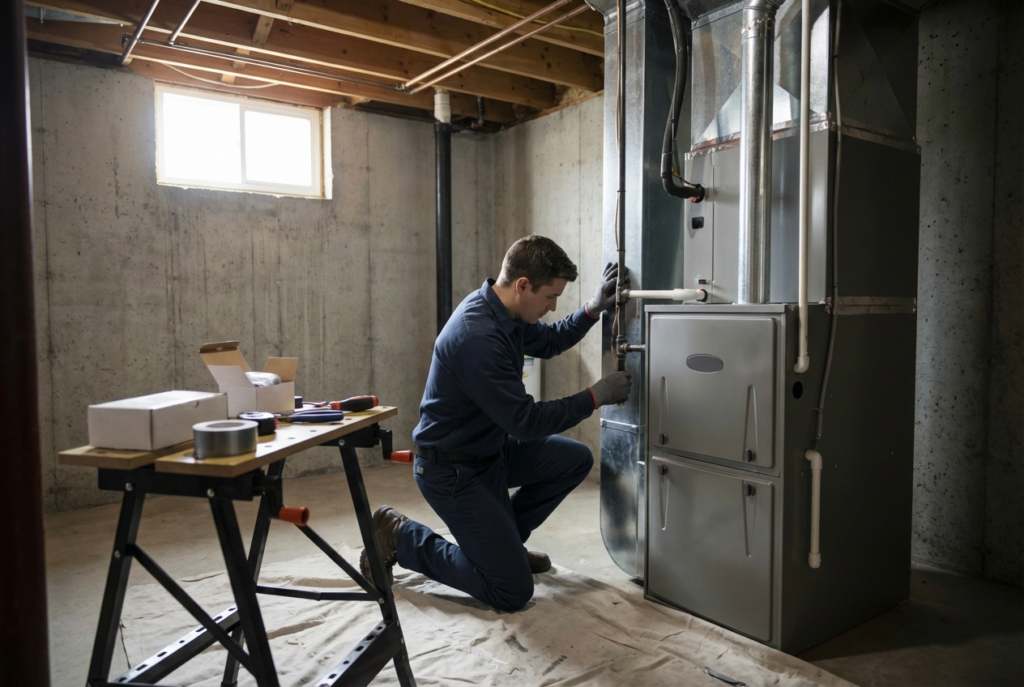
Looking at 80% efficiency furnace installation in Oakville means you’re smart about money, not cheap. Sales guys push high-efficiency models because they make bigger commissions, but standard efficiency furnaces work great for most houses. You save $1,500-2,000 upfront compared to condensing systems. Small houses with low gas bills never recover high-efficiency costs. People moving in 5-7 years pay for upgrades the next owner enjoys. Sometimes the best financial decision is spending less money on equipment that does the job.
Why 80% Efficiency Makes Sense
Lower Upfront Cost Actually Matters More Than You Think
Saving $1,800-3,000 upfront isn’t nothing. That’s multiple car payments. Several months of groceries. Money you could use for literally anything else instead of locking it into marginally better furnace efficiency. Sales guys act like upfront cost doesn’t matter because they want you buying expensive equipment, but most families would rather have that cash available than tied up in a furnace that saves $10-15 monthly on gas bills.
High-efficiency salespeople show you 18-year savings projections like you’re definitely staying in this house until 2043. Reality is most people move every 7-10 years. You pay extra for efficiency improvements the next homeowner benefits from while you’re gone. Meanwhile that $2,000-3,000 you saved with standard efficiency could’ve been invested, used for home improvements that actually increase resale value, or just sitting in savings as an emergency fund. Money now beats theoretical future gas savings.
Financing costs eat up efficiency savings. Finance a $7,500 high-efficiency furnace at 8% interest over five years and you’re paying $1,521 in interest charges. Finance a $5,000 standard furnace and you pay $1,014 in interest. The $507 difference wipes out a year and a half of efficiency savings before you even start. Cash buyers don’t face this problem, but if you’re financing anything, cheaper equipment means less interest paid. Understanding realistic heating costs helps you make decisions based on your actual situation instead of sales projections.
80% Furnaces Are Simpler and Break Less Often
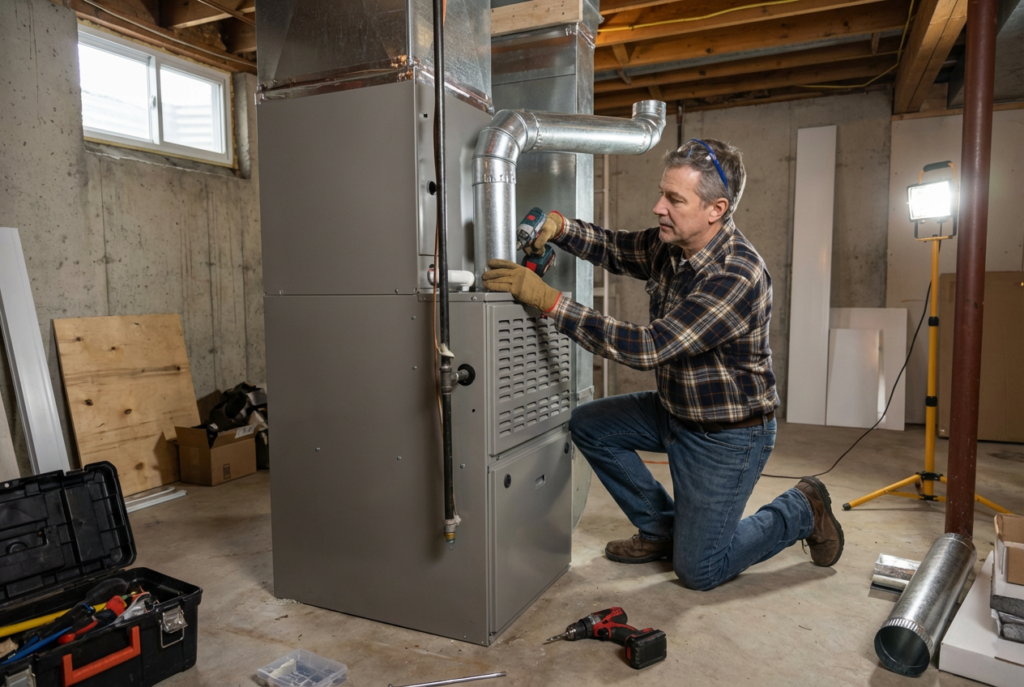
Standard 80% furnaces can install anywhere in your house—unheated attics, basements, garages, crawl spaces. They vent hot exhaust that won’t freeze so location doesn’t matter. High-efficiency models create condensate water that freezes if the furnace sits in an unheated space. This limits where you can put them. Attic installation in an unconditioned space? Not happening with high-efficiency unless you want frozen drain lines and a broken furnace every winter.
Venting standard furnaces uses your existing chimney or simple metal pipe. No penetrations through exterior walls, no complicated vent termination requirements, no weather-proofing concerns. Install takes hours less because we’re not drilling through siding and brick to run PVC pipes outside. High-efficiency venting requires punching holes in your house, running PVC intake and exhaust pipes to the exterior, and carefully positioning them away from windows, doors, and air intakes. Get the vent location wrong and negative pressure pulls carbon monoxide and combustion gases back into your house through nearby windows.
PVC vent placement has strict code requirements. Can’t terminate within three feet of windows, doors, or property lines. Can’t point toward neighbor’s property. Can’t be too close to air conditioning condensers or other mechanical equipment. Sometimes there’s literally no good place to put the vents without rerouting them across your entire house. Standard metal venting doesn’t have these restrictions because hot exhaust rises naturally and disperses quickly instead of pooling near openings.
High-efficiency condensing furnaces create water as a byproduct of combustion. This condensate needs draining through plastic pipes that freeze, crack, or get clogged with sludge. Condensate pumps fail. Drain lines need cleaning. Secondary heat exchangers corrode from constant water exposure. These are all problems that don’t exist on standard 80% furnaces because they vent combustion gases hot enough that water stays as vapor.
Parts availability and technician knowledge favor standard equipment. Every HVAC tech in Oakville knows how to work on 80% furnaces because they’re industry standard. High-efficiency condensing furnaces have more specialized components. Not every tech stocks parts for them. Some smaller companies don’t even service them regularly. You’re more likely to get fast repair service on standard equipment that everyone works on versus specialized high-efficiency models that require specific expertise.
When High-Efficiency Extra Costs Never Pay Back
Small houses don’t burn enough gas for efficiency to matter. Your total heating costs run $600 per winter? Maximum possible savings from high-efficiency is $120 yearly. Takes 15+ years to recover the $1,800 extra cost. By then the furnace is old and needing repairs anyway. You basically broke even at best, assuming nothing else went wrong with the more complicated high-efficiency system.
Mild climate regions waste money on premium efficiency. Places where winter barely exists don’t need furnaces running much. Florida, Texas, Southern California—spending extra on heating efficiency makes no sense when you use the furnace maybe 40 days per year. Even colder regions have variation. St. Louis winters are nothing compared to Minnesota. Our heating season is shorter and milder so efficiency savings are proportionally smaller.
Short-term homeowners should always buy standard. Planning to sell in three years? You’ll recover maybe $300-400 of efficiency savings before you leave. Next owner gets the remaining $2,000 worth of gas savings you paid for. They’ll appreciate it but you got zero financial benefit. Take the $1,800 you saved upfront, use it to paint the house or update the kitchen—improvements that actually add resale value instead of invisible furnace efficiency the next buyer won’t even think about.
Perfect Situations for Standard Efficiency Furnaces
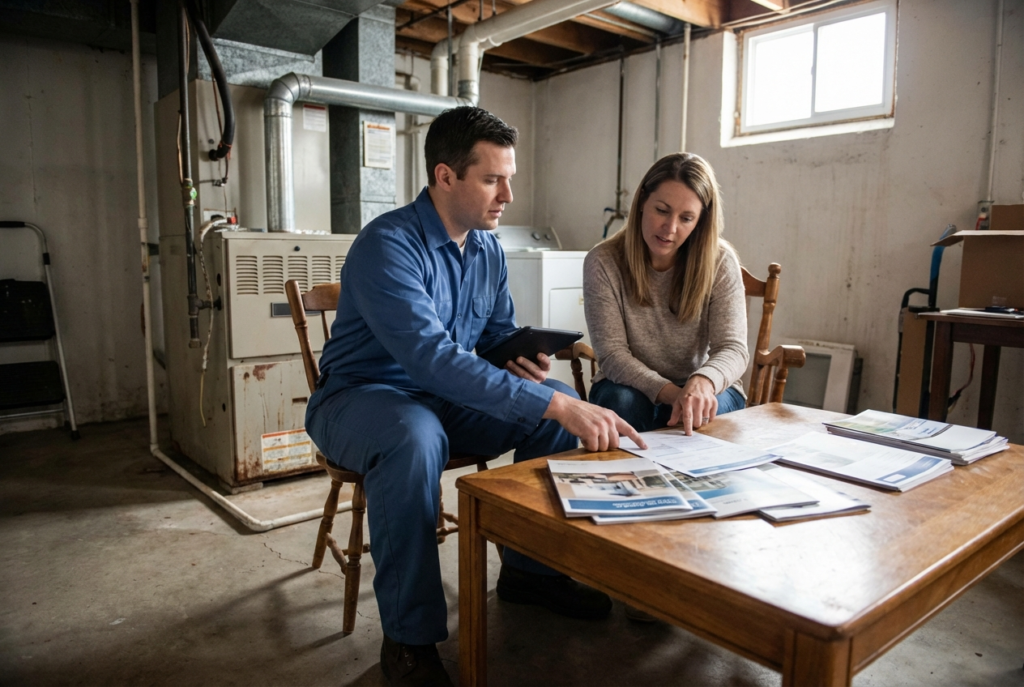
Budget-conscious buyers with limited cash benefit most. You need a furnace now and you have $4,500 saved. Standard efficiency fits your budget—unless you don’t have natural gas service to your house, in which case electric furnaces become your only option. High-efficiency means financing or draining savings.”
Rental properties and investment homes make standard efficiency the obvious choice. Landlords pay for the furnace, tenants pay the gas bills. Zero incentive to spend extra on efficiency that saves tenants money while costing you more upfront. Standard 80% furnaces are reliable, affordable, and perfectly adequate for rental situations. Save the efficiency upgrade money for your own house where you actually capture the gas bill savings.
Houses with good insulation and sealed ductwork already waste minimal heat. Your house has new windows, quality insulation, properly sealed ducts? You’re not losing much heat regardless of furnace efficiency. Going from 80% to 96% efficiency saves you less in a tight efficient house versus a drafty disaster. Fix the house problems first—air sealing, insulation, duct work. Then a standard furnace performs great because the house itself is efficient. Our main furnace installation guide helps you think through what makes sense for your specific house and situation.
Debunking the High-Efficiency Sales Pitch
You’re Not Being Cheap by Choosing 80%
Sales guys love implying you’re cutting corners if you don’t buy high-efficiency. They act like choosing standard 80% means you don’t care about quality or your family’s comfort. This is BS. Standard efficiency furnaces heat your house just as well as premium models. The air coming out of your vents is the same temperature. Your house reaches the same 72 degrees. The only difference is how much gas gets wasted up the chimney, and for many situations that difference doesn’t justify thousands in extra costs.
Contractor guilt trips about the environment ignore math. Sure, high-efficiency uses less gas. But if your total heating costs are $700 yearly, you’re burning about 700 therms of natural gas. Going from 80% to 96% efficiency saves you 112 therms annually. That’s 0.6 tons of CO2 per year. Your SUV produces 6 tons yearly just driving to work. Choosing standard efficiency isn’t destroying the planet—it’s a rounding error compared to other household emissions. Make efficiency choices that actually matter like insulation and air sealing, not marginal furnace upgrades.
Financial advisors would question spending $3,000 extra to save $150 yearly. That’s a 5% return on investment. You can get 7-10% returns putting that money in index funds with zero risk of condensate pump failures or frozen drain lines. Sometimes the financially smart move is buying adequate equipment and investing the difference instead of tying cash up in mechanical systems. Nobody retiring comfortably ever said “I wish I’d spent more on my furnace efficiency 20 years ago.”
Hidden Costs of High-Efficiency Nobody Mentions
Condensate pumps eventually fail and need replacing. These pumps move water created during combustion from the furnace to a drain. When they quit—and they all quit eventually—your furnace shuts down until you replace the pump. Parts cost $80-150, labor adds another $150-250. Standard 80% furnaces don’t have condensate pumps so this $300-400 repair never happens. Over the furnace’s lifespan you might replace the pump twice. That’s $600-800 you wouldn’t spend on standard equipment.
PVC venting deteriorates faster than metal. Sun exposure breaks down plastic. Temperature cycling causes cracks. Joints separate from expansion and contraction. Twenty years from now your high-efficiency PVC venting might need complete replacement while metal venting from standard furnaces lasts 40+ years. PVC vent replacement isn’t cheap—figure $500-800 in labor and materials because we’re redoing exterior penetrations and sealing. Standard metal venting just keeps working.
Secondary heat exchanger replacement costs almost as much as a new furnace. These exchangers handle condensate and corrode over time from constant water exposure. When they fail on a 15-year-old high-efficiency furnace, replacement costs $2,000-3,000. At that point you’re better off replacing the whole furnace. Standard 80% furnaces have simpler heat exchangers that last longer because they’re not constantly wet. Heat exchanger failure usually means the furnace lived its full 20-year life, not that it failed prematurely from design complications.
Standard Efficiency Is the Professional’s Choice
HVAC techs install standard 80% furnaces in their own houses more often than you’d think. They know high-efficiency complications from fixing them daily. Frozen condensate lines, failed pumps, corroded heat exchangers, pressure switch problems, blocked PVC vents. These issues are rare on any single furnace but techs see them constantly across hundreds of service calls. When they’re spending their own money, lots of them choose simpler equipment that works reliably over complicated systems with more failure points.
Rental property investors almost universally install standard efficiency. These are people making calculated financial decisions based on real numbers, not emotions or sales pitches. They’ve run the actual ROI calculations accounting for their specific situation. They know tenants pay the gas bills so efficiency saves them nothing. They want reliable equipment that works for 20 years with minimal service calls. Standard 80% furnaces fit that requirement perfectly while costing less upfront and having fewer expensive repairs.
Get Honest 80% Efficiency Furnace Installation in Oakville
Call (314) 600-2202 for 80% efficiency furnace installation in Oakville. We install what makes sense for your situation—not what earns us bigger commissions. Sometimes standard efficiency is the smarter choice and we’ll tell you straight.