Serving St. Louis & Surrounding Areas

Electric Furnace Installation in Oakville, MO: Start With the Panel
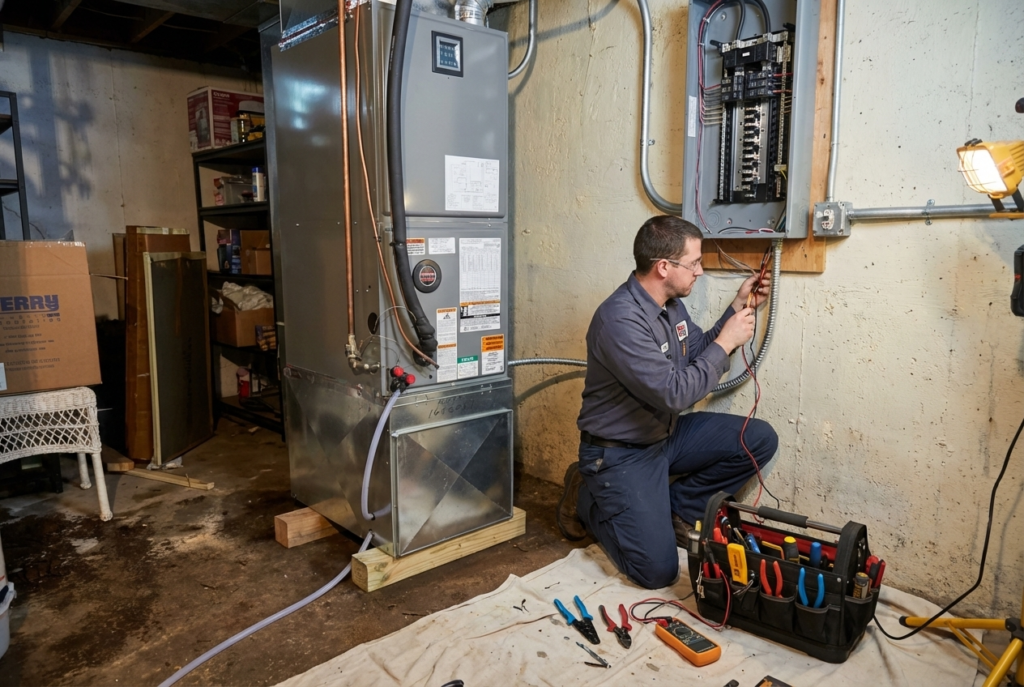
An electric furnace is the simplest heating appliance in the catalog. No burners, no flue, no combustion air, nothing to vent. That simplicity is why people assume it is the easy install, and for the heating half of the job it is. The hard half is electrical, and it gets decided by a panel in your basement that nobody looks at until the quote is already written.
When Electric Is Actually the Option
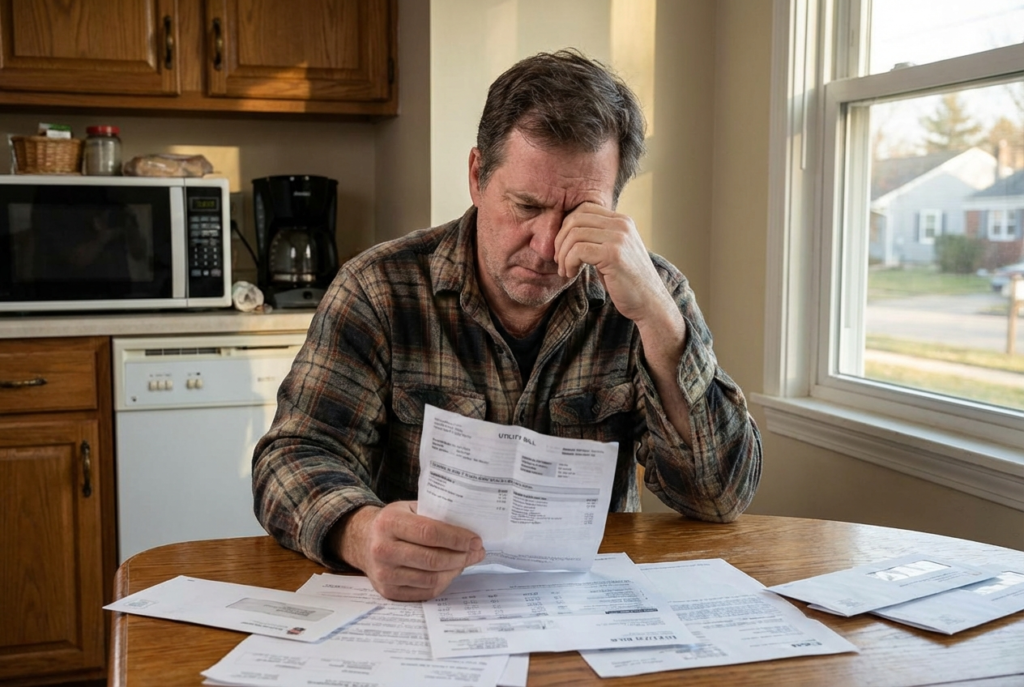
Very few houses choose resistance heat on the merits. It gets chosen when the alternatives are worse or absent, and there are really only three of those situations.
- There is no gas at the street. Extending a main to a single property is quoted by the utility, not by us, and on a long run it can cost more than the furnace and the electrical work combined.
- Gas is at the street but not worth reaching. A long private run, a driveway to cut, or a meter that has to be relocated can push a line extension past the point where it makes sense for how long you plan to stay.
- You want no combustion in the building. Some people land here after a carbon monoxide scare, and it is a legitimate reason on its own.
Propane is the other way out of the first two, and it comes with a tank, a rental arrangement, delivery scheduling and a price that moves. It is a real option for some rural properties, but it trades the electrical problem below for a logistics one.
The Panel Decides This Before You Do
Here is the number that governs the whole project. Electric furnaces are rated in kilowatts, commonly ten, fifteen or twenty for a house. The elements run at two hundred forty volts, so the current they draw is the kilowatts divided by that voltage.
A twenty kilowatt furnace pulls a little over eighty amps while the elements are energized. Because heating is treated as a continuous load, the circuit and the breaker get sized above the running draw, which lands that furnace north of a hundred amps of dedicated capacity.
Now compare that against what the house has. Plenty of older Oakville homes are still on a one hundred amp service, and a fair number sit at one hundred fifty. A furnace that wants a hundred amps to itself does not fit inside a hundred amp service that is also running a range, a dryer, a water heater and an air conditioner. It is not a matter of being careful with what you switch on at once. The capacity is not there.
So the sequence is backwards from what people expect. The service gets evaluated first, then the equipment gets chosen, because if the answer is a service upgrade then that upgrade is a project of its own involving the utility, a new meter, a new main panel and an inspection. Finding that out after a furnace is sitting in your basement is the expensive way to learn it.
Sizing in Kilowatts, Not in Guesswork
Electric furnaces get oversized more often than gas ones, because the penalty feels invisible. Nothing short cycles the way an oversized gas furnace does, so people assume extra capacity is free insurance. It is not free. Every kilowatt you add is capacity the service has to carry and wire that has to be paid for.
Sizing is done from the house, meaning square footage, insulation, window area and how leaky the place actually is. A tight newer build and a drafty century home of the same size are not the same load, and the label on whatever is currently in the basement is not evidence of anything except what somebody installed once.
Most electric furnaces stage their elements rather than switching everything on at once, bringing on one bank at a time as the house calls for more. That staging is worth asking about, because it is what keeps a mild day from drawing the full nameplate current every cycle.
Before You Buy Resistance Heat, Price a Heat Pump
This is the conversation worth having while the electrician is already looking at your panel, because both paths use the same service.
Resistance heat has a hard ceiling built into the physics. A kilowatt of electricity becomes a kilowatt of heat, and that is the end of it. There is no such thing as a more efficient electric furnace, which is why you will not find efficiency ratings compared across models the way you would with gas.
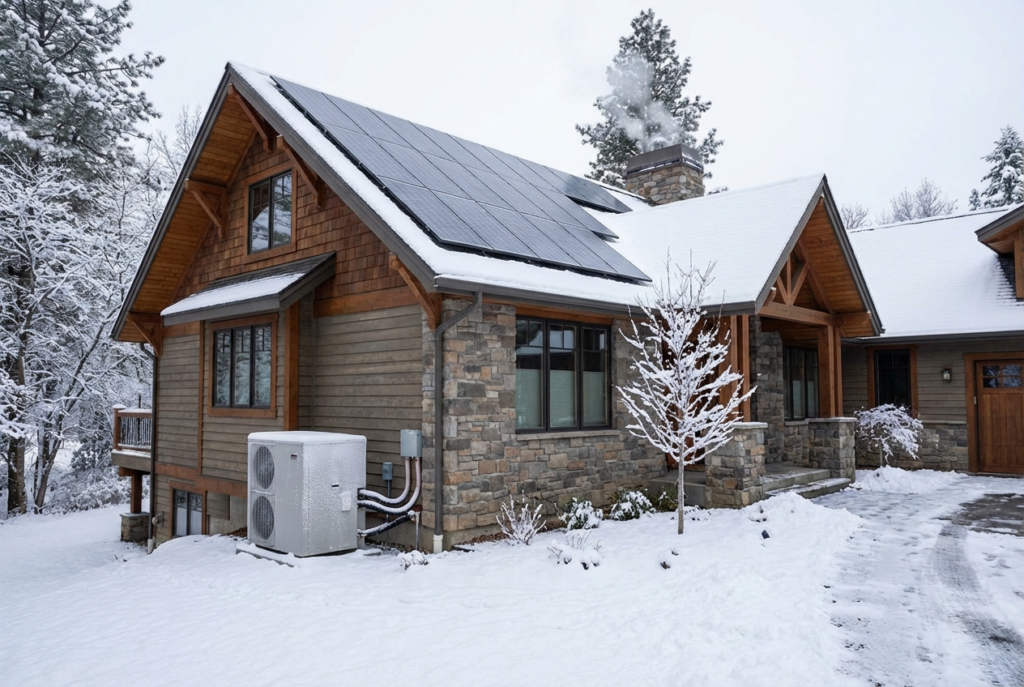
A heat pump does something different. It moves existing heat rather than creating it, so a kilowatt of electricity delivers noticeably more than a kilowatt of heat into the house across most of our heating season. In our climate it needs a backup for the coldest stretches, and that backup is very often an electric furnace, which means these two are not really competitors. The common setup is a heat pump doing the ordinary work with electric elements behind it for the hard days.
If you are already committing to the electrical service, getting both numbers before you decide is worth the phone call. Our heat pump installation page covers that side.
The Wiring, the Disconnect, and the Permit
The electrical portion is where corners get cut, partly because it is the part a homeowner cannot easily inspect afterward.
- Conductors sized for the actual breaker rating. Heating circuits use heavy gauge wire and long runs from the panel add real cost, which is why a vague allowance for electrical in a quote is worth questioning.
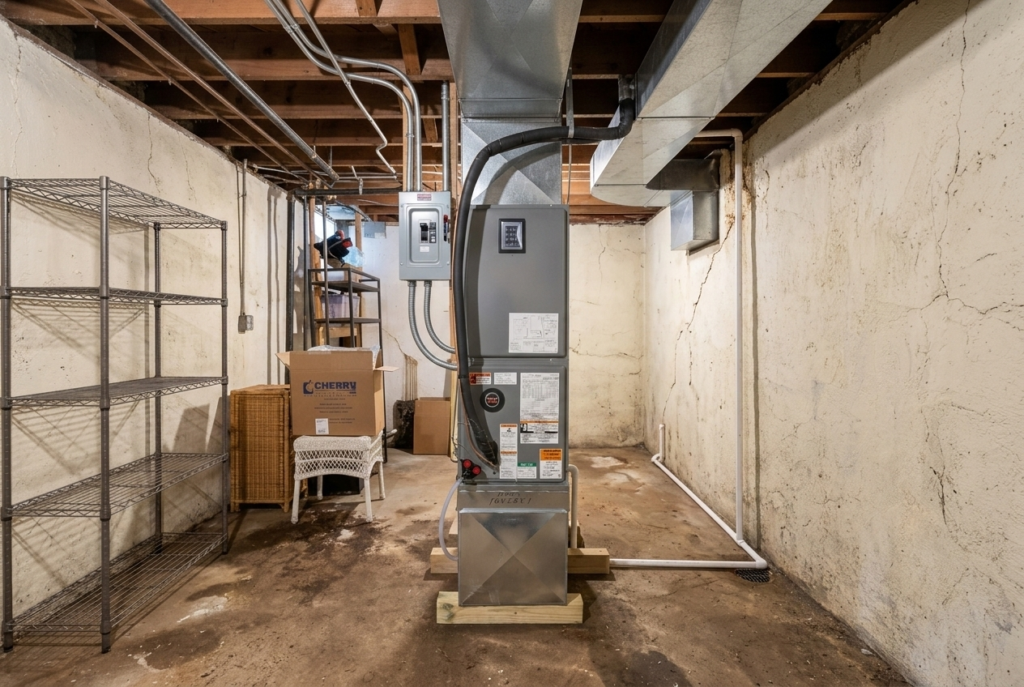
- A disconnect within sight of the furnace, so the unit can be killed by somebody standing at it rather than by hunting through a panel across the basement.
- Contactors and a sequencer rated for the load, since these are the components that make and break heavy current thousands of times a season.
- Clearance around the cabinet, because the elements do glow, and storage stacked against a furnace is a genuine hazard rather than a code technicality.
There is usually an electrical permit and inspection here in addition to the mechanical one. That is a feature. An inspector confirming wire gauge, breaker rating and grounding is a free second opinion on the part of the job you have no way to verify yourself, and skipping it is the thing that surfaces years later during an insurance claim.
What Living With It Is Actually Like
Electric heat behaves differently from gas in ways that surprise people in the first winter.
It comes on gently. Gas furnaces deliver noticeably hot air quickly, while resistance elements warm the airstream more gradually. The house arrives at temperature perfectly well, it simply does not announce itself at the register the way people expect.
Deep overnight setbacks are also less rewarding than they are with gas. Recovering several degrees in the morning brings on every element at once during the coldest part of the day, and much of what the setback saved gets spent buying it back. A shallower setback, or a steady setting, usually works out better.
What we would not do is heat only a few rooms with portable heaters to keep the furnace off. That advice circulates, and it trades a heating bill for a fire risk. The rules that make portable heaters survivable are on our emergency furnace repair page, and running them all winter breaks most of them. If the operating cost is genuinely the problem, the answer is a heat pump or a tighter house, not an extension cord.
Frequently Asked Questions
Will my electrical panel handle an electric furnace?
That is the first thing to find out and it is answered on site, not over the phone. A twenty kilowatt furnace needs somewhere north of a hundred amps of dedicated capacity, which a hundred amp service already running a range, dryer and water heater does not have to spare. Many Oakville homes need a service upgrade first, and that changes the shape of the whole project.
Is an electric furnace cheaper than a gas furnace?
Cheaper to install, generally, since there is no gas piping, no flue and no combustion air to deal with. More expensive to run, because a kilowatt of electricity buys exactly a kilowatt of heat and nothing more. Compare using your own utility’s current rates rather than anybody’s estimate, including ours.
Why can’t I just get a more efficient electric furnace?
There is no such thing. All resistance heating converts electricity to heat at the same one to one rate, so no model beats another on efficiency. The only way to get more heat per kilowatt is a heat pump, which moves heat instead of making it.
Do I need an electrician as well as an HVAC contractor?
The heavy electrical work needs someone licensed for it, and there is usually an electrical permit and inspection separate from the mechanical one. Ask who is doing that portion and confirm it before work starts, because a vague electrical allowance in a quote is where surprise costs come from.
How big an electric furnace do I need?
It comes from the house rather than from what is already installed. Square footage, insulation, window area and how tight the building is all feed the number. Oversizing is not harmless here, because every extra kilowatt is capacity your service has to carry and wire somebody has to pay for.
Should I be looking at a heat pump instead?
Very likely worth pricing, especially since both options run off the same electrical service you may be upgrading anyway. A heat pump handles most of our heating season on considerably less electricity and typically uses electric elements as its backup, so this is often not an either or decision.
Start With the Panel
The useful first visit is short. Somebody reads your service size, looks at what else is on it, and tells you whether an electric furnace fits the house you have or whether a service upgrade comes first. That answer shapes the budget more than the choice of equipment does.
Call (314) 600-2202 and say you are looking at electric heat and want the service checked. If gas is available to the property after all, furnace installation is the comparison worth running first.