Serving St. Louis & Surrounding Areas

Failed Air Handler? Call Now For Air Handler Repair in Oakville
Air handler repair in Oakville is one of the most common calls we get when a home stops cooling completely. The air handler is what moves air through your entire system. When it goes down, nothing works. No cooling, no heating, nothing coming through the vents. It doesn’t matter how good your outdoor unit is. If the air handler isn’t running, the whole system is down.
Air handler problems show up fast in Oakville, especially during the hottest weeks of summer when the system runs around the clock. A blower motor that was struggling in May often quits completely by July. A coil that was barely freezing up in spring turns into a full ice block by August. The longer a failing air handler runs without getting looked at, the more damage it does to the rest of the system.
Liberty Heating Cooling & Plumbing has been diagnosing and repairing air handlers in South St. Louis County for 27 years. We offer same-day service seven days a week. If your air handler quit or something just doesn’t feel right with your airflow, we can get someone out to you today.
Here’s everything you need to know about air handler repair in Oakville:
- What an air handler does and why it matters
- The most common signs your air handler is failing
- What causes air handlers to break down
- How to tell if it’s the air handler or another part of your system
- What to expect from same-day air handler repair in Oakville
- When repair makes sense versus replacing the unit
Air Handler vs Furnace — What’s the Difference and Why It Matters
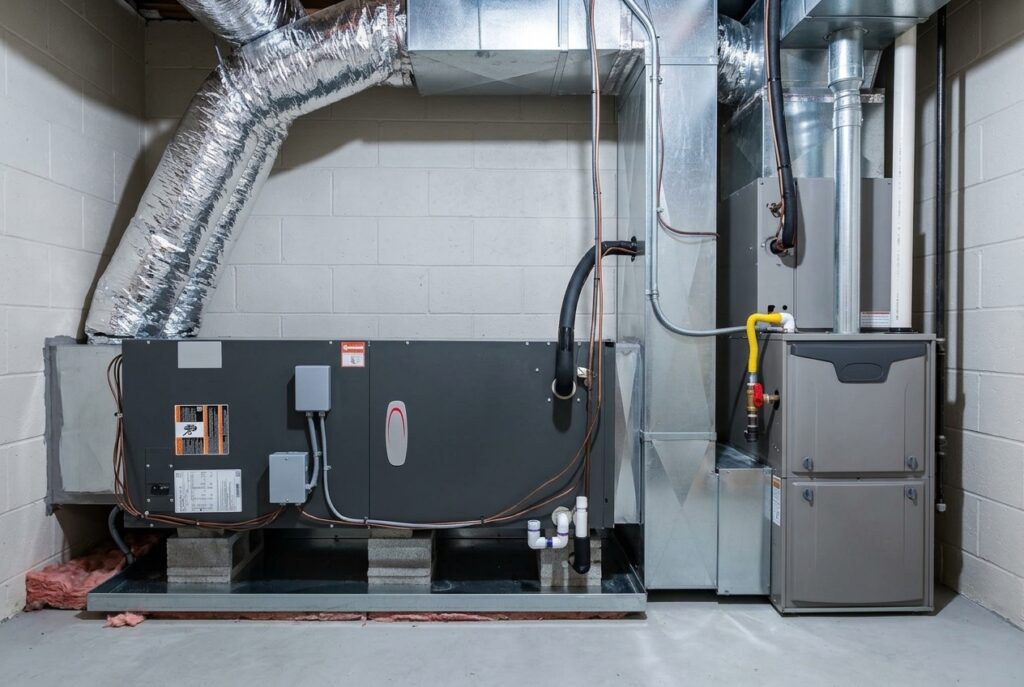
Most homeowners use air handler and furnace like they mean the same thing. They don’t — and knowing the difference saves a lot of confusion when something breaks down.
A furnace burns fuel to make heat. Natural gas, propane, or oil goes in, combustion happens, and warm air comes out. It’s a self-contained heating system with a burner, a heat exchanger, and a flue to vent the exhaust outside.
An air handler doesn’t make heat. It moves air. Inside you’ve got a blower motor, an evaporator coil, and a filter. In the summer it works with your outdoor AC unit to pull heat out of your home and push cool air through the ducts. In the winter it pairs with a heat pump to do the same thing in reverse.
Where people get tripped up is the heat strip question. You can add electric heat strips to an air handler and it will heat your home. The strips work like a giant toaster — electric coils that warm the air as it passes through. But without those strips, an air handler produces zero heat. It is not an electric furnace. It’s an air mover, full stop.
This matters when something goes wrong. A failed blower motor inside the air handler kills airflow completely — no cooling, no heating, nothing moving through your vents. A failed heat strip means you lose heat but still have cooling. Knowing which part went down tells you exactly what you’re dealing with before you even pick up the phone.
What Are the Signs Your Air Handler Needs Repair?
The air handler usually gives you warning before it quits completely. Most homeowners just don’t know what to look for.
No air coming from the vents If the system is running but nothing is blowing out of your vents, the blower motor is the first thing to suspect. A seized motor or a failed capacitor that can’t get it started will shut down airflow completely.
Weak airflow in some or all rooms Air is coming out but it feels like nothing. Check your filter first — a clogged filter causes exactly this. If the filter is clean and airflow is still weak, the blower motor or the wheel attached to it is probably losing power.
Warm air when the AC is running The system is on but the air coming through your vents is warm. The evaporator coil inside the air handler may be frozen or coated in buildup. Either way it can’t absorb heat properly and cooling stops.
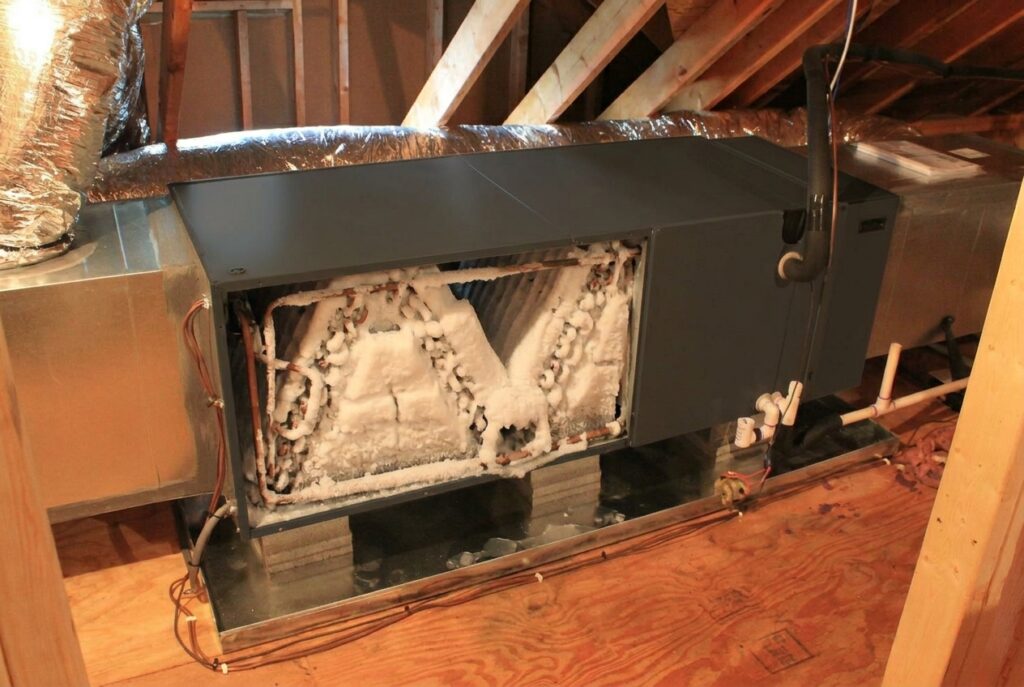
Ice on the unit or the copper lines Ice forming on your air handler or the copper lines coming out of it means the evaporator coil is frozen. Turn the system off and let it thaw completely before doing anything else.
Strange noises from the indoor unit Squealing usually points to blower motor bearings going bad. Banging or rattling means something has come loose inside. Neither one gets better on its own.
Electric bills going up for no clear reason A blower motor that’s struggling draws more power trying to keep up. If your bill jumped and nothing else changed, a failing motor is worth looking at.
What Causes Air Handlers to Break Down?
Air handlers don’t fail randomly. There’s almost always something that wore them down first. Here’s what we see most often on service calls in Oakville and South St. Louis County.
Blower motor failure The blower motor runs every time your system cycles on. In a St. Louis summer that can mean 12 to 16 hours a day. That sustained runtime wears out bearings, burns out windings, and eventually kills the motor completely. Motors that are 10 years or older are especially vulnerable during long heat stretches.
Failed capacitor The capacitor gives the blower motor the jolt it needs to start up. When it fails the motor just sits there and hums without turning on. Capacitors are one of the most common air handler repairs we do — cheap part, big impact when it goes.
Frozen evaporator coil The evaporator coil inside your air handler needs steady airflow to work. When a dirty filter cuts that airflow off the coil gets too cold and ices over. Once it’s frozen solid the system can’t cool at all. The fix isn’t just thawing the coil — whatever caused the airflow restriction has to get fixed too or it freezes again.
Dirty evaporator coil Even without freezing a coil that’s coated in dust and buildup can’t absorb heat properly. Cooling drops off slowly over weeks until one day the house just won’t get cold. Regular filter changes are the best way to prevent this.
Electrical failures Loose wiring, corroded connections, and failed control boards cause air handlers to behave erratically — short cycling, not starting, or shutting off randomly. These are the harder ones to diagnose without the right tools.
Lack of maintenance Most of the air handler failures we see in Oakville come down to one thing — the system never got looked at until something broke. A yearly inspection catches small problems before they turn into motor replacements and coil cleanings.
How to Tell If It’s the Air Handler or Another Part of Your System
Warm air and weak airflow can come from a lot of places. Before assuming the air handler is the problem it helps to rule out the obvious stuff first.
Check the filter A clogged filter is the single most common cause of airflow problems and frozen coils. Pull it out and hold it up to the light. If you can’t see through it, replace it before calling anyone. A lot of service calls we go on in Oakville turn out to be a dirty filter.
Check the thermostat Make sure it’s set to cool and not fan only. Fan only mode runs the blower without turning on the cooling. The air moves but it’s not cold. It sounds obvious but it happens more than you’d think.
Go outside and look at the outdoor unit If the outdoor unit isn’t running but the air handler is, the problem is outside not inside. A tripped breaker, a failed capacitor on the outdoor unit, or a dead compressor will all cause warm air even though the air handler is working fine.
Listen to the indoor unit If the air handler is making noise it wasn’t making before, the problem is almost certainly inside the unit. Outdoor issues don’t usually cause squealing or banging from the indoor unit.
Check for ice Ice on the copper lines or on the air handler itself points directly to the indoor unit. That’s either a frozen coil from restricted airflow or low refrigerant causing pressure to drop inside the system.
If you’ve checked all of these and something still isn’t right, that’s when it’s time to call. Most air handler problems in Oakville can be diagnosed and repaired same day. Schedule a service call with Liberty Heating Cooling & Plumbing and we’ll tell you exactly what’s going on.
What to Expect From Same-Day Air Handler Repair in Oakville
When you call Liberty Heating Cooling & Plumbing for air handler repair in Oakville, here’s what actually happens.
We ask you a few quick questions before we come out. When did it stop working? What are you hearing or seeing? Have you checked the filter? That information helps us show up with the right parts instead of making a second trip.
Most air handler repairs finish same day. A blower motor swap takes two to three hours. A capacitor replacement takes under an hour. A frozen coil needs time to thaw — usually a few hours — but we can diagnose the cause and get the repair done in the same visit once it’s clear. According to the U.S. Department of Energy, keeping your air handler and coils clean is one of the most effective ways to extend the life of your cooling system and reduce energy costs.
We carry common parts on the truck. Blower motors, capacitors, contactors, and filters for most standard systems. If your unit needs a specialty part we’ll tell you upfront and give you a realistic timeline.
We work with your budget and offer a 10% discount for senior citizens. Every repair is done by a licensed, bonded, and insured technician. We’ve been doing this in South St. Louis County for 27 years and we’ll tell you straight what the repair costs and whether it makes sense given the age of your system.
When to Repair Your Air Handler vs Replace It
Not every air handler problem is worth fixing. Sometimes the repair makes perfect sense. Other times the money is better spent on a new unit. Here’s how to think about it.
Age of the system Air handlers typically last 15 to 20 years with decent maintenance. If yours is under 10 years old and needs a capacitor or a blower motor, repair it. If it’s pushing 18 years and needs a motor replacement on top of a dirty coil and failing electrical components, replacement is probably the smarter move.
Cost of the repair vs cost of replacement A capacitor runs $150 to $250 to replace. A blower motor runs $400 to $700. Those repairs make sense on a system that has years of life left. If the repair costs more than half the price of a new air handler, start doing the math on replacement.
How the system has been running A system that’s been struggling for a couple of seasons — higher bills, rooms that won’t cool down, frequent service calls — is telling you something. One more repair might buy you another year. It might not. We’ll give you an honest read on where your system stands so you can make the right call for your home and your budget.
What else needs attention An air handler doesn’t exist in isolation. If the outdoor unit is also aging and the refrigerant lines need work, putting money into the air handler alone might not solve the bigger picture. We look at the whole system before recommending anything.
If you’re not sure whether to repair or replace, call us. We’ll come out, look at what you’ve got, and give you a straight answer — no pressure either way.