Serving St. Louis & Surrounding Areas

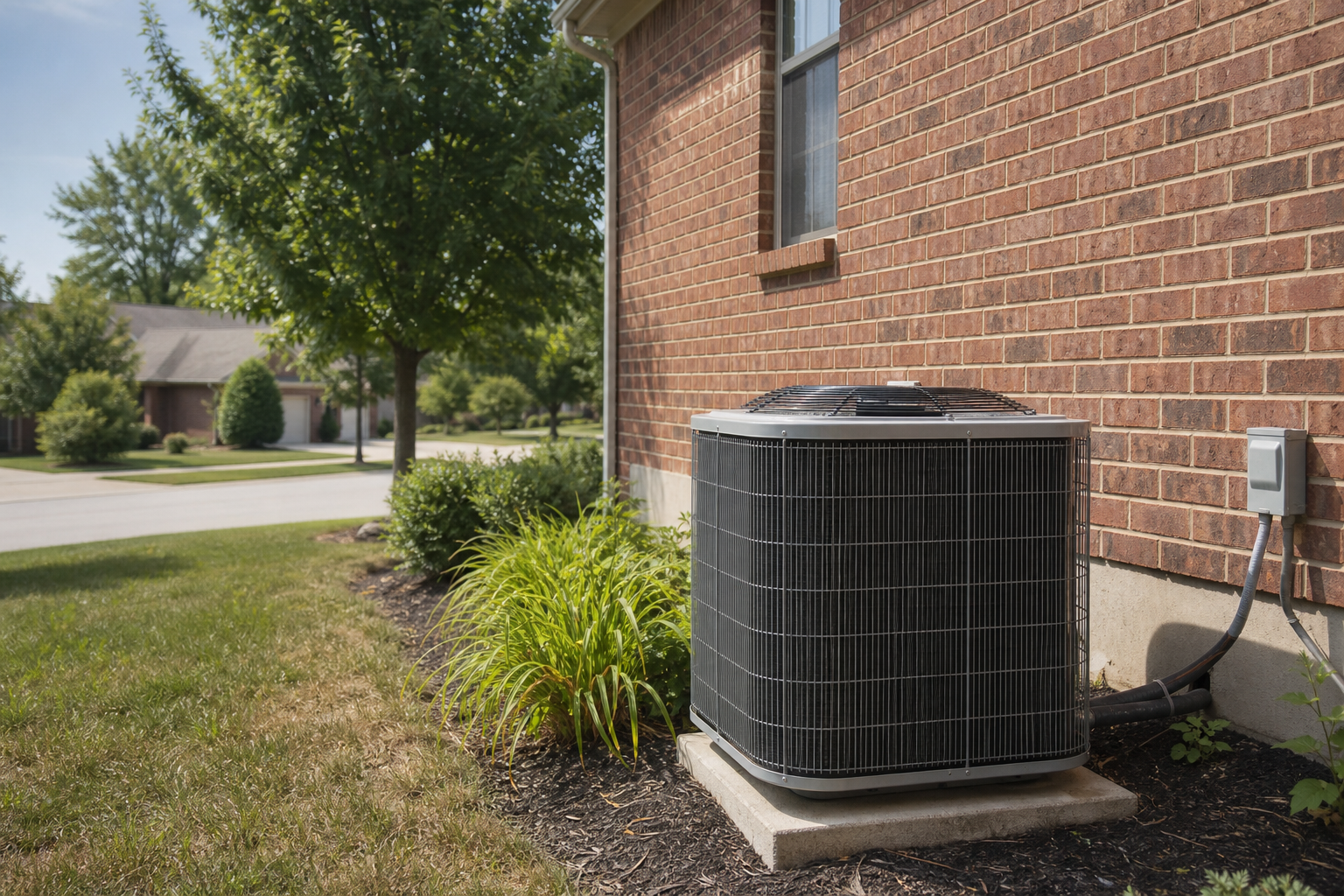
Is It Safe to Run Your AC With a Refrigerant Leak in Oakville?
Homeowners ask me this every summer, usually phrased exactly the same way. Is it safe to run AC with a refrigerant leak in Oakville for a few days while you wait on a tech? Short answer, no. Kill it at the thermostat the minute you suspect a leak.
Refrigerant is what carries cooling around the loop. Once it starts escaping, the unit keeps grinding away on less and less of what it needs, and the damage stacks up faster than people expect.
Part of why the question even comes up is that a leaky AC usually still blows air. Fan spins, thermostat clicks. From the living room couch it looks alive, just a little tired. That visual is the trap. The system stopped actually cooling a while ago, it is just chewing itself to pieces on your electric bill at this point.
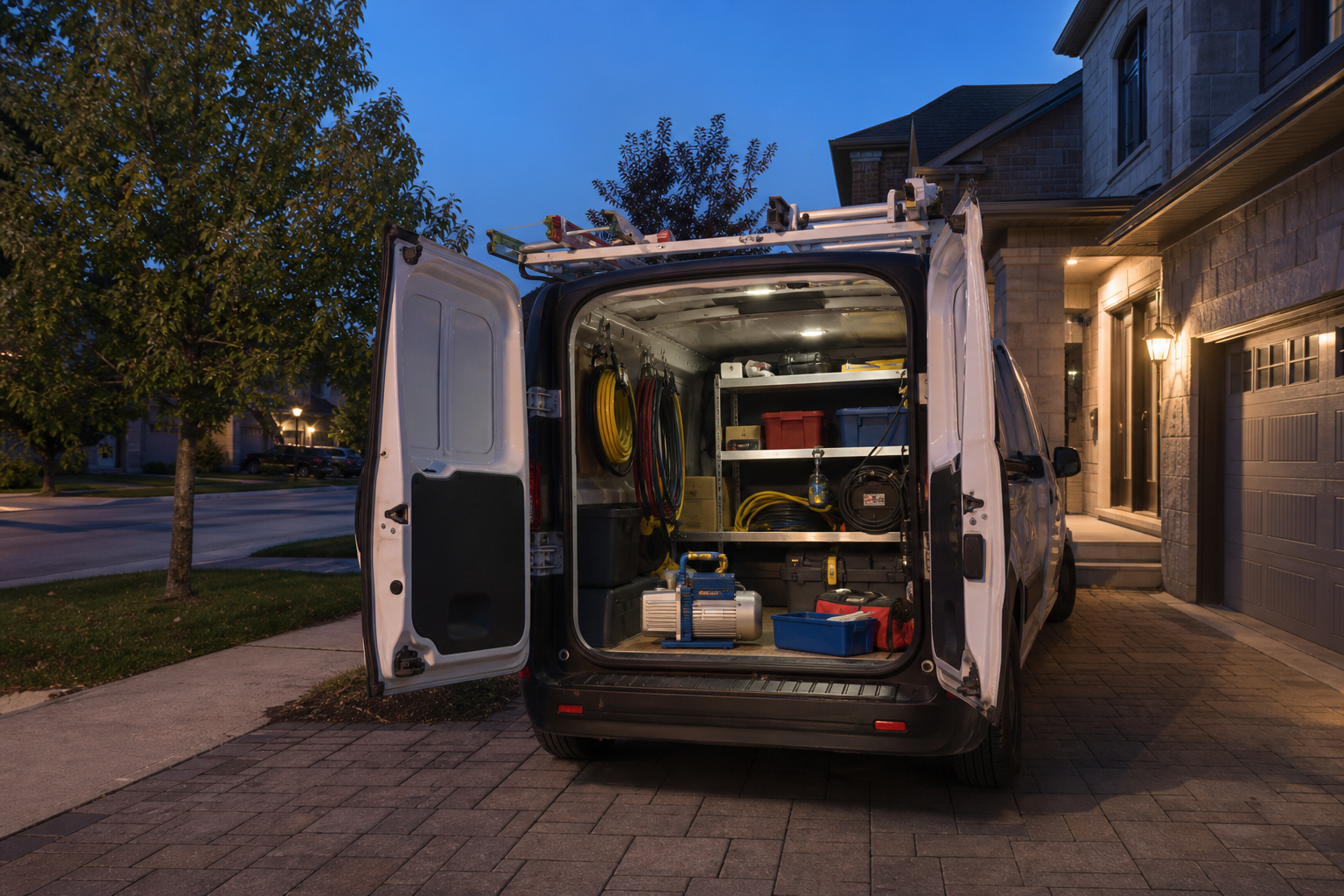
Sam at Liberty Heating Cooling & Plumbing has been pulling burnt-out compressors out of South County homes for almost three decades. Most of them trace back to one thing, a leak that got ignored or topped off instead of fixed. If your unit is short on refrigerant, get it looked at professionally before the small bill turns into the big one. You can also schedule a same day visit with our team if the AC is still running right now.
Here is everything you need to know about running an AC with a refrigerant leak:
- Why a leaking AC is still dangerous even when it seems to be working
- How low refrigerant burns out the compressor
- The health side of refrigerant leaks inside the home
- Why the EPA cares about this and what the law says
- The “just top it off” mistake most homeowners make
- What an honest leak repair actually looks like
The Short Version on Running an AC With a Leak
No, you should not keep running it. Shut it off at the thermostat and call somebody. Every hour the system runs short on charge is an hour the compressor is taking damage that you cannot see and cannot undo.
Three things are happening at the same time when an AC leaks. The system loses its ability to cool, the compressor loses the oil that protects it, and any refrigerant that escapes is gone for good. None of those reverse on their own. They only get worse the longer the unit cycles.
You will sometimes hear a hiss near the indoor coil or the line set outside. Sometimes there is frost on the copper line. Sometimes the air from the vents goes from cold to room temperature and stays there. Any of those are reasons to flip the breaker and stop running it until a tech looks at the charge level.
How Low Refrigerant Burns Out the Compressor
This is the part most homeowners do not know. Refrigerant carries the compressor’s oil through the system. When the charge drops, the oil stops circulating the way it should, and the compressor starts running hot and dry. It is the same idea as running a car engine low on oil. It works for a little while, then it does not.
A compressor failure is the single most expensive thing that can go wrong with a residential AC. On a lot of older units it crosses the line where repair stops making sense and the whole system has to be replaced. That is a five-figure decision that started as a slow leak somebody ignored for a season.
The cruel part is that the leak itself is often a small repair. A worn Schrader valve, a pinhole in an evaporator coil, a loose flare fitting on the line set. Catch it early, the fix is straightforward. Let the compressor cook, the fix is a new system.
Sam has seen this exact story play out over and over in South County. Homeowner notices the AC is not cooling as well, calls a cheap guy who adds refrigerant without checking for the leak, gets a few weeks of relief, then the compressor seizes in August. By then it is too late.
The Health Side Inside the Home
Refrigerant is not something you want to breathe. R-22, the older stuff still sitting in a lot of Mehlville and South County homes, displaces oxygen in a closed space. R-410A, the newer blend, is heavier than air and pools at floor level. Either one in a small utility room with poor airflow is a real exposure risk, not a theoretical one.
Symptoms come on quietly. Headache, dizziness, a weird taste in the back of your mouth, nausea.
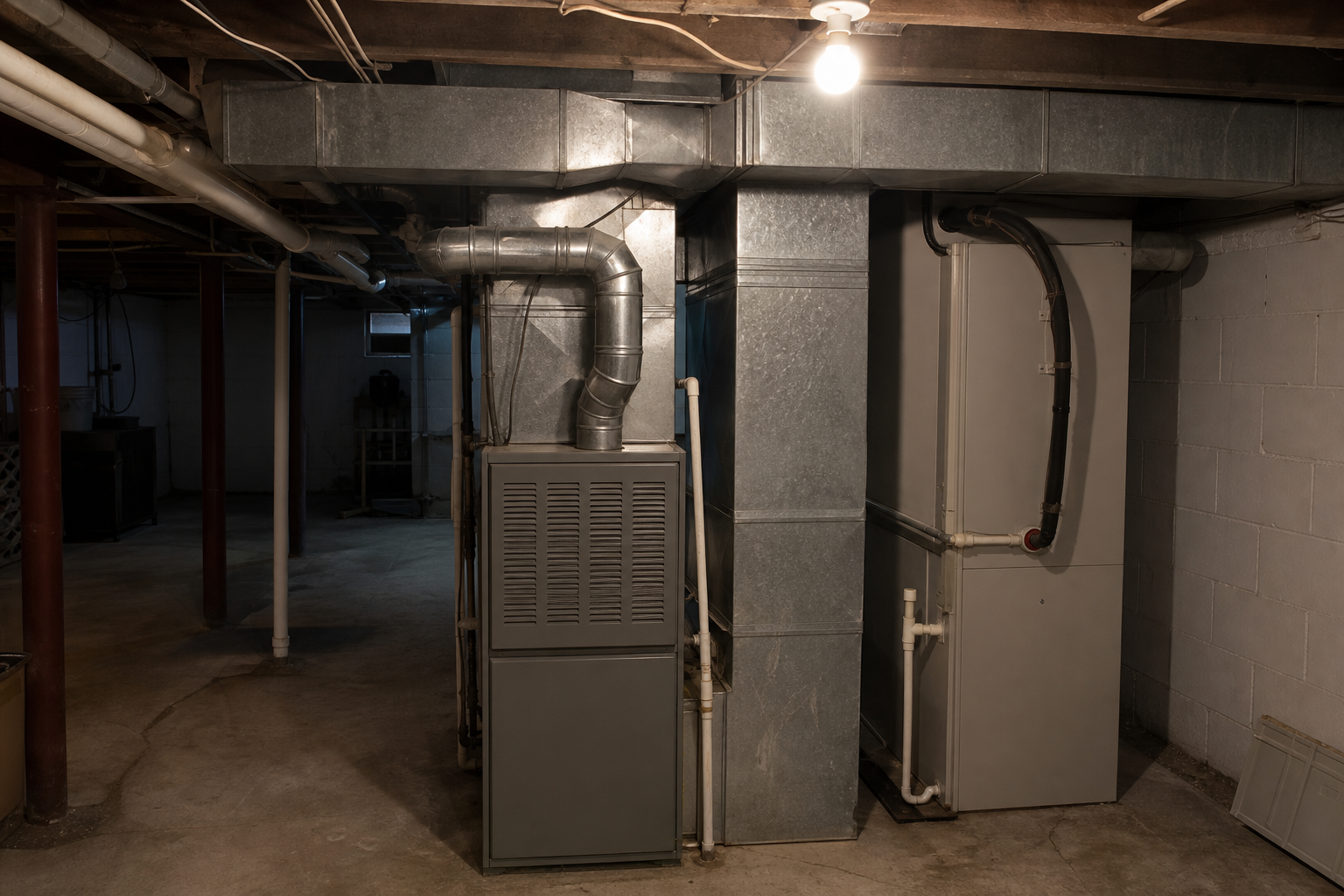
If the indoor coil is in a finished basement and the leak is on the indoor side, those symptoms can show up without anyone connecting them to the AC. The CDC has documented cases of refrigerant inhalation in residential settings.
Kids and pets feel it first because they are lower to the floor and they breathe faster. If you suspect a leak and anyone in the house is feeling off, open a window, get everyone upstairs, and shut the system off at the breaker. Then call. Do not wait it out.
What the EPA Says About Letting It Leak
Most homeowners never hear about the legal piece, but it exists. Section 608 of the Clean Air Act says you cannot knowingly vent refrigerant into the air. That law got written with HVAC techs in mind. The same idea still lands on a homeowner who knows the system is leaking and keeps it running anyway.
Every cycle on a leaky unit pushes more refrigerant out into the atmosphere through whatever hole opened up. R-22 is the worst offender because it eats ozone, which is the reason new equipment stopped using it years ago. The EPA cares enough that techs are required to recover the refrigerant on a service call, never just dump it.
The takeaway for a homeowner is short. Kill power to the unit, get the leak located, get it sealed, then recharge it.
Run that order in reverse and you are paying twice while making the air worse for everybody else on the block.
The “Just Top It Off” Mistake
This is the biggest pattern Sam sees and the one he is most blunt about. A homeowner calls because the AC is not cooling. A contractor shows up, hooks up the gauges, sees the charge is low, adds refrigerant, collects the check, and leaves.
No leak search, no repair, just a top off.
That is not a fix. That is dumping money outside, because every ounce of refrigerant added to a leaking system is going to leak right back out. Sometimes in weeks, sometimes in months, depending on the size of the hole. The homeowner calls back in the middle of the next heat wave and pays for another top off, and the cycle repeats.
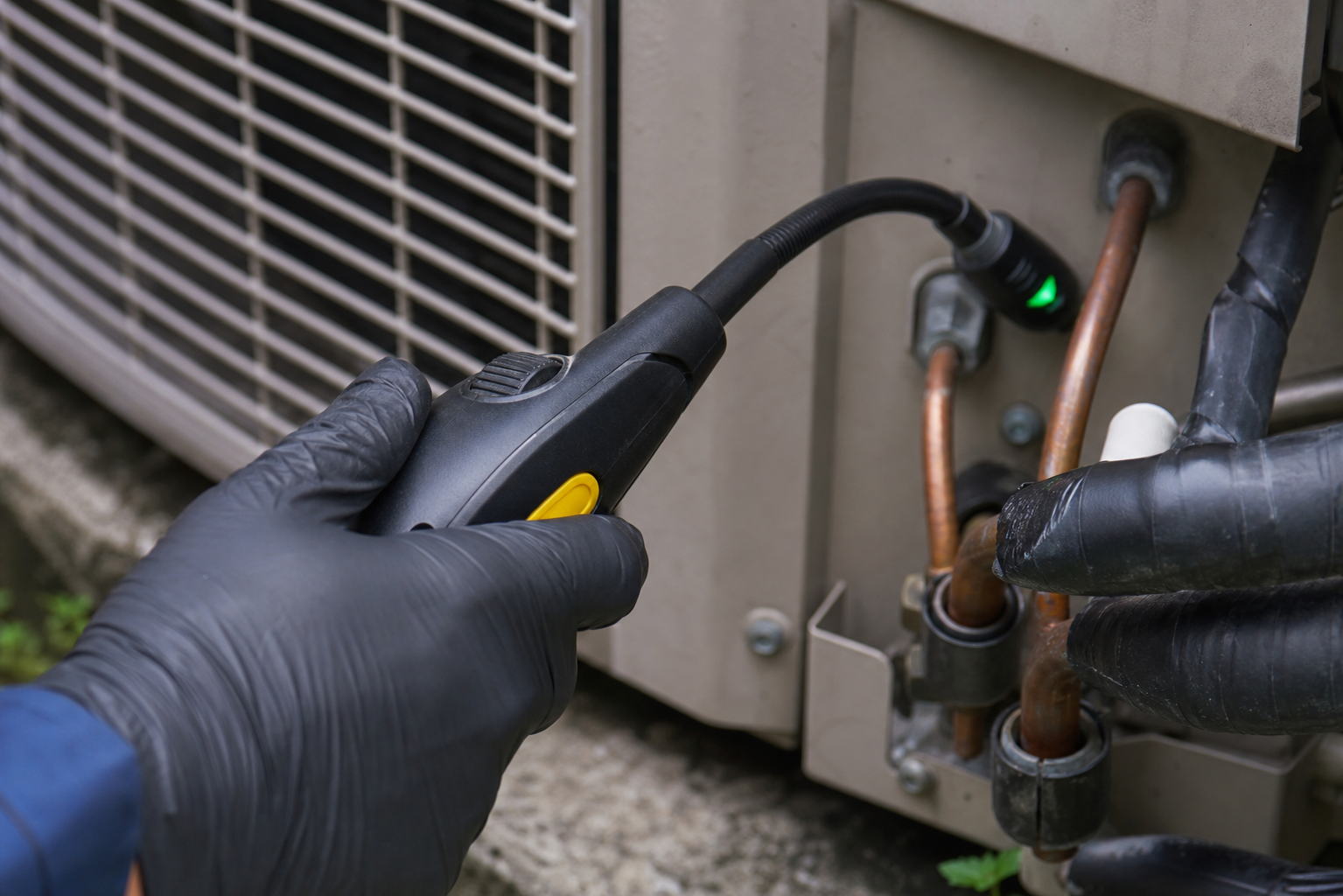
The honest version goes the other direction. Find the leak first using UV dye, an electronic sniffer, or a nitrogen pressure test, then repair the leak. Pull a vacuum on the system to remove moisture and air, then weigh in the correct charge.
That is the sequence on a real repair, and it is the one we use on every job around here.
What an Honest Leak Repair Looks Like
Step one is the diagnosis. A tech checks pressures, looks at superheat and subcooling, then runs leak detection. UV dye gets pulled around joints and the indoor coil. An electronic detector sweeps the line set, fittings, and service valves. On a stubborn leak we will isolate the system and put it under nitrogen pressure to listen for it.
Step two is the call. Some leaks are cheap to fix. A bad Schrader valve, a loose flare, a punctured line, those are straightforward. An evaporator coil with multiple pinholes on an older R-22 system is a different conversation. We tell you what we found and what the realistic options are, including whether it makes sense to repair the older unit at all or put that money into a new system instead.
For R-22 specifically the math gets sharper every year. The refrigerant itself is harder to source and the price keeps climbing. We will give you the straight answer on whether the repair makes sense for your specific unit, not the answer that puts the biggest invoice on your kitchen table.
Step three is the repair, vacuum, and recharge, in that order. Skipping any of them is how you end up calling somebody back next summer.
Why Oakville Homeowners Trust Liberty With Refrigerant Leak Diagnosis
Liberty Heating Cooling & Plumbing has been working on AC systems around South St. Louis County for 27 years. That matters on a leak call specifically because diagnosis is the whole job. Anybody can hook up a set of gauges. Knowing where to look on the housing stock around here, what kind of leaks show up on which equipment, and when an older R-22 system is worth saving versus replacing, that comes from doing the work for a long time.
We are family-owned, licensed, bonded, and insured. We run a 10% senior citizen discount. We answer the phone seven days a week including weekends and holidays, because refrigerant leaks do not wait for Monday morning to get worse. Same-day service is available across South County, plus the Metro East side in Monroe County Illinois.
Sam personally handles the diagnosis on these calls. He will not sell you a top off if the system needs a repair, and he will not push a replacement if the repair makes sense. That is the difference between a one-time invoice and a real long-term customer, and it is how the company has lasted almost three decades. If your AC is acting like it might be leaking, reach out and get a tech on the schedule before the compressor takes the hit.
Think Your AC Might Be Leaking? Here Is What to Do Right Now
If the AC is running but not cooling, or you hear a hiss, or you see frost on the copper, the first step is the easiest. Shut the system off at the thermostat. Do not keep running it hoping it will sort itself out. It will not, and every hour it cycles is more damage to the compressor.
The second step is to get a tech out to find the leak. Liberty Heating Cooling & Plumbing handles leak detection, repair, vacuum, and recharge as one job. We use UV dye, electronic detection, and nitrogen pressure testing depending on what the system needs. If you want to read the federal background on why refrigerant management matters, the EPA’s Section 608 page is the authoritative source.
Call Liberty Heating Cooling & Plumbing at (314) 600-2202 or schedule online. We are available seven days a week including weekends and holidays. Same-day service available throughout South County.