Serving St. Louis & Surrounding Areas

How Do You Know If Your AC Compressor Is Going Bad?
The signs of a bad AC compressor in Oakville usually show up as warm air from the vents, a loud growl from the outdoor unit, a tripped breaker, or a system that hums but never kicks into actual cooling. Those are the symptoms most homeowners notice first. They are real, and any one of them is worth a service call.
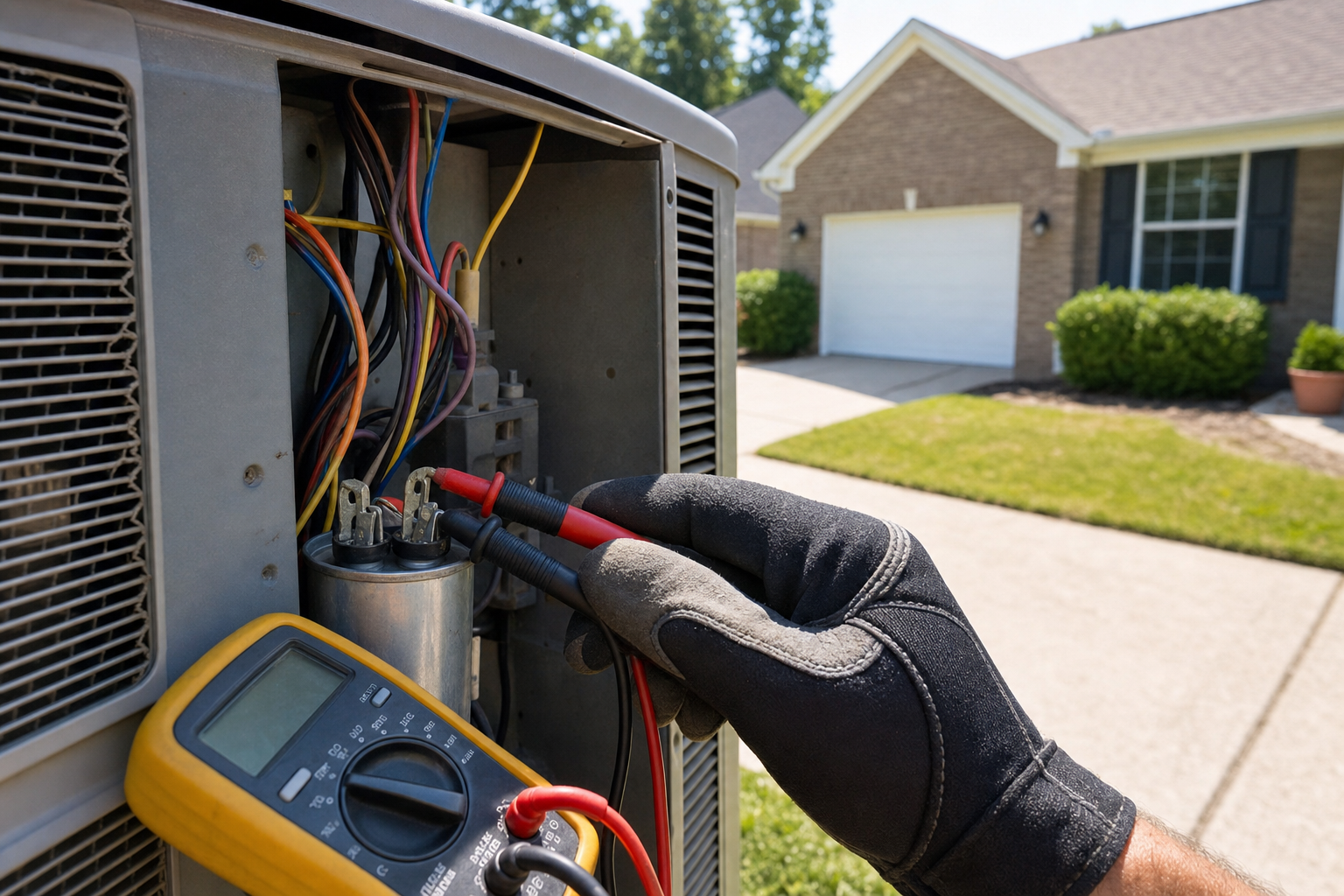
Here is the catch. About half the calls we run for a “dead compressor” turn out to be a bad capacitor or a burned contactor. Both parts cost a fraction of a compressor and take under an hour to swap. If a contractor walks up to your unit, listens for ten seconds, and tells you the compressor is shot, ask them what the capacitor read on a meter. If they did not test it, you do not have a diagnosis yet.
Sam has been running HVAC service across South St. Louis County for twenty-seven years. He has seen every flavor of compressor failure local units throw, and he has also pulled plenty of homeowners out from under bad verdicts that turned into expensive replacements they did not need. If your AC is acting up and you want a straight answer, get it looked at by someone who actually puts a meter on the parts. Liberty’s team handles every call that way, and you can read what a real diagnostic looks like on our Oakville AC repair page.
Here’s everything you need to know about the signs of a bad AC compressor:
- The most common symptoms homeowners notice first
- Why hard starting and dimming lights point at the compressor
- What hot refrigerant lines and silent compressors actually mean
- The capacitor and contactor failures that get misdiagnosed every summer
- When the compressor really is the problem and what to do next
- Why local heat-cycle summers stress compressors harder than most
The Quick List of Symptoms Most Homeowners Notice First
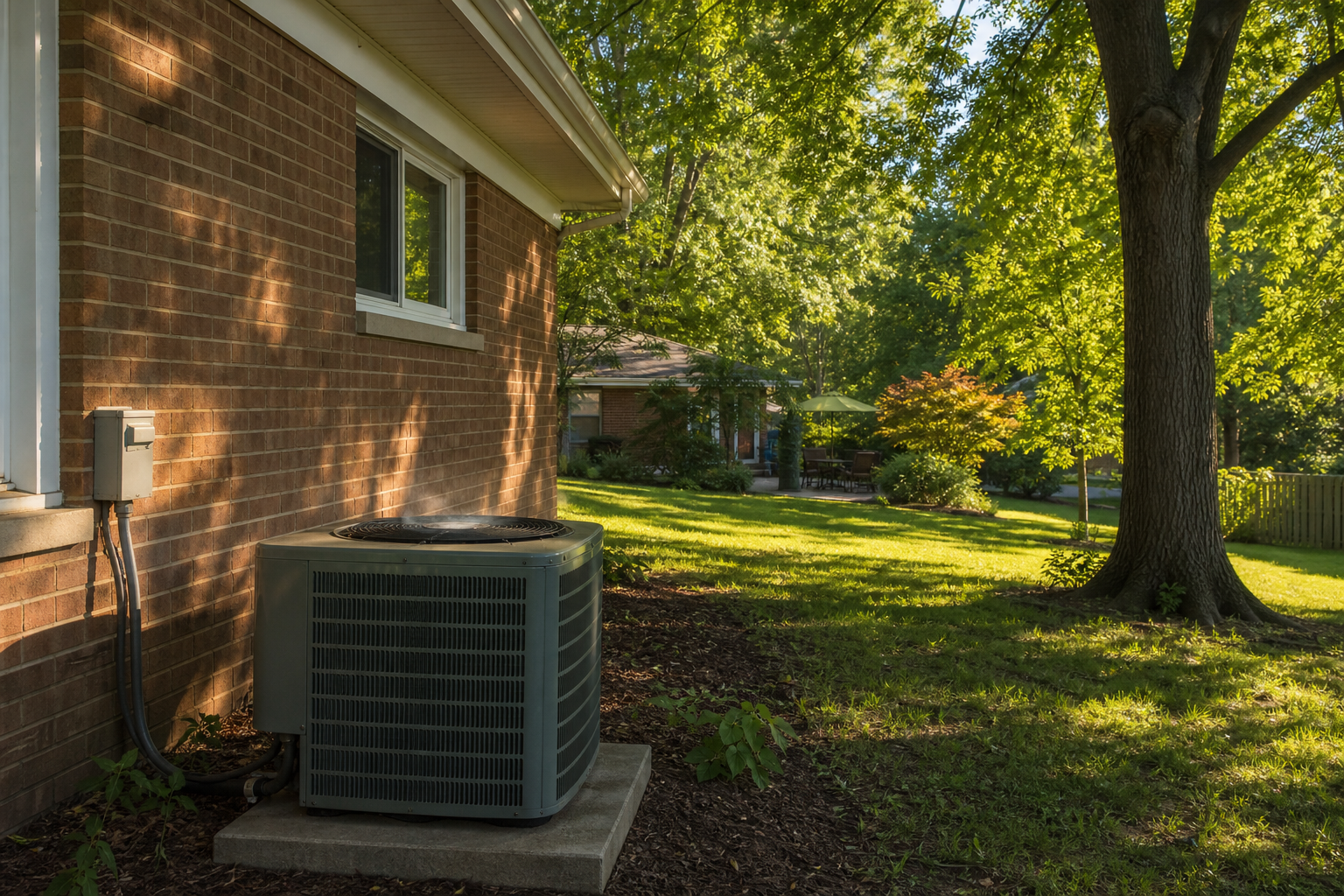
If you are trying to figure out whether your compressor is failing, start with what you can see and hear from outside the house. The outdoor unit is where the compressor lives. That metal box on the side of your home is the spot to walk up to before anything else.
Here is what tends to show up first on a failing compressor:
- Warm air coming from the registers even though the system is running
- A growl, rattle, or clatter from the outdoor unit you have not heard before
- The breaker for the AC tripping once or more in a single day
- Lights in the house dimming for a half second when the unit kicks on
- The outdoor fan spinning fine but no humming, vibrating sound from inside the cabinet
- Refrigerant lines feeling warm or hot to the touch instead of cold and sweaty
Any one of these alone is a maybe. Two or three together is a strong signal something is wrong on the compressor side. None of them prove the compressor itself is dead. They just tell you the system has a real problem and you should not keep running it. Shut it off at the thermostat and get a tech out before the next hot afternoon turns the small problem into a bigger one.
Hard Starting and Dimming Lights Are the Loudest Warning
The clearest tell on a dying compressor is the way it tries to wake up. A healthy one grabs a quick spike of current for a split second and then settles in to run. A sick one drags that spike out for two or three seconds while the motor fights to spin. That long drag is exactly what dims your lamps for a beat when the AC kicks on.
So if your living room lights flicker every single time the unit fires up, do not write it off. The compressor is calling for what techs call locked-rotor amps. That is the current it pulls when the motor inside cannot break loose. A tired capacitor causes the same flicker, which is why this one symptom on its own does not prove the compressor is the thing that is bad.
What the breaker is really telling you
Tripped breakers come from the same place. Compressor pulls too much current, breaker does its job, system goes dark. Flipping the breaker back and running the unit one more time is not a repair. Every hard start chews up a little more of the windings inside the compressor. Stack enough of those starts together and you will turn a capacitor problem that costs almost nothing into a compressor that really is cooked.
About the hard-start kit
Some techs will throw a hard-start kit at an old unit to nurse it through one more summer. Fair enough if you already plan to replace the whole system next spring. Not fair if it is sold to you as the fix without anyone bothering to figure out why the compressor is fighting that hard in the first place. Get the actual cause sorted before you bolt on a workaround.
Hot Refrigerant Lines, Silent Compressor, Warm Air
Walk out to the outdoor unit while the system is calling for cooling. You are looking at three things. The big insulated line should feel cold and a little sweaty. The fan on top should be spinning.
Under all that fan noise, you should also hear a low hum from inside the cabinet itself. That hum is the compressor doing its job.
If the big line feels warm or even hot to the touch, the compressor is either not pumping refrigerant at all or it is pumping it the wrong way. Either is bad. Some failed compressors keep running but lose the ability to actually compress, so refrigerant just flows through without changing temperature. That is why the air at your vents goes warm.
The silent compressor problem
Here is one a lot of folks miss. The fan on the outdoor unit and the compressor are two separate things. The fan can spin happy as can be while the compressor sits there doing nothing.
If you hear the fan but no hum, no vibration through the cabinet, no pulse you can feel with your hand on the metal, the compressor never came on. That is usually a contactor that is not closing or a compressor that has shorted out internally. A meter tells you which one in about five minutes.
Warm air at every register
Warm air at the registers with a running outdoor unit is the symptom that gets reported the most. By itself it points at a dozen possible problems. Paired with a warm suction line and a silent compressor, it points right at the compressor or the parts that feed it power.
The Capacitor and Contactor Failures That Get Misdiagnosed Every Summer
Here is the honest version most companies will not say out loud. A real chunk of the “your compressor is dead” verdicts handed out around here every summer are wrong. The compressor is fine. The cheap part feeding it power has failed, and the tech either did not test it or did not want to.
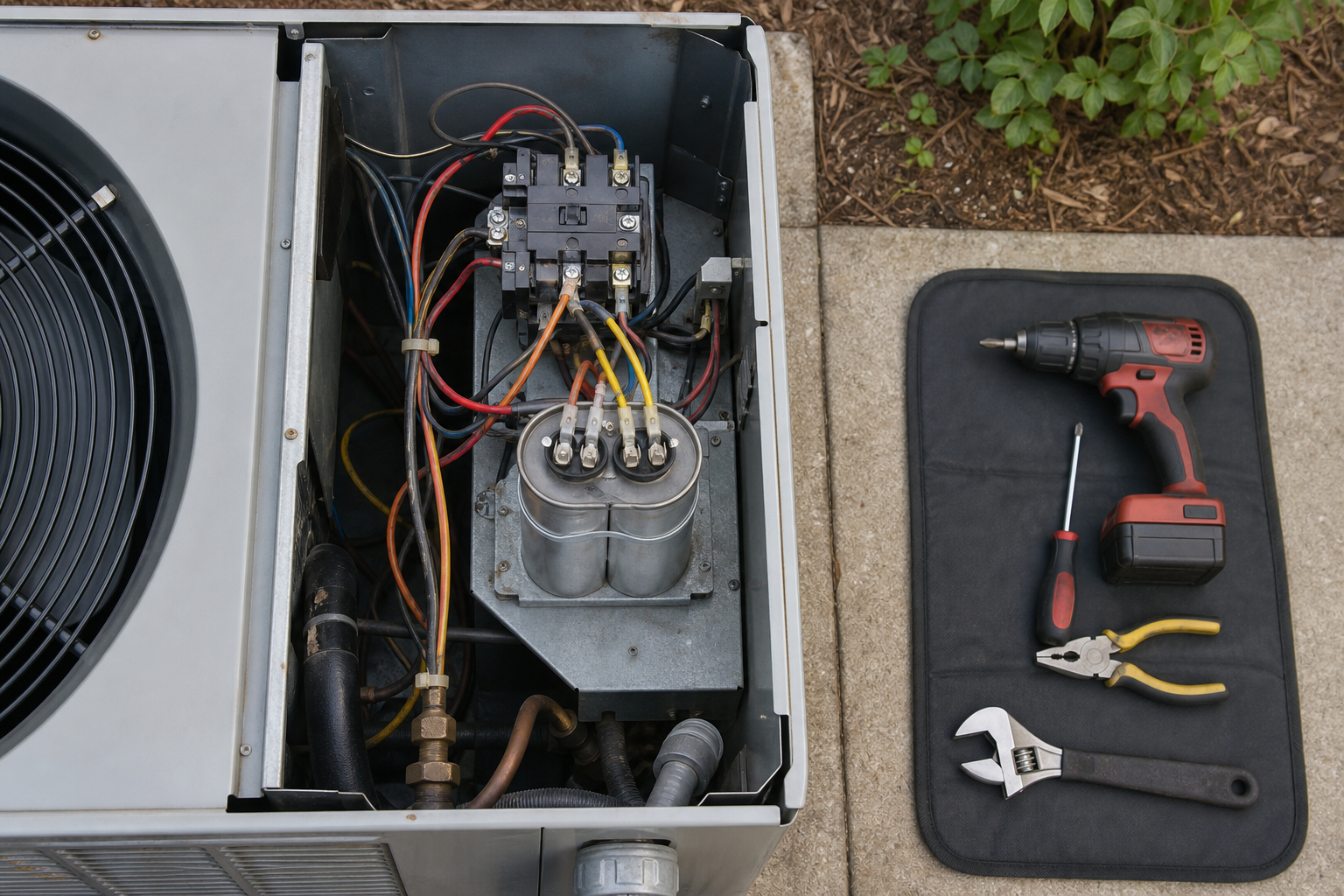
The capacitor is a small can that sits inside the outdoor cabinet. It stores up an electrical kick that the compressor needs to start. When that can weakens or fails outright, the compressor either struggles to start or never starts at all.
Symptoms? Hard starting, tripped breakers, hot lines, warm air, silent compressor. Read that list again. Every single one matches the compressor symptom list almost exactly.
The contactor is the other cheap part that gets blamed on the compressor
A contactor is basically a heavy-duty relay switch. When the thermostat calls for cooling, it tells the contactor to close, which sends power to the compressor. If the contactor is burned, pitted, or stuck, the compressor never gets the signal. You will hear the fan run, you will hear silence from the cabinet, and a lazy diagnosis will call that a dead compressor.
How to know you got a real diagnosis
A real compressor diagnosis takes about thirty minutes with a multimeter and an amp clamp. The tech tests the capacitor reading against its rated value. They check the contactor for continuity and pitting. They put a clamp on the compressor wires and watch the amp draw at startup.
Only after all of that can anyone tell you with a straight face that the compressor itself is the problem. If a contractor declares your compressor dead inside fifteen minutes without touching a meter, get a second opinion. You can book a diagnostic visit with our team and we will tell you what is actually wrong before we quote anything.
When the Compressor Really Is the Problem and What You Should Do
Sometimes the compressor really is the dead part. After the capacitor checks out, the contactor checks out, the refrigerant charge is right, and the amp draw at startup is still ugly, you are looking at internal failure. That is the bad news. The honest news on top of it is that compressor replacement is the expensive repair in the HVAC world. Parts and labor add up fast.
Once a tech confirms the compressor is genuinely shot, you have three real options to think about:
- Replace the compressor only, if the rest of the system is young and healthy
- Replace the outdoor condenser unit, if the system is a mix of newer and older parts
- Replace the whole system, indoor and outdoor, if the unit is past twelve years old or running R-22
That last one matters more around here than most homeowners realize. R-22 refrigerant was phased out years back. If your system still runs R-22 and the compressor fails, repair is technically possible but rarely smart. The refrigerant cost alone has gone through the roof, and any other component that goes next will hit the same wall. Most of the time the math points at full replacement.
Before you sign anything
Ask three questions. What is the age of the unit, in calendar years? What refrigerant does it use? And what is the warranty status on the compressor itself?
Many compressors carry a ten-year parts warranty from the manufacturer, and a lot of homeowners pay for parts they should have gotten free. A contractor worth hiring will check the warranty before they quote.
Why Oakville Homeowners Trust Liberty Heating Cooling & Plumbing with Compressor Calls
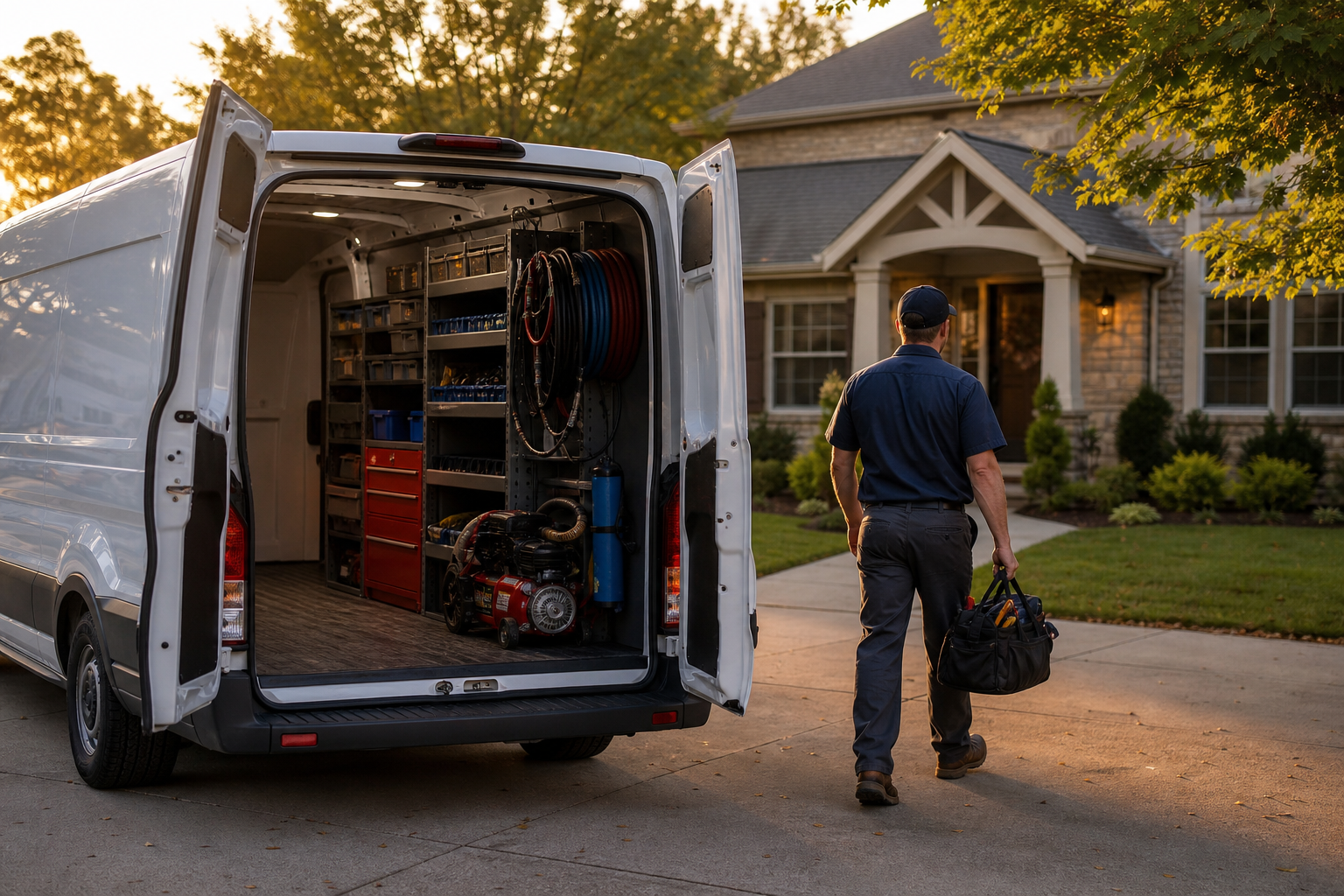
Sam has been turning wrenches on HVAC systems across South St. Louis County for twenty-seven years. Most of the houses we service were built between the seventies and the early two-thousands, and the AC units sitting next to them follow predictable failure patterns. After enough summers, you stop guessing and start reading the patterns. That is what you get when you call us out on a compressor problem.
Every compressor diagnosis starts the same way at Liberty. Capacitor check with a meter. Contactor inspection. Amp draw at startup. Refrigerant pressures on both sides.
Only after those numbers come back do we tell you what is wrong. No fifteen-minute death verdicts. No selling you a compressor when the capacitor was the part that died.
We are licensed, bonded, and insured. We are family-owned and we live in the same neighborhoods we service. Senior citizens get a ten percent discount on every call. We run same-day service when the schedule allows and we work seven days a week including weekends and holidays, because compressors do not wait for Monday morning to quit.
If you want a straight diagnosis from a tech who has seen this exact failure on this exact unit before, that is what we do. Get the full picture of how we handle AC repair calls and what to expect when our truck pulls up.
Think Your AC Compressor Is Failing? Here Is What to Do Next
If your unit is showing two or three of the signs we walked through, do not keep flipping the breaker and hoping it sorts itself out. Each hard-start cycle puts more stress on the compressor windings. The longer you let it limp along, the higher the chance a fixable capacitor problem turns into a five-figure compressor swap.
The right move is to shut the system off at the thermostat and have a tech put a meter on the parts before anything else happens. A real diagnostic visit will tell you in about thirty minutes whether you are looking at a sixty-dollar capacitor or a real compressor failure. Either way, you walk away knowing exactly what is going on instead of guessing.
For background on how a home cooling system is supposed to behave when it is healthy, the U.S. Department of Energy guide to home cooling systems is a solid reference.
Call Liberty Heating Cooling & Plumbing at (314) 600-2202 or schedule online. We’re available seven days a week including weekends and holidays. Same-day diagnostics available throughout South St. Louis County.