Serving St. Louis & Surrounding Areas

At What Temperature Does No AC in St. Louis Become a Real Emergency?
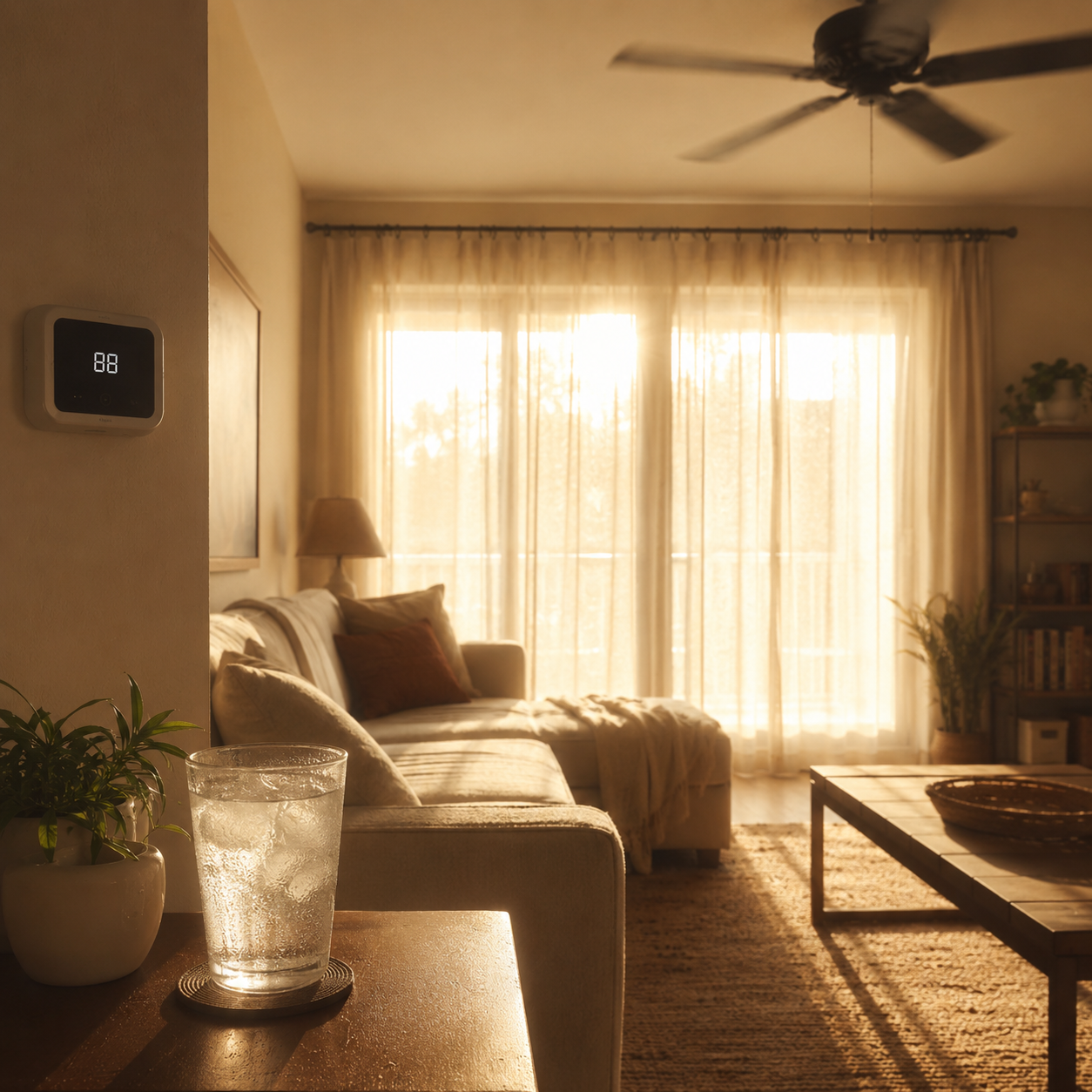
At what temperature is no AC an emergency in St. Louis comes down to who is sitting in the house, not just what the thermostat reads. Healthy adults can usually ride out 85 degrees indoors for a few hours without anything bad happening. An infant, an elderly grandparent, or anyone with a heart or lung condition is in real trouble at 80, especially once the humidity climbs and the body cannot shed heat by sweating anymore.
The honest answer is the people in the room set the threshold, not the wall display. A single number applied to every household is the kind of advice that gets somebody hurt. Outdoor temperature matters too because it controls how fast the indoor reading climbs after the system quits, but the indoor number is what triggers the call.
Sam at Liberty Heating Cooling & Plumbing has been triaging cooling failures in South County for 27 years and uses the same simple rule every time. If somebody fragile is home, the threshold drops. If the heat advisory is on, the threshold drops more. The full diagnostic and dispatch process is laid out on our main cooling repair page for anyone who wants to see how it works.
Here’s everything you need to know about when a dead AC actually counts as an emergency:
- The honest indoor temperature thresholds for healthy versus vulnerable households
- Which people in your house drop the emergency threshold the most
- What to do before the indoor reading hits that danger number
- When a broken AC can safely wait until the next business day
- Why summers around here tighten the margin faster than the national average
- How Sam triages emergency cooling calls and what same-day service looks like
The Honest Temperature Threshold (Indoor vs Outdoor)
For a house full of healthy adults, sitting in 85 degrees for a few hours stinks but it won’t put anyone in the hospital. Hit 88 and things start sliding the wrong way. The body is sweating harder, you stop noticing how much water you’ve lost, and the longer it drags on the worse it gets. Once that indoor reading parks at 90 or higher for a couple of hours, anybody in the house can run into real heat sickness, not just the kids and the older folks.
How fast you get there depends almost entirely on what’s happening outside. A 75 degree afternoon with the AC dead is annoying and not much else, the indoor reading barely moves. A 95 degree day with sticky air? That indoor temp can jump four or five degrees an hour after the system shuts off, faster if the house has weak insulation or those big west-facing windows getting cooked all afternoon.
So here is the cheat sheet most homeowners need. Indoor sitting at 80 with anyone vulnerable in the house, pick up the phone. Indoor at 85 with healthy adults only, you’ve got a few hours to find a tech. Indoor at 90 and still climbing, doesn’t matter who is home, call right now. Those numbers aren’t pulled from thin air, they track how a body actually handles heat trapped inside a closed-up house.
Who In Your House Pushes the Threshold Lower
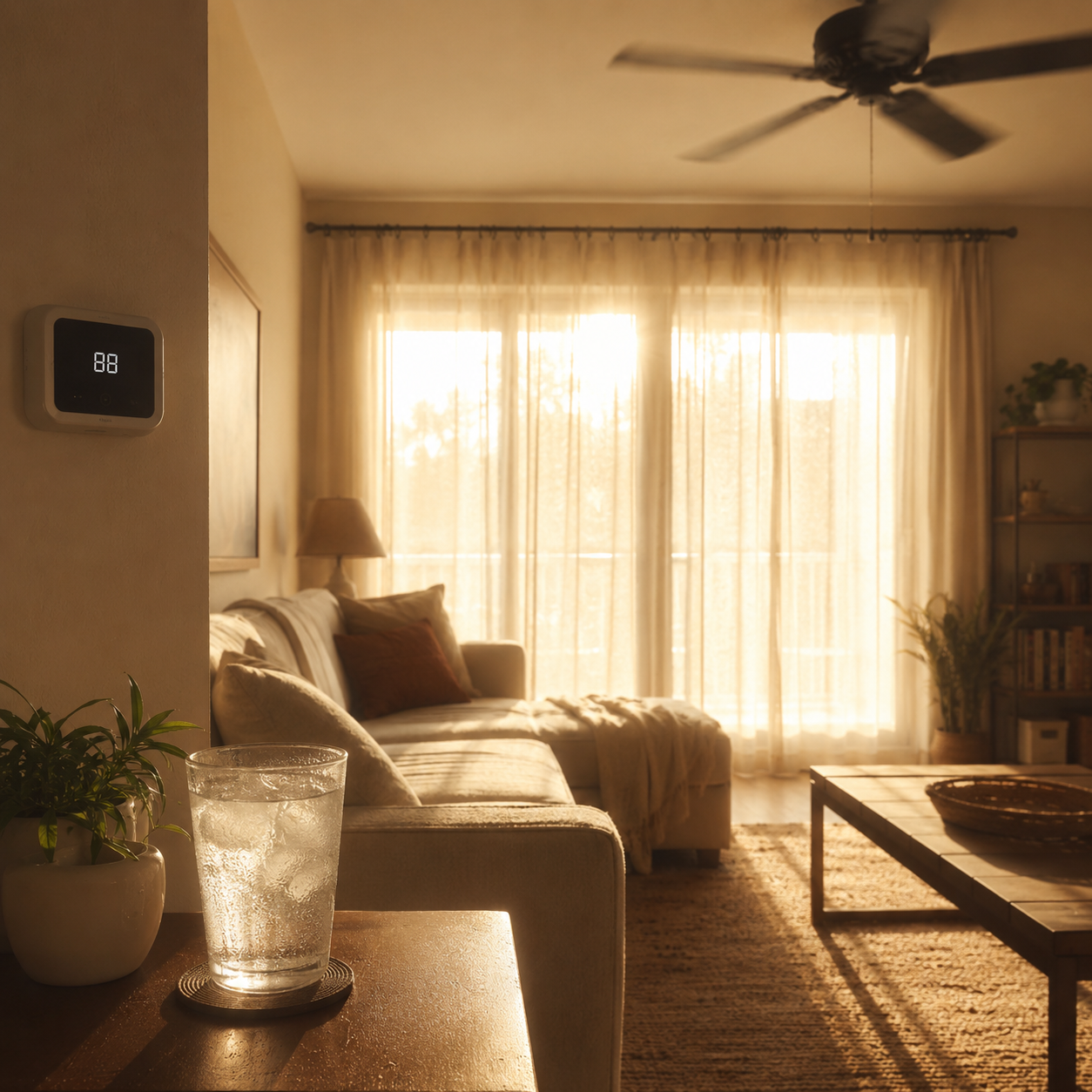
The people in your house set the emergency line, not the thermostat dial. A baby under a year old can’t sweat off heat the way you can, and an overheated infant goes from fussy to in-trouble inside an hour. Same goes for anyone over about 70. The body’s cooling system gets slow with age, and plenty of older folks don’t even feel hot until they’re already woozy. If grandma is dozing on the couch and the AC quits, that emergency threshold drops a solid twenty degrees compared to a single thirty-something living alone in the same house.
Anybody with heart trouble, COPD, or pills that mess with sweating belongs in that same fragile bucket. Beta blockers, some antidepressants, and water pills all make heat hit harder. Pregnant women feel it earlier too because their body is already running a little hot. Not sure if a prescription makes heat worse? Just assume it does and pick up the phone.
Folks with mobility issues who can’t get themselves to a cooler room are another group everybody forgets. If someone can’t walk down to the basement on their own, they’re already in a tough spot the second the house creeps past 80. Same deal for anybody living solo who might not catch on to how hot it has gotten until they’re feeling dizzy. The line isn’t a number, it’s whichever person in the room is the most vulnerable.
What to Do Before Indoor Temp Hits That Number
Before the indoor reading hits that danger number, a few quick moves buy you hours of margin. Drop every blind and curtain on the south and west side of the house. The radiant heat pouring through an unshaded window in the afternoon is what shoves an indoor temp from warm into dangerous, faster than the outdoor air itself. Tape a sheet of cardboard over the worst window if you don’t have a real blind.
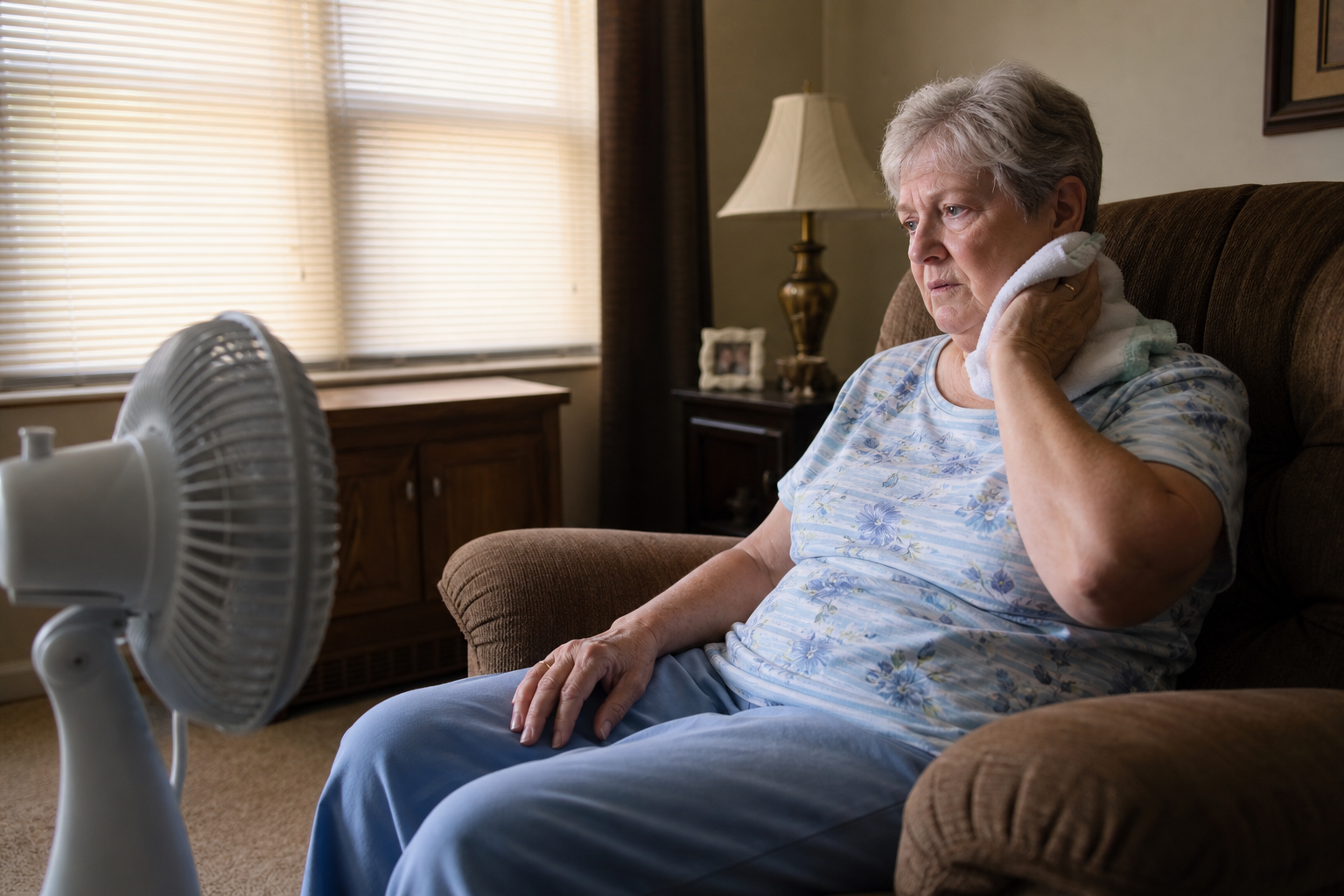
Move the most fragile person into the coolest room you’ve got. Basements run ten to fifteen degrees cooler than the upstairs in most older homes around here, even with the cooling totally dead. No basement? Then pick whatever ground-floor room sits on the shady north side. Run a box fan or two on them. A wet washcloth across the back of the neck or the wrists pulls real heat off the body through the surface blood vessels and works faster than people think. If you want a tech sent out before things slide further, grabbing a same-day diagnostic is the move.
Drink more water than feels right. People in a hot house drink based on thirst, and thirst lags actual dehydration by an hour or two. A glass every thirty minutes even when nobody wants it. Skip the beer and the coffee for now, both pull water back out of you. If the heat advisory is on and the wait for a tech is going to be long, a cooling center beats sitting in an 88-degree living room. Most county libraries and senior centers stay open as walk-in cooling sites on extreme heat days.
When the Temperature Says “Wait Until Morning”
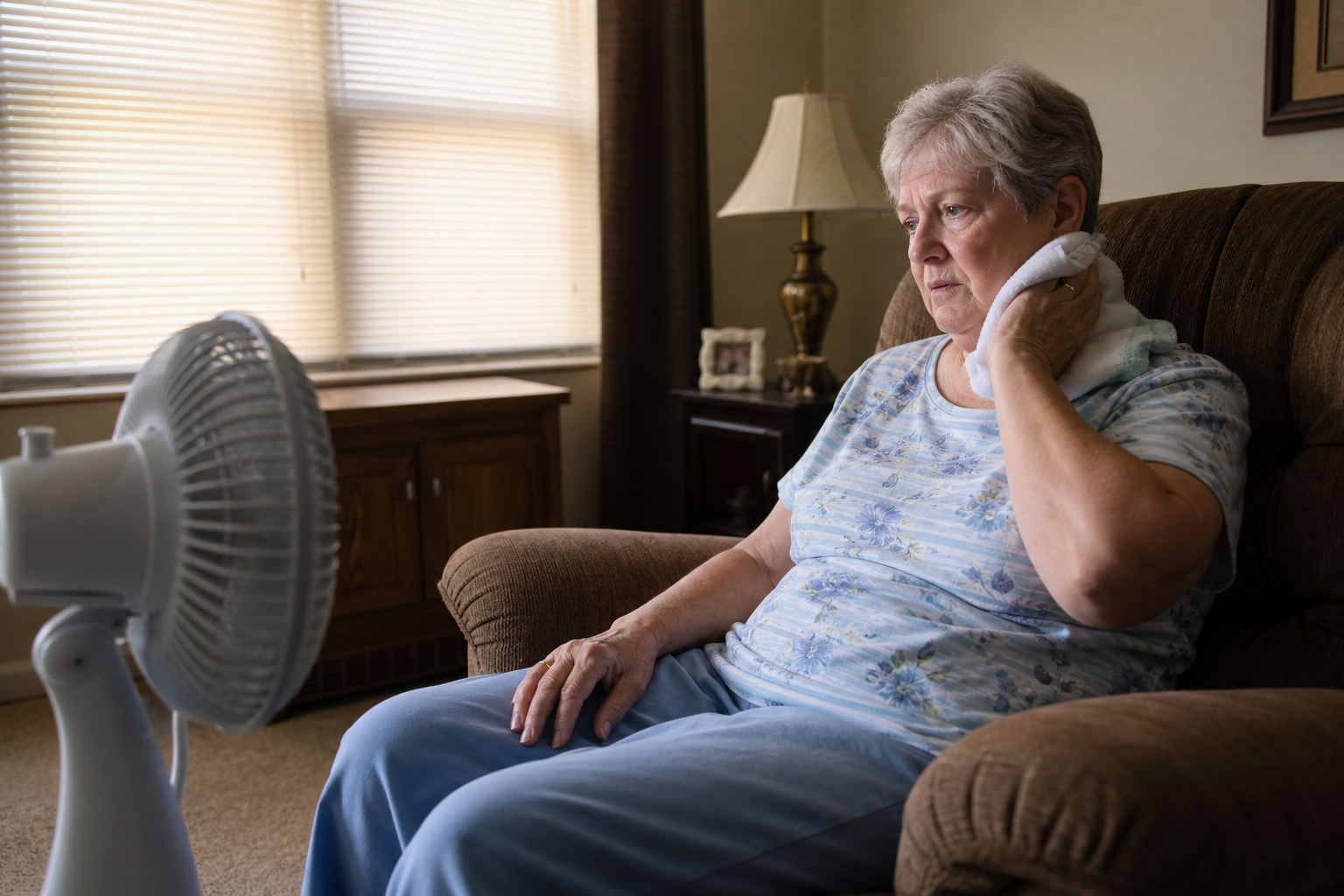
A lot of cooling failures don’t need a midnight phone call. If the outdoor temp is under 85, the indoor reading is hanging around 78 or 80, everybody in the house is healthy, and the forecast for the next morning is mild, you can safely wait. Crack the windows after sundown, point a couple of fans at the bed, sleep in the coolest room you’ve got, and book a regular service call when the office opens. Nobody is at risk and you aren’t paying a premium for after-hours work you didn’t need.
A single warm bedroom is almost never an emergency either. Usually that traces back to a duct issue or a starved return, and both get sorted out during normal business hours. A cheap window unit or a borrowed portable will keep one bedroom livable overnight without much hassle. Same goes for a system that’s still cycling and moving air but running three or four degrees warmer than you’d like. The compressor is alive, the blower is doing its job, refrigerant is moving. That’s a next-day call, not a 10 pm one.
Here’s what nobody wants to admit out loud. Plenty of HVAC shops bill every after-hours phone call as an emergency on purpose because the rate sheet is fatter at 11 pm. Sam doesn’t run that game. If your situation can fairly wait without anybody getting hurt or any water damage stacking up, he will tell you so on the phone and put you on tomorrow’s schedule at the normal rate.
Why St. Louis Summers Tighten the Margin
St. Louis summers don’t behave like the national playbook. We sit in a humidity pocket where the river, the bluffs, and all that asphalt team up to push the heat index past 100 on plenty of July and August afternoons. A forecast of 92 degrees might feel like 106 once humidity gets factored in. That changes how fast the indoor temperature climbs after the system quits, and it changes how fast a body in that house gets into trouble.
Older homes around here carry another wrinkle. A big chunk of the housing stock in South County, Oakville, Mehlville, and the Concord Village stretch was built in the 1950s through the 1970s with skinny attic insulation and original single-pane windows in some rooms. Those homes can lose every bit of cool air inside an hour of the AC dying. A newer subdivision build with double-pane glass and modern insulation might coast for half a day. Knowing which one you’re sitting in changes what threshold you should really be watching.
Heat advisories matter too. The National Weather Service issues them when the combined heat and humidity make outdoor exposure dangerous, and indoor temps follow the same pattern when cooling is broken. On advisory days, lop ten degrees off whatever your usual threshold would be. An indoor 78 on a normal Tuesday is fine. Indoor 78 on a code-red heat day with a baby in the house is not.
Why St. Louis Homeowners Trust Liberty With Emergency Cooling Calls
Sam has been answering cooling failure calls in South County for 27 years, and that kind of run teaches you to triage on the phone before you ever roll a truck. Some calls really can’t wait, and Liberty answers those same-day, seven days a week including weekends and holidays. Other calls can fairly hold until morning, and Sam will tell you so instead of dispatching a tech you don’t actually need yet. The triage starts with the same questions every time: who’s in the house, what does the indoor thermostat read, and what does the outdoor forecast look like for the next twelve hours.
Liberty is licensed, bonded, and insured in Missouri, and family-owned out of the Oakville shop on Ridgetop View Drive. The crew knows the local housing stock from older single-pane homes around Mehlville to the newer subdivisions out toward Arnold. That housing knowledge feeds the triage. A 1960s ranch with thin attic insulation hits a dangerous indoor temperature in two hours flat. A 2005 build with modern windows holds for most of a day. Which one you live in changes the answer.
A 10 percent senior citizen discount applies to every service call, regular hours or otherwise. No fine print, no weekday-only carve-out. If you’re 65 or older and the system quits, the discount stands. If you want to see how Sam’s crew handles the call when you finally pick up the phone, the way our team handles emergency cooling failures is laid out on the main page.
Indoor Temp Climbing Right Now? Here’s How to Get a Technician Out Today
If your indoor temperature is climbing right now and you landed here trying to figure out at what temperature is no AC an emergency in St. Louis, the next move depends on who is in the house and what number you are reading on the wall. Indoor at 80 with anyone vulnerable home, call now. Indoor at 85 with healthy adults only, call within a few hours. Indoor at 90 and still climbing, doesn’t matter who is home, call right now.
Either way, Liberty picks up the phone. Sam runs a fast triage before he sends anybody so you aren’t paying for a truck roll you didn’t actually need. The National Weather Service keeps a solid plain-English breakdown of how heat affects the body and when indoor temperatures become dangerous over at their extreme heat safety page, worth a quick look if you want to understand what is really happening while you wait.
Call Liberty Heating Cooling & Plumbing at (314) 600-2202 or schedule online. We are available seven days a week including weekends and holidays. Same-day service available throughout South County and the Metro East side across the river.