Serving St. Louis & Surrounding Areas

What Maintenance Does Your AC Unit Actually Need Each Year in St. Louis?
What maintenance does an AC unit need in St. Louis? The honest answer is shorter than most companies want you to believe. Three jobs prevent almost every breakdown we get called out for: keeping the coils clean, swapping the filter on schedule, and making sure the condensate drain is clear. Do those three and you have handled the bulk of what keeps a system alive through a Missouri summer.
The rest of the “checklist” you see online is a mix of real but minor steps and outright padding written by people who have never opened a condenser. Some of it matters once a year in a technician’s hands. Some of it is there to make a tune-up sound bigger than it is. The trick is knowing which is which, so you spend your time and money on the parts that actually keep your house cool.
Sam has been doing this in South St. Louis County for 27 years, and the pattern almost never changes. The units that fail in July are the ones nobody touched since the last time they failed. The ones that keep running are the ones that got the basics, on time, every year. If your system is overdue, our team at Liberty can walk you through what it actually needs before anything breaks.
TLDR
- Three jobs prevent most breakdowns: clean coils, a fresh filter, and a clear condensate drain.
- You can safely handle filters, rinsing the outdoor coil, and keeping the drain line clear yourself.
- Refrigerant and electrical work are for a licensed tech by law and for your safety.
- Skipping maintenance quietly raises your power bill and can void your compressor warranty.
- St. Louis summers and older South County systems make an on-schedule service matter more here.
The Annual AC Maintenance Checklist (What Actually Matters)
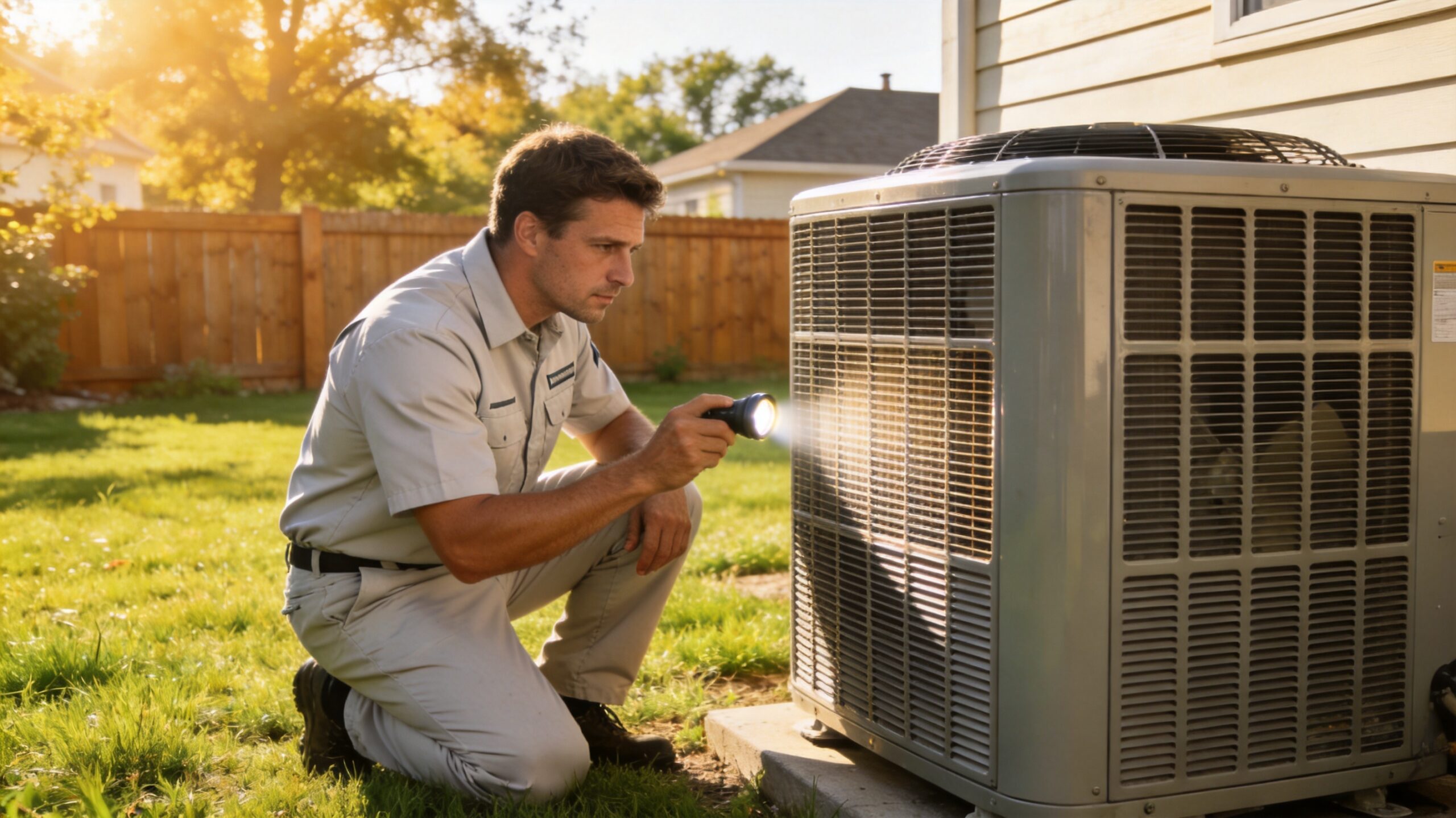
Three things carry most of the weight, and here’s how we know: they’re what we find wrong on nearly every dead unit we pull up to. The outdoor coil, caked in cottonwood and lawn dust, so the system can’t shed heat. The filter, gray and collapsed, choking the airflow until the indoor coil ices over. The condensate drain, plugged solid, water backing up until a little float switch quietly shut the whole thing off. None of that is exotic. It’s just neglect, and it’s most of our summer calls.
Past those three, a real service adds checks you can’t do from the driveway. We read the refrigerant charge, and if it’s low, we tell you straight: low means leaking, and a leak doesn’t heal. We go through the electrical connections and tighten what’s loose, because one lazy wire is all it takes to drop a unit on a 95-degree afternoon. We test the capacitor, which is the first part to quit in heat, and we make sure the thermostat is reading the room instead of guessing.
That’s the list. The twenty-item versions online aren’t lying to you. They’ve just sliced these few real jobs into confetti so the page looks heavier than the work actually is.
The Jobs You Can Safely Do Yourself
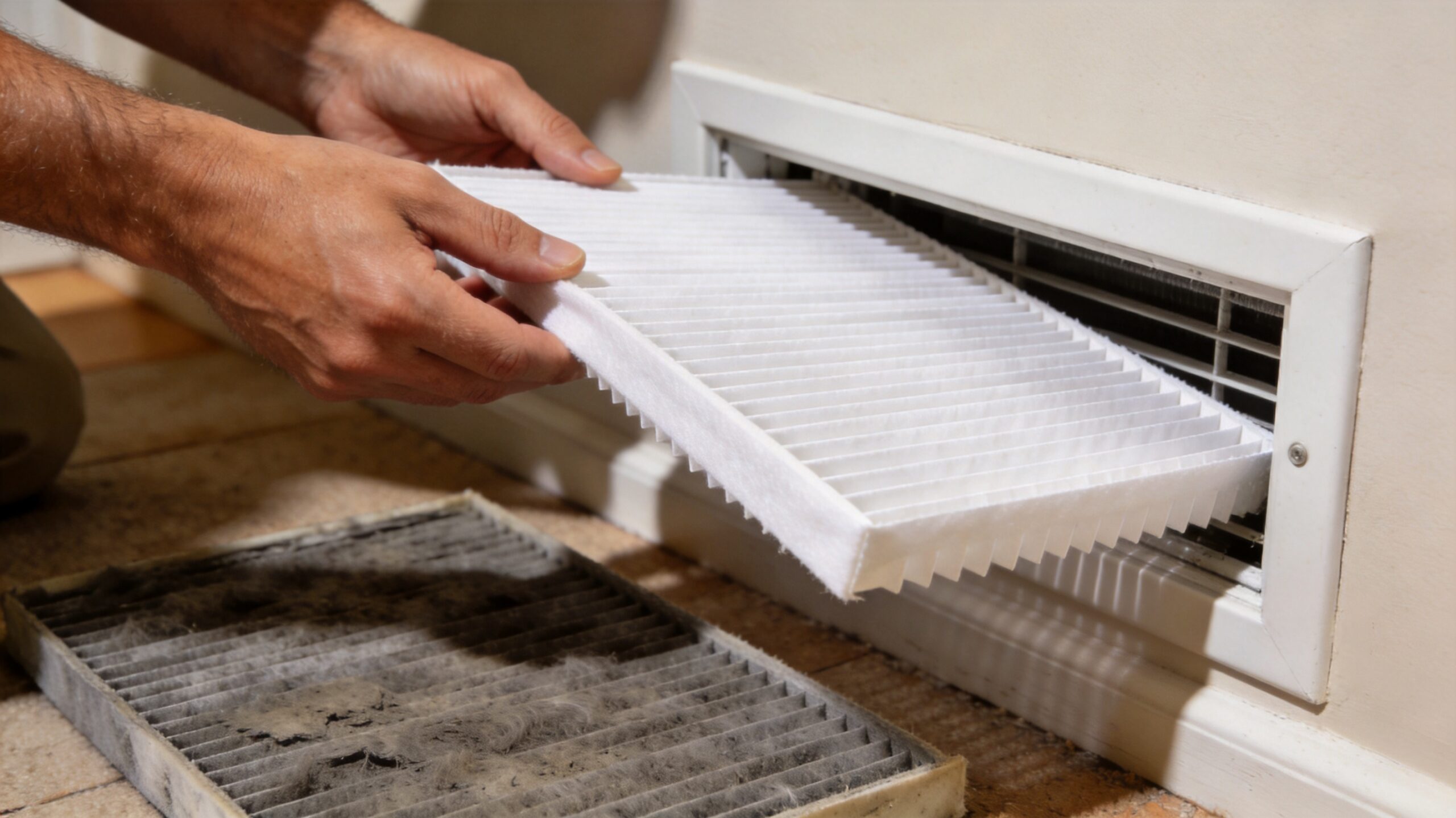
Plenty of this you can handle without us, and you should. The filter is the big one. Pull it once a month in cooling season and hold it up to a light. If you can’t see through it, swap it. A three-dollar filter changed on time prevents more breakdowns than any single thing a homeowner does, and almost nobody does it.
The outdoor unit is next. Cut the power at the disconnect box on the wall beside it, then take a garden hose and rinse the coil from the inside out, gently, top to bottom. You’re flushing out the grass clippings and cottonwood that block airflow. Keep two feet of clear space around the whole cabinet too, so the bushes you planted last spring aren’t slowly strangling it.
Last, glance at the condensate drain line, that little PVC pipe dripping near the indoor unit. If it’s not dripping when the AC runs, it may be clogging. A cup of vinegar poured down the access port a couple times a season keeps the gunk from growing. That’s the honest DIY list. Notice what’s not on it: anything with refrigerant, anything electrical, anything behind a panel that needs a screwdriver. We’ll get to why in a minute.
The Jobs That Need a Licensed Technician
Here’s where the line is, and it’s not about gatekeeping. It’s about a couple of things that genuinely hurt people. Refrigerant is the first. Topping off a system or chasing a leak takes EPA certification by law, and there’s a reason for that. The stuff freezes skin on contact and you can’t legally buy the good kind without a license anyway. If your AC is low, somebody trained needs to find the leak, not just dump more in and call it fixed.
Electrical is the second. The capacitor inside your condenser stores a charge big enough to put you on the ground, and it holds that charge even after you’ve cut the power and walked away. We discharge them with a tool for a reason. Same goes for the contactor, the control board, and the wiring that ties it all together. A loose connection is a fire risk, and diagnosing one means knowing what you’re looking at.
Then there’s the stuff that just takes experience to read. A compressor that’s starting to fail makes a specific sound. A coil that freezes for one reason looks different from a coil that freezes for another. Twenty-seven years in South St. Louis County means Sam has seen the same handful of failures a few thousand times. That pattern recognition is most of what you’re paying for, and it’s the part no video teaches. When you hit that wall, our team can take it from where your toolkit stops.

What Skipping Maintenance Actually Costs You
The math on skipping maintenance is worse than people think, because the damage compounds quietly. A dirty coil doesn’t break your AC on day one. It just makes it work harder, run longer, and pull more power to deliver less cooling. You pay for that twice, once on the electric bill every month and again in the years it shaves off the compressor from running hot.
Then there’s the failure that the small stuff sets up. A clogged filter starves airflow, the indoor coil freezes, the system runs with ice on it, and now you’re looking at a frozen-up unit on the hottest week of the year. Or the condensate drain backs up, water finds your ceiling, and a fifteen-minute drain cleaning becomes a drywall repair. None of these start big. They start as the thing nobody got around to.
The part that stings most is the warranty. Most manufacturers require proof of annual professional maintenance to honor the coverage on your compressor. Skip the service, and when the expensive part fails at year eight, you find out the coverage you were counting on is void. We’ve watched homeowners learn that the hard way, holding a repair quote they thought somebody else was supposed to pay.
Why South St. Louis County Homes Need It On Schedule
Our summers here don’t ease a system in gently. We go from mild to brutal in a couple of weeks, and a Missouri July leans on an air conditioner harder than the spec sheet ever assumed. A unit that was coasting through May suddenly runs most of the day and half the night, and every weak spot you ignored over the winter shows up at once.
The housing stock matters too. A lot of South County homes are running systems that were sized and installed decades ago, and the older a unit gets, the less slack it has. A new condenser can shrug off a skipped year. A fifteen-year-old one is living on the margin, and the maintenance is what keeps it on the right side of that margin through another summer.
There’s also the cottonwood. Anybody who’s lived here knows what late spring does to an outdoor coil, that fuzz packing into the fins until the unit can barely breathe. If you only clean that coil once a year, the timing is everything: do it heading into summer, not after the heat already cooked the system trying to push heat through a clogged coil. Local conditions are the whole reason a generic national maintenance schedule doesn’t quite fit here.
Why St. Louis Homeowners Trust Liberty With Annual AC Maintenance
What sets a maintenance visit apart isn’t the checklist, it’s whether the person holding it actually knows your kind of system. Sam has spent 27 years on South St. Louis County homes specifically, which means he’s not learning your aging condenser on the fly. He’s seen its exact failure pattern hundreds of times and knows what to catch before it strands you in July.
Liberty is family-owned, licensed, bonded, and insured, and we run maintenance the way we’d want it run on our own homes: the real checklist, done in full, with a straight answer about what your system actually needs and what it doesn’t. No invented problems, no padded tune-up. If something’s wearing out, we’ll show you. If it’s fine, we’ll tell you that too.
We’re available seven days a week, including weekends and holidays, and we offer a 10 percent discount for senior citizens. If you’ve been meaning to get your system looked at before the heat sets in, scheduling a maintenance visit with our team is the simplest way to head off the breakdown you’d otherwise meet at the worst possible time.

Is Your AC Overdue for Maintenance? Here’s How to Get It On the Calendar
If you can’t remember the last time anyone serviced your system, that’s your answer, and you’ve got time to fix it before the heat makes it urgent. Knowing what maintenance an AC unit needs in St. Louis is one thing; getting it done on schedule is what actually keeps you cool. The right move is to handle it now, in the calm before summer, not during the first 95-degree week when every HVAC company in town is buried.
A good maintenance visit is the cheapest insurance you’ll buy all year. It catches the worn capacitor, the low refrigerant, the clogging drain while they’re still small, instead of after they’ve taken the whole system down with them. If you want to understand the standards behind a proper service, the U.S. Department of Energy lays out the fundamentals of air conditioner maintenance in plain terms.
Call Liberty Heating Cooling & Plumbing at (314) 600-2202 or schedule online. We’re available seven days a week including weekends and holidays, with same-day availability throughout Oakville and South St. Louis County.
ARTICLE SCHEMA (Article only — NO BreadcrumbList per Liberty PAA rules; Rank Math auto-emits 2-level Home → Article)