Serving St. Louis & Surrounding Areas

Can You Service Your Own AC in St. Louis, or Should You Call a Pro?
Can you service your own AC in St. Louis? Partly, yes, and you should, because the easy stuff genuinely keeps your system healthy and almost nobody bothers with it. But there’s a hard line between the maintenance that’s smart to do yourself and the repairs that are illegal, dangerous, or both. Knowing where that line sits is the whole game.
The honest split looks like this. Filters, coil rinsing, keeping the unit clear, flushing the drain line, all yours, all safe, all worth doing. Refrigerant, electrical, anything behind a panel that holds a charge, those belong to someone trained and licensed, and not because of some guild rule. Because they can hurt you or wreck the system.
Sam has spent 27 years in South St. Louis County cleaning up after well-meaning DIY jobs that crossed that line, and the pattern is always the same. So before you grab a screwdriver, here’s exactly what you can handle and where you should stop and let our team take it from there.
TLDR
- You can safely DIY filters, rinsing the outdoor coil, clearing the drain, and keeping the unit clear.
- A simple routine is a monthly filter check plus one bigger spring cleaning pass.
- Refrigerant is illegal to handle without EPA certification, so a low system needs a pro.
- Capacitors and electrical parts hold a lethal charge even with the power off, so don’t touch them.
- DIY costs more when you guess wrong on parts or skip the diagnostics only a pro can do.
What You Can Safely Do Yourself (The Real DIY List)
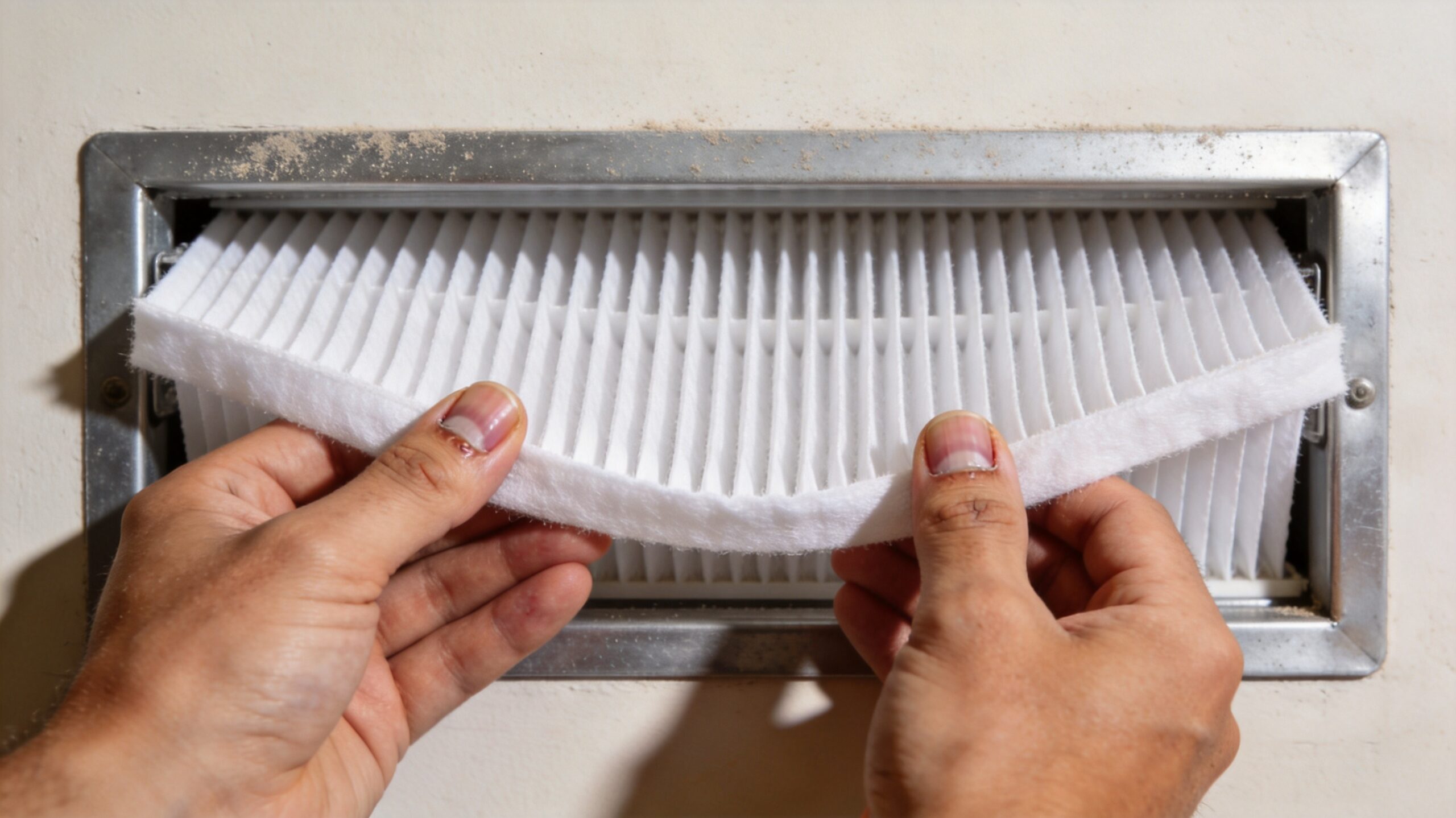
Plenty of AC care is genuinely homeowner territory, and doing it well makes a real difference. The filter tops the list. Pull it monthly during cooling season, hold it to the light, and if you can’t see through it, replace it. A cheap filter changed on time prevents more breakdowns than almost anything else you can do, and it costs less than lunch.
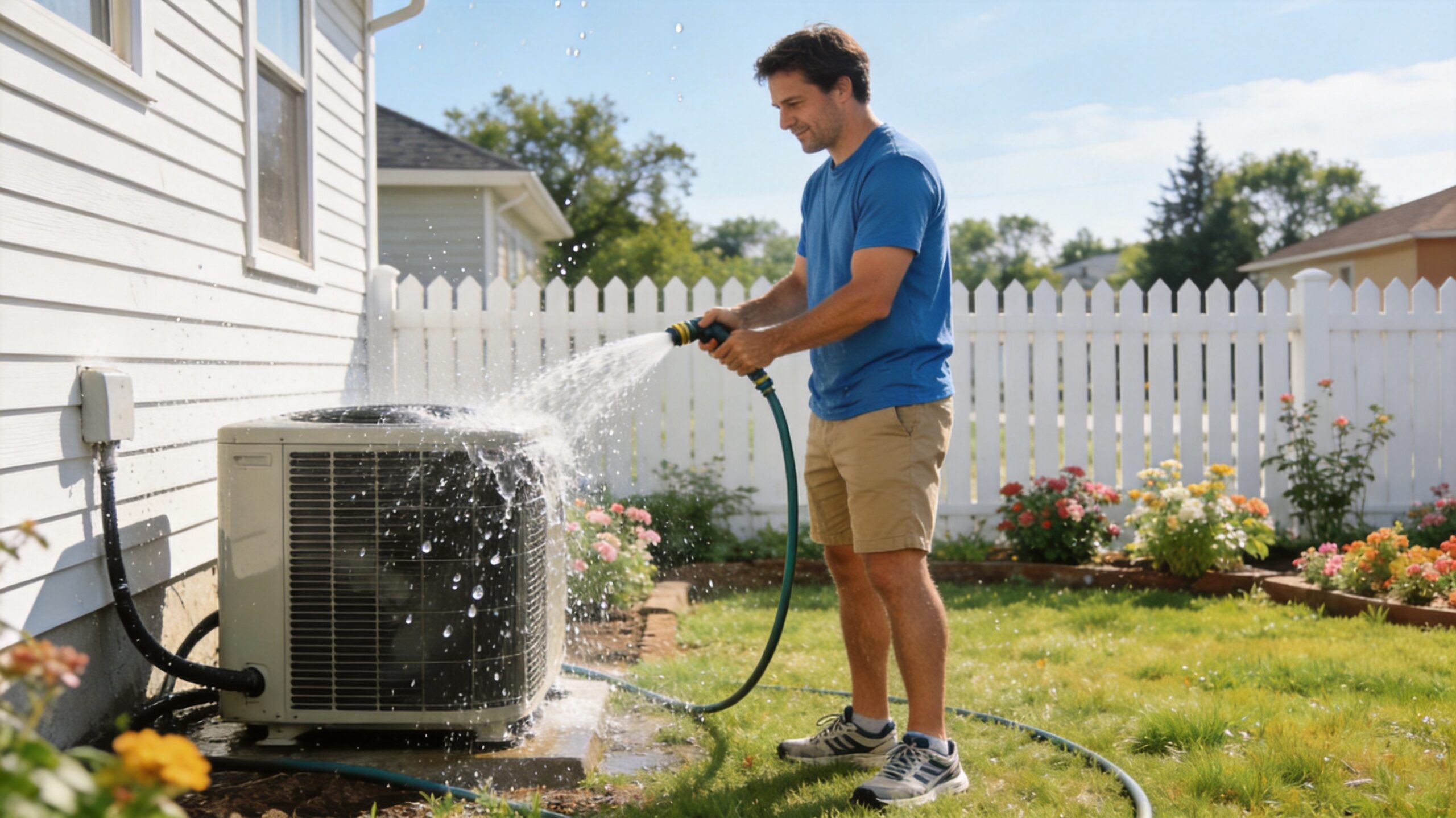
Next is the outdoor unit. With the power cut at the disconnect, you can rinse the condenser coil gently with a garden hose, top to bottom, washing out the grass clippings and cottonwood that block airflow. Keep a couple feet of clearance around the whole cabinet so plants aren’t choking it. That’s safe, simple, and it directly lowers how hard your system has to work.
Last, the condensate drain. A little vinegar poured down the access port a few times a season keeps algae from clogging the line. None of these jobs need tools you don’t own or knowledge you don’t have. They’re the honest DIY list, and they’re the homeowner half of what maintenance your unit actually needs.
The 30-Minute Homeowner Maintenance Routine
Here’s how to put it together into something you’ll actually do. Set a reminder for the first of each month during cooling season. Walk out to the indoor unit, pull the filter, check it, swap if needed. Two minutes, tops. That alone is most of the battle.
Then, once in spring, give it the bigger pass. Cut power to the outdoor unit at the disconnect box on the wall beside it. Rinse the coil down with the hose until the water runs clear off the fins. Trim back anything growing within a couple feet of the cabinet. Pour your vinegar down the drain line. Glance at the line while the system runs later to confirm it’s dripping like it should. Restore power, and you’re done.
That’s the whole routine, and it takes about half an hour once a year plus a two-minute filter check each month. Do that much and you’ve handled everything a homeowner reasonably can. The rest, by design, needs somebody with a license and a meter.
What You Are Legally Not Allowed to Touch
This is the part the DIY videos skip, and it’s the part that matters most. Refrigerant is regulated by federal law. Under EPA Section 608, you need certification to buy or handle it, and that rule exists because the stuff is genuinely hazardous and because venting it is illegal. If your system is low, you cannot legally top it off yourself, and even if you found a way, you’d just be feeding a leak nobody found.
So when a system is low on refrigerant, that’s a hard stop. It needs a licensed tech, not because we’re protecting our turf, but because the law and the physics both say so. The right move is finding the leak, not adding more and hoping.
The takeaway is simple. Anything involving refrigerant lines, recharging, or recovery is off-limits to a homeowner, full stop. Cross that line and you’re looking at a federal violation on top of a problem you probably made worse. This is exactly where the DIY list ends and the professional one begins.
The Repairs That Send DIYers to the Hospital (or the Replacement Aisle)
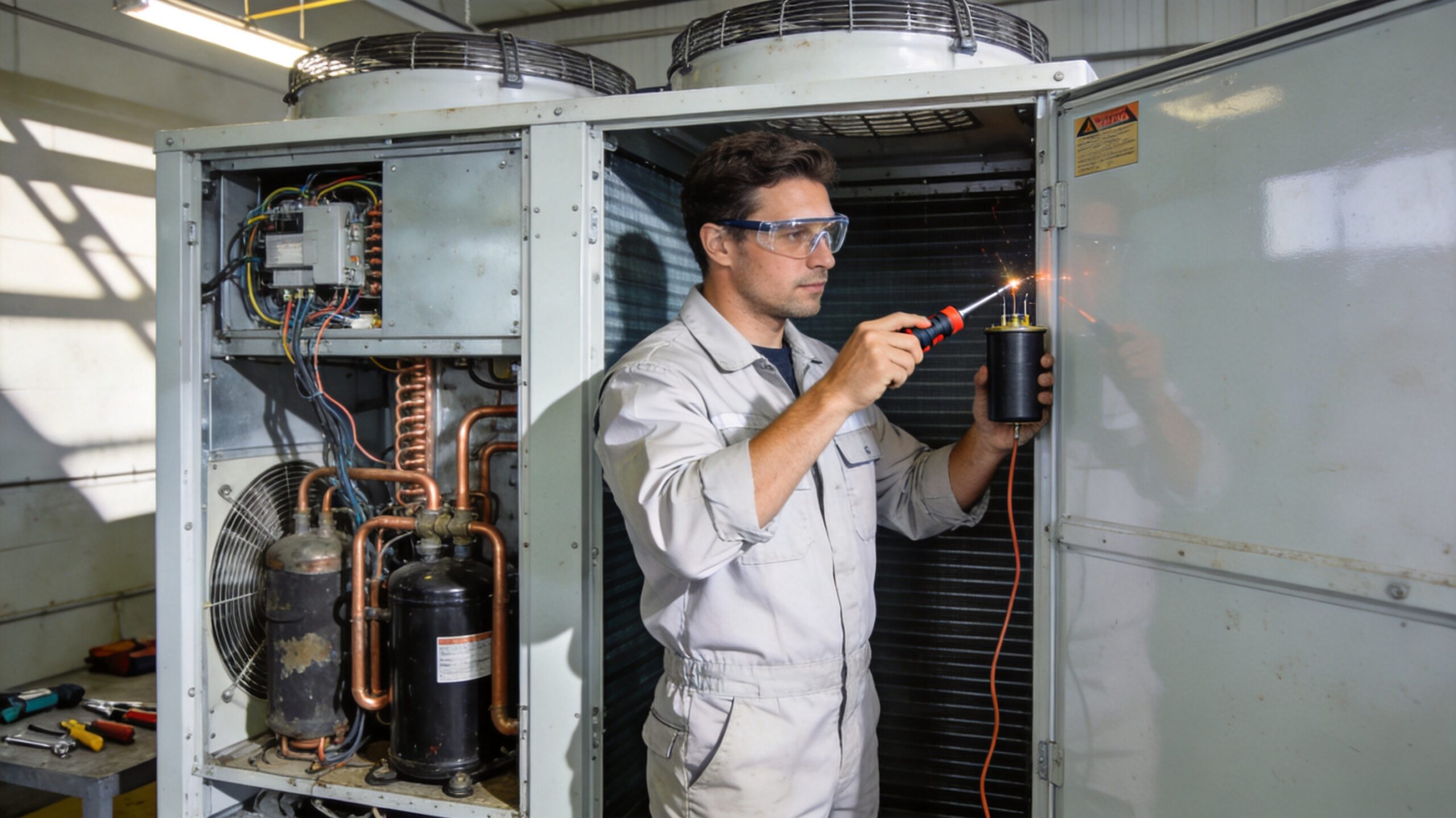
Electrical is where good intentions turn into emergency-room visits. The capacitor inside your condenser stores a charge big enough to drop a grown adult, and it holds that charge even after you’ve killed the power and walked away. People assume unplugged means safe. It doesn’t. We discharge capacitors with a tool every single time for exactly that reason.
The damage you can do to the system is just as real. A wrong wire on the contactor, a control board shorted by a slip of the screwdriver, a compressor wired backward, any of these can turn a small problem into a replacement. We’ve watched homeowners chase a forty-dollar part and end up needing a whole unit because one mistake cascaded.
So the rule on anything electrical is the same as refrigerant: stop. Capacitors, contactors, control boards, and the wiring that ties them together all hold a charge, a fire risk, or a chance to fry something expensive. Reading those parts safely takes training and the right meter, and that’s genuinely worth paying for.
When DIY Costs More Than Calling a Pro
There’s a point where doing it yourself stops saving money and starts burning it, and it sneaks up on people. The classic version is the homeowner who buys a part off the internet, guesses at the diagnosis, swaps it, and finds the problem was something else entirely. Now they’ve spent the money, lost the weekend, and still have to call us, except now we’re also undoing whatever got disturbed.
The other version is subtler. Skipping a real professional service to save a little, year after year, until the small stuff nobody caught adds up to a dead compressor. The DIY filter changes were great. They just weren’t a substitute for the diagnostic checks that need a meter and trained eyes.
The honest framing is this: do the safe maintenance yourself and do it faithfully, because it genuinely helps. But the moment a job needs refrigerant, electrical work, or a real diagnosis, calling a pro is the cheaper path, not the expensive one. Knowing when to stop is its own kind of skill, and it’s the one that protects your wallet.
Why St. Louis Homeowners Trust Liberty With What They Can’t DIY
What people appreciate is that we tell them the truth about the line, including the parts they can handle without us. We’d rather you change your own filters and rinse your own coil than pay us for it. That’s not us turning down work. That’s us being straight, because a homeowner who handles the easy stuff has a healthier system and fewer emergencies, which is better for everyone.
When a job does cross into refrigerant or electrical, Sam’s 27 years in South St. Louis County mean it gets handled right the first time. Liberty is family-owned, licensed, bonded, and insured, and we carry the certification the law requires for the work you legally can’t do yourself. That’s the whole point of the line: some of this is yours, and some of it is genuinely ours.
We keep it fair, too. Seniors get a 10 percent discount, and everything is quoted upfront before any work starts. When you hit the edge of what you can safely do, our team is ready to pick it up from there.

Hit the Limit of What You Can Do Yourself? Here’s the Next Step
So you’ve swapped the filter and hosed down the coil, and the thing is still acting up. Maybe it’s low on refrigerant. Maybe something electrical smells a little off. Whatever it is, you’ve reached the line, and this is the right moment to hand it off rather than push your luck. Past that point, the money and the risk both climb in a hurry.
Curious about the refrigerant rules from the people who write them? The Environmental Protection Agency spells out why you need certification just to touch the stuff. And when you’re ready to let a licensed tech take the jobs you legally can’t, call Liberty Heating Cooling & Plumbing at (314) 600-2202 or book online. There’s someone around all seven days, weekends and holidays included, with same-day service throughout Oakville and South St. Louis County.