Serving St. Louis & Surrounding Areas

Water Heater Installation in Oakville, MO: When to Replace It and What the Day Looks Like
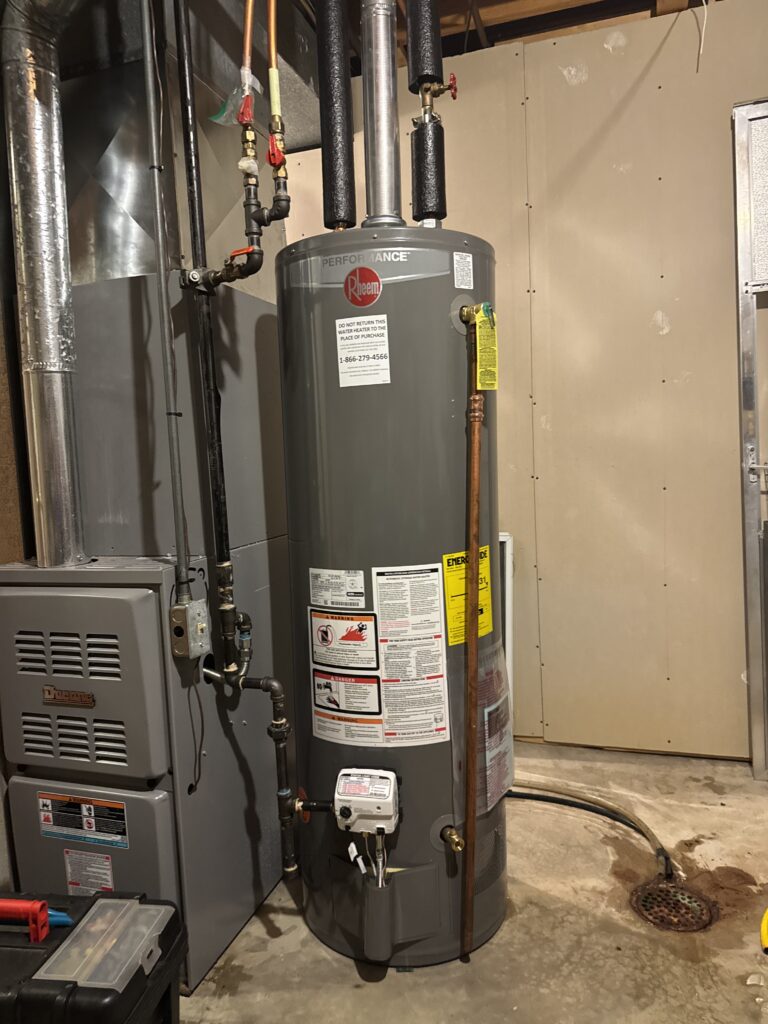
Water heater installation in Oakville usually starts with a decision, not a delivery. Your tank is leaking, or the hot water quit, or it’s just old and you’re nervous. Before anything gets hauled up the basement stairs, somebody has to tell you straight whether it needs fixing or replacing.
TLDR:
- If the tank itself is leaking, it can’t be fixed. It needs replacing.
- Most tank water heaters last somewhere around 8 to 12 years.
- We match gas to gas and electric to electric unless you ask for a change.
- You get a firm price before any work starts.
- Call (314) 600-2202 and Sam will tell you which way he’d go.
That’s how Sam Marsala runs it. Sam owns Liberty Heating Cooling and Plumbing and has been in the trade since 1998. He’ll tell you when a part will get you a few more good years, and he’ll tell you when it won’t.
Most of our water heater work is in South St. Louis County, out of our shop in Oakville. A lot of homes around here still have the heater sitting in an unfinished basement next to the furnace, sharing the same chimney. That setup matters when it’s time to swap, and we’ll get to why below.
A 13-Year-Old Tank, a Straight Answer, and Hot Water the Next Day
One customer found us on Angi and called about an old water heater. Sam called back fast and gave a rough estimate over the phone, just from what they told him.
He was honest about the choice. They could repair it or replace it. Since the heater was over 13 years old, they decided to replace it. Sam showed up when he said he would, went over the price and the plan again, and had the new one in faster than they expected.
That’s the normal pace for us. Another customer wrote that Sam replaced their water heater within a matter of hours from the first time they talked. Most of the time, if the tank is a standard size, we can get it swapped the same day or the next.
Signs Your Water Heater Is Done (and the One That Means Stop Waiting)
Some problems are worth fixing. A pilot that won’t stay lit or a burned-out element is usually a repair, and our page on getting hot water back without buying a new tank walks through those.
These signs point the other way:
- Water pooling under the tank. If it’s coming from the tank body, not a valve or a pipe fitting, the steel inside has rusted through. There’s no patch for that.
- Rusty or brown hot water. If only the hot side looks rusty, the inside of the tank is likely breaking down.
- Loud popping or rumbling. That’s years of sediment cooking on the bottom. Past a certain point, flushing won’t clear it.
- Age past about 10 years plus any of the above.
- You keep running out of hot water and the family has grown since the heater went in.
The first one is the one that means stop waiting. A tank that’s weeping today can split open tomorrow. If it’s in a finished basement, that’s carpet, drywall and whatever’s stored down there.
Gas or Electric: Matching the New Heater to Your House
The easiest swap is like for like. If you have gas now, you get gas. If you have electric, you get electric. The hookups are already there, so the job goes faster.
Gas water heaters need a good vent. The exhaust goes up the flue, and in a lot of older Oakville and Mehlville homes, that flue is shared with the furnace. When we install a new gas heater, we check that the vent pipe is the right size, sloped right, and actually pulling the exhaust out of the house. We check the draft with the heater running before we leave.
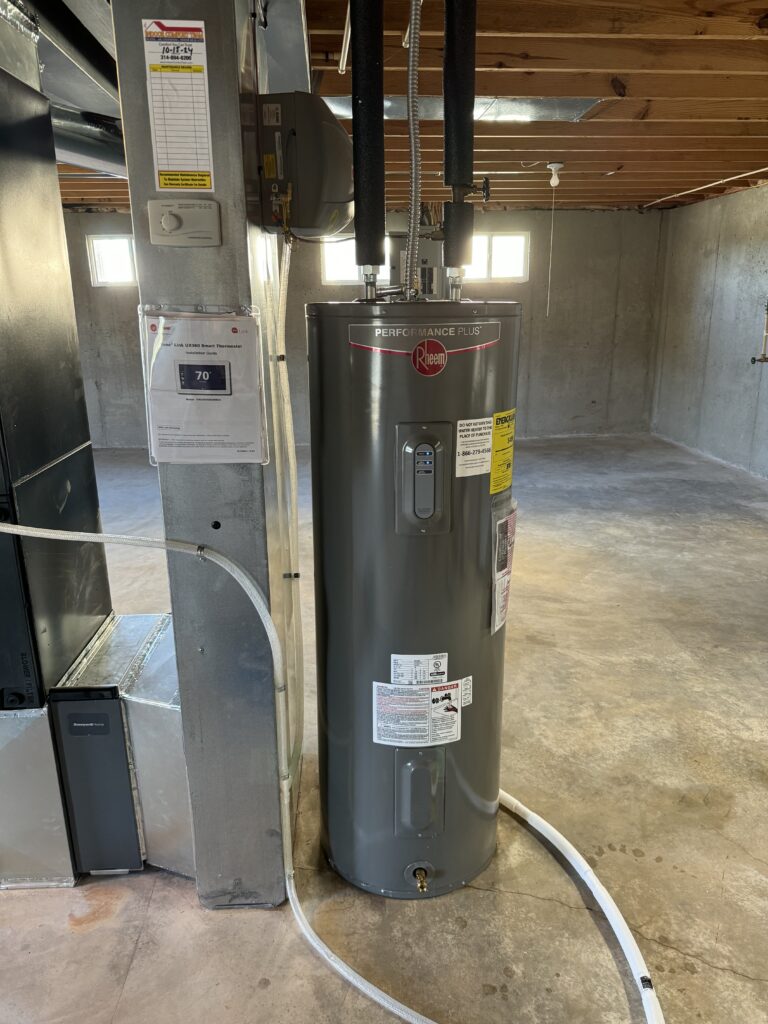
Electric water heaters are simpler to vent (there’s nothing to vent), but the wiring has to be right. The breaker and wire size have to match what the new heater needs. Newer homes, like the one in the photo below, often went all electric from the start.
Thinking about going tankless instead? That’s a different job. It can mean a bigger gas line, new venting through the wall, or more power at the panel. We explain all of that on our page about what an older house needs before it can go tankless.
What Water Heater Installation in Oakville Looks Like, Step by Step
Here’s how a normal replacement visit goes, start to finish:
- You call (314) 600-2202. Sam asks what you’re seeing, how old the heater is and whether it’s gas or electric.
- You get a price before anything starts. If the job needs extra parts to meet code, you hear about it up front, not on the bill.
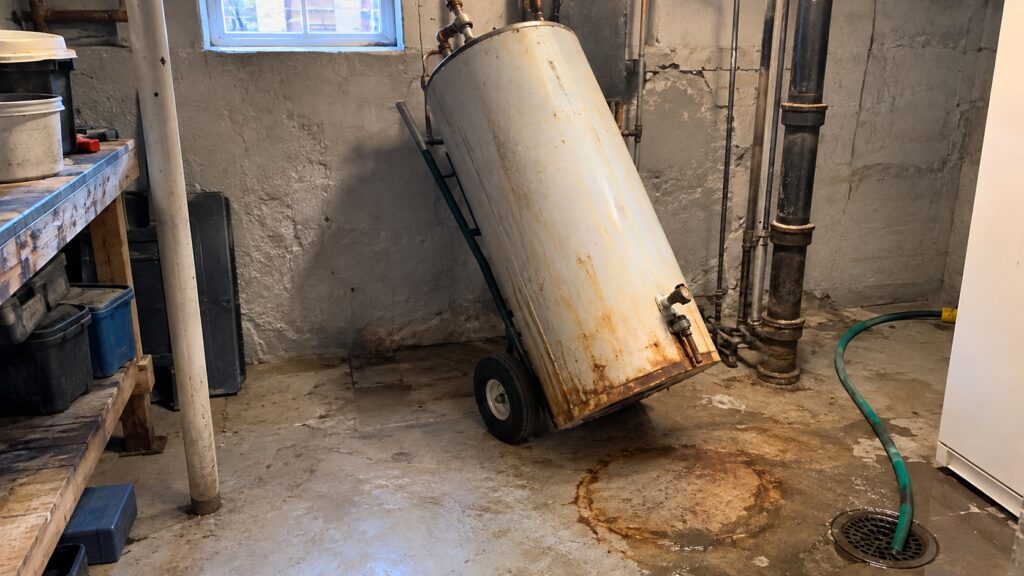
- We shut off the gas or power, and the water. Then the old tank gets drained through a hose to your floor drain or outside.
- The old heater comes out. We disconnect the water lines and the gas line or wiring, and move it out of the way.
- The new heater goes in. It gets set level, with new water connections and a relief valve line run down toward the floor.
- We hook up the gas and vent, or the wiring. Gas joints get leak tested.
- We fill the tank before turning anything on. Firing an empty electric heater burns out the elements in seconds.
- We test it. We light it or power it up, check the vent draft on gas units, and watch it heat.
- We set the temperature and show you the controls. Most families do fine at about 120 degrees.
The Small Parts That Decide How Long It Lasts
A new tank is only as good as the parts around it. These are the pieces we look at on every install.
Expansion tank. When water heats up, it expands. In a lot of homes there’s nowhere for that extra water to go, so pressure builds and wears out the heater and your faucets. A small expansion tank on the cold line soaks it up.
One customer called us just to add one. Sam was there within an hour, and it wasn’t even an emergency.
Relief valve line. Every tank has a temperature and pressure relief valve. Its pipe has to run down to within a few inches of the floor so it can’t spray anyone if it opens.
Drain pan. If the heater sits over a finished floor, a pan underneath gives a small leak somewhere to go besides your carpet.
The right size. Bigger isn’t always better. A tank that’s too large heats water you never use. We size it by how many people live there, how many bathrooms you have and whether you run the dishwasher and showers at the same time.
If you want to compare models before we talk, the ENERGY STAR guide to water heaters lists efficient tank, heat pump and tankless options.
Why Oakville Homeowners Call Sam for This
Sam answers his own phone, including nights and weekends. Liberty holds a 4.9 rating on Angi and won Angi’s Super Service Award in 2025.
In most basements the water heater sits a few feet from the furnace and the AC lines, and Sam works on every piece of equipment in that room. He’ll also tell you when you don’t need a new water heater. We’d rather fix a heater that has years left than sell you one you don’t need. When it really is time, you’ll know why, and you’ll know the price before we start.
Frequently Asked Questions
How Long Does a Water Heater Last in an Oakville Home?
Most tank water heaters around Oakville last about 8 to 12 years, depending on water quality, how much hot water the house uses and whether the tank was ever flushed. Once yours passes 10 years and starts leaking, rumbling or running out of hot water, it’s time to start planning a replacement.
Should I Replace My Water Heater Before It Fails?
If it’s past about 10 years old, planning ahead is usually smarter than waiting for a leak, because a failed tank can flood a basement fast. If it’s younger and working fine, there’s no reason to replace it early, so we’ll tell you honestly which side of that line yours is on.
How Much Does Water Heater Replacement Cost in Oakville?
It depends on gas or electric, the tank size, how it vents and any code parts your house is missing, like an expansion tank or a proper relief line. Sam looks at your setup and gives you a firm price before any work starts, so call (314) 600-2202 and he can tell you what yours will need.
Can I Still Use Water While My Water Heater Is Being Replaced?
Yes, cold water keeps running to your sinks and toilets for most of the job, because only the water heater gets shut off and drained. You’ll be without hot water for a few hours until the new tank is in, filled and heated back up, so plan showers and laundry around that afternoon.
What Brand of Water Heater Lasts the Longest?
No brand lasts long on its own, and the tanks that make it well past 10 years are usually the ones installed with an expansion tank, flushed now and then and checked for a worn anode rod. Sam will tell you which models he trusts once he sees your setup, and why he’d put that one in his own basement.
Do I Need a Professional for Water Heater Installation in Oakville?
For a gas heater, yes, because a bad gas joint or a vent that doesn’t draft can leak gas or carbon monoxide into the house where your family sleeps. Electric heaters carry their own risk with 240 volt wiring, and a wrong install can also void the manufacturer’s warranty before the tank is a week old.
Ready To Get Started?
Looking for water heater installation in Oakville? Call Sam at Liberty Heating Cooling and Plumbing. He’s been in the trade since 1998, he answers his own phone, and you get a price before any work starts. Call us at (314) 600-2202 to get your water heater installation in Oakville started today!