Serving St. Louis & Surrounding Areas

Tankless Water Heater Installation in Oakville, MO: What Your House Needs First
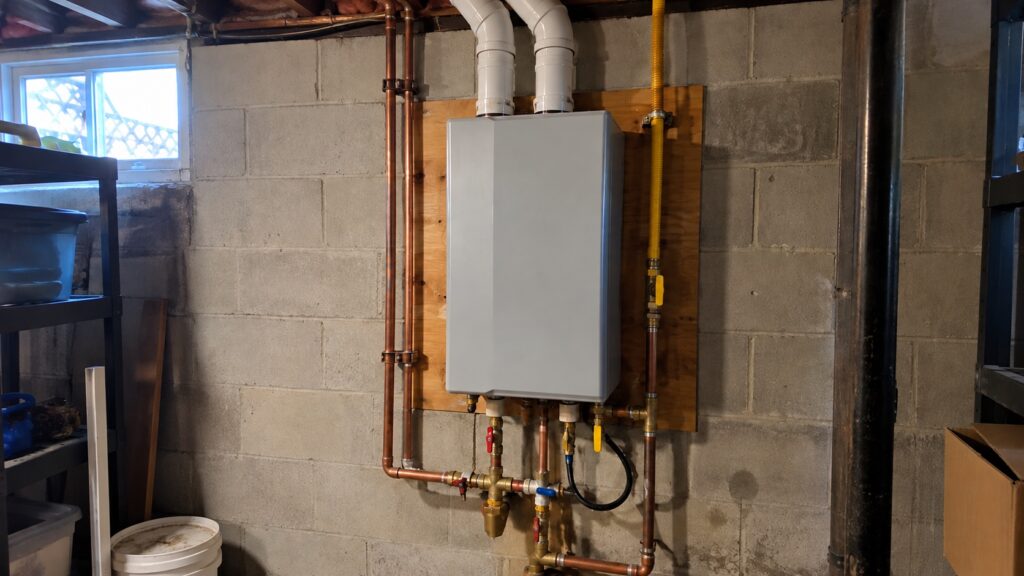
Tankless water heater installation in Oakville sounds simple on paper. You pull out the old tank, hang a small box on the wall and never run out of hot water again. The box is the easy part. Whether it works the way you hope depends on three things already in your house: the gas line, the vent and the electrical panel.
TLDR:
- A gas tankless unit can burn about five times the gas of a regular tank.
- Most can’t use your old chimney, so they need a new vent.
- Whole-house electric tankless often needs more power than a 100-amp panel has free.
- Size it for January water, not July water.
- Plan on a flush once a year.
Sam Marsala checks all three before he gives you a number. He’s been at this since 1998, and he would rather tell you a tankless isn’t right for your house than put one in that leaves you with a cold shower in February.
Plenty of people who call us about tankless end up going tankless. Some end up with a better tank instead. Either way, you’ll know why before anything is bought.
Three Things Your House Has to Pass Before Going Tankless
1. Enough Gas to Feed It
A regular 40 or 50 gallon gas tank burns about 40,000 BTUs an hour. A whole-house gas tankless unit can burn close to 199,000 when the shower and the dishwasher are both going. That’s a lot more gas moving through the same pipe.
Many older homes have a half-inch line running to the water heater. That’s usually too small for a tankless. The fix is a bigger line from the meter, and in some houses the meter itself is too small and the gas company has to swap it. We check your pipe size, the length of the run and everything else on that meter (furnace, stove, dryer) before we quote.
2. A Vent That Fits the New Unit
Your old gas tank probably vents up the same chimney or metal flue as the furnace. Most tankless units can’t use it. The ones we install most often are high-efficiency models that vent through two plastic pipes, usually out a side wall or up through the roof.
That means we need a good spot on an outside wall, away from windows, doors and the gas meter. In a finished basement, it also means planning where those pipes run so they don’t cut through the room you just paid to finish.
If your furnace and water heater share a chimney now, taking the water heater off can change how the furnace vents. We check that too, so fixing one problem doesn’t start another.
3. Room in Your Electrical Panel
Gas tankless units only need a regular outlet. Electric tankless units are a different story. A whole-house electric model can need three large double breakers and more than 100 amps on its own.
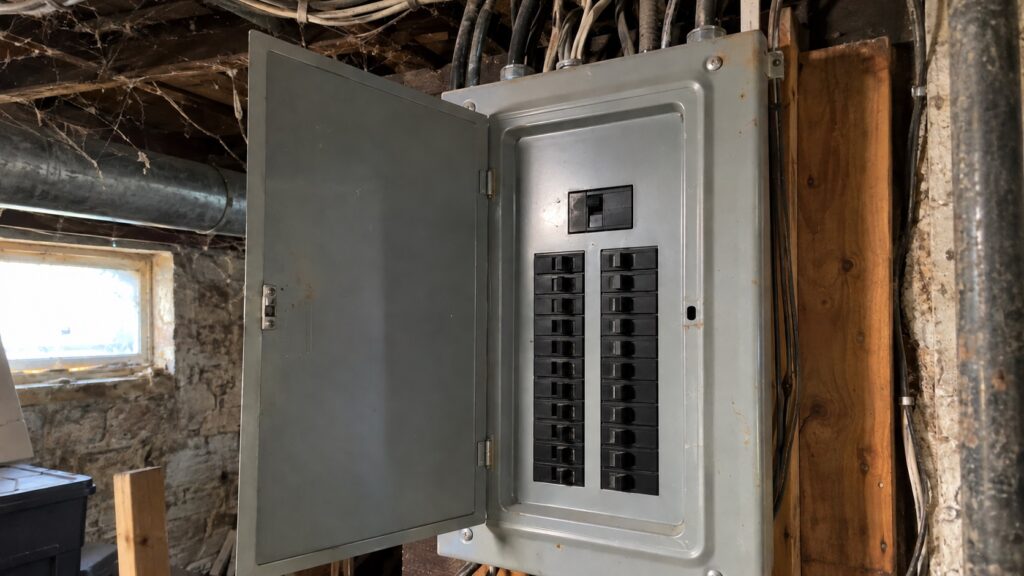
A lot of Oakville and South County homes still run on a 100-amp service. We’ve written about older South County houses that need a panel upgrade before a tankless can go in. It’s the same math we use on all-electric furnace jobs where the panel decides everything. If your panel can’t handle it, you’ll hear that before we quote, not after.
Sizing for a January Shower in St. Louis
Tankless units are sized by flow, how many gallons per minute they can heat at once. A shower uses about 2 gallons a minute. Two showers and a dishwasher running together can need 5 or more.
The catch is the water coming into your house. In the summer it might come in near 70 degrees. In January it can drop into the 40s. The unit has to heat that cold water up to around 120 degrees while it’s flowing past, and that’s a much bigger job.
A unit that keeps two showers hot in July might only keep one hot in January. So we size for the coldest week of the year. If you want to read the specs yourself, the ENERGY STAR list of gas tankless water heaters shows flow ratings for certified models.
Why Some Plumbers Talk People Out of Tankless (and When They’re Right)
You may have heard a plumber say tankless isn’t worth it. Sometimes they’re right. Here’s when we’d agree with them:
- Your house is all electric with a 100-amp panel and you don’t want a panel upgrade.
- You’re moving in a year or two and won’t be around long enough to enjoy the savings.
- Nobody will flush it. A tankless that never gets flushed scales up and starts acting up.
- You mostly run one tap at a time and a regular tank already keeps up fine.
There are also a few quirks worth knowing. Hot water takes a few extra seconds to reach the tap, because nothing is stored hot. A very low trickle may not turn the unit on at all. And a gas tankless still needs electricity, so it won’t make hot water during a power outage.
On the other hand, it can last close to 20 years with care. It only burns fuel when a tap is open, and nobody has to worry about a 50-gallon tank bursting in the basement. If that’s what you want, and your house can support it, it’s a great upgrade. If a tank is the better fit, we’ll point you to a regular tank replacement done the right way instead.
Tankless Water Heater Installation in Oakville, Start to Finish
Here’s what a conversion day looks like once the plan is set:
- We shut off the water, gas and power. Then we drain the old tank.
- The old tank comes out and gets hauled away.
- We mount the new unit on the wall on a solid backing board.
- We run the bigger gas line if your house needs one, and leak test every joint.
- We put in the new vent pipes through the wall or roof, sealed at the outside.
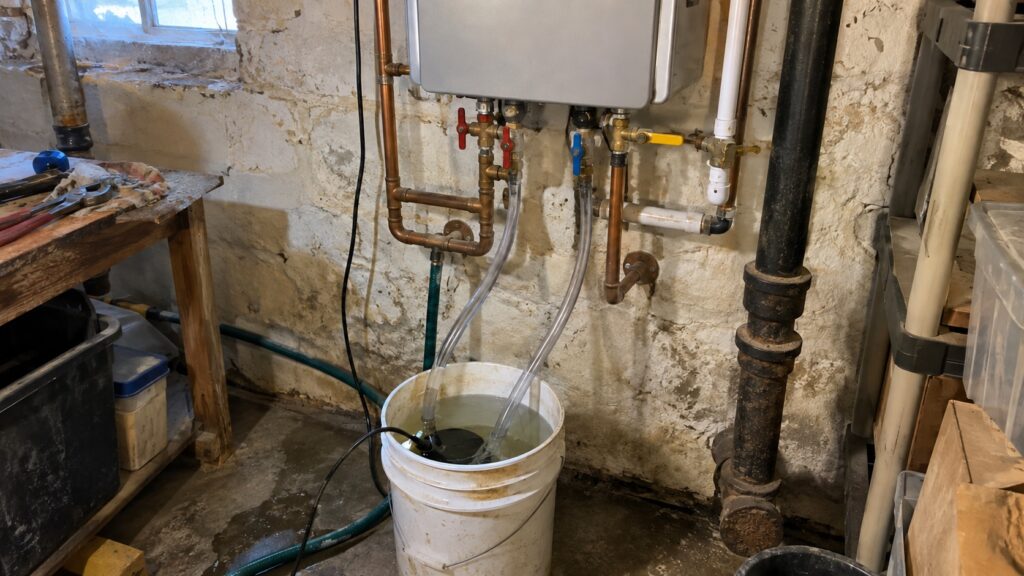
- We add service valves under the unit so it can be flushed without cutting pipe later.
- We connect the water lines and a drain line for the water the unit makes when it runs.
- We fire it up and test it at more than one tap at a time.
- We show you the controls and set the temperature, usually around 120 degrees.
A conversion takes longer than swapping one tank for another, often most of a day. If the gas line or vent has to travel a long way, plan on more time. You’ll know that before the day starts.
The Once-a-Year Flush That Keeps It Running
Our water carries minerals. Over time those minerals build up inside the small heating passages of a tankless unit, a lot like the white crust inside a tea kettle. Too much buildup and the unit starts overheating, shutting down or throwing error codes.
The fix is a flush. We hook a small pump and hoses to those service valves and run a cleaning solution through the unit for about an hour. Once a year is usually enough for most houses around here.
If yours is already throwing error codes or running lukewarm, the flush may not be enough. That’s a repair call, and our page on tracking down why the hot water quit covers what we check on tankless units too.
Frequently Asked Questions
Can a Tankless Water Heater Run Two Showers at Once?
Yes, if it’s sized for it, but that sizing has to be based on winter water, which comes into the house much colder than summer water. A unit that’s too small will keep one shower hot and leave the second one lukewarm, so we size every tankless for two showers on a January morning.
What Size Tankless Water Heater Does My Oakville Home Need?
It depends on how many hot water taps your family runs at the same time, not how big the house is. Most homes with two bathrooms need a unit that can heat about 5 gallons a minute in winter, and Sam will count your bathrooms, appliances and habits before picking one.
Will a Tankless Water Heater Raise My Electric Bill?
A gas tankless unit only uses a small amount of electricity to run its fan and controls, so you won’t see much change there. A whole-house electric tankless can use a lot of power while it’s running, but because it isn’t keeping a tank hot all night, many families end up using less overall.
What Are the Downsides of Tankless Water Heater Installation in Oakville?
The biggest ones are the work it takes up front (gas line, vent and sometimes the panel) and the yearly flush to keep minerals out. You’ll also wait a few extra seconds for hot water, and a gas unit won’t heat water during a power outage because it needs electricity to run.
How Often Should a Tankless Water Heater Be Flushed?
About once a year in most St. Louis County homes, because our water has enough minerals to build up inside the unit. If you have a water softener, you may be able to go longer, and if the unit starts showing error codes or running lukewarm, it’s time for a flush right away.
How Much Does a Tankless Water Heater Cost to Install?
It depends almost entirely on your house, because the unit itself is only part of the job. Upgrading a gas line, adding a new vent or changing the panel can all be part of it, so Sam checks those things first and quotes one number for the whole job before anything gets ordered.
Ready To Get Started?
Looking for tankless water heater installation in Oakville? Sam will look at your gas line, your vent and your panel first, and tell you straight whether tankless makes sense for your house. Call us at (314) 600-2202 to get your tankless water heater installation in Oakville started today!