Serving St. Louis & Surrounding Areas

Emergency Boiler Repair in Oakville, MO: Before the Pipes Freeze
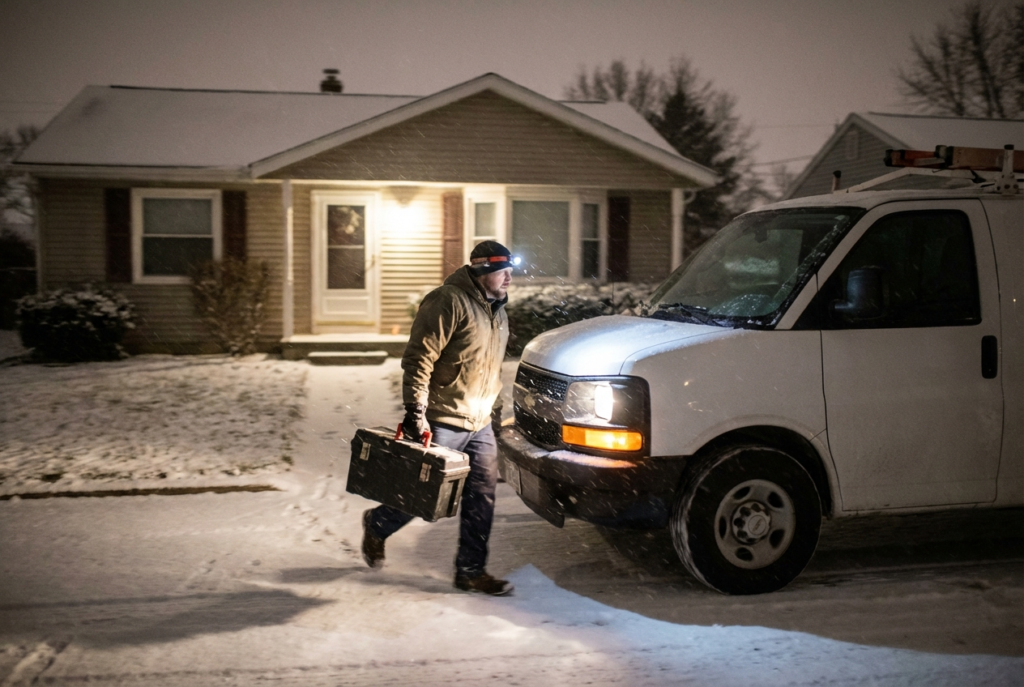
When a furnace dies, the house gets cold and that is the whole problem. When a boiler dies, the house gets cold and several hundred feet of water stops moving inside the walls, the floors and the crawl space. The cold is the inconvenience. The water is the emergency, and it runs on a clock that has nothing to do with how uncomfortable anyone is.
The Clock You Are Actually Racing
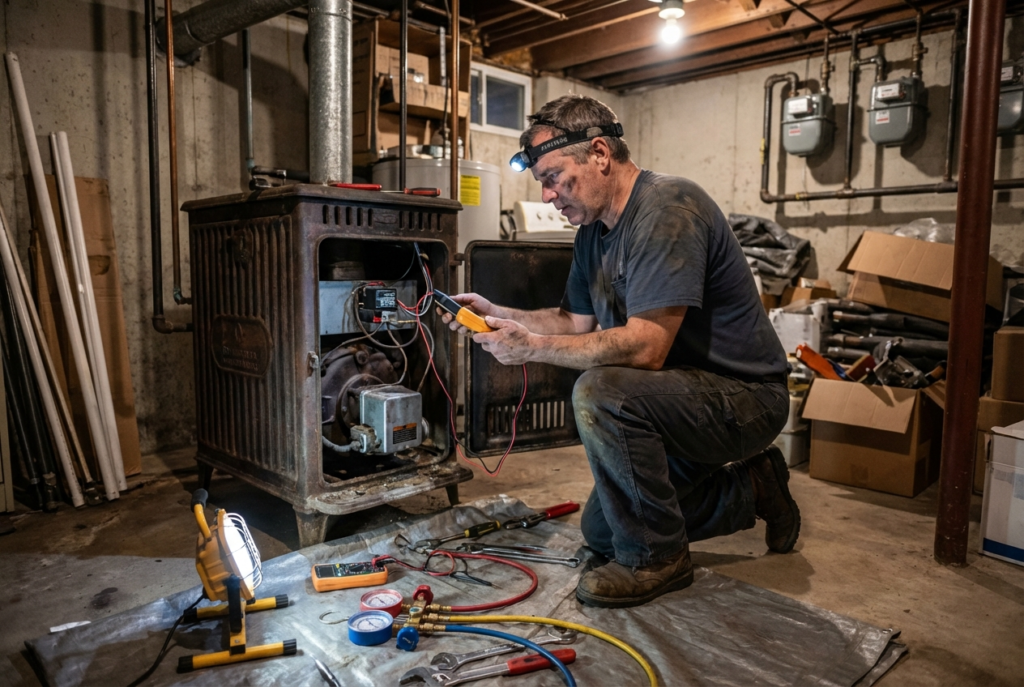
A hydronic system holds its heat far longer than forced air does, which is genuinely good news for the first few hours. Cast iron radiators and a body of warm water give up their temperature slowly, and a well built house with a dead boiler often feels fine well into the evening.
That same thermal mass is why people underestimate this. The house feels manageable, so the call waits until morning, and meanwhile the parts of the system nobody can feel from the living room have been dropping steadily the entire time.
Water freezes at thirty two degrees, but a pipe does not freeze when the air near it briefly touches that number. It freezes after sustained hours below it, and the pipes at risk are never the ones in the rooms you are standing in. They are in the crawl space, against an outside wall, in the garage ceiling, or running through an unheated addition.
So the useful question on the first call is not how cold the house is. It is where your pipes run and how long they have been sitting still.
The First Hour: Keep the Water Moving
Circulation buys time even when there is no heat being added, because moving water is dramatically harder to freeze than standing water, and it drags whatever warmth the system still holds out to the cold ends of the building.
- Leave the power on. The instinct is to shut everything off at the switch. If the circulators still run, that is the wrong instinct. Kill power only if there is an active leak or you have been told to.
- Turn every thermostat up, not down. You are not trying to heat the house. You are trying to command every zone valve open so no loop is sitting isolated and still.
- Open interior doors, and the cabinets on outside walls. Kitchen and bathroom plumbing in an exterior wall is usually the first casualty in the whole building, and an open cabinet door is often enough to save it.
- Deal with the garage. A garage door left open, or a garage that seals poorly, turns any pipe in that ceiling into the most exposed run in the building.
If the boiler is dead but the circulators are not, say that on the phone, because it changes the whole timeline. A system that is circulating cold water is in far less danger than one sitting motionless, and it changes what has to happen tonight versus tomorrow.
What Gives Out First, and In What Order
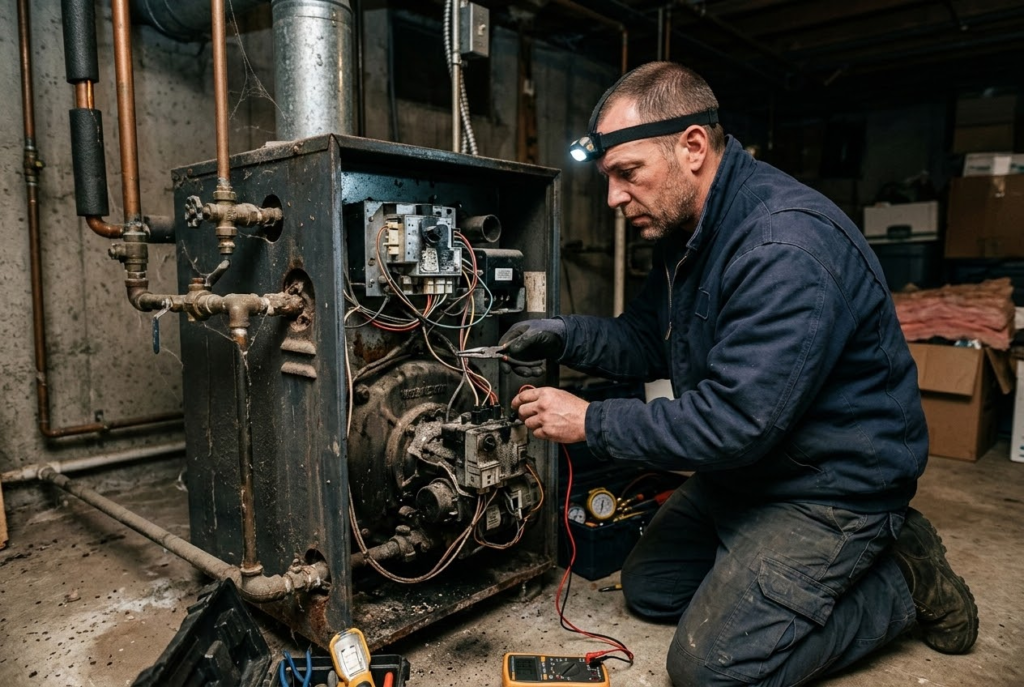
Failures follow a predictable sequence, which is useful because it tells you what to check and roughly when.
Small diameter pipe in unheated space goes first. It holds the least water, so it has the least thermal mass to spend, and it is usually the run nobody insulated because it was out of sight when the house was built.
Next are the ends of the longest loops, meaning the rooms furthest from the boiler that were always a little cooler than everywhere else. They were the last to get warm when the system worked, and they are the first to give up now.
Cast iron radiators come later, because a large radiator holds a substantial volume of water and takes a long time to reach freezing. When one does freeze, it tends to crack a section rather than split a seam, and a cracked section is generally not repairable on its own.
The boiler itself is usually last, being the largest mass of water in the building and normally in the most sheltered spot. That is why a boiler that survives a cold night intact tells you very little about whether the rest of the system did.
Why Pipes Split Where They Do
This part is counterintuitive and it changes what you look for afterward.
A pipe does not usually burst at the ice. Water expands as it freezes, and as an ice plug grows it pushes liquid water ahead of itself down the pipe. If that water can escape, nothing happens. If it runs into a closed valve or another plug, pressure builds in the trapped section between them, and the failure happens there, which can be some distance from any ice.
Two consequences follow. The first is that you may find no damage during the freeze at all, because the ice is also acting as a plug. The second is that the flood usually arrives during the thaw, sometimes a day later, when that plug melts and opens the split it created. A house can come through the cold looking fine and still be waiting on a burst.
So a system that froze gets pressurized and watched deliberately as it comes back up, rather than simply refilled and declared fine because heat is working again.
When Draining Is the Right Call
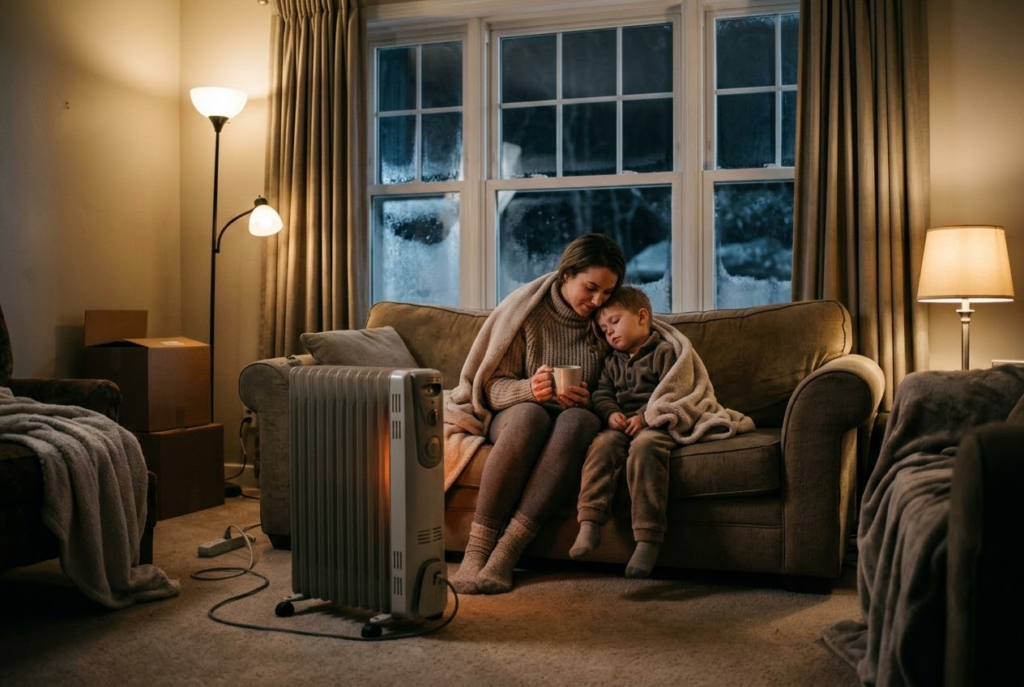
If the building cannot be kept above freezing and nobody can reach it in time, draining the system is the move that limits the damage. It is not a small decision and it should be a deliberate one.
What draining protects is the expensive part. Pipe inside finished walls and ceilings, embedded floor loops, and cast iron sections are what turn a heating failure into a construction project. Getting the water out removes that entirely.
What it costs you is real too. A drained system has to be refilled, purged of air loop by loop, brought back to pressure and treated again with inhibitor. Old valves that have not been operated in years sometimes refuse to reseat once they are moved. On an old system, draining occasionally starts a small leak that was being held shut by sediment.
The situations where it is clearly correct are the ones where the building will be empty and unheated for a stretch, or where an extended outage has arrived alongside genuinely severe cold. If you are considering it, call before doing it, because there are usually specific low points and valves involved and a partial drain that leaves water trapped in a loop is worse than not draining at all.
Antifreeze, and Why Your System Probably Does Not Have It
People ask about this during exactly this kind of night, so it is worth answering plainly.
Hydronic systems can be run on a glycol mix rather than plain water, and some are, particularly in buildings that sit empty in winter, snowmelt loops, and anything serving an unheated outbuilding. It genuinely removes the freeze problem.
It is not free. Glycol carries less heat than water for the same volume, so the system moves more fluid to deliver the same warmth, which asks more of the circulators. It needs testing and periodic replacement because its corrosion inhibitors deplete over time, and a neglected glycol charge becomes more corrosive than the water it replaced. The type matters too, since glycol intended for another application can attack the seals and metals in a heating system.
For an occupied house with reliable heat it is usually unnecessary. For a property that sits empty part of the year, or one that has already been through a freeze once, it is a conversation worth having in spring rather than in January.
Frequently Asked Questions
My boiler quit and it is freezing out. How long before pipes are in danger?
It depends far more on where the pipes run than on the thermostat. Small pipe in a crawl space, a garage ceiling or an exterior wall can reach trouble in a matter of hours, while radiators in the living space take much longer. If the circulators are still running the clock is considerably slower than if everything has gone still.
Should I shut the whole system off?
Not automatically. If the circulators still run, leaving them powered keeps water moving and moving water is much harder to freeze. Turn the thermostats up rather than down so every zone valve opens. The exception is an active leak, where the power and often the water feed should come off.
The house came through the cold and everything looks fine. Am I clear?
Not necessarily. Pipes commonly split at a point away from the ice, and the ice itself plugs the split until it melts. Plenty of floods arrive during the thaw rather than during the freeze. A system that got close to freezing is worth pressurizing and watching deliberately as it warms back up.
Should I drain the system to protect it?
Sometimes, and it is worth a phone call first. Draining protects pipe in walls, embedded floor loops and cast iron sections, which are the parts that turn this into a construction job. It also means refilling, purging every loop and re-treating the water, and a partial drain that traps water in a loop is worse than leaving it alone.
Can I put antifreeze in my boiler system?
Systems can run on a glycol mix and some do, particularly buildings that sit empty in winter. It carries less heat than water, asks more of the circulators, and needs periodic testing and replacement. For an occupied house it is usually unnecessary, though it is a reasonable conversation after a property has been through one freeze.
Do you carry boiler parts for after hours calls?
Circulators, common zone valves, relief valves and controls travel with us. Boiler models vary a great deal more than furnaces, so a specific part sometimes has to be sourced. When that happens the first job becomes protecting the system and the building rather than waiting on a component.
Cold Radiators and a Falling Temperature
Three things to have ready when you call. What the pressure gauge reads, whether you can hear the circulators running, and whether any of your pipes run through a crawl space, a garage or an unheated addition. That last answer is the one that sets the urgency.
Reach us on (314) 600-2202, any hour through the heating season. If the radiators are cold but the building is in no danger and this can wait for a normal visit, boiler repair works through the likely component. If the boiler has been limping for a while and you would rather not do this again, boiler installation covers what replacing it involves.