Serving St. Louis & Surrounding Areas
Save Money with High-Efficiency Furnace Installation in Oakville
High-efficiency furnaces cost $1,500-2,500 more than standard furnaces and everyone promises they’ll save you money. But do they actually pay for themselves or is it just marketing? Your salesman swears you’ll save $40 monthly on gas bills but then why do half your neighbors install cheaper furnaces? High-efficiency furnace installation in Oakville makes sense for some houses and wastes money on others. Your furnace replacement depends on your actual heating costs, how long you’re staying in the house, and what rebates you qualify for.
Understanding High-Efficiency Furnace Costs and Savings
What 95-98% AFUE Actually Means for Your Bills
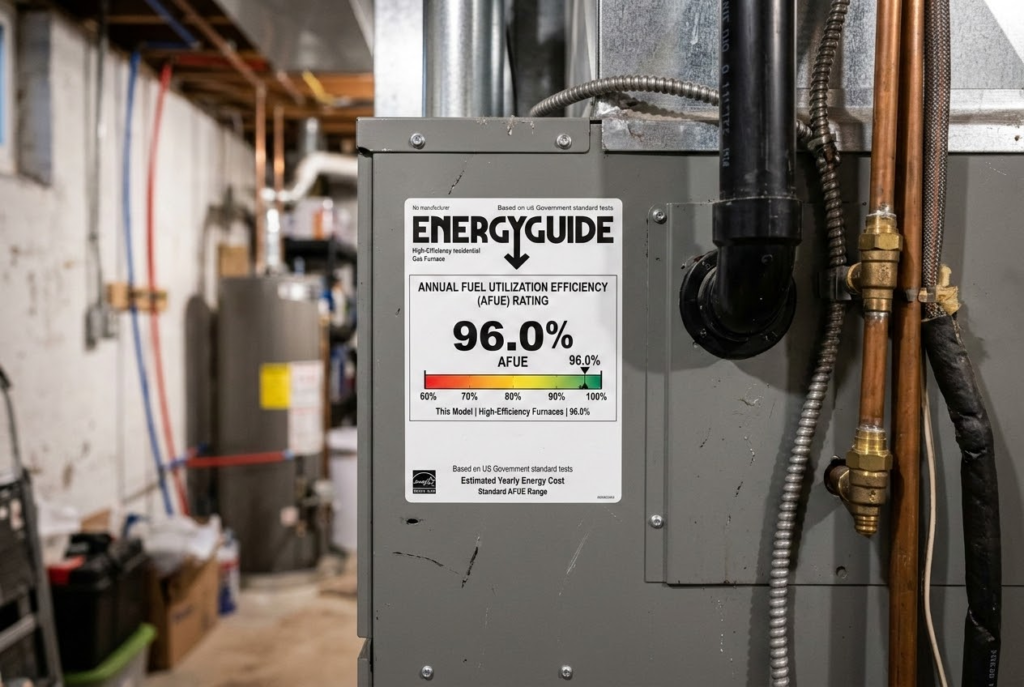
AFUE stands for Annual Fuel Utilization Efficiency. A 95% AFUE furnace converts 95% of gas into heat and wastes 5% up the chimney. Standard 80% furnace wastes 20% of every dollar you spend on gas. This sounds like huge savings but actual dollar amounts depend on how much gas you burn. House that uses $1,000 in gas per winter wastes $200 with an 80% furnace versus $50 with a 95% furnace. That’s $150 yearly savings. House using $2,500 in gas saves $375 per year.
Small houses with low heating bills don’t save enough to justify the extra cost. Your total winter gas bill is $400? Even perfect efficiency only saves you $80 per year. Took you 20 years to recoup the $1,600 extra you paid for high-efficiency. Big drafty houses with $300 monthly winter gas bills save way more—potentially $500-700 per year. Those houses recover the extra cost in 3-4 years.
Efficiency ratings assume perfect conditions. Real-world savings run lower than manufacturer claims because your ductwork leaks, your house isn’t sealed tight, your thermostat settings vary. Count on capturing maybe 70-80% of the theoretical savings. Sales guys quote maximum possible savings under ideal conditions that don’t exist in your actual house. Understanding furnace efficiency ratings helps you calculate realistic expectations instead of salesman promises.
Real Monthly Savings – The Math Nobody Shows You
Let’s do actual math using real numbers. Your current 80% furnace costs $216 monthly in gas during January and February, $144 in December and March, $72 in November. That’s $864 for the heating season. Upgrading to 95% efficiency theoretically saves 15.8% on fuel costs. Your actual savings: $137 per year. Over the furnace’s 18-year life, that’s $2,466 total savings.
High-efficiency furnace costs $6,240 installed versus $4,320 for standard 80%. Extra cost: $1,920. Add in rebates—utility company gives $480, federal tax credit gives $360. Net extra cost after rebates: $1,080. Savings of $137 yearly means payback in 7.9 years. If you’re staying in the house 10+ years, you come out ahead by about $1,380 over the furnace’s life. Not huge money but you’re still better off.
Now let’s run numbers for a smaller house. Winter gas bills total $480 for the whole season. Upgrading to 95% saves $76 per year. Same $1,920 extra cost, same $840 in rebates, net $1,080 extra. Payback takes 14.2 years. Over 18 years you gain $281 total. Barely worth the hassle. These calculations matter because sales guys never run actual numbers for your specific house—they just promise savings.
Energy Rebates and Tax Credits That Pay You Back
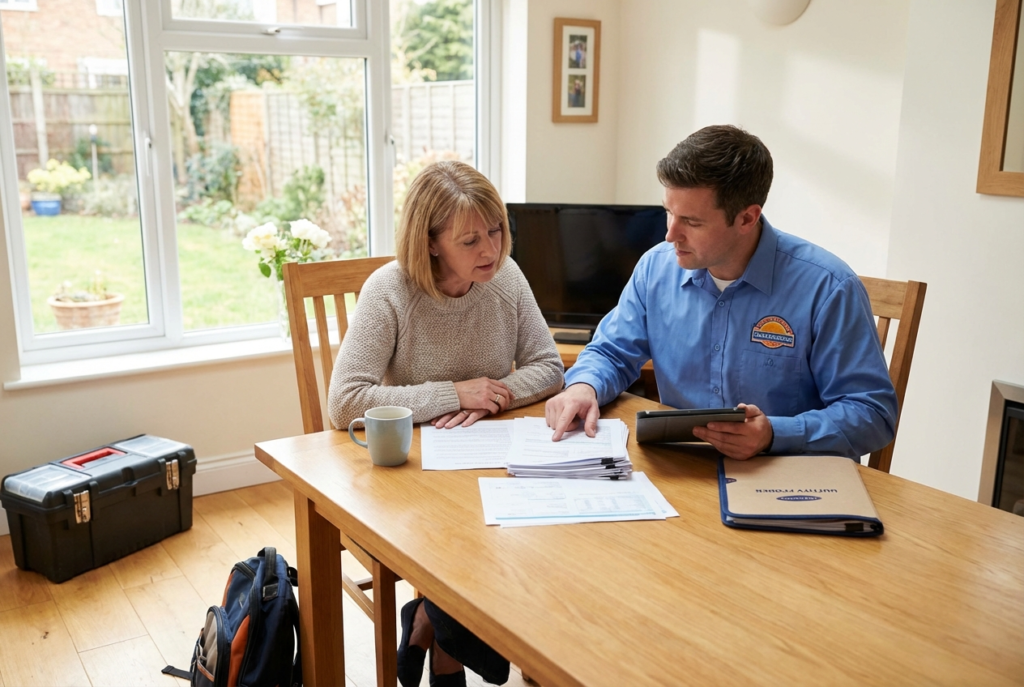
Utility companies in the St. Louis area offer $360-960 rebates for high-efficiency furnaces. Exact amount depends on your provider and the furnace efficiency rating. 95% AFUE usually qualifies for $360-480. 96-98% AFUE gets $720-960. These rebates come directly from the utility company, not the contractor. File paperwork after installation, get a check in 6-8 weeks. Don’t assume your contractor handles this—many don’t tell you rebates exist because they want you focused on their price.
Federal tax credits for high-efficiency furnaces run up to $720 for equipment meeting efficiency requirements. This is a tax credit, not a deduction—it reduces your actual tax bill dollar for dollar. Claim it when you file taxes for the year you installed the furnace. Keep all receipts and manufacturer certification showing your furnace qualifies. Tax credits have income limits and phase out for high earners, so verify you’re eligible before counting on this money.
Some cities and counties offer additional local incentives. These stack with utility and federal money. You might get $480 utility rebate plus $720 federal tax credit plus $240 city incentive for total $1,440 back on a $6,600 furnace. That changes the math completely—now you’re comparing $5,160 net cost for high-efficiency versus $4,320 for standard. Suddenly the extra cost is only $840 for way better efficiency. Always research every available incentive before deciding which furnace to buy.
How Long Until High-Efficiency Pays for Itself
Payback period is the big question everyone asks wrong. They want to know when they “break even” but really they should ask whether they’ll actually be in the house long enough to benefit. Most people move every 7-10 years. If payback takes 12 years, you’re buying efficiency for the next homeowner. Nothing wrong with that if you care about resale value or just want lower bills while you live there, but it’s not a financial win for you personally.
Fast payback scenarios work when you have high heating costs and good rebates. Big house, $2,400 yearly gas bills, $840 in rebates = 3-4 year payback. You’ll definitely still own the house. Plus you’re saving $360-480 per year so over 10 years that’s real money. These situations are no-brainer decisions to go high-efficiency. Every year past payback is pure savings in your pocket.
Slow payback happens with low heating costs or weak rebates. Small efficient house, $720 yearly gas bills, $360 in rebates = 10-15 year payback. Maybe you break even, maybe you don’t. At this point high-efficiency is about wanting the best equipment or environmental concerns, not financial logic. Perfectly fine reasons to choose it but don’t pretend it’s saving you money—you’re paying extra for other benefits you value.
Who Actually Benefits from High-Efficiency Furnaces
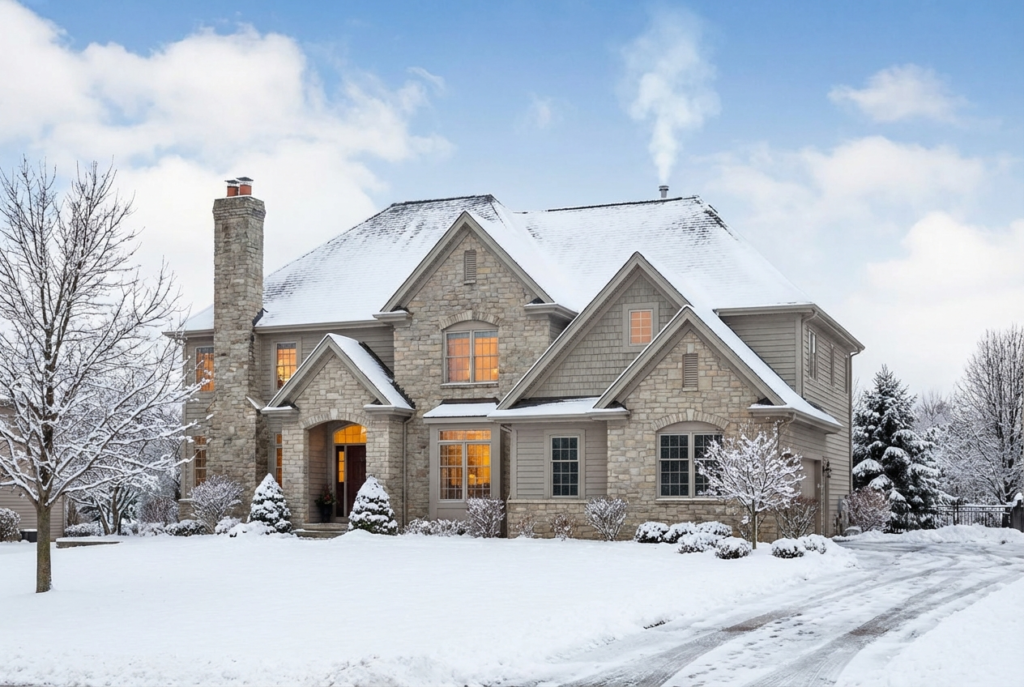
Large houses and cold climates benefit most. House over 2,500 square feet in a place with real winters burns enough gas that efficiency matters. Monthly bills exceed $240 in peak winter. Saving 15-20% means $48-60 monthly or $600+ yearly. These savings actually move the needle on household budget. Over 15 years that’s $9,000 saved. Even after paying extra upfront, you’re thousands ahead.
Long-term homeowners should buy best efficiency they can afford. Planning to stay 15-20 years? High-efficiency pays for itself and then keeps saving money. Short payback period doesn’t matter when you’ll own the furnace for its entire life. Every dollar saved in year 10-20 is pure profit. Plus newer high-efficiency furnaces often last longer than budget models because they’re built with better components.
People with low gas bills waste money on high-efficiency. Small house, mild winters, bill never tops $120 monthly? Standard 80% furnace makes way more sense. Your yearly savings from high-efficiency might be $90. Extra cost after rebates is $1,080-1,440. Takes 12-16 years to break even. By then the furnace is old anyway. Take that $1,440 difference, invest it, make more money than you’d save on gas. Financial logic says buy the cheaper furnace.
The Truth About Efficiency Marketing
Sales Tactics That Oversell High-Efficiency Benefits
Sales guys love showing you annual savings calculations that assume you heat your house to 72 degrees for six months straight. Reality is nobody does that. You turn the heat down at night. You’re gone during the day. Mild weeks in November you barely run the furnace. Their calculation shows $600 yearly savings but your actual usage pattern saves maybe $336. This gap between theoretical and real-world savings is how they make high-efficiency sound better than it actually performs.
“Pay for itself in three years” claims ignore opportunity cost. Sure, the furnace might save you $600 yearly. But what if you invested that extra $1,800 upfront cost instead? At 7% return that’s $126 the first year, growing every year. After 10 years your investment is worth $3,540 while the furnace saved you $6,000 in gas. You still come out ahead with the furnace, but not by as much as the salesman implied. They never mention you’re locking money into equipment instead of having it available.
Environmental benefits get weaponized as guilt trips. “Don’t you care about the planet?” Of course you do, but buying high-efficiency furnace for a tiny house with minimal heating needs doesn’t move the environmental needle. Your total annual emissions drop by maybe 0.3 tons of CO2. Driving 2,000 fewer miles per year saves more. Going high-efficiency for environmental reasons is fine if that matters to you, just don’t let sales guys guilt you into spending extra when the actual impact is minimal.
When Contractors Push High-Efficiency You Don’t Need
Higher-priced furnaces mean bigger commissions for sales guys. They make $240 selling you a $4,320 furnace but $620-680 selling you a $8,600 high-efficiency model. Their financial incentive is getting you to spend more, not matching equipment to your actual needs. Guy who quotes you high-efficiency might genuinely believe it’s best, or he might just be chasing bigger commission. You can’t tell which by talking to him.
Some contractors only sell premium equipment because they don’t want to compete on price with budget installers. They position themselves as “quality-focused” and refuse to quote standard-efficiency options. This forces you to either buy high-efficiency from them or get quotes elsewhere. Nothing wrong with this business model but understand it’s about their market positioning, not what’s objectively best for you. You might genuinely need the high-efficiency, or you might be a good candidate for 80% but they won’t even discuss that option.
Beware the “while we’re at it” upsell. You’re getting a furnace and suddenly they’re recommending high-efficiency plus a $1,440 air cleaner plus a $720 humidifier plus a $480 smart thermostat. Each item makes sense individually but together you’re spending $9,600 instead of $4,320. This creep happens because once you’ve mentally committed to a furnace purchase, adding another $1,200 feels less significant than it actually is. Decide what you actually need before talking to contractors, not during the sales pitch.
Making the Right Choice for Your Situation
Run your own numbers using actual gas bills from last winter. Don’t trust calculator tools on contractor websites that assume average usage. Pull out your actual bills. Add up November through March gas costs. Calculate what 15-20% savings means in real dollars for your house. Then factor in actual rebates available in your area. This gives you real ROI timeline instead of marketing projections.
Consider your specific plans for the house. Selling in 5 years? High-efficiency might not pay back in time. Staying 20 years? Almost any efficiency pays for itself eventually. Retiring here permanently? Buy the best efficiency you can afford because you’ll capture every dollar of savings. Moving for a job in 3 years? Standard 80% makes more financial sense. Your timeline matters more than generic “high-efficiency is better” advice.
Trust contractors who present options instead of pushing one answer. Good contractors quote both standard and high-efficiency, explain real-world costs and savings for your situation, then let you decide. Salespeople who only push one option or dismiss your questions about alternatives are selling, not advising. You want someone who runs actual numbers for your house, not someone reciting marketing bullet points about efficiency.
Get Honest High-Efficiency Furnace Installation in Oakville
Call (314) 600-2202 for high-efficiency furnace installation in Oakville. We’ll run real numbers for your house, explain actual savings, and help you decide if high-efficiency makes sense for your situation—no pressure, just facts.