Serving St. Louis & Surrounding Areas

How Much Does an Emergency AC Visit Cost in St. Louis?
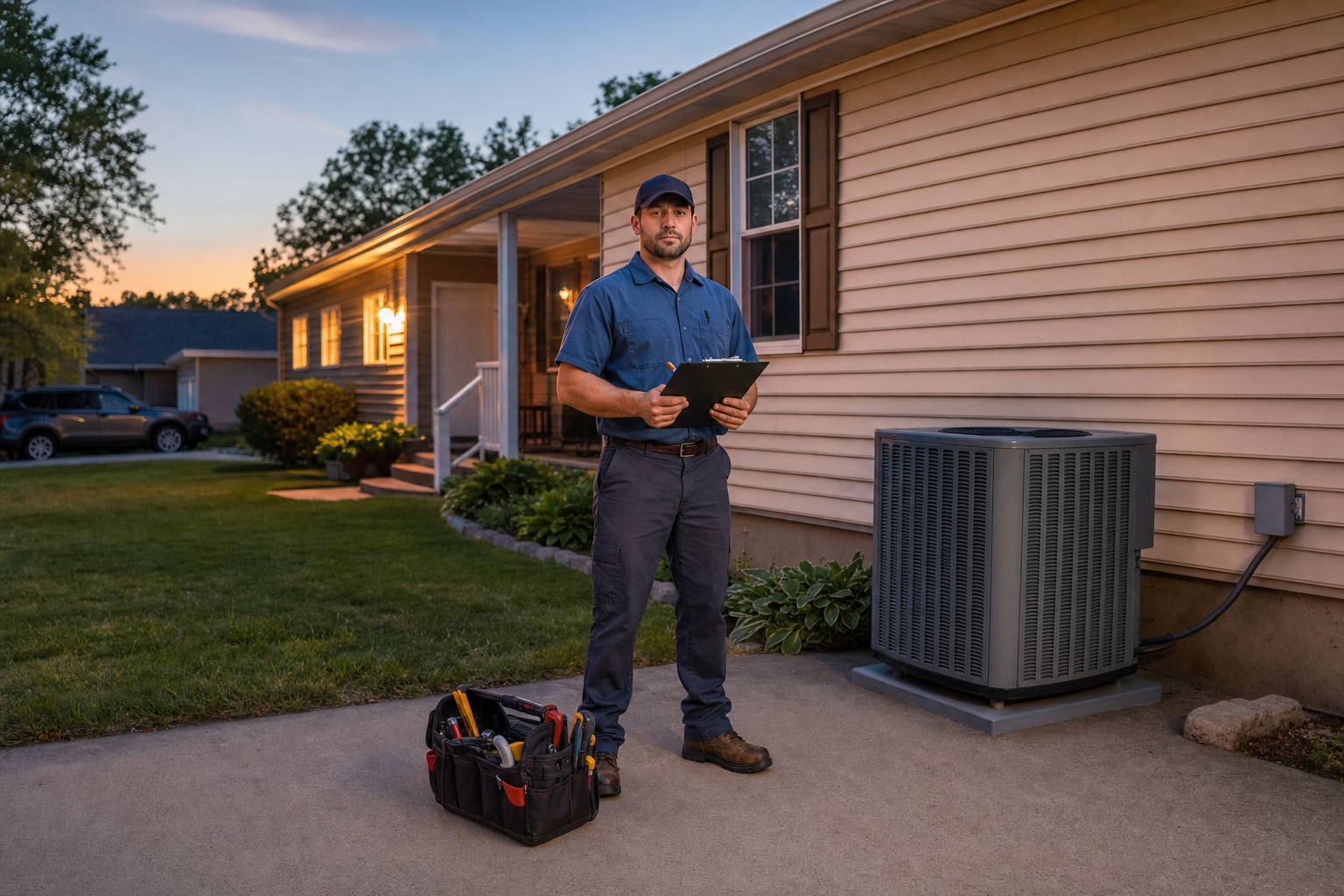
How much does an emergency AC visit cost in St. Louis? This page is about one thing: what an after-hours or weekend service call actually runs, and why the number moves. It isn’t about whether a shop even answers at 2 a.m., and it isn’t about routine tune-up pricing. The honest answer is that an emergency visit usually runs more than a standard daytime call, and the gap depends on what time you call, how tangled the diagnosis gets, and which company picks up.
You’re sitting in an 85-degree house, you Google a number, and the receptionist won’t quote a thing until a tech is in your driveway. The real cost picture is built from three pieces: the diagnostic fee, any after-hours or weekend premium, and whatever the actual fix needs. If your bigger question is who actually staffs a real after-hours line, that’s covered in whether HVAC companies offer 24/7 emergency AC service. And if you want the cost of routine upkeep instead of a breakdown call, what annual AC service costs is a separate number altogether.
Sam has been answering after-hours AC calls across South County for 27 years. He’s seen the games other shops play with weekend pricing, and the way Liberty handles it is different. If your system just quit and you need a straight answer on what a visit will cost before a tech leaves the shop, the cleanest path is to call and get a straight quote on a same-day visit before you commit to anything.
Here’s what this page covers about emergency AC visit costs in St. Louis:
- Why an emergency visit is priced higher than a standard daytime call
- The three factors that move the final ticket up or down
- What a diagnostic fee actually pays for, and how it keeps you from paying twice
- How Liberty prices after-hours and weekend calls differently
- When an emergency call is worth the premium and when waiting makes more sense
Why an Emergency Visit Costs More Than a Standard Call
An emergency AC visit costs more for one plain reason: somebody has to leave dinner or skip a Sunday off to get to your house. That labor is more expensive because the tech is on overtime, and the company is paying to have someone available outside normal hours. There’s also standby cost. A shop that runs a real after-hours rotation keeps a tech on call instead of letting the whole crew clock out, and that costs money even on nights nobody rings.
Parts play into it too. Most supply houses close at five and stay shut on weekends. If your fix needs anything beyond the common stuff already on the truck, the tech either makes it work with what he has or comes back Monday. That uncertainty is baked into the rate.
The honest version is that some shops treat “emergency” as a profit center. They quote double or triple the standard rate outside business hours and hope you’re too sweaty to push back. Others run the same pricing on a Saturday as a Tuesday because they decided long ago that goodwill outlasts the markup. That difference matters when you’re staring at a quote at midnight.
The Three Factors That Drive Emergency Pricing
Three things move the number on an emergency quote, and none of them are mysteries once somebody on the inside spells them out.
When you actually called. Tuesday at 6 p.m. is the cheapest “after hours” slot at almost every shop because the tech rolling out hasn’t even gotten home yet. Compare that to 2 a.m. Sunday during a July heat wave, when the tech is getting pulled out of bed and his weekend is gone. The rate sheet usually reflects it, and holiday weekends are the worst. We had a homeowner last 4th of July who got quoted a wild number by another outfit before he called us. The hour mattered more than the actual problem.
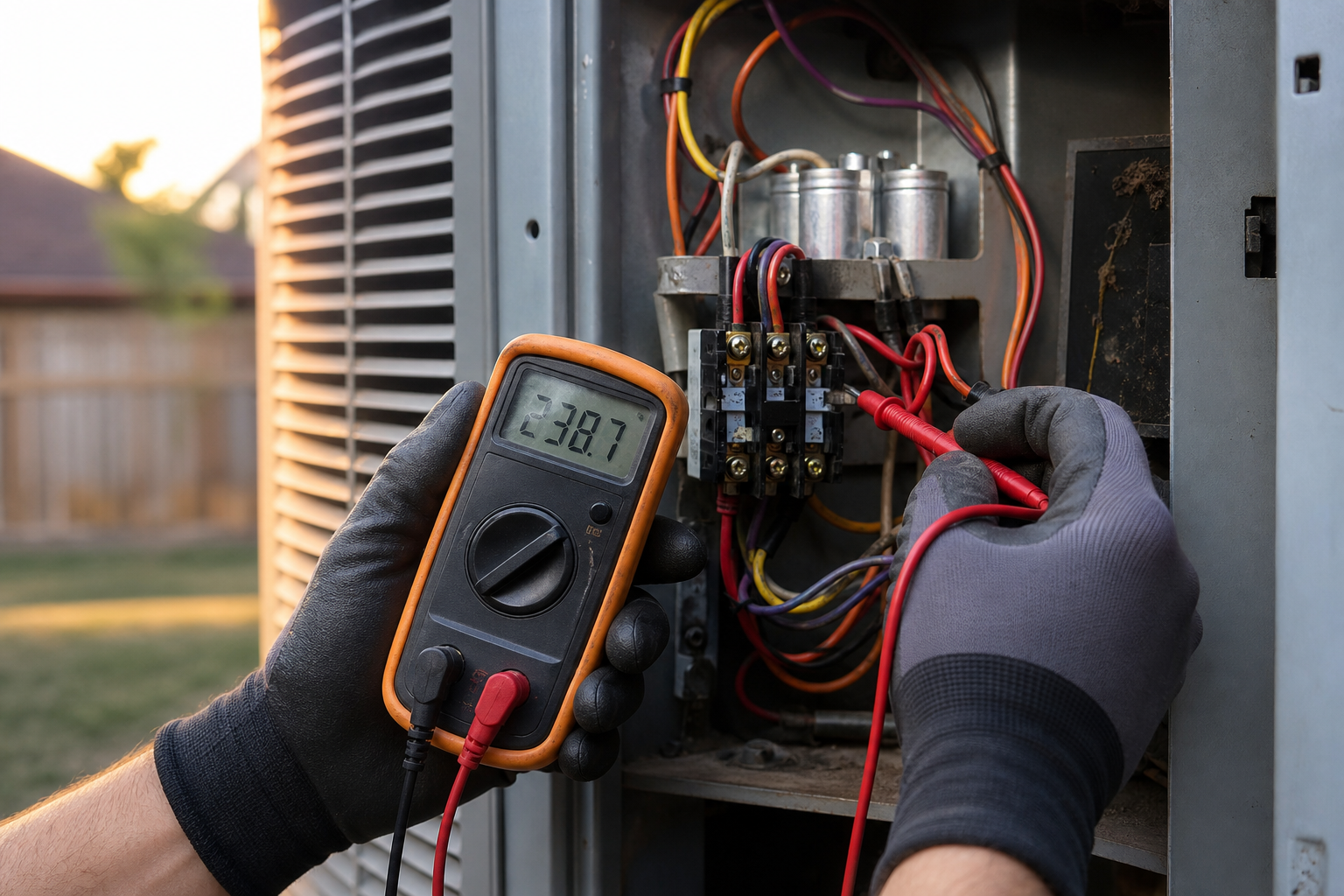
How tangled the diagnosis turns out to be. A capacitor that’s clearly blown reads in five minutes. A system throwing odd symptoms across three components can eat an hour before anybody touches a wrench. Most homeowners never think about this part, but it’s where a real chunk of the after-hours bill quietly builds. Some shops bill diagnosis on its own meter; others bake it into a flat trip fee. Ask which one before the tech starts pulling panels.
The fix itself, once it’s found. Repair pricing after the diagnosis usually lands close to a normal Tuesday rate, because the labor takes the labor it takes. A capacitor swap is a capacitor swap. The premium lives on the front end of the visit, not the back, so if a shop claims the part itself costs triple on a Sunday, catch that flag before you sign.
What an Emergency Diagnostic Fee Actually Covers
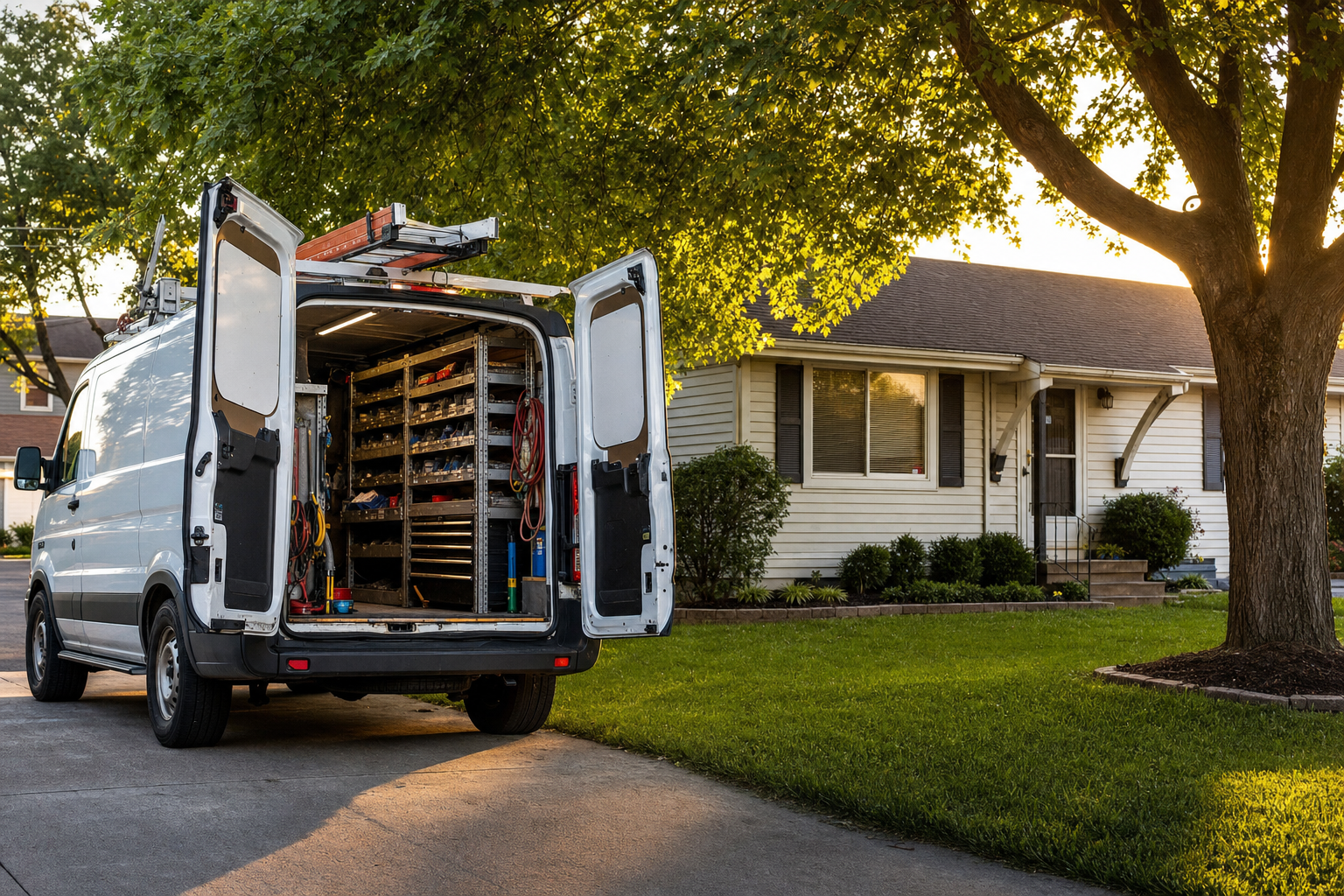
When a shop quotes you a diagnostic fee on an emergency call, what are you really paying for? Most receptionists won’t break it down. The fee covers the trip out plus the time the tech spends figuring out what’s wrong: hooking up gauges, pulling the disconnect, checking the capacitor with a meter, looking at the contactor, reading static pressure, and confirming the thermostat is calling correctly. That’s real work whether the answer takes 10 minutes or 90.
Here’s the part most folks miss, and it’s how you avoid paying emergency rates twice. At an honest shop, the diagnostic fee gets credited toward the repair when you give the green light on the same visit, so you pay the repair total instead of the diagnostic on top of it. Send the tech away and call a second shop, and you’ve paid a diagnostic for nothing plus another trip fee on top. If a shop charges you the diagnostic AND the full repair with no credit, that’s a flag too.
What the fee does not cover: it’s not a deposit toward a future visit, and it’s not a quote-only fee you can carry to another shop to price-shop the repair. And watch the labels. A “free estimate” for emergency work often hides a high trip fee on the back end, so read the language before you agree.
How Liberty Prices After-Hours Calls Differently
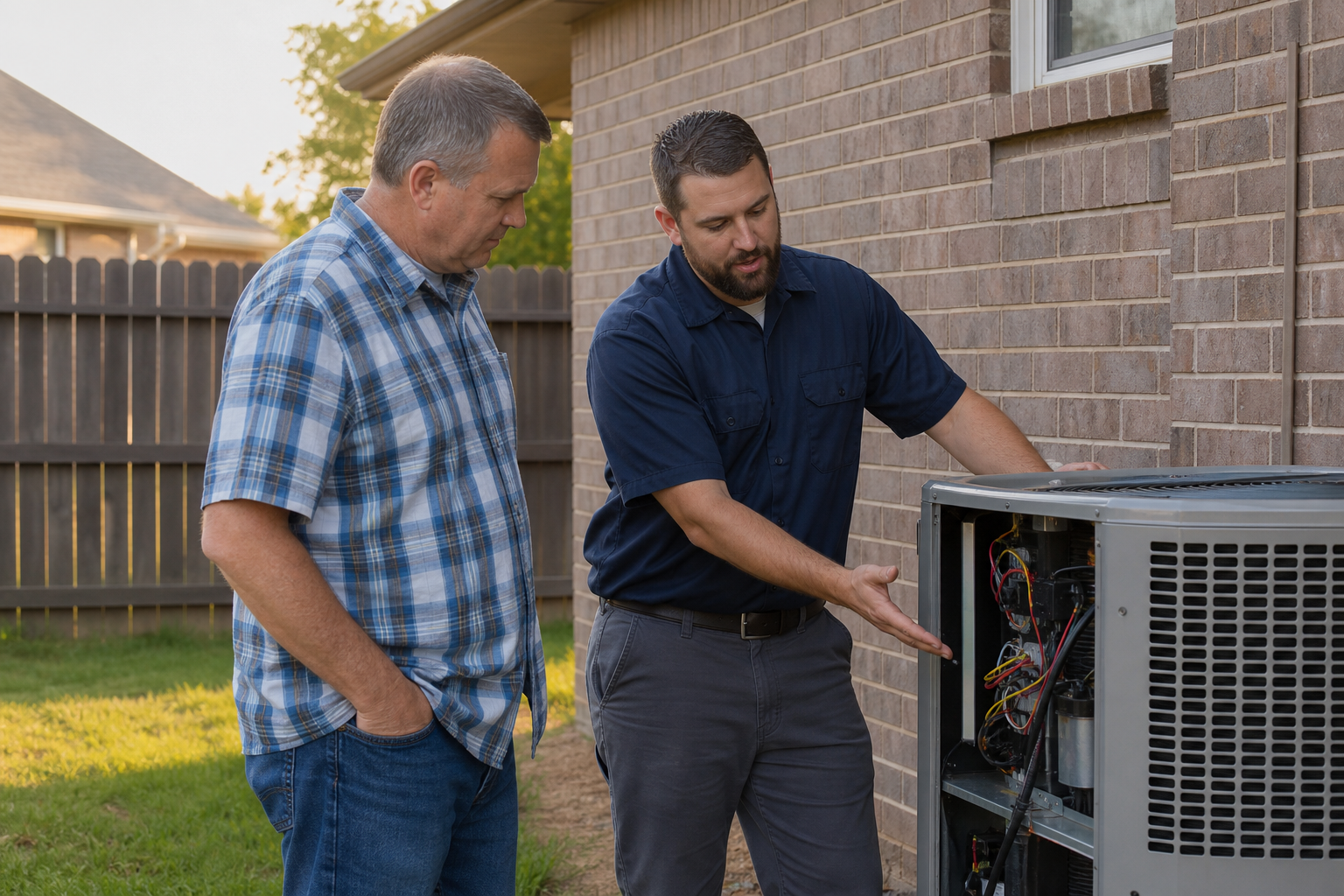
Most shops in the area run two rate sheets: one for business hours, one with a premium for nights, weekends, and holidays, usually somewhere between 1.5x and 3x the standard rate. Liberty does it differently. Our number is the same on a Sunday, a holiday, or a random Tuesday afternoon. No middle-of-the-night surcharge, no Sunday upcharge, no 4th-of-July tax on the ticket. It’s not that we don’t value our techs’ weekend time. It’s that homeowners remember which shop didn’t gouge them when they were sweating at 9 p.m. with a sick parent in the house, and that memory is worth more to us than a one-time premium.
The quote happens before any work starts. The tech tells you what’s wrong, what the fix is, and what it’ll cost, and you say yes or no. No surprise add-ons, no “well, we found something else” upsell halfway through. If the diagnosis turns up a second problem, we give you the option to handle it now or schedule it later. Plenty of folks defer a non-urgent secondary fix to a regular-hours visit, which keeps it off the emergency ticket.
The 10 percent senior discount applies on emergency calls too, not just standard ones. Some shops quietly drop senior pricing after-hours, which always struck Sam as backwards, since the folks who need the discount most are the ones least able to wait until morning in a hot house. If you’d rather skip the rate game altogether, our emergency cooling repair team runs the same pricing whatever day or hour you ring us.
When the Premium Is Worth It, and When to Wait
Not every “no AC” situation justifies paying an after-hours premium at a shop that charges one.
Call now if there’s a vulnerable person in the house. Infants, elderly residents, anyone with a heart or breathing condition, anyone on heat-sensitive medication. The cost of waiting there is a hospital visit, not a rough night, so it’s always worth the premium. Call now if it’s actively dangerous too: burning smells, smoke, exposed wiring, or water pouring from the ceiling out of a clogged drain pan. None of that waits until morning, and the longer it runs, the bigger the secondary damage and the eventual bill.
You can probably wait until morning if the house holds a livable temperature with fans running, everyone at home is healthy, and the outdoor temp is dropping into the 70s overnight. Most South County summer nights cool down enough that a healthy household can ride it out until 8 a.m., which saves the after-hours markup at any shop that charges one. The exception is the start of a multi-day heat wave with overnight lows above 78, when every shop is slammed by morning and a two-day wait for a slot costs you more than the rate you saved. Match the urgency to the household.
Emergency AC Visit Cost: Common Questions
Is an emergency AC visit more expensive than a daytime call?
At most shops, yes. The premium sits on the front end (the trip and diagnostic), usually 1.5x to 3x the standard rate for nights, weekends, and holidays, while the repair labor lands close to a normal rate. Liberty is the exception: we charge the same rate seven days a week, so there’s no after-hours upcharge on the ticket.
Does the diagnostic fee get credited toward the repair?
At an honest shop it does, as long as you approve the fix on the same visit. You pay the repair total instead of the diagnostic plus the repair. If a shop charges the diagnostic and the full repair with no credit, ask why before you agree.
What makes one emergency AC job cost more than another?
Three things: the hour you called (2 a.m. Sunday costs more than 6 p.m. Tuesday), how long the diagnosis takes, and whether the needed part is on the truck or has to wait for a supply house to open. The fix itself is usually the smallest variable.
How do I avoid paying emergency rates twice?
Approve the repair while the tech is already at your house so the diagnostic fee folds into the repair total. If you send him away and call a different shop, you’ve paid one diagnostic for nothing and you’ll pay a second trip fee on top. One visit, one ticket.
Do you charge extra on weekends or holidays for AC service?
No. Liberty charges the same rate whatever day or hour you call, weekends and holidays included, and the 10 percent senior discount still applies. You’ll hear the quote before any work starts.
Get a Straight Emergency AC Quote in Oakville
If your AC just quit and you’re stuck deciding between spending money tonight or sweating it out, call first and pin down a real number before you commit. We’ll walk you through the trip fee, the diagnostic, and how our same-rate-every-day approach shakes out on the ticket. No mystery pricing and no answering service sitting on your message until Monday. Liberty is family run, licensed, bonded, and insured, and the rate holds whatever day or hour you call. For background, the U.S. Department of Energy’s guide to home cooling systems is a solid quick read.
Call Liberty Heating Cooling & Plumbing at (314) 600-2202 or schedule online, and ask for the emergency quote up front. We run same-day emergency cooling calls across Oakville and the rest of South County at one flat rate, with the senior discount honored every time.