Serving St. Louis & Surrounding Areas

Should You Turn Off Your AC Immediately If It Smells Burnt in St. Louis?
If you are wondering should you turn off AC if it smells burnt in St. Louis, the short answer is yes, kill it at the thermostat or the breaker right now and do not turn it back on until somebody has eyes on it. A burning smell coming out of a working air conditioner is almost never harmless, and the few times it is harmless can wait an hour for a tech to confirm. The risk of leaving it running is a real fire inside the air handler or the outdoor unit, and that risk is not worth a cooler living room for the next twenty minutes.
The longer answer matters because not every burning smell means the same thing. Dust burning off the heat strip on the first cool morning of fall feels different than a hot plastic smell on a 95-degree July afternoon. One is normal for ten minutes. The other is a winding cooking inside a motor and needs the system shut down before it starts a fire. Knowing which is which keeps you from either panicking over nothing or shrugging off a real problem.
Sam at Liberty Heating Cooling & Plumbing has been pulling apart burnt-up air handlers in South County for 27 years and has seen every version of this call. Most homeowners who smell something burning wait too long because the AC is still blowing cold and nothing looks wrong. By the time the breaker trips, the capacitor or the blower motor has already cooked. If you want the full picture on how he diagnoses urgent cooling failures, the main page on Liberty’s same-day cooling work walks through how triage calls actually go.
Here’s everything you need to know about a burnt smell coming from your AC:
- The short answer and why it is the right move every time
- The five different burning smells and what each one really means
- Why the fire risk is bigger than most homeowners think
- What to check yourself before a technician shows up
- When the smell has gone past “smell” and means call 911
- How Liberty handles burning-smell calls the same day
Short Answer: Yes, Shut It Off and Here’s Why
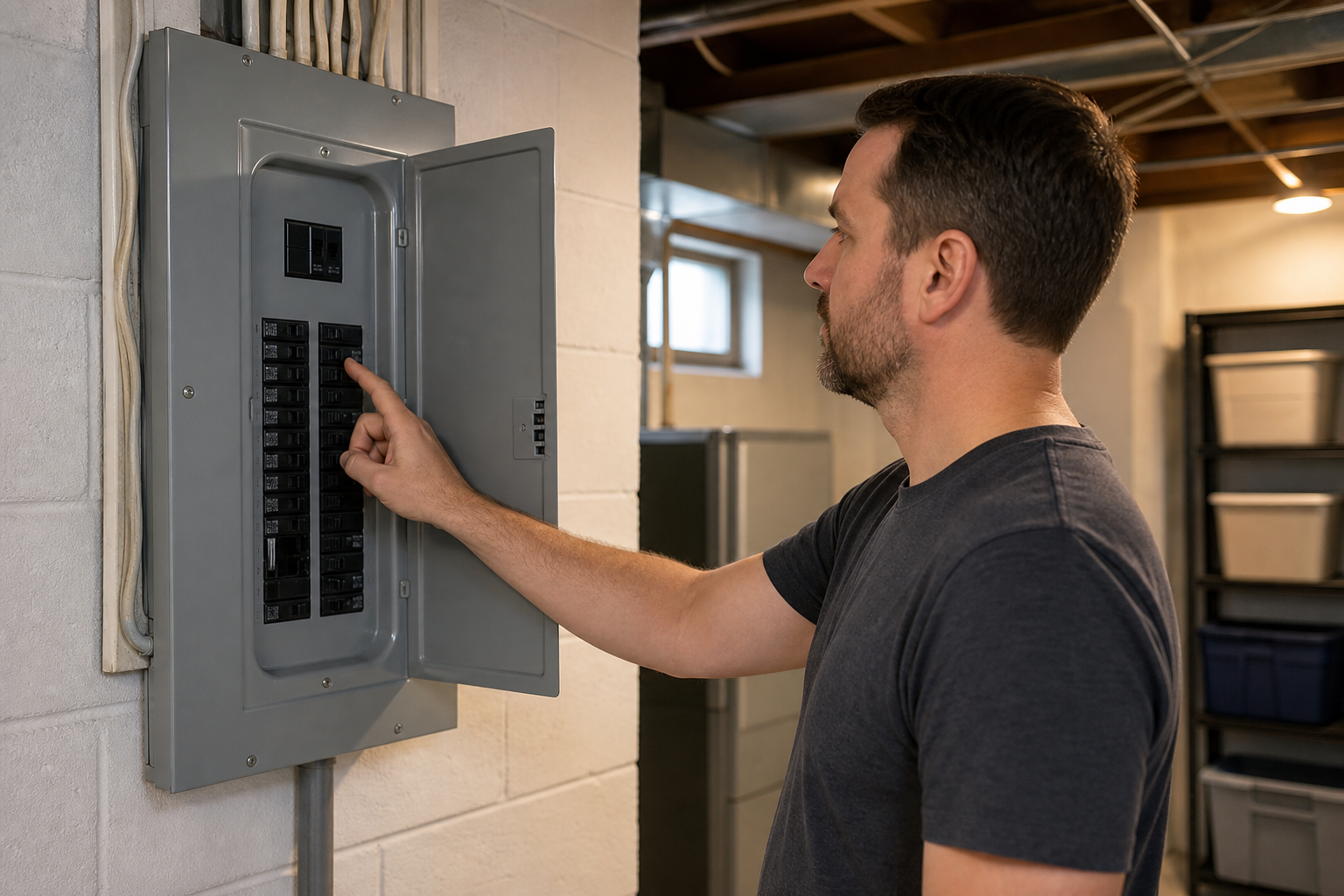
Smell something burnt? Hit the thermostat off button now. Then go find your breaker panel. You want to flip two breakers, both double-pole: one feeds the air handler inside, the other feeds the condenser outside. The thermostat alone is not enough. Even with the system “off” at the wall, power is still sitting in the contactor, the capacitor, and the blower motor wires. Those parts are exactly where a burnt smell usually comes from in the first place.
Why pull both breakers and not just one? Because a shorted winding or a slowly failing capacitor can keep warming up under line voltage even when no cooling cycle is running. Cut the electricity and the heat stops. Cut the heat and the smell stops getting worse. Easy as that.
One thing folks do that they should not: “let me run it through one more cycle, see if it clears.” That move alone is responsible for half the cooked compressors Sam has pulled out of South County crawl spaces. The smell almost never clears on its own. Each extra minute is another minute that bad part keeps cooking. Shut it down. Then call.

The Five Burning Smells and What Each Actually Means
There are five distinct burning smells an AC system can throw, and each points to a different cause. A musty dusty smell on the first hot day of the season is dust burning off the heat exchanger or the heat strip, and that usually clears in ten or fifteen minutes of runtime. If it does not clear, or you smell it mid-summer with no seasonal startup happening, treat it like the others.
A sharp hot plastic smell is the worst news of the bunch. That means a wire insulation, a contactor, or a circuit board is overheating. Plastic does not burn until temperatures are way past safe. Shut the system down at the breaker the moment you catch this one.
A sweet chemical smell that almost feels like nail polish remover is refrigerant. Refrigerant leaking onto a hot coil can produce a faintly burnt sweetness. That one is a same-day call because refrigerant displacement in a small basement room can make the air dangerous to breathe.
Burning rubber points to a belt or a motor bearing seizing up. Less common on modern systems, but plenty of older South County units still run belt-driven blowers in the basement. The fifth smell is a wet electrical odor, like an extension cord that got hot in the rain, which usually means a condensate leak has reached a control board.
The Fire Risk You’re Underestimating
Ask a homeowner what a broken AC looks like, and they will say warm air and sweat. Almost nobody pictures flames. But NFPA fire data keeps electrical distribution gear near the top of residential ignition causes year after year, and HVAC equipment lives squarely inside that bucket. The melted contactor or the popped capacitor sitting inside an outdoor unit can light up the wiring insulation around it faster than most folks would believe.
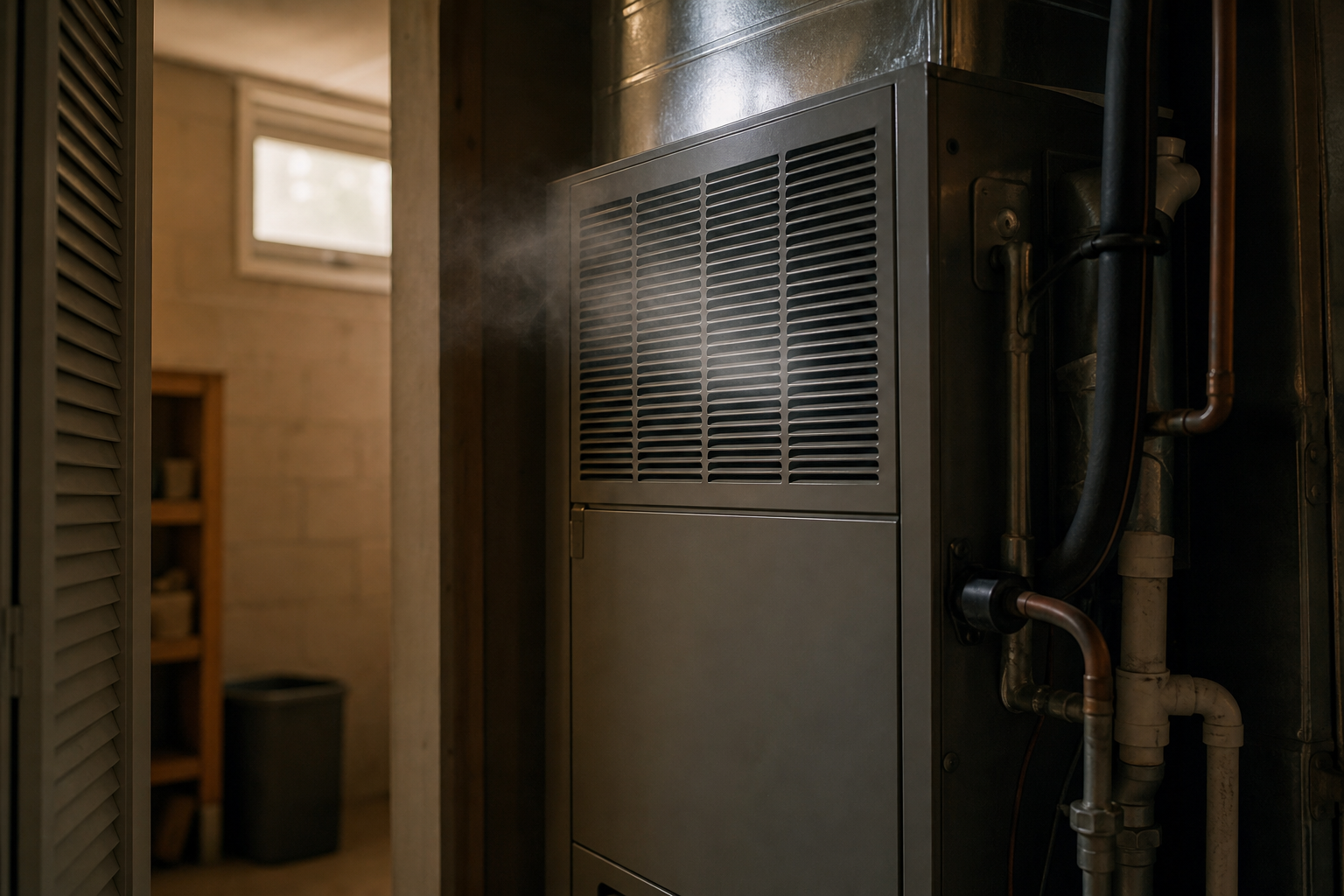
The indoor air handler is honestly the scarier of the two. It sits tucked away in a basement utility closet or an attic, hemmed in by drywall, wood framing, and whatever boxes the last homeowner shoved next to it. A flame the size of a candle inside that cabinet has plenty of fuel before any smoke alarm even notices. Worse, the newer variable-speed equipment running in subdivisions out toward Arnold has more electronics packed into the motor housing, and those electronics run hot right before they quit.
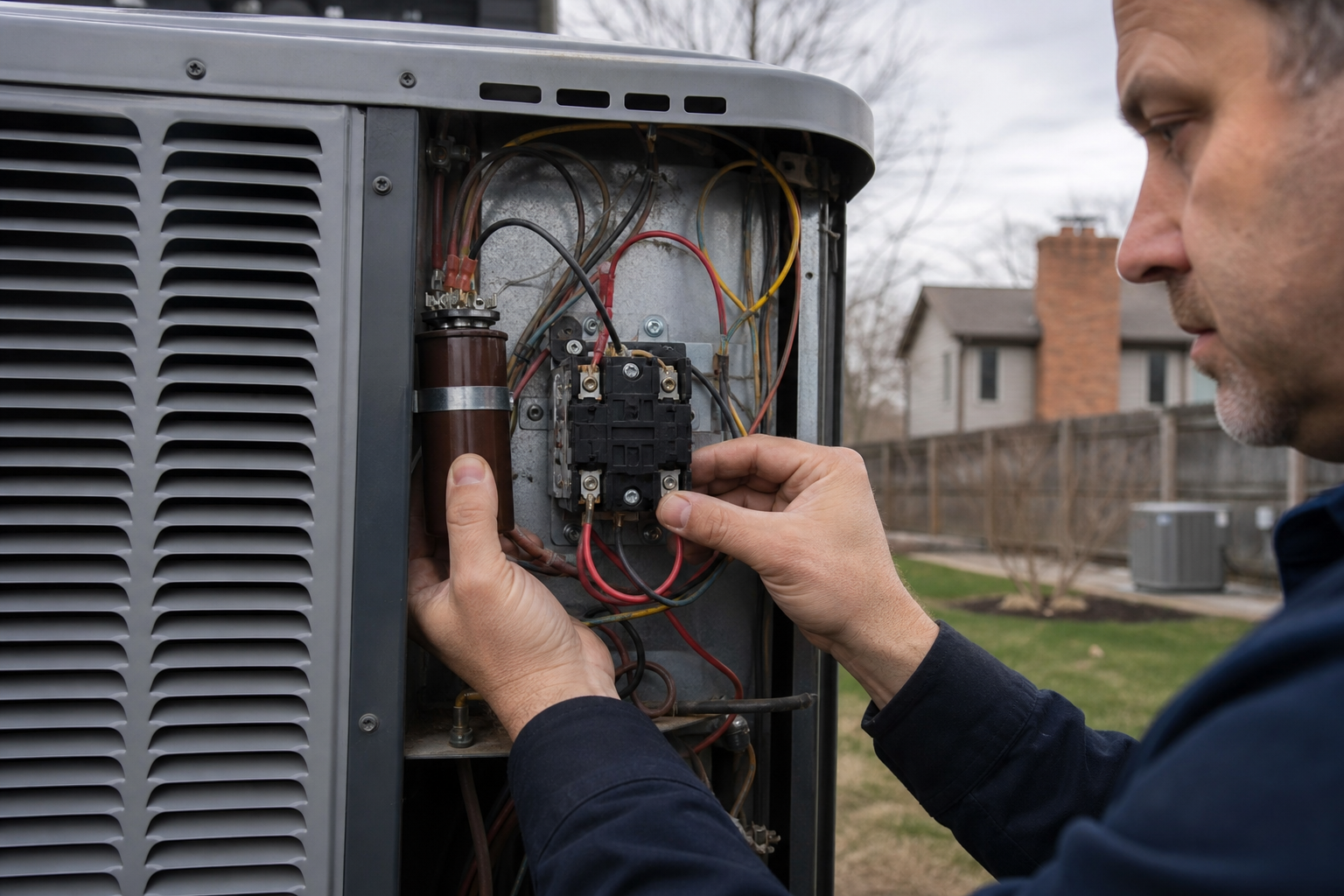
Out at the condenser, the most common ignition point is a small cylindrical part called the run capacitor. Two terminals, sits next to the contactor, lasts maybe ten years. When it shorts, it can pop, it can vent oil, and in the worst cases it lights up the wiring inside the service panel. Homeowners usually hear humming or a buzz from the outdoor unit a few days before. If a hum and a burnt smell showed up together, those two are linked, and the breaker needs to go off now.
What to Check Before the Technician Arrives
Breaker is off. Now you have a few minutes before a truck shows up, so put them to use. Step outside and walk over to the condenser. Look at the metal service panel for any dark spots, scorch marks, or chunks of melted plastic. Take a sniff near the side vents on the cabinet. If the smell is loudest out there, you are probably looking at a capacitor or a contactor issue. Do not pop the panel open. Even with the breaker off, that capacitor can still bite you. Techs discharge it on purpose before touching anything inside.
Back inside, hunt down the air handler. Basement closet, attic, maybe a hall utility space. Put your hand near the metal cabinet (don’t touch, just close). If there is heat coming off it, that is bad. Look for a haze hanging in the air. Look for dark streaks near where the wires enter the housing. Then pull the filter slot open and give it a sniff. A scorched filter is uncommon, but if you find one, that tells you the heat came from inside the blower section.
Write down or just remember what you found. It saves the tech twenty minutes of poking. Smell outside but clean air handler inside? Probably condenser. Smell everywhere with both cabinets cold to the touch? Probably the ductwork or a control board went sideways. The more details handed off at the door, the faster the right part gets pulled off the truck.
When to Stop Calling It a “Smell” and Call 911
There is a hard line between “smells funny” and “actively on fire.” Smoke you can see rolling out of any part of the system is past that line. Real heat radiating off the cabinet metal is past that line. If either one shows up, dial 911 first, the HVAC shop second. An electrical fire boxed inside a closet does not stay small for long once it has fuel like drywall paper, attic insulation, or a stack of cardboard nobody remembered was leaning against the air handler.
Heard a pop and then smelled smoke? Same deal. That sequence almost always tells you the capacitor just gave up, and there is a fair chance wiring and insulation around it are smoldering even if no flame is visible. Get the family outside. Stand across the street. Do not lift the cabinet panel to “just check.” Opening it gives the fire oxygen, which is the one thing it was missing.
Here is the part nobody warned you about. If your AC breaker tripped by itself and you smell something burning, leave the breaker tripped. Do not flip it back. The breaker tripping was the system telling you something is wrong. Sending power back into that circuit is asking for round two. Wait for a tech to find the cause first. A re-tripped breaker is one of the loudest warnings residential equipment can throw, and most homeowners shrug at it.
One last thing. If anyone in the house starts feeling lightheaded, sick to their stomach, or short of breath once the smell hits, treat it as carbon monoxide or refrigerant exposure. Out the door, fresh air, call for medical help. You don’t need a strong smell for the exposure to be real, and waiting it out is the wrong move.
Why St. Louis Homeowners Trust Liberty With Burning-Smell Emergency Calls
Sam has been answering burning-smell calls in the area for 27 years. The crew at Liberty knows every common ignition point on the residential equipment running in South County homes, from the older single-speed condensers in 1960s ranches to the newer variable-speed air handlers in subdivisions out toward Arnold. When you call and say the AC smells burnt, the first thing Sam does is walk you through shutting it off safely on the phone before he even dispatches a truck. That triage matters.
Liberty is licensed, bonded, and insured in Missouri and family-owned out of the Oakville shop. Same-day service runs seven days a week including weekends and holidays. The 10 percent senior citizen discount applies to every call, including the urgent ones. A burning smell call is not the moment somebody should be worrying about pricing games or after-hours premiums, and Sam does not run that game.
The crew also does not push for an unnecessary replacement after a burnt-up capacitor or contactor. A blown capacitor on a five-year-old system is a sixty-dollar part and an hour of labor. A blown capacitor on a twenty-year-old system that has been cooking for a while might be a different conversation. Either way, the diagnosis is honest. If you want to see how Liberty triages other urgent cooling failures, the way Sam handles same-day calls is documented on the main cooling page.
AC Smells Burnt Right Now? Shut It Off and Call This Number
You came here because something smells like it is burning, right this minute. First move is not the phone, it is the breaker panel. Kill power for both the indoor and outdoor units at the panel. Crack a window in whichever room smells strongest. Then grab the phone. The longer line voltage sits on a failing part, the uglier the eventual fix gets, and the higher the odds something actually catches inside the cabinet.
Liberty picks up same-day, every day, weekends and holidays included. Sam walks you through what to check on the phone before he sends a truck rolling, which usually saves a service call you didn’t need. For a deeper read on residential fire causes including HVAC electrical issues, the USFA home fires prevention guide is worth bookmarking once the immediate situation is under control.
Call Liberty Heating Cooling & Plumbing at (314) 600-2202 or schedule online. Seven days a week, weekends and holidays included, same-day service throughout Oakville and South St. Louis County. If you have not seen it yet, the full breakdown of how same-day cooling calls work lays out what happens when a tech actually shows up at the door.