Serving St. Louis & Surrounding Areas

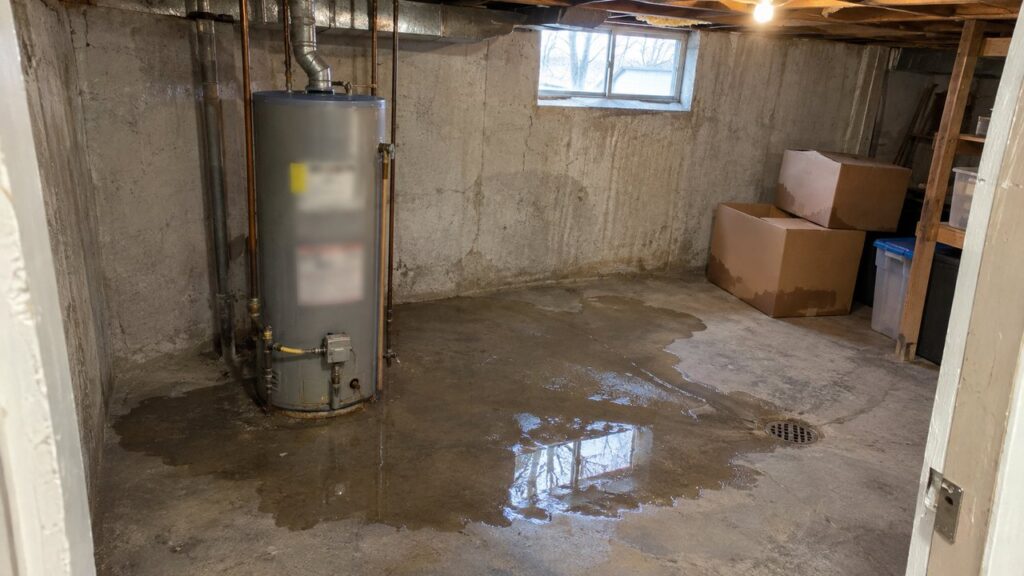
What Should You Do If Your Water Heater Is Leaking in Oakville, St. Louis?
If your water heater is leaking, shut off the cold water valve on top of the tank and turn off the gas or the power before you do anything else. Then get your stuff out of the way, take a few pictures, and look at how fast the water is coming. A slow drip from a valve can usually wait until morning. Water pouring out of the tank can’t.
Liberty is a family-owned company, and Sam Marsala has been working on water heaters around Oakville and the rest of St. Louis since 1998. A wet basement floor is one of the most stressful calls we get, mostly because people don’t know yet how bad it is. This page covers the first ten minutes, how to tell if you’ve got an emergency, and what usually happens next. For how we find the leak and fix it, see our water heater repair page.
The First Ten Minutes: What to Do Right Now
Don’t panic and don’t start taking things apart. Five quick steps, in this order.
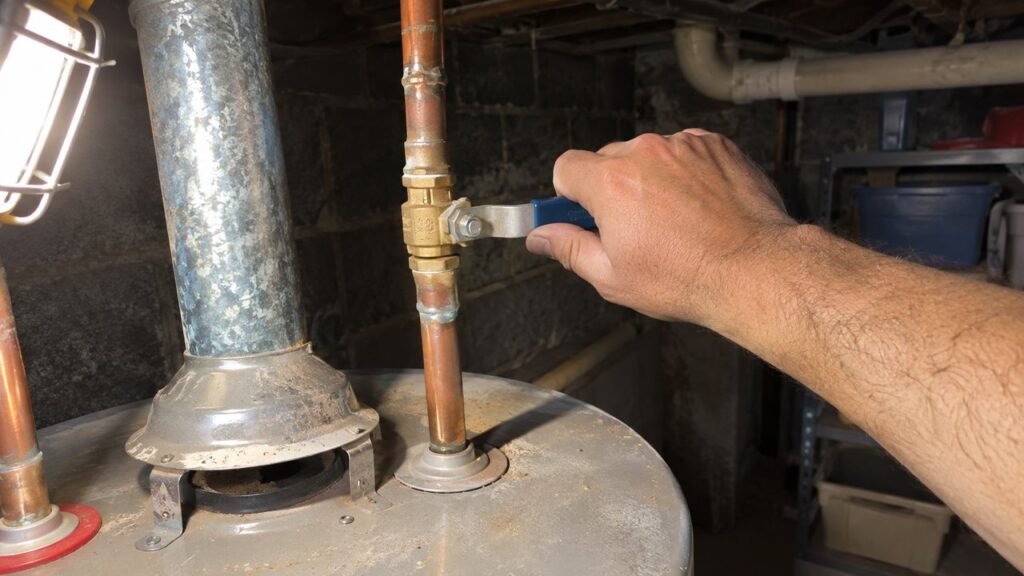
- Shut off the cold water. Look at the top of the tank. Two pipes come out of it, and the cold one has a valve. If it’s a round handle, turn it to the right until it stops. If it’s a lever, turn it so it sits across the pipe. Now no new water goes into the tank.
- Turn off the heat. On a gas tank, find the knob on the gas control box near the bottom and turn it to PILOT or OFF. On an electric tank, go to your breaker box and flip the breaker for the water heater. It’s usually a double breaker, two switches tied together.
- Move your stuff. Boxes, rugs, old photos, anything stored on the floor nearby. Cardboard soaks up water fast and falls apart.
- Catch what you can. A bucket, some old towels, a wet vac if you have one. Only do this if you aren’t standing in water near cords or outlets.
- Take pictures. Get the tank, the label on its side, the puddle, and anything that got wet. If you end up calling your insurance, they’ll ask for them.
One more thing. Keep your hands out of any water that’s coming straight from the tank. Most tanks are set somewhere around 120 degrees, and some are set a lot hotter than that. That’s hot enough to burn you.
Is a Leaking Water Heater an Emergency?
Sometimes. Sometimes it can sit until tomorrow. It comes down to two things: how fast the water is coming out, and where it’s headed.
Call Right Away If
- Water is running or spraying, not just dripping.
- The puddle keeps getting bigger even after you shut the cold valve.
- It’s moving toward carpet, drywall, a finished room, or anything you can’t replace.
- Water is getting close to an outlet, a power strip, or the furnace.
- There’s no floor drain close by for it to go to.
It Can Usually Wait a Few Hours If
- It’s a slow drip, maybe a cup or two over a few hours.
- The tank sits on bare concrete right next to a floor drain.
- You shut off the cold water and the dripping slowed way down or stopped.
In a lot of older South County houses, the water heater sits in an unfinished corner of the basement near a floor drain. That helps a lot. But plenty of people have finished their basements since then, and now the tank is three feet from new carpet and a couch. If that’s your house, even a small leak is worth a call today.
If you smell gas at any point, forget the water. Get everyone out, leave the lights and switches alone, and call the gas company from outside.
How Long Will a Water Heater Last Once It Starts Leaking?
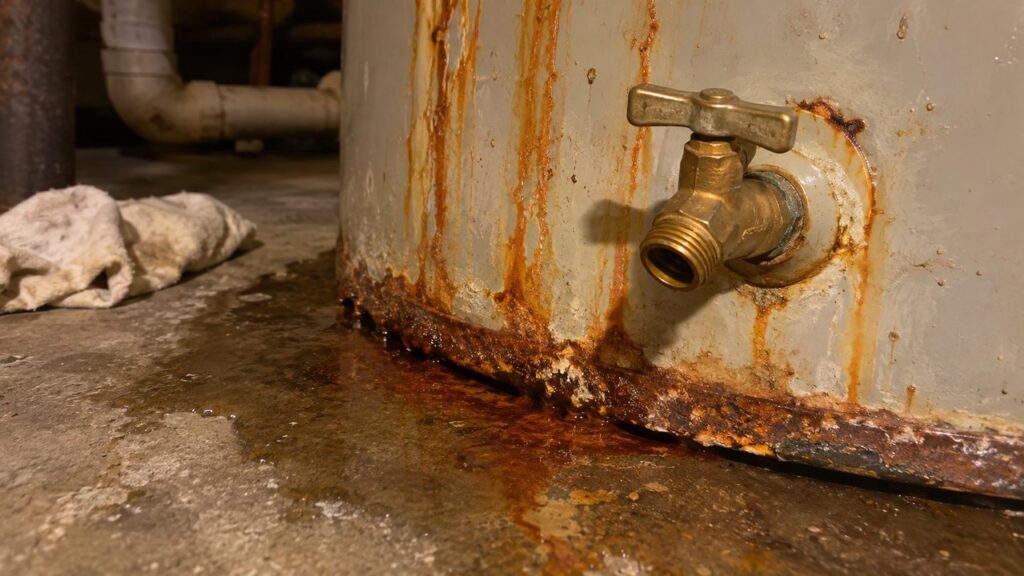
First you need to know where the water starts. A drip from a fitting, from the drain valve near the bottom, or from the safety valve on the side is usually a repair. Water seeping out of the tank itself means the tank is done. We go over how to tell them apart on our water heater repair page.
If it’s the tank, nobody can give you a real number. Some tanks drip for a few weeks. Others go from a few drops to a steady stream in a day or two.
Here’s why. A tank is steel on the inside with a thin glass coating. After enough years, the water finds a weak spot in that coating and rust starts eating through the steel. By the time you see water on the outside, the rust has already gone all the way through in at least one spot. And it doesn’t stop there.
So we tell people not to trust it, ever. Keep the cold water off as much as you can, keep things away from it, and start planning to replace it now. Our water heater installation page walks through what a swap involves.
Is It Safe to Leave a Leaking Water Heater On?
Usually not. Leaving it on keeps filling the tank, and a tank that’s rusted through will push out whatever you put in.
On an electric tank, the bigger worry is water and wiring in the same spot. The heating parts inside are wired to a circuit with a lot of power on it. Water running down the side of the tank and into the wiring cover is not something to leave alone.
On a gas tank, water running down to the bottom can soak the burner area and put out the pilot. That’s the small blue flame that lights the main burner. Rust and water down there also wear out the burner parts faster.
Don’t Run It Empty
If you drain the tank or the water drops low, the heat has to be off first. An electric heating element that runs without water around it can burn out in seconds. A gas burner firing under an empty tank can overheat the steel. Water off, heat off, every time.
You Still Have Cold Water
The valve on top of the water heater only shuts off water going into the water heater. It doesn’t shut off your house. Your toilets, your kitchen cold tap and the hose outside all keep working. You just won’t have hot water until it’s fixed.
Will Homeowners Insurance Help With a Leaking Water Heater?
Maybe with part of it. We’re not an insurance company and we can’t tell you what your policy says, so read it or call your agent. But this is how it tends to go for the people we work with.
- The water damage: When a tank fails all at once and soaks the basement, many policies help with the floors, walls and belongings that got wet.
- The water heater itself: Usually not covered. A tank that rusted out from age counts as normal wear, like an old roof.
- Slow leaks: Damage from a drip that went on for weeks or months often gets turned down, because it could have been caught sooner.
That’s why the pictures matter, and why you shouldn’t wait to call. If you want to know what to ask your agent, the state of Missouri has a plain home insurance overview with a guide and common questions.
How Common Is It for a Water Heater to Burst?
Rare. A lot rarer than the internet makes it sound.
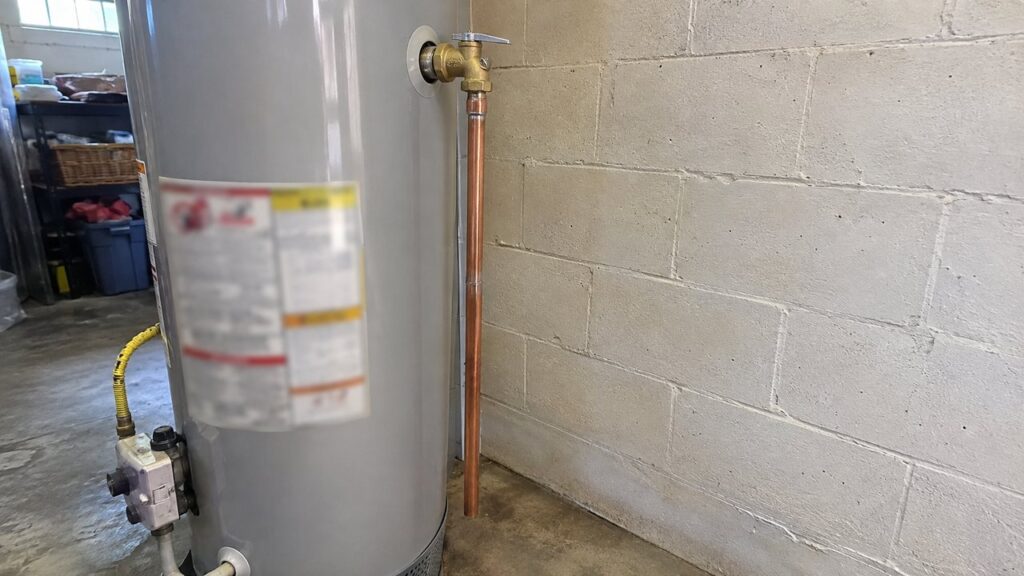
Every tank has a temperature and pressure relief valve. It’s a safety valve on the top or side of the tank with a pipe running down toward the floor. If the water gets too hot or the pressure climbs too high, that valve opens and lets water out. Its whole job is to dump water so the tank doesn’t blow.
What happens with an old tank is a leak, not an explosion. The steel rusts through and water seeps or runs out. That can still put a lot of water on your floor. You’ve got the 40 or 50 gallons in the tank plus whatever keeps coming in from the cold line, which is why shutting that valve matters so much.
The real danger is a relief valve that’s stuck, missing, or has a cap on the end of its pipe. If you ever see a plug or cap on that pipe, tell us. It should never be there.
Frequently Asked Questions
If my water heater is leaking, should I drain it?
Only if the water is coming from the tank itself and it’s headed toward something that can get ruined, and only after the cold water is off and the gas or power is off too. Hook a garden hose to the drain valve near the bottom, run it to a floor drain, and give the water a few hours to cool first if you can.
Is it OK to do laundry while my water heater is leaking?
A cold wash is usually fine, since the washer’s cold side comes from your main water line and not through the water heater. Skip hot and warm loads until it’s fixed, because those pull water through the leaking tank and refill it, and that keeps the leak going.
Why does my water heater only leak when the washer is running?
Washers snap their water valves shut fast, and that sends a quick jolt of pressure back through the pipes, which can make a worn safety valve spit or a loose fitting drip. Since the washer and the water heater often sit side by side in a basement, it’s also worth checking that the water isn’t really coming from the washer hose.
With the water heater shut off, can I still use water in the house?
Yes, as long as you only closed the valve on top of the water heater and not the main shutoff for the whole house. Toilets, the cold side of every faucet and the outside hose all keep working, you just won’t have any hot water until the leak gets fixed or the tank gets replaced.
Get Help With a Leaking Water Heater in Oakville
When we get there, we find where the water is coming from first. Then we tell you straight whether it’s a part we can fix or a tank that needs to go, and we show you what we found. If it’s the tank, we’ll go over your options and leave the old one safely shut off until the new one goes in.
Water heater leaking and the puddle getting bigger? Call Sam at (314) 600-2202, or send us a note through our contact page. We cover Oakville and all of St. Louis, and we pick up every day.