Serving St. Louis & Surrounding Areas

What Is Actually Included in a Real AC Tune-Up in St. Louis?
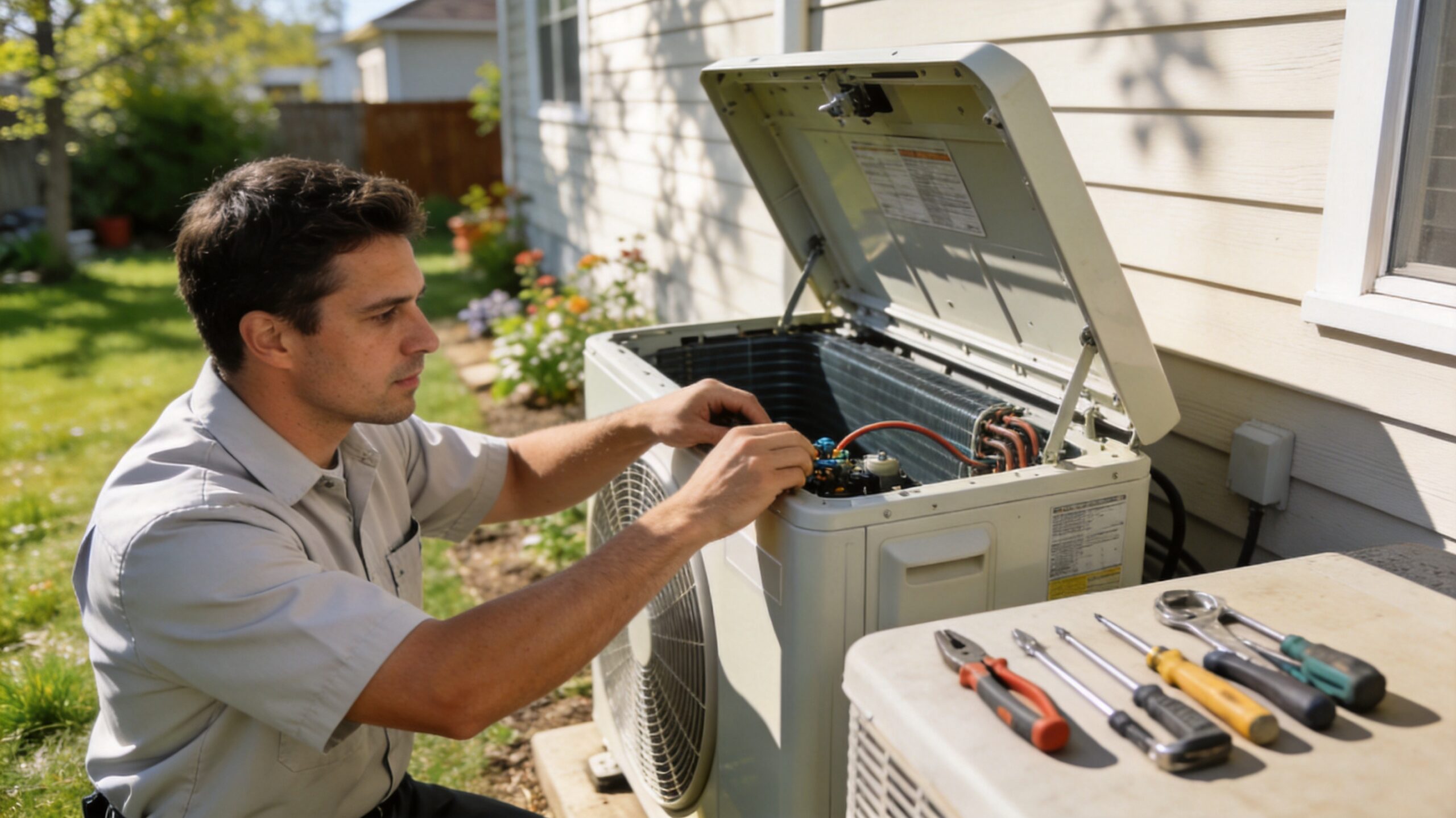
What is included in an AC tune-up in St. Louis depends entirely on who’s holding the wrench, and that’s the problem. The word “tune-up” isn’t regulated. One company’s tune-up is a real hour of checks and adjustments. Another’s is a guy who glances at your unit, swaps the filter you could have swapped yourself, and hands you a bill. Both call it the same thing.
So before you book one, it helps to know what a real tune-up actually covers, point by point. That way you can tell whether you’re paying for genuine work or a sales call dressed up as maintenance. The list below is what our techs actually do when they pull up to a house, not a marketing version of it.
Sam built Liberty’s tune-up around 27 years of seeing what fails in South St. Louis County and when. If you want the honest version of what a thorough service looks like, our team can walk you through the full inspection before anything gets scheduled.
TLDR
- A real AC tune-up has two halves: cleaning the coils and drain, plus full diagnostics.
- The electrical checks (capacitor, contactor, connections) prevent most July breakdowns.
- Cheap tune-ups skip the refrigerant and drain checks because those take time and a license.
- A thorough service tests the thermostat and the safety controls, not just the cooling.
- If your tech gives you no numbers and is gone in fifteen minutes, you got a cleaning, not a tune-up.
The Full AC Tune-Up Checklist, Point by Point
A real tune-up has two halves: the cleaning and the diagnostics. On the cleaning side, we rinse the outdoor condenser coil, check and replace the filter, clear the condensate drain line, and straighten any bent fins choking airflow. None of that is glamorous, but it’s the difference between a system that breathes and one that’s slowly suffocating.
On the diagnostic side is where the real value sits. We test the refrigerant charge, check the capacitor and contactor, tighten every electrical connection, measure the temperature drop across the coil, and run the system through a full cooling cycle to watch how it behaves. A tune-up that skips the diagnostics isn’t a tune-up. It’s a cleaning, and you should only pay cleaning prices for it.
The whole thing should take real time. If somebody is in and out of your house in fifteen minutes, they cleaned, they didn’t tune.
The Electrical Checks That Prevent Mid-Summer Failures
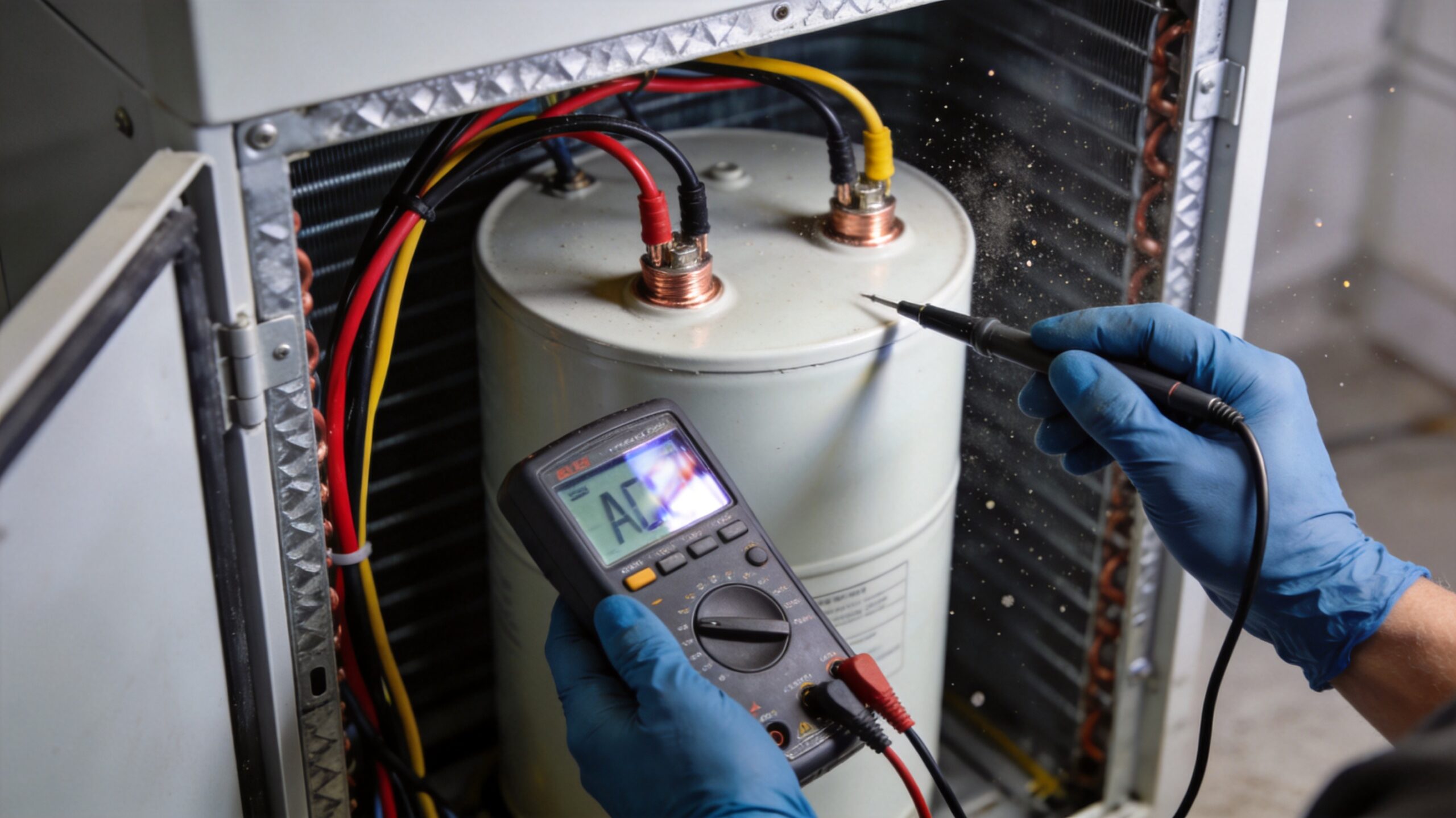
Most July breakdowns are electrical, and most of them were preventable. The capacitor is the usual suspect. It’s a small cylinder that gives your compressor the jolt it needs to start, and heat slowly kills it. We test it with a meter and read whether it’s still in spec or drifting toward failure. A weak capacitor that costs a little to swap in May becomes a dead unit on the hottest Saturday in July if nobody caught it.
We also go through every electrical connection and tighten what’s loose. Wires expand and contract with heat, and a connection that worked all winter can back out just enough to arc and burn by midsummer. A loose lug is a fire risk and a no-cool call waiting to happen, and snugging it down takes a tech thirty seconds.
The contactor gets checked too. It’s the switch that closes every time your AC kicks on, and the contacts pit and corrode over thousands of cycles. We look for burning and sticking, because a failing contactor leaves you with a unit that won’t shut off or won’t start.
The Coil and Airflow Work That Restores Efficiency
Here’s the part homeowners underrate: a dirty system doesn’t just risk breaking, it quietly robs you every month. When the outdoor coil is packed with cottonwood and dust, your AC can’t dump heat outside, so it runs longer and harder to cool the same room. You feel that as a higher bill and a house that never quite gets comfortable in August.
We rinse that coil down properly, not a quick spray but a real flush that pulls the gunk out of the fins. Then we check the indoor coil and the blower, because airflow problems stack. A clogged filter starves the system, the indoor coil ices over, and now you’ve got a frozen unit blowing warm air on the worst possible day.
We also measure the temperature drop between the air going into your return and the air coming out of your vents. That number tells us whether the system is actually moving heat the way it should. If it’s off, something in the airflow or refrigerant chain is wrong, and we’d rather find it in spring than have you find it in a heat wave.
The Refrigerant and Drain Checks Most Cheap Tune-Ups Skip
This is where the lowball tune-ups give themselves away. Checking refrigerant takes gauges, time, and an EPA license, so the cheap operators skip it. They’ll clean the coil, call it done, and never tell you the system is low. But low refrigerant isn’t a top-off situation. It means you have a leak, and a leak only gets worse.
We read the charge every time. If it’s down, we tell you straight that the answer isn’t just adding more, it’s finding where it’s going. Pumping refrigerant into a leaking system is throwing money at the ground, and any company that does it without mentioning the leak is hoping you’ll keep coming back for refills. Checking the charge is one of the core maintenance jobs every system needs on schedule.
The condensate drain is the other skipped step. Your AC pulls gallons of water out of the air, and that water rides a little drain line out of your house. When it clogs, it backs up into the pan, trips the safety float, and shuts your system down, or worse, finds your ceiling. We flush it and confirm it’s flowing, because a five-minute check beats a drywall repair.

The Thermostat and Safety-Control Test
A tune-up isn’t done until we confirm the brain works. We check that the thermostat is reading the actual room temperature and calling for cooling at the right point. A thermostat that’s off by a few degrees makes the whole system cycle wrong, running too long or short-cycling on and off in a way that wears parts out fast.
We also test the safety controls, the switches that are supposed to shut your system down before it hurts itself. The condensate float switch we already mentioned is one. There are high-pressure and low-pressure cutoffs too, and they only do their job if they actually trip when they should. A safety that’s failed quietly is no safety at all, and you don’t find out until the day it was supposed to save your compressor.
Then we run the full cycle and watch. Startup, steady run, shutdown. A system tells you a lot in those three minutes if somebody knows what to listen and look for.
How to Tell If Your Tune-Up Was Real or a Drive-By
You don’t have to be a tech to audit your own service. Start with the clock. A genuine tune-up takes the better part of an hour. If somebody was gone in fifteen minutes, you got a filter swap and a handshake.
Next, ask what they measured. A real tech can tell you your refrigerant pressures, your capacitor reading, and your temperature drop across the coil, because they actually checked. If all you got was “looks good” with no numbers, there’s a decent chance nobody put a meter on anything. Numbers are the receipt.
Finally, look at what they told you. A thorough service usually surfaces at least something, a capacitor drifting low, a coil that needed real cleaning, a drain starting to clog. Not because we’re hunting for upsells, but because a 27-year-old habit of looking closely tends to find the small stuff before it becomes the big stuff. A tune-up that finds nothing, every single year, on an aging system, is a tune-up that wasn’t really looking. If yours keeps coming back spotless, it might be time to let our team take a real look.
Why St. Louis Homeowners Trust Liberty to Do the Full Tune-Up
The reason our tune-up takes longer is that we actually do all of it, every visit, no matter how the unit looks from the driveway. Sam has spent 27 years in South St. Louis County learning that the systems which fail in July are almost always the ones somebody rushed through in spring. That lesson is built into how our techs work: the checklist doesn’t get trimmed because it’s hot or because the schedule is full.
Liberty is family-owned, licensed, bonded, and insured, and we treat a tune-up as the appointment where we earn the right to be the company you call when something does break. We’re not there to find an excuse to sell you a system. We’re there to keep the one you have running through another Missouri summer, and to tell you the honest truth about where it stands.
We also keep it fair. Seniors get a 10 percent discount, and we quote everything upfront before any work starts, so there are no surprises after the fact. If you want a service that treats your AC like it matters, our team is ready to put your system through the complete service.

Ready for a Tune-Up That Actually Covers Everything? Here’s How
By now you know the difference between a real tune-up and a drive-by, so here’s the honest advice: get the thorough version booked before the heat lands, not after your system is already gasping. Spring and early summer are the window. There’s still time to fix what we find before you actually need the AC to carry a 95-degree afternoon.
Want to see why these steps matter from someone other than us? The folks at the U.S. Department of Energy lay out exactly why regular care keeps a system alive longer. Once you’re ready for the real thing, call Liberty Heating Cooling & Plumbing at (314) 600-2202 or schedule online. Somebody’s available seven days a week, weekends and holidays included, and same-day service runs throughout Oakville and South St. Louis County.
{ “@context”: “https://schema.org”, “@type”: “Article”, “headline”: “What Is Actually Included in a Real AC Tune-Up in St. Louis?”, “author”: {“@type”: “Organization”, “name”: “Liberty Heating Cooling & Plumbing”}, “publisher”: {“@type”: “Organization”, “name”: “Liberty Heating Cooling & Plumbing”}, “datePublished”: “2026-06-01”, “dateModified”: “2026-06-01”, “mainEntityOfPage”: “https://libertyheatingcoolingandplumbing.com/what-is-included-in-ac-tune-up-st-louis/” }