Serving St. Louis & Surrounding Areas

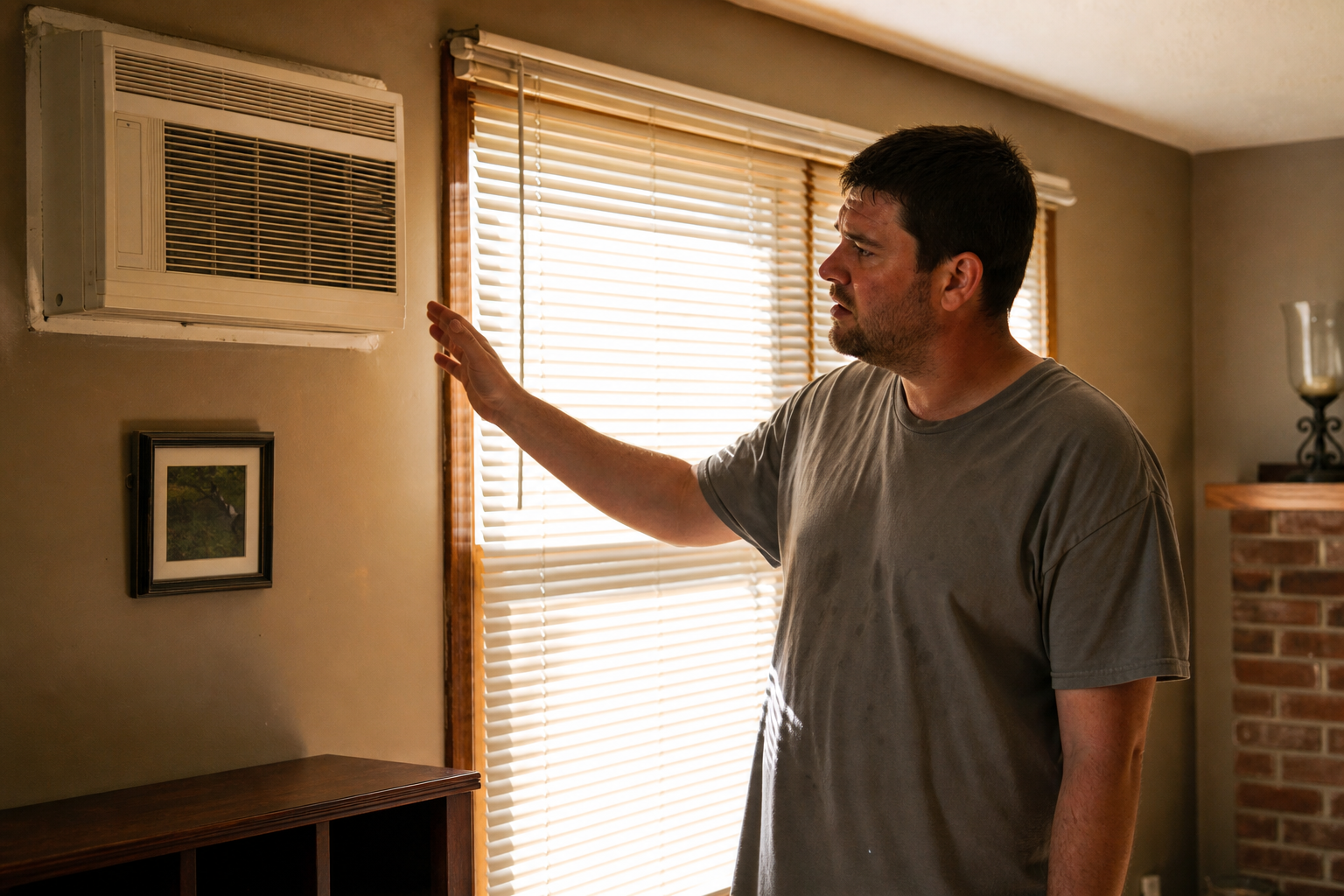
Why Does Your AC Smell Like It’s Burning in Your St. Louis Home?
Why does my AC smell like it’s burning in St. Louis is one of those questions where the honest answer depends entirely on what kind of burning smell you’re talking about. Dust scorching off a heat exchanger at the first start of the season smells different from a melting wire, and a sweet chemical odor is a completely different problem from a musty burnt smell. Each one points to a different cause, a different fix, and a different level of urgency.
The reason it matters which smell you have is that some are nothing and some are seconds away from a fire. Plenty of contractors lump every burning smell into “dust burning off, it’ll go away” because that’s the easiest thing to say on the phone. That answer is right exactly once a year and wrong the other eleven months.
Sam at Liberty Heating Cooling & Plumbing has been diagnosing burning-smell calls in South County for 27 years and knows the differences cold. If you want the full read on how the team handles same-day cooling failures and what triggers an immediate truck roll, the Oakville and South St. Louis County emergency AC page covers how Liberty triages calls like this.
Here’s everything you need to know about what a burning smell from your AC actually means:
- The five distinct burning smells and what each one points to
- Why “dust burning off” is only the right answer at first-of-season start
- How to tell hot plastic or melted wire from anything else
- What a sweet or chemical odor near the unit really means
- When a musty burning smell is mold, not fire
- What burning rubber says about belts, motors, and your next phone call
The Five Burning Smells, Translated
Pull up a chair. Five smells show up on these calls. Sam can usually call the cause from the doorway based on which one hits him first. Dry and dusty, like a hair dryer left running too long. Sharp hot plastic, the kind that bites the back of your throat. A sweet chemical smell, somewhere between nail polish remover and a fresh black sharpie. A musty burnt smell with a damp note under it, the way a wet sock smells if you ran it through a hot dryer. Burning rubber, like an old lawn mower under load.
Why bother splitting hairs? Because each smell wants a different move from you in the next sixty seconds. Dusty fades on its own and costs you nothing. Hot plastic gets the breaker flipped right now, no debate. The sweet one means refrigerant is leaving the line and a guy with a license has to find it. Musty is almost always mold on a wet coil or a clogged drain, and you can keep the system off without panic. Burning rubber says a belt or a motor is rubbing where it shouldn’t, and the system is days from quitting.
Anybody can play this game from the couch. Walk to the indoor unit. Take a slow breath through the nose. Match it to one of the five above. That one guess narrows the whole job, and a tech worth hiring will start the phone call by asking you to do exactly that.
Dust on the Heat Exchanger – Only Normal at First Start
A dusty burning smell is the only burning smell that gets a pass, and it gets that pass for exactly one situation. When the AC fires up for the first time after sitting all winter, dust that settled on the indoor coil, the blower wheel, and the air handler interior starts cooking off as the system warms back up. It smells dry and faintly burnt, kind of like a hair dryer running on its highest setting for a few minutes.
That smell should fade inside fifteen to twenty minutes and never come back. If it lingers past half an hour, or if it shows up mid-season on a system that’s been running fine for weeks, dust is not the answer. The same goes for any house where the system was used a few weeks ago. There’s no dust accumulation in that time frame to explain the smell.
Here’s the part contractors don’t tell you. “It’s just dust burning off” is the most overused diagnosis on the phone, because it lets the company avoid sending a truck. In the middle of July, on a system that’s been running daily, dust is almost never the answer. If somebody tells you that and your gut says otherwise, trust your gut and get a second look. The system either needs a real diagnosis or it needs a filter and a coil clean, but it does not need to be ignored.
Hot Plastic or Burning Wire – Stop Immediately
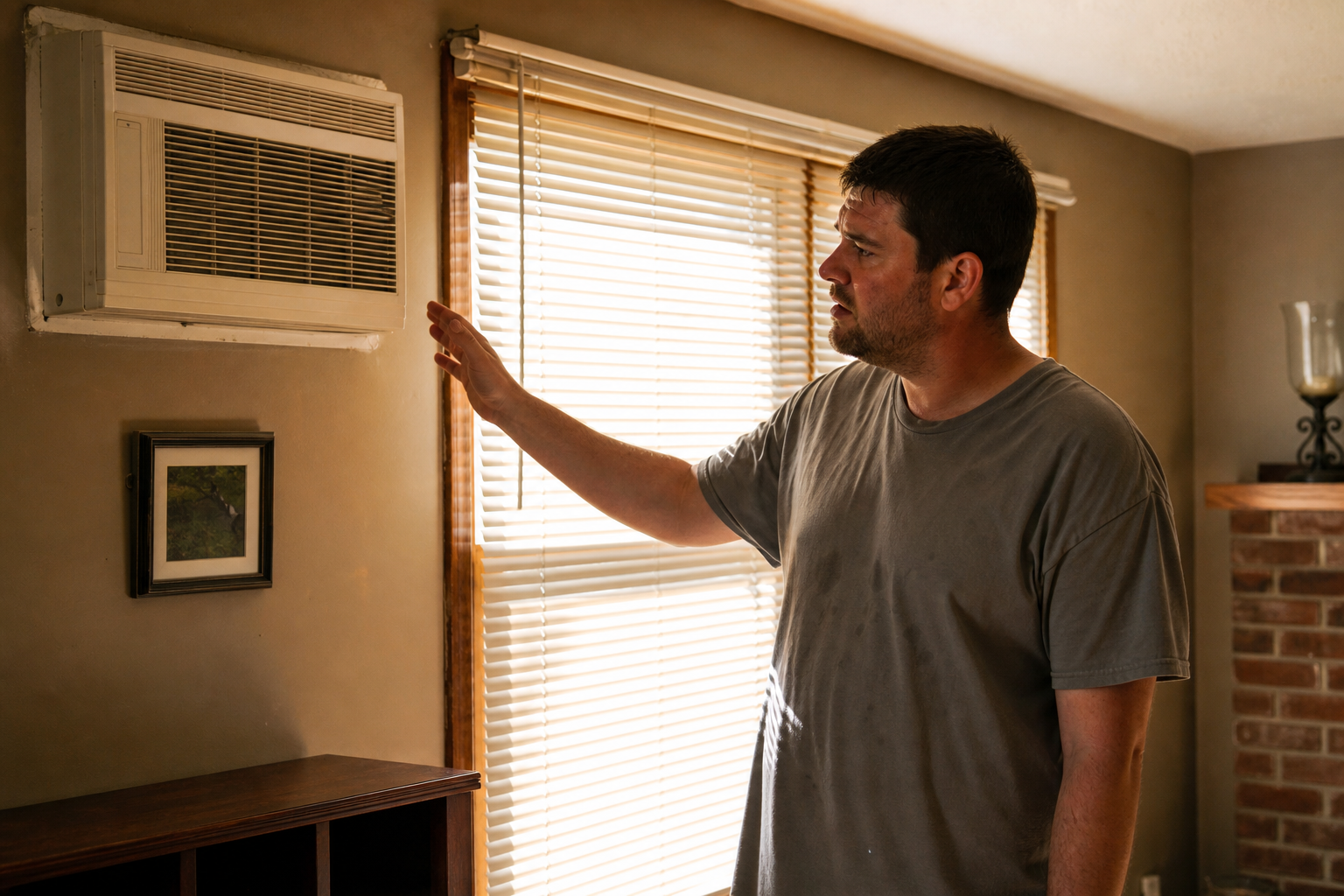
Hot plastic is the smell you do not let ride. Something is overheating right now. Usually it’s a wire melting its own insulation inside the blower box, a capacitor venting because it’s failing, or a motor winding starting to cook. The smell bites. It only gets sharper the longer the unit runs, because heat keeps building on itself with nowhere to go.
Flip the breaker. Not the thermostat, the breaker. Telling the thermostat to stop just stops it from asking the unit to cool. If a wire is arcing or a capacitor is bulging, the only switch that actually kills power is the one in your panel. Find the AC breaker, which is usually two switches, one labeled for the outdoor condenser and one for the indoor air handler. Throw both.
Then walk to the side of the house and yank the disconnect block out of the gray box on the wall next to the outdoor unit. Now the whole system has zero juice. From there, you call. Do not open the air handler yourself even if you have swapped filters a hundred times. A bad capacitor stores enough voltage to put you on the floor for hours after the breaker is off, and a few control boards do the same trick.
Hot plastic is the smell where waiting until morning gets people hurt. A wire hot enough to smell three rooms away is hot enough to light up the foam insulation wrapped around it. Get somebody out today. If nobody is picking up, your next number is the fire department’s non-emergency line.
Sweet or Chemical Odor – Refrigerant or Coolant Leak
A sweet chemical odor near the air handler or the outdoor unit means refrigerant is escaping, and it is not a smell to brush off. Newer R-410A systems have a slightly sweet ether smell that some people describe as faintly like a permanent marker. Older R-22 systems have a heavier chemical edge to them. Either way, that smell does not show up unless gas is leaving the line set.
The reason this matters past comfort is that refrigerant displaces oxygen in a small space. An air handler in a basement utility closet or a small mechanical room can build up enough fumes to make somebody lightheaded if the leak is bad enough. Crack the closest window, leave the room, and keep small kids and pets out until a tech with proper detection gear can find the leak.
There’s also a regulatory side most homeowners don’t think about. Refrigerant is an EPA-regulated substance and any active leak has to be repaired by a certified technician, not patched and refilled. Some shops will quote a “top-off” without finding the leak. That’s an illegal practice and it bleeds out within weeks. The right move is leak detection with electronic equipment, repair of the source, vacuum and proper recharge to factory spec, with documentation.
If you live in a 1960s or 1970s ranch around here, there’s a real chance you still have an R-22 system on its last legs. Those systems are common in older South County housing stock and they tend to start leaking at the flare fittings or the evaporator coil first.

Musty Burning – Mold on a Warm Component
Musty with a burnt edge is almost always mold growing on something warm and damp inside the unit. The usual spot is the evaporator coil. That coil sweats for hours every day during cooling season. The metal never really dries. When the fan kicks on and warms it back up between cycles, any film of mold or bacteria growing on it bakes off a smell that lands somewhere between burnt toast and a gym bag.
Same thing can happen inside the air handler box, on a chunk of insulation that got soaked, or in the drain pan under the coil if the water isn’t draining out the way it should. Half the time the real culprit is a clogged condensate line. Water has nowhere to go, so it pools in the pan, grows a layer of slime, and then the supply registers blow that smell into the house every time the fan cycles.
Nothing here is a fire risk. Plenty of homeowners ignore it for months. The problem is that anybody with asthma, allergies, or a weak immune system pays the price first. Fix list is short. Clean the coil. Flush the pan. Swap the filter. Clear the condensate trap. A UV light bolted on the coil keeps the growth from coming back. Older homes around here with air handlers tucked into damp basements are the ones we get called on the most.
Burning Rubber – Belt or Motor Slip
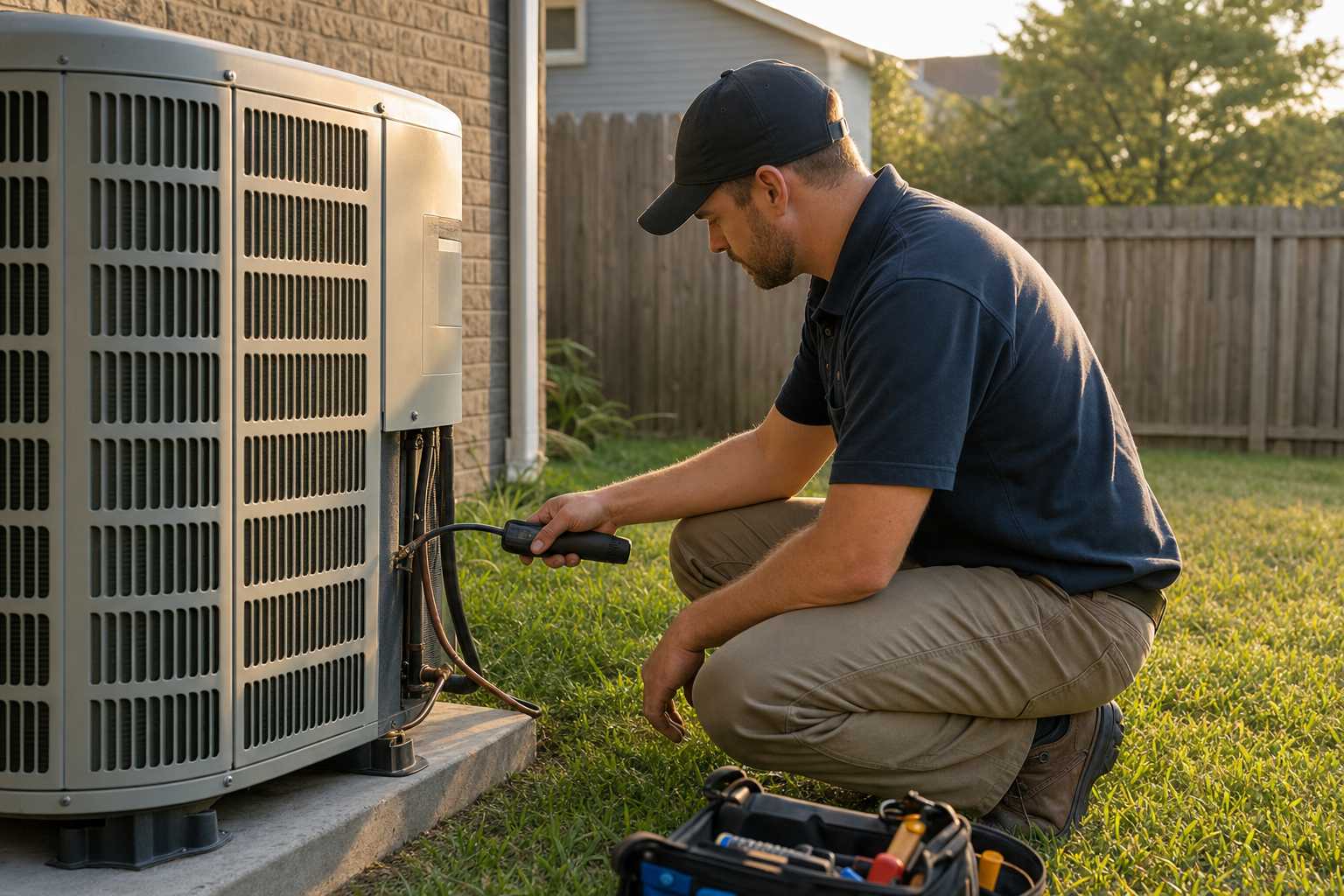
Burning rubber mostly turns up on old belt-driven blowers. There aren’t a ton of those left in houses, but every now and then we still pop a panel and find one. What you’re smelling is the belt slipping against its pulley because the motor is fighting harder than the belt can grip. Glazed belt, cracked belt, belt that has walked out of its track. All three slip. All three heat up. All three start to stink.
Direct-drive blowers, which is what most modern systems use, have no belt at all. Same kind of smell can still hit you, but the cause is different. A motor with seized or seizing bearings keeps trying to spin and ends up cooking its own windings. The varnish on those windings is basically baked plastic and rubber. Once that smell shows up, the motor has maybe a few more starts in it before it locks up entirely.
Cut the power and try to start it once. Listen. A hum with no air moving, a high whine, or a click followed by dead silence all point the same direction. Motor is dying. Get on it before it goes all the way out, because a frozen blower motor likes to take the run capacitor with it on the way down, and sometimes the control board too. Same-day call usually pays for itself versus replacing two parts instead of one.
Why South County Homeowners Trust Liberty With Burning-Smell Diagnostics
Sam has been answering burning-smell calls in this area for 27 years, and he’s seen every one of the five smells more times than he can count. That kind of run teaches you to triage on the phone before sending a truck. If it’s first-of-season dust burning off and the rest of the system sounds normal, he’ll tell you to wait it out and save the diagnostic fee. If it’s hot plastic or refrigerant, the truck is rolling that day.
Liberty is licensed, bonded, and insured in Missouri, and family-owned out of the Oakville shop on Ridgetop View Drive. The crew knows the local housing stock, from the older single-pane homes around Mehlville and Lemay to the newer subdivisions toward Arnold and Imperial. That housing knowledge feeds into how a burning smell gets diagnosed. A 1965 ranch with a 30-year-old air handler in a damp basement has a totally different fault profile than a 2010 build with a sealed mechanical room. The team reads the smell against the system age and the install location before guessing at the cause.
A 10 percent senior citizen discount applies to every service call, regular hours or otherwise. No carve-outs, no fine print. Same-day service is the standard seven days a week including weekends and holidays. To see how Sam’s team handles incoming emergency cooling calls and what a real diagnostic visit looks like, the way the crew triages same-day cooling failures is documented on the main emergency cooling page.
Smelling Something Burning From Your AC Right Now? Here’s What to Do
If you landed here because your AC actually smells burnt right now, the next move depends on which of the five smells you’re dealing with. Dust at first-of-season start can wait fifteen minutes to confirm it fades. Anything else, especially hot plastic, refrigerant sweetness, or burning rubber, earns a phone call today. Hot plastic specifically earns the breaker shutoff first and the phone call second.
While you’re waiting on a tech, keep the system off at the breaker if there’s any chance of an electrical issue. If the smell is strong enough that family members are coughing or feeling lightheaded, leave the house and call from outside. The Consumer Product Safety Commission keeps a useful guide on carbon monoxide and combustion safety in homes at the CPSC carbon monoxide information center that’s worth a read for anyone who wants to understand combustion appliance risks in general. If you want a fuller breakdown of which sudden cooling failures actually count as emergencies, Liberty’s same-day emergency cooling guide walks through the triage logic the crew uses.
Call Liberty Heating Cooling & Plumbing at (314) 600-2202 or schedule online. We are available seven days a week including weekends and holidays. Same-day service available throughout Oakville and South St. Louis County, and over to Monroe County IL.