Serving St. Louis & Surrounding Areas

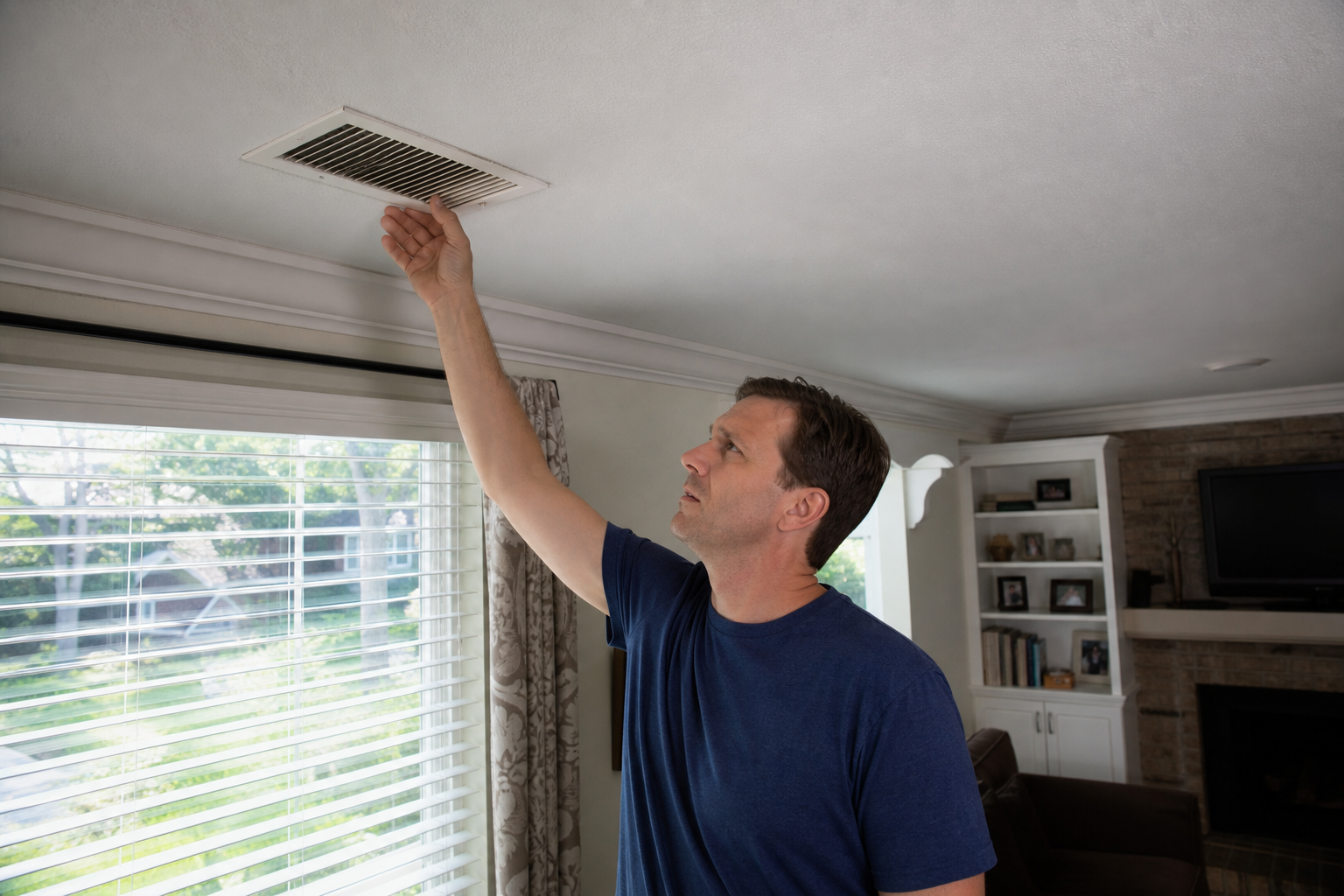
Why Is Your AC Suddenly Blowing Warm Air? Your 10-Minute Self-Check Before You Call
Cooling fine yesterday. Today the vents are pushing warm air and the house is climbing. First thing: breathe. Don’t panic, and please don’t start flipping every switch you can find. About a third of the warm-air calls we get around Oakville turn out to be something you can catch yourself in ten minutes, with nothing but your eyes and a flashlight. The rest do need a tech. But even then, the ten minutes you spend right now tells us where to start and gets you cool sooner. So think of this page as a do-it-this-second checklist. Work it straight down, top to bottom, before you dial a soul.
If this is a one-time “it just quit today” thing, keep reading. If your AC keeps losing its cool every few weeks and you want the full breakdown of what’s actually failing inside the system, read our companion guide on why an AC runs without cooling instead. And if your system won’t turn on at all, no air moving anywhere, that’s a different problem covered in our first-thing-to-check guide for an AC that stops.
Set a Timer and Work These Five Checks in Order
Here’s the whole sequence, start to finish. Each step takes a minute or two. Do them in this order, because the early ones are the cheap fixes and the later ones tell us what a tech needs to bring. Grab a flashlight and let’s go.
1. The Thermostat (2 minutes)
Walk to the thermostat first. Confirm it says COOL, not HEAT and not FAN. On FAN the blower runs and moves room-temperature air all day, which feels exactly like broken cooling but isn’t. Now drop the set point a good five degrees below whatever the room reads and listen. If it’s a battery model and the screen is dim or blank, pop in fresh batteries before you do anything else. A dying thermostat battery will drop the cool signal on the hottest afternoon and leave the fan running warm. If the screen wakes up and the outdoor unit kicks on after you lower it, you may have just fixed it for free.
2. The Breaker and Disconnect (2 minutes)
Head to your electrical panel. Most central systems run on two breakers, one for the indoor blower and one for the outdoor unit. A tripped breaker doesn’t always look tripped. It can sit in a mushy middle position that looks on but isn’t. Push each AC breaker firmly all the way off, then all the way back on. There’s also a small gray disconnect box on the wall right next to the outdoor unit. Make sure its pull-out block is seated fully. If a breaker trips again the moment you reset it, stop. That’s an electrical fault, not a reset job, and it needs a tech before anything gets damaged.
3. The Air Filter (1 minute)
Pull your filter and hold it up to a light or a window. If you can’t see light coming through it, it’s choking your system, and that’s a five-minute fix you can do yourself. A packed filter starves the indoor coil of airflow, and starved airflow is the single most common reason a healthy AC starts blowing warm. Slide a clean one in with the arrow pointing toward the unit. If the old filter was truly filthy, don’t just swap it and walk away. A blocked filter often means the coil has already iced up, which is your very next check.
4. The Indoor Coil for Ice (2 minutes)
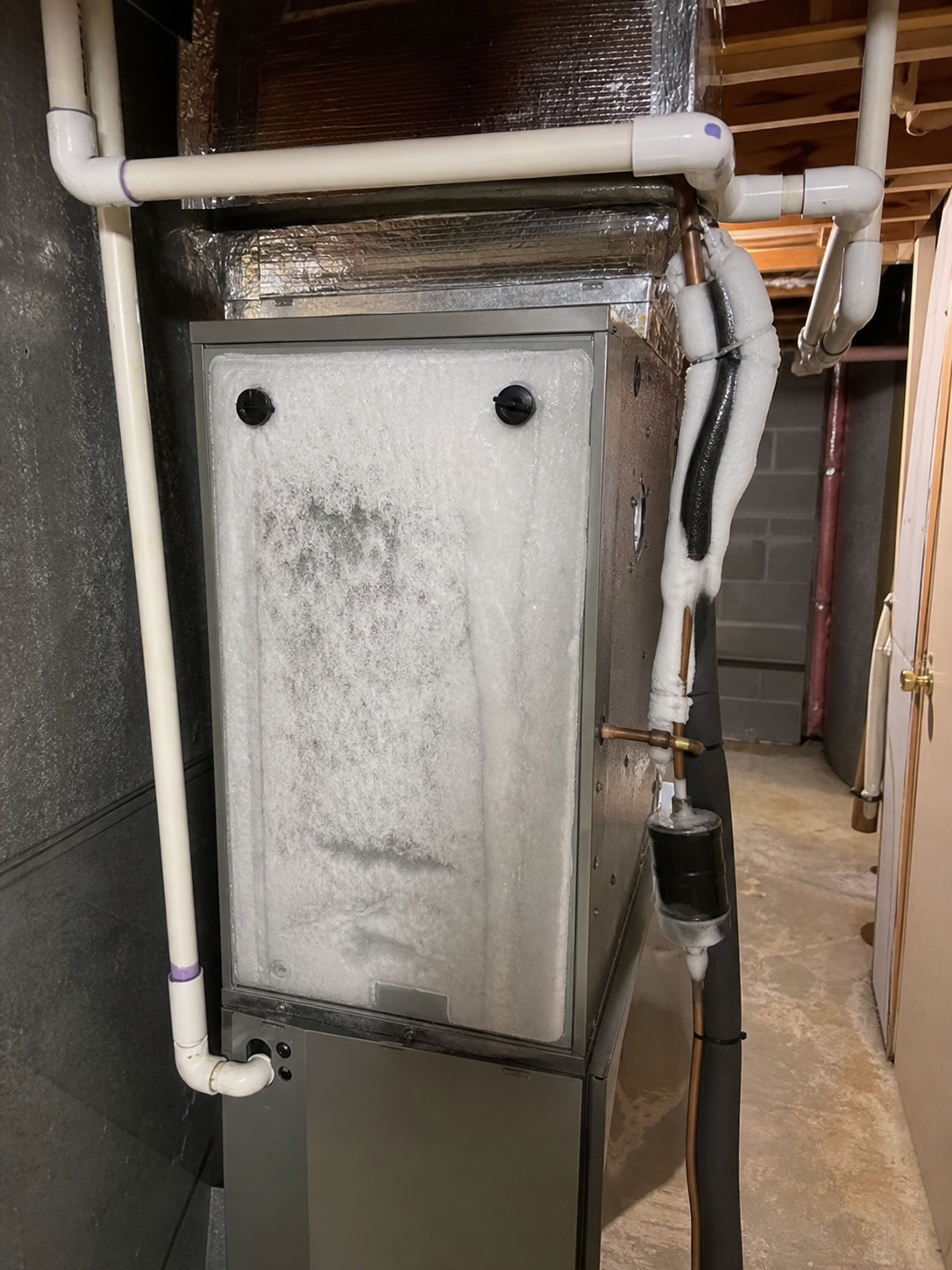
Now go find your indoor unit. That’s the big metal box down in the basement or tucked in a utility closet. Look at the copper lines coming out of it. See frost on that copper, or a straight-up block of ice creeping onto the cabinet? Your coil’s frozen. And a frozen coil can’t cool a thing, no matter how hard that fan blasts. So here’s the move: flip the thermostat to OFF, then set the fan switch to ON. Running the fan alone pushes room air over the ice and melts it down quicker. Throw a towel under the unit too, because all that ice has to go somewhere, and where it goes is water on your floor. A full thaw runs a few hours. Don’t rush it, I know it’s tempting. Once it’s clear and your fresh filter is in, fire it back up. If it ices over again inside an hour? That one’s a call for us.
5. The Outdoor Unit (2 minutes)
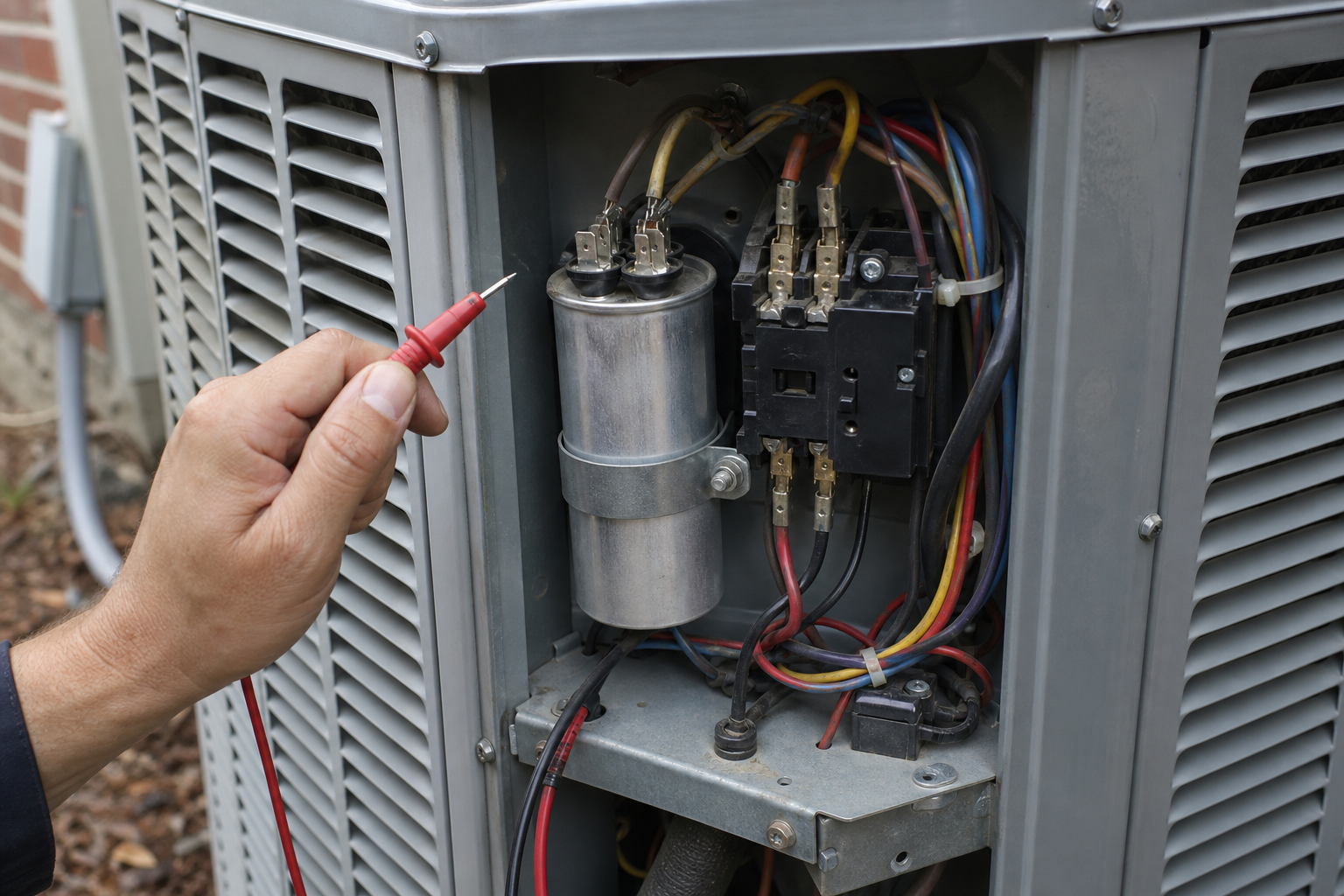
Last stop, walk outside to the condenser with the thermostat still calling for cool. Look and listen. Is the big fan on top spinning? Do you hear the compressor running? While you’re there, clear away any tall grass, leaves, or clutter piled against the sides, because a smothered outdoor unit can’t dump heat and slowly gives up on cooling. Then read the pattern. What you hear out here is the biggest clue you can hand a technician, so make a mental note before you head back inside.
Read Your Results: What Each One Is Telling You
Now put it together. Three outdoor patterns cover almost everything, and each one points somewhere different.
- Fan spinning, compressor humming, but still warm air inside. The unit has power and it’s trying. This usually points at the refrigerant side or a coil that needs a meter on it. You’ve done all you safely can. Time to call.
- Dead silent, no fan, no hum. That’s a power or control problem: a breaker that won’t hold, a bad contactor, or a low-voltage wire. If resetting the breaker didn’t hold in step 2, this needs a tech.
- Humming but the fan won’t turn. The unit has power but a motor can’t start. Shut it off at the thermostat so it isn’t sitting there straining, and call. Running it in this state just adds wear.
If steps 1 through 4 already got you cooling again, great, you saved yourself a service call. If you landed on any of the three patterns above, or the coil re-froze, you’re past what a homeowner can safely chase. The next step needs meters and gauges, and that’s us.
What to Do While You Wait for the Technician
Alright, you’ve decided to call. A few small moves now keep the house bearable and stop things from sliding downhill while you wait. Found ice, or water pooling around the indoor unit? Leave the system flat OFF, not just idling. Pull the blinds and curtains on whatever side the sun’s beating on to keep that radiant heat out. Get some ceiling fans going, and a box fan or two, because moving air makes a warm room feel a good few degrees cooler on your skin even though the thermometer hasn’t budged. Once it cools off outside in the evening, crack the windows. And lay off the oven and the dryer during the hottest stretch of the afternoon. None of this fixes the AC, I’ll be straight with you. It just buys you some comfort until the truck pulls up.
Warm Air Now? Get Liberty on the Way Today
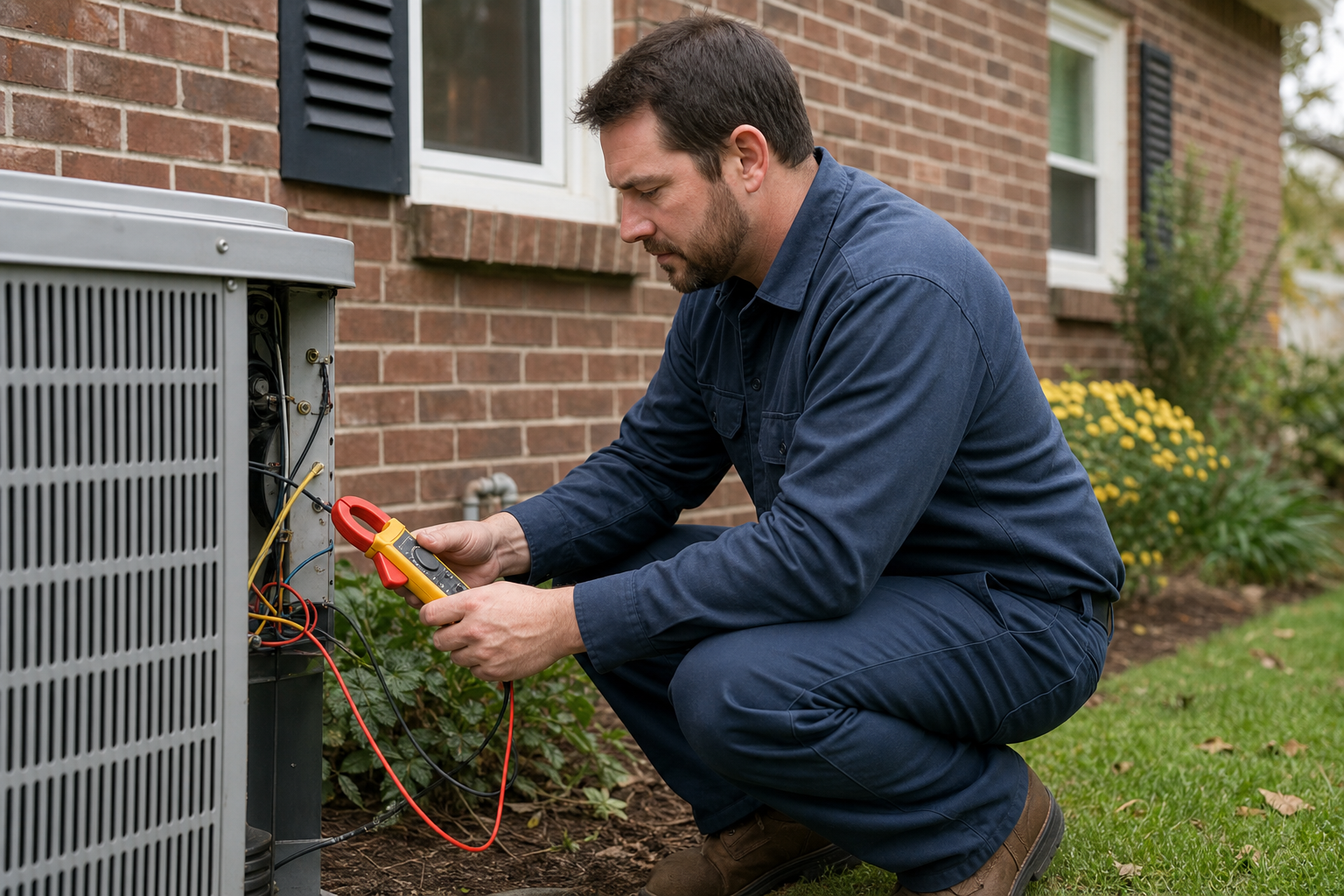
When the checklist runs out and the air’s still warm, that’s our cue. Liberty Heating Cooling & Plumbing works right out of Oakville, and Sam’s put 27 years into South County systems, so a warm-air call in the heat of summer is about the most routine thing we run all week. We roll up with the clamp meter and the gauges already on the truck, find the real failure instead of guessing at it, and tell you straight what broke and what it runs before we lay a hand on anything. Somebody answers the phone seven days a week, weekends and holidays right along with them, because nobody should be stuck sweating in an 85-degree living room waiting on Monday. Folks 65 and up get 10 percent knocked off the ticket. And we’re a family shop, fully licensed, bonded, and insured, so you know who’s standing behind the work.
Ready when you are. Call (314) 600-2202 or book same-day AC repair in Oakville online, and if it truly can’t wait, our emergency AC service gets someone out fast.
Quick Questions About Warm Air Right Now
My AC was fine yesterday and blowing warm today. Is that an emergency?
Not usually a safety emergency, but it’s worth acting on the same day, especially in a heat wave with kids, pets, or older adults in the house. Run the five-step check first. If you land on a power problem or a coil that re-freezes, call and we’ll get someone out, often the same day.
How long should I let a frozen coil thaw before turning the AC back on?
Give it a few hours with the system OFF and the fan set to ON. Rushing it just refreezes the coil and puts you back at square one. Once every bit of ice is gone and you’ve got a clean filter in, try cooling again and watch whether it ices up a second time.
Can I just add refrigerant myself to get cold air back?
No. Refrigerant is sealed at the factory and never gets used up, so if it’s low, it leaked out and needs a licensed tech to find and fix. It’s also regulated, and topping it off without sealing the leak just wastes it. Skip that step and call instead.
The outdoor fan is spinning but the air inside is still warm. What now?
You’ve reached the end of what’s safe to check yourself. A spinning fan with warm indoor air usually means the refrigerant or coil side needs a gauge and a meter to read. Note what you saw and heard outside, then give us a call so we come ready.
Do you charge to come out same day for a warm-air call?
We’ll go over any diagnostic or trip fee with you on the phone before we head out, so there are no surprises. You’ll always know the number up front. Call (314) 600-2202 and we’ll walk you through it.