Serving St. Louis & Surrounding Areas

Is a Broken AC an Emergency in Oakville, or Can It Wait Until Morning?
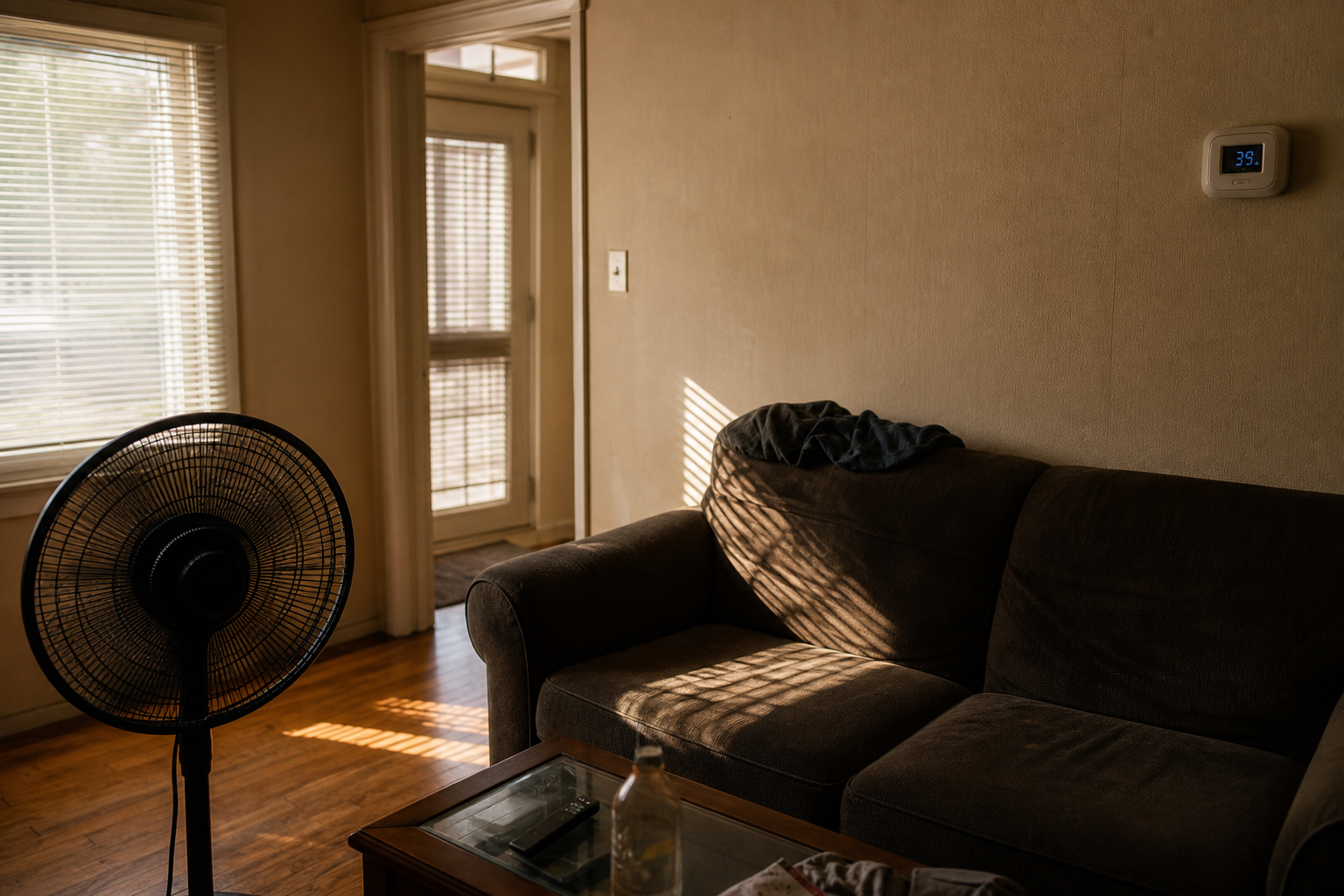
So the AC quit, and now you’re standing in a warm house doing math in your head. Is this a pick-up-the-phone-right-now problem, or something that keeps until the shop opens? That’s the real question this page answers. Skip the yes-or-no headlines, because the honest call comes down to just two things: who is in the house, and what the unit is actually doing. Run those two checks and you’ll usually know within a minute which way to go.
There’s a money angle nobody warns you about, too. Some shops treat every after-hours phone call like a five-alarm fire because the after-hours rate sheet pays better. Sam doesn’t play it that way. A good chunk of the time a two-minute conversation settles the whole thing, you sleep fine, and you book a normal daytime visit. The trick is knowing which side of that line you’re on. If you want the raw heat numbers behind all of this, the guide on what indoor temperature makes no AC a real emergency covers them in full. This page is about the decision itself.
Here’s what you’ll walk away knowing:
- The one-minute check to run before you dial anybody
- How the people living with you swing the answer, fast
- The safety red flags that override the clock completely
- What a real after-hours visit costs you versus holding until morning
- Practical ways to keep everyone comfortable if you decide to wait
The Two-Question Check to Run Before You Dial
Start here before you touch the phone. Question one: is there anyone home who can’t just shrug off a warm night? Question two: is the system doing anything alarming, a smell, a sound, water, sparks, or is it simply sitting there dead and quiet? A dead-and-quiet unit in a house full of healthy adults is almost never worth paying a premium at eleven at night. A unit that’s making noise or smells wrong, or a house with a newborn or a grandparent in it, flips the whole thing on its head.
If both answers come back calm, congratulations, you’ve got a wait-until-morning situation and you can breathe. If either one trips, keep reading, because the next two sections are written for exactly your night. And if you’re honestly on the fence, lean toward calling. A triage conversation costs you nothing, and a shop worth its salt will talk you out of a truck you don’t need instead of running the meter.
Who’s Under Your Roof Tonight Changes the Answer
The same broken AC is a shrug for one household and a genuine problem for the next, and the whole difference is who’s sleeping there. A healthy thirty-something can ride out a warm evening with a fan and a cold shower and be fine by breakfast. Put an infant, a frail parent, or someone with a heart or breathing condition in that same house and the margin gets thin in a hurry.
Babies under a year can’t shed heat the way grown-ups do, so a warm room wears on them long before it bothers you. Older folks, especially anyone living alone, often don’t clock how hot it’s gotten until they’re already struggling, because both the thirst signal and the sweat response fade with age. Stir in blood pressure medication, heart trouble, COPD, or a pregnancy, and the body’s built-in cooling gets even less dependable. If any of that describes someone in your house, a dead AC on a hot night is a same-day call, and I wouldn’t second-guess it.
This is also where a quick phone triage earns its keep. Tell whoever answers exactly who’s home, their rough age, and any health conditions. That one detail bumps you up the priority list and tells the tech what he’s walking into before he even loads the van.
Red Flags That Beat the Clock No Matter the Hour
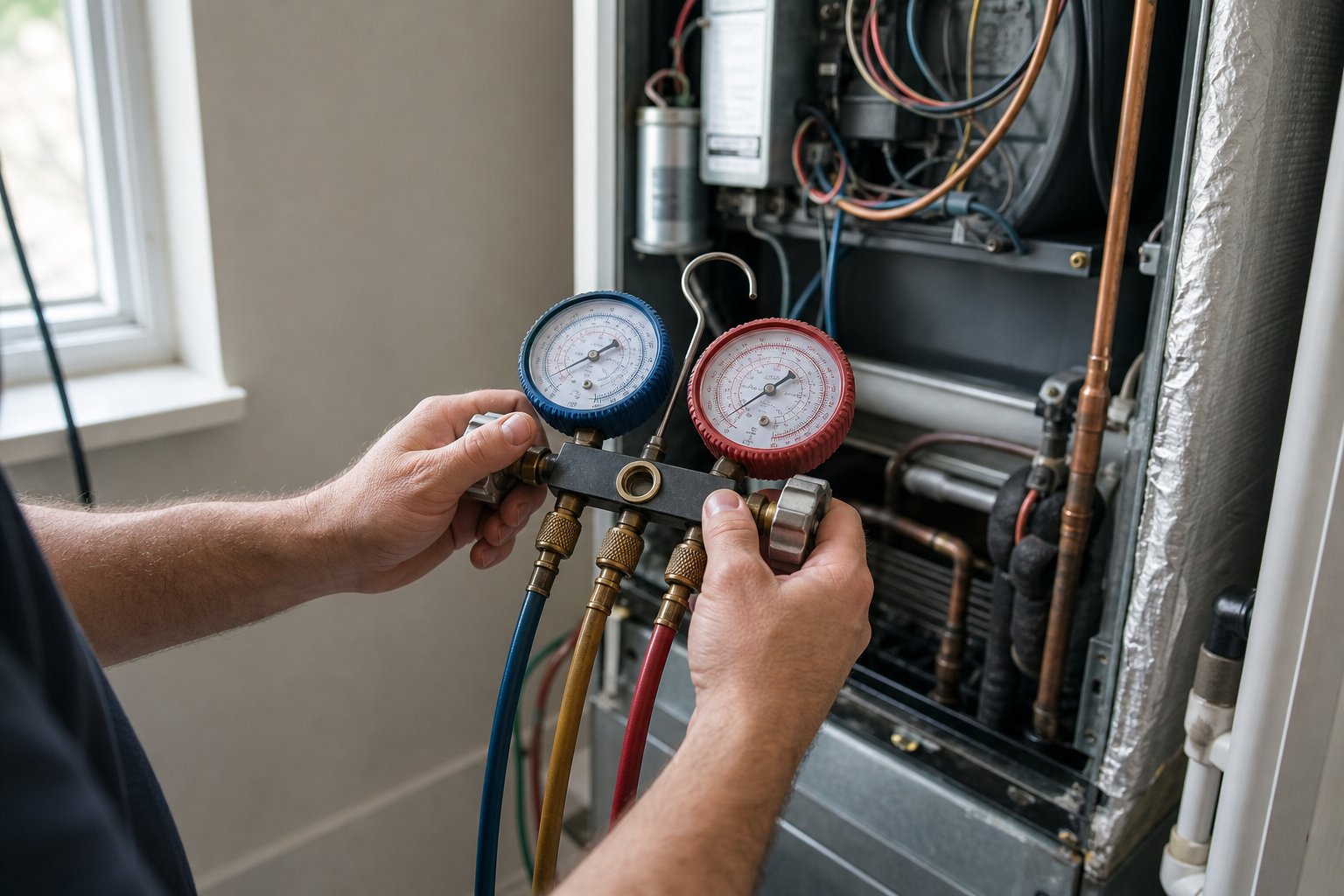
Some failures don’t care what time it is or who’s home. If you catch any of these, shut the system off at the breaker and call, day or night, healthy household or not.
- A burning or electrical smell rolling off the unit. That’s its own beast with its own fixes, so cut the power first and read up on why an AC smells like it’s burning before you do anything else.
- A hiss or a faintly sweet chemical odor near the indoor coil. That usually means refrigerant is leaking into the room, and in a tight basement or closet it can crowd out the air you’re breathing. Crack a window and step outside.
- Water pouring out of the indoor unit and down a wall or into the ceiling. Every hour that keeps going turns a cheap fix into drywall and mold work.
- Anything electrical: sparks, a scorched outlet, a breaker that won’t stay set, or a panel that buzzes. Leave the power off and let a pro look.
None of those are wait-until-morning problems. They’re the line between a repair and a house fire or a flooded ceiling, and they’re the exact reason emergency service exists in the first place. If you can’t tell whether a strange noise or smell qualifies, our emergency AC repair line will help you sort it in a couple of minutes.
Calling After Hours vs. Waiting: What Actually Happens
Say you dial the emergency line tonight. Here’s the real sequence. Sam or somebody on the crew picks up and runs you through a few quick questions first: who’s home, what the unit’s doing, what you’re smelling or hearing. Plenty of the time that conversation alone cracks it, a tripped breaker or a filter so clogged the coil iced over, something you can handle yourself while he stays on the line. When it does need a truck and it’s a genuine safety issue, someone heads out that evening.
Now say you wait instead. You grab the first normal slot in the morning, you skip any after-hours premium, and you get an unhurried diagnostic in daylight, when supply houses are open and a tech can actually source whatever your system needs. For a plain no-cool with healthy people in the house, waiting is usually the smarter and cheaper move, not the reckless one. What you trade for it is another warm night. If the house is holding a livable temperature and nobody’s fragile, that trade is easy. If it isn’t, it’s not.
What you’re really weighing is comfort and a little money against safety. When safety isn’t in play, let it ride and keep the cash. When it is, the after-hours cost is the last thing worth fretting over. And if your real question is what a specific fix runs, don’t guess off a website. Call and ask for a quote so you get a real number for your actual situation.
Decided It Can Wait? Get Through Tonight Like This
If you’ve run the two checks and landed on morning, a handful of moves make the wait a lot more bearable. Start with the windows. Pull every blind and curtain on the west and south sides while the sun’s still up, because the heat blasting through glass in late afternoon does more damage than the outdoor air on its own. Once the sun drops and it’s finally cooler outside than in, throw everything open and get a cross-breeze running.
Pick the coolest room in the house and set up camp there. In most homes around here that’s the basement, or the lowest floor on the shaded side. Aim a fan at whoever needs it most, and lay a damp cloth on the neck or wrists, which pulls heat off a person faster than you’d expect. Keep water moving, too, small sips often rather than one big glass, and give the coffee and beer a rest tonight since both work against you.
If it’s a rough heat stretch and the wait stretches long, remember the county keeps cooling centers open on extreme days. Libraries, senior centers, and the like will let anyone walk in and sit in the air conditioning for a few hours. There’s zero shame in parking a vulnerable family member in one while you hold out for a morning appointment.
Broken AC Questions Oakville Homeowners Ask
Should I call for a broken AC at night, or wait until morning?
If everyone home is healthy and the unit is just sitting there dead and quiet, waiting until morning is fine, and cheaper. Call that same night if someone vulnerable is under your roof, or if the unit is smelling, hissing, sparking, or leaking water.
Does Liberty charge extra for after-hours emergency calls?
Sam runs a phone triage first and often solves it with no truck at all. When a genuine after-hours visit is needed, he’ll be straight with you about it up front. For an exact price on your situation, call and ask for a quote rather than trusting a number off a website.
Is a broken AC dangerous for a baby or an elderly person?
It can be. Infants and older adults handle heat poorly, so a warm house wears on them well before it bothers a healthy adult. If someone like that is home and the AC is down on a hot night, treat it as a same-day call.
What should I do the second my AC stops working?
Check the thermostat batteries and the breaker first, then scan for anything alarming: a burning smell, a hiss, water, sparks. If it’s all clean, you probably have a wait-until-morning fix. If anything’s off, shut the system down at the breaker and call.
Why Oakville Leans on Liberty When the Cooling Quits
Liberty runs out of a family shop right here on Ridgetop View Drive, and Sam’s been taking these cooling calls around South County for 27 years. That much time on the job is mostly why the phone triage works so well. He’s heard the gap between a nuisance and a real problem enough times to sort them in a question or two. So you get a straight answer, not an automatic truck roll padded onto your bill.
The company is licensed, bonded, and insured in Missouri, and Sam’s crew answers the phone every day of the week, weekends and holidays included. Neighbors 65 and older get ten percent knocked off any service call, and that holds whether it’s a Tuesday lunch hour or a Sunday at midnight, with no weekday-only fine print buried anywhere. Because the crew works these streets all season, they already know how a 1960s Mehlville ranch behaves compared to a newer build out toward Arnold, and that read feeds straight into how fast they tell you to move.
Want to see how a standard cooling repair actually runs, from the first call through the fix? The Oakville AC repair page lays out the whole process.
AC Down and Not Sure? Here’s Your Next Move
Bottom line, if your AC just died, run the two checks. Anyone fragile in the house, or any burning smell, hiss, spark, or active water leak, means tonight. A quiet dead unit with healthy folks around it can almost always hold until the shop opens without putting a single person at risk.
Either way, somebody at Liberty actually picks up and walks you through it before sending anyone out, so you never pay for a visit you didn’t need. Curious what your system’s even doing while you wait? The U.S. Department of Energy keeps a solid, plain-English rundown at its home cooling systems guide.
Ready when you are: Liberty’s line rings through to (314) 600-2202, and there’s an online scheduler if you’d rather book that way. The crew covers Oakville and the surrounding South County suburbs every day of the week, holidays and all, and it’ll cross the river into Monroe County, Illinois for same-day calls too.