Serving St. Louis & Surrounding Areas

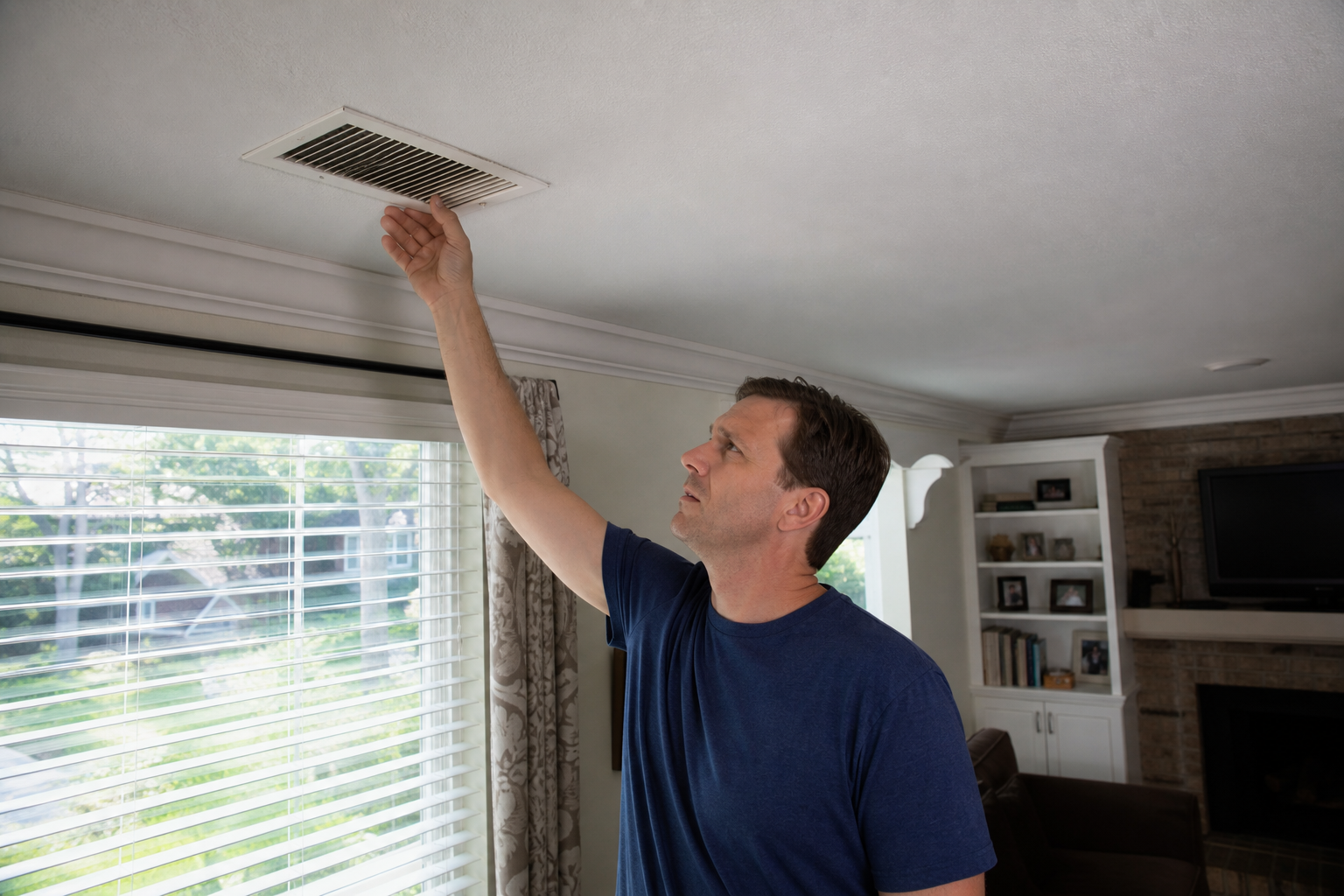
Why Is AC Suddenly Blowing Warm Air? Start With What Changed at Your House
Why is AC suddenly blowing warm air when it was fine last week? More often than you’d think, the clue is whatever happened right before it quit. Maybe a storm blew through Tuesday night, somebody edged the yard, a new thermostat went on the wall, or it was just the first real scorcher of June. Sam Marsala has been fixing air conditioners around St. Louis since 1998, and on a warm air call his first question is always the same: what changed?
So that’s how this page is laid out, one “what changed” at a time. Find the one that sounds like your week. If no air is coming out of the vents at all, that’s a different animal, and our page on what to do when the AC suddenly stops covers it. Cooling has been slipping for weeks? Jump to the bottom section.
Right After a Storm or a Power Blink
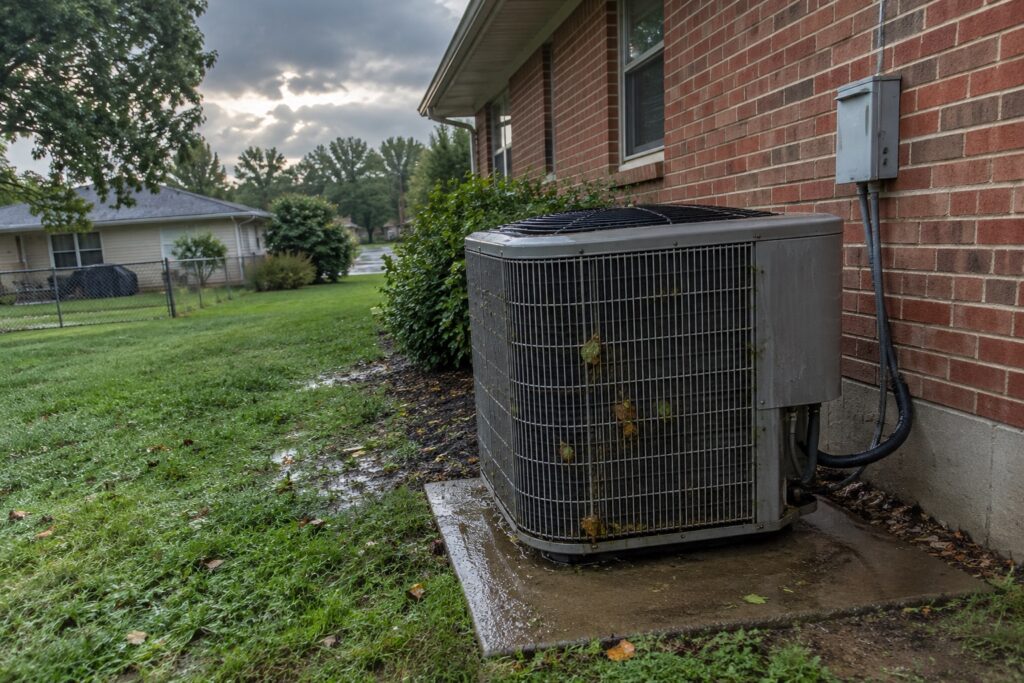
We get those summer storms where the lights blink twice and come right back. Most people don’t know their AC is on two breakers, not one. The furnace fan inside has its own, and the outdoor unit has a bigger double breaker all by itself. Trip only the outside one and the fan keeps right on blowing (just not cold air).
A lightning strike nearby, or a surge when the power snaps back, can also cook parts in the outdoor unit. The capacitor takes the worst of it. It’s a little metal can that gives the motors their kick to start, and newer units have a control board that’s just as touchy. Lose either one and the outside fan sits still, or it hums and won’t spin.
What you can do: open the panel, find the breaker marked AC or condenser (sometimes just “outside”), and flip it off and back on one time. Trips again? Leave it off and call us, since something’s shorted. And give the system five minutes after the lights come back before you decide it’s broken. Plenty of units sit out a built-in delay on purpose.
Right After Yard Work
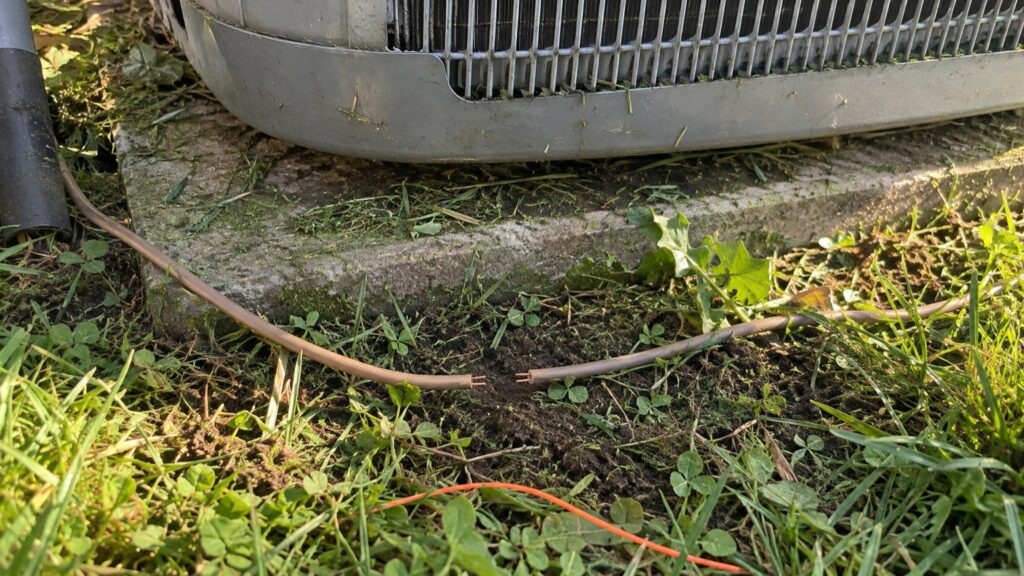
This one catches people off guard. There’s a skinny tan wire, about as thick as a phone charger cord, running from the house out to the condenser, and it’s the only thing telling the outside unit to turn on. A string trimmer goes right through it. You won’t hear a thing.
With that wire cut, the thermostat calls for cool, the fan inside kicks on, and the outdoor unit just sits there waiting for a message that never comes. Air’s moving. It isn’t cold. Take a walk along the base of the unit and look for a nick or a clean cut in that tan wire, and if it runs right beside the thick black power line, leave the splice to us.
Mowing can cause two other headaches. Bump the gray box on the wall beside the unit with the mower deck and its pull-out can work loose; our guide on the first thing to check shows what that looks like. Then there’s the grass itself. Clippings blasted into those thin metal fins can choke the unit so bad it can’t get rid of heat, and a gentle garden hose (never a pressure washer, and with the power off) is how you clear them.
Right After a New Thermostat or Fresh Batteries
Brand new thermostat, warm air on day one. Check the fan setting before anything else. On means the fan inside runs all the time, even while the outdoor unit rests between cycles, so half the time you’re feeling plain room air. Auto is what you want.
After that it’s usually the wiring. The wire that starts the outdoor unit is normally marked Y, and if it never made it onto the new thermostat (or it’s on the wrong terminal) the AC won’t come on at all. Heat pumps have one extra trap. Buried in the new thermostat’s setup menu is a setting for how the system flips between heating and cooling, and if it’s backward, you’ll ask for cool and get heat.
Even swapping batteries can do it, believe it or not. Some models wipe their settings when the batteries come out, so make sure yours says Cool and the number is lower than the room. Screen looks fine but nothing’s happening? Pop the faceplate off, take a photo of the wires, and have it ready when you call. Sam can tell a lot from that one picture.
The First Hot Day of the Year
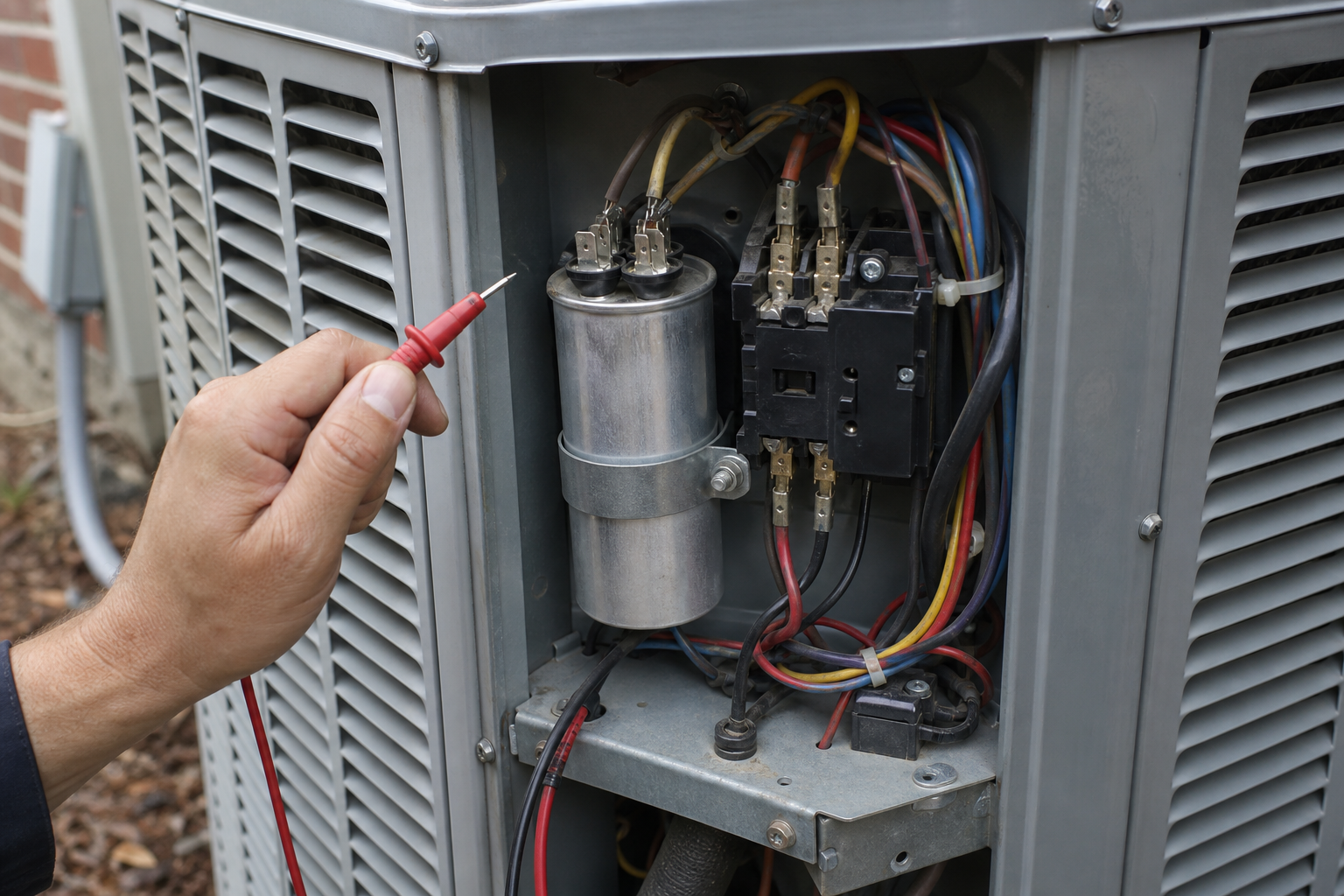
All winter and most of spring your AC sat there doing nothing. Then the first 90-degree day shows up and it’s starting and stopping all afternoon. That’s when tired parts quit. The capacitor is the usual suspect, because it loses a little strength every year until one day it can’t get the motors going.
Brent B. left Sam a verified review about exactly this. The capacitor had failed, Sam replaced it, and he told Brent the relay needed cleaning and would need replacing before long. That relay (techs call it a contactor) is the switch that turns the outdoor unit on and off. Dirt and wear on its contacts can keep it from closing.
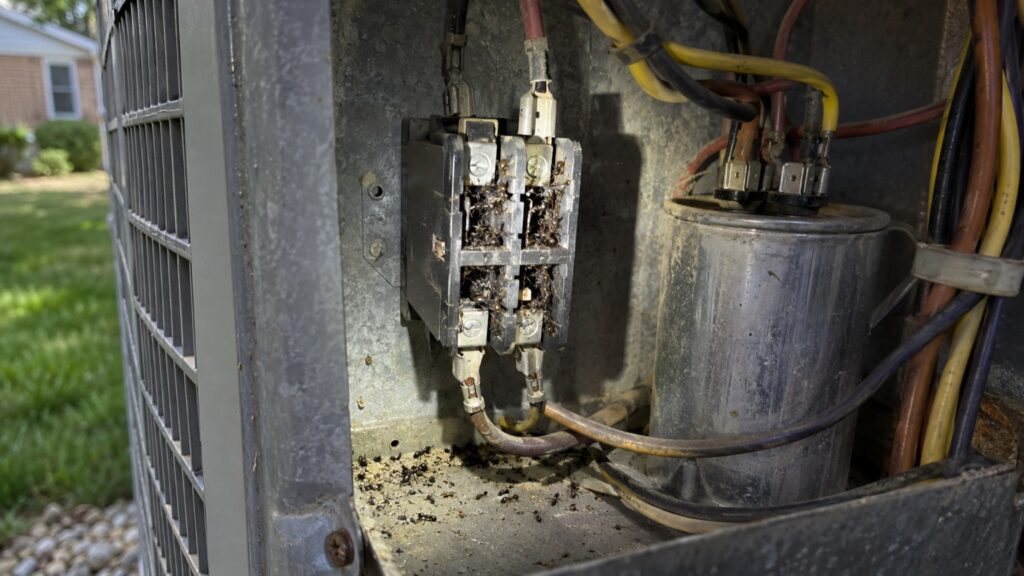
Ants are the other spring surprise around here. They move into the warm electrical box inside the condenser and pile into the contactor until it physically can’t close. Wasps like to build in the gray box on the wall, too. Don’t reach in there yourself. That box is live with high voltage even when the thermostat is off.
After Days of Nonstop Running in a Heat Wave
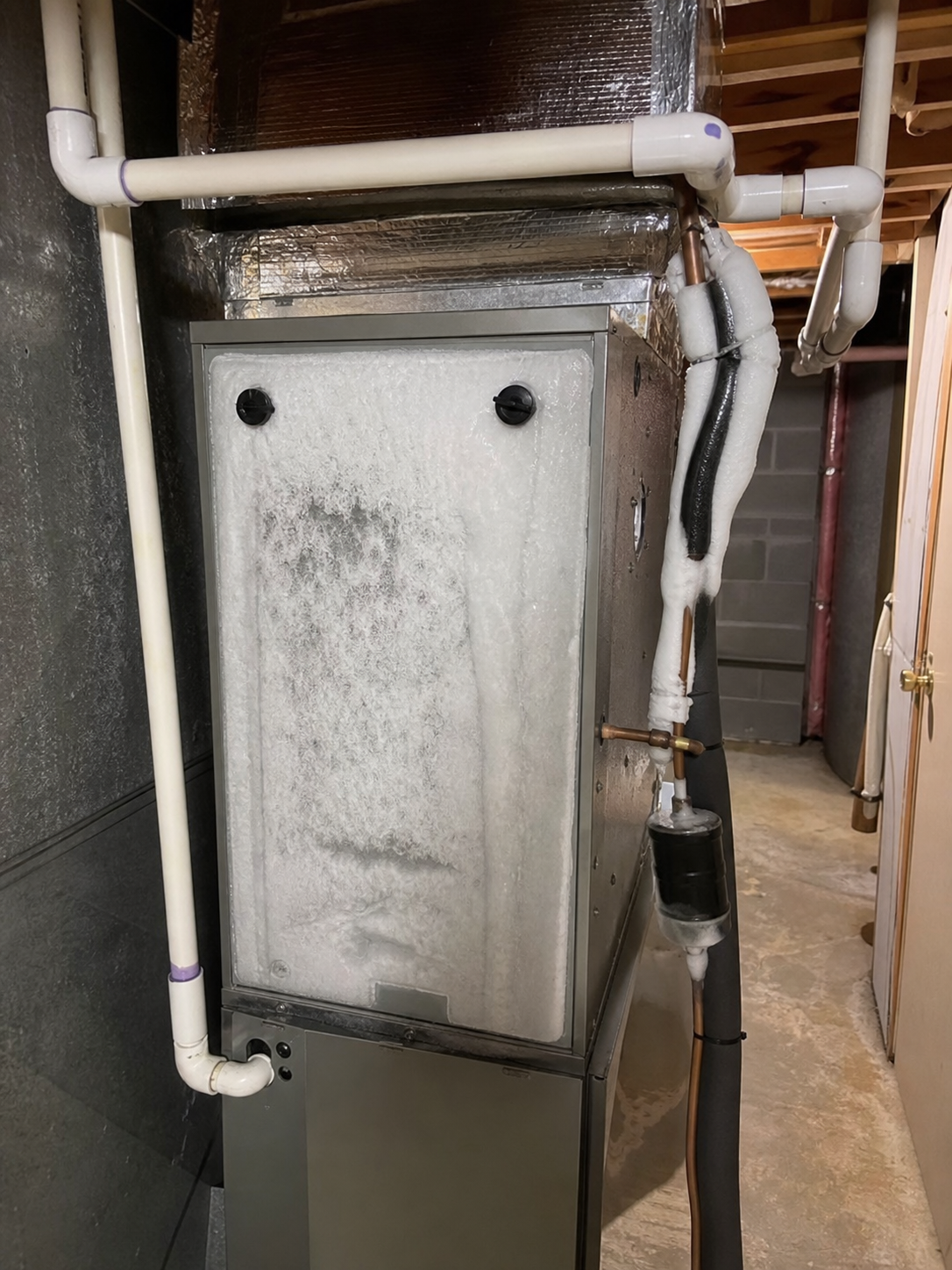
In a long heat wave your AC might not shut off for hours, and on a 100-degree day that’s fine. What isn’t fine is a clogged filter or weak airflow on top of it. The coil inside gets so cold the moisture on it freezes, and then the ice itself blocks the air.
You’ll feel it at the vents first: less air, and warmer air, as the ice grows. Sometimes there’s frost on the big copper line outside too. Turn the system Off, put the fan on On, and give the ice a few hours to melt. Fresh filter in before you try cooling again.
Freezes up again by the next day? A filter isn’t going to fix that one. It almost always means the system’s low on refrigerant, and that means a leak, which brings us to the last situation.
When Nothing Changed at All
No storm. No yard work. No new thermostat. The cooling just slipped a little each week until one afternoon it was gone, and that slow fade is the classic sign of a refrigerant leak. Refrigerant doesn’t get used up like gas in a car, so low means it went somewhere.
That’s not something you can find or fix from the yard. It takes gauges, a leak search, and a real repair before topping it off makes any sense at all. Our page on why an AC keeps running without cooling digs into the slow causes, like a dirty outdoor coil or a worn-out compressor. And once you’re cool again, Energy Star’s maintenance checklist is worth five minutes.
What Sam Checks First When He Gets There
Sam starts every warm air call the same way, and it isn’t with gauges. He goes from the simple stuff to the harder stuff, so you’re not paying for an hour on the wrong part.
- “What changed?” A storm, yard work, a new thermostat, or a week of nonstop running.
- Is the thermostat really sending the cool signal out to the condenser?
- Outside: is the fan turning, and is the compressor actually running?
- A meter on the capacitor, and eyes on the contactor for burn marks, pitting, or bugs.
- The temperature of the air going in versus the air coming out of the vents.
- Gauges last, once everything else checks out.
So when you call, lead with what changed. A lot of the time that one answer tells him which parts to grab before he even leaves.
Questions About an AC Suddenly Blowing Warm Air
Should I turn my AC off if it’s blowing hot air?
Yes, flip it to Off at the thermostat, since letting it run warm can overheat the compressor or freeze the coil and turn a small fix into a big one. You can leave the fan on for some air movement while you check the breakers and peek at the outdoor unit, then give us a call at (314) 600-2202.
Why is my air conditioner blowing room temperature air?
Usually the fan inside is running fine while the outdoor unit isn’t, and the common reasons are a tripped outside breaker, a thermostat wire cut by a trimmer, a dead capacitor, or a fan left on On instead of Auto. Go see whether the outside fan is spinning, because that one detail tells a tech where to start looking.
How long does it take for AC to come back on after a power outage?
Give it about three to five minutes once the lights come back, because most systems have a built-in delay that keeps the compressor from starting too soon. If the outdoor unit is still quiet after fifteen minutes, check for a tripped breaker, and if the breaker looks fine, the surge may have damaged a part like the capacitor.
Is there a way to reset the AC unit outside?
Most outdoor units don’t have a reset button, but you can do a power reset: thermostat to Off, the outdoor breaker off for about five minutes, then back on. If it still won’t start or the breaker trips right away, stop there and call us, because resetting it again and again is hard on the compressor.
Get Sam Out to Find Why It’s Blowing Warm
Looking for help with an AC suddenly blowing warm air in St. Louis? Call Sam at Liberty Heating Cooling and Plumbing and tell him what changed this week. He’ll show up ready for the parts that usually fail after it. The number is (314) 600-2202.