Serving St. Louis & Surrounding Areas

What Is the $5,000 Rule for AC, and Does It Apply to Your St. Louis System?
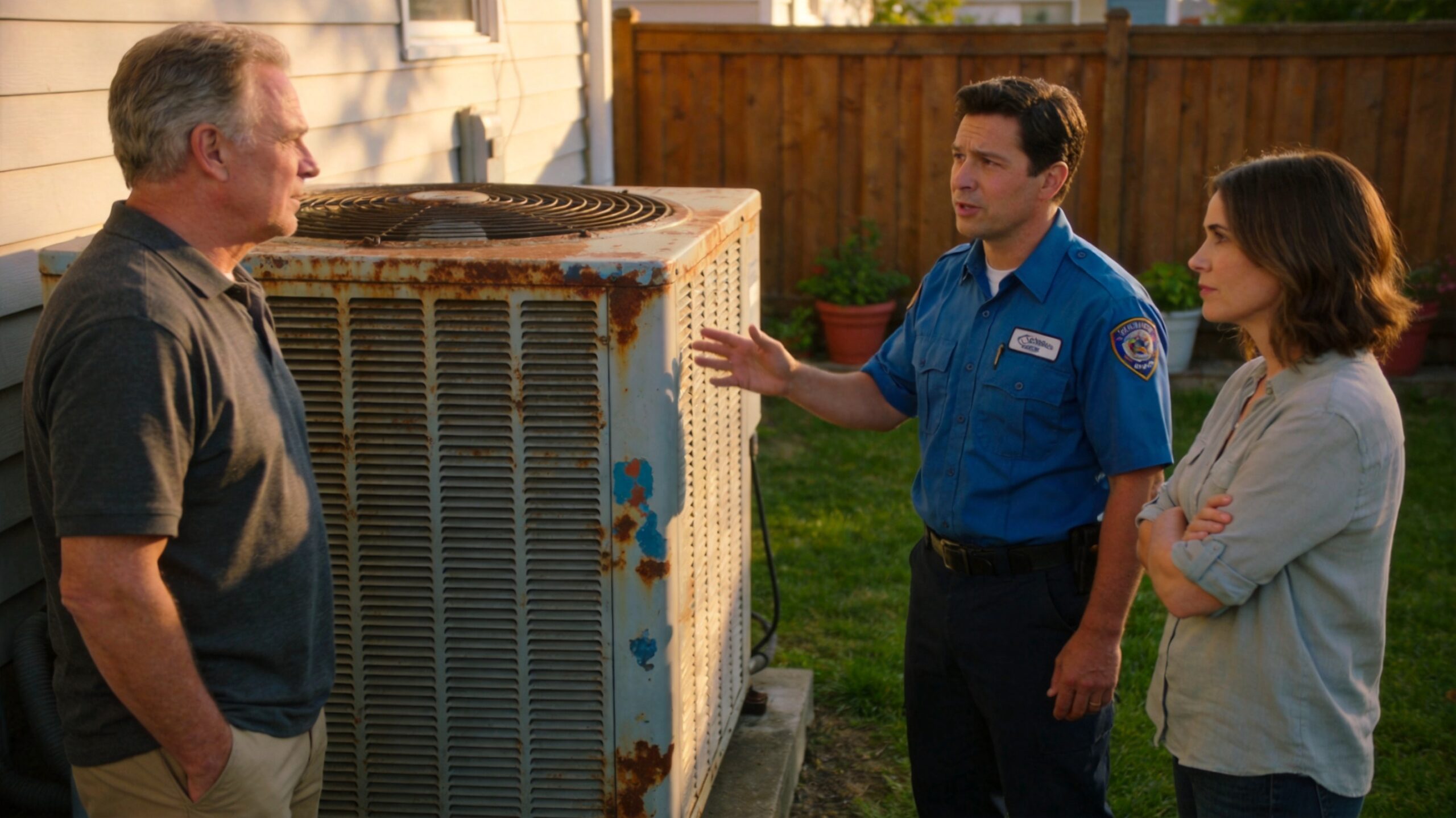
What is the $5,000 rule for AC in St. Louis, and should you actually trust it with a decision this big? It’s a rule of thumb for the repair-versus-replace question, and it’s genuinely useful as a starting point. The catch is that the replace-everything crowd loves to wave it around to push you toward a new system you might not need yet.
Here’s the rule itself: take the age of your unit in years, multiply it by the cost of the repair you’re facing, and if the result tops $5,000, the math says replace. If it comes in under, repair. Simple enough to do on a napkin, which is exactly why it caught on. But simple isn’t the same as complete, and this rule leaves out a few things that matter.
Sam has used 27 years in South St. Louis County to watch this rule steer people right and steer people wrong, and the difference is knowing where it holds up. Before you let one formula decide whether you’re buying a whole new system, here’s how it really works and where it quietly misleads.
TLDR
- The $5,000 rule multiplies your AC’s age by the repair cost; over $5,000 says replace, under says repair.
- It’s a useful gut check but only a starting point, not a final verdict.
- Lazy operators use it to push replacements, even on units with cheap, routine fixes.
- The rule ignores efficiency gains, phased-out refrigerants, and the rest of the system’s condition.
- The right call needs the number plus real context from an honest set of eyes.
The $5,000 Rule Explained in Plain English
The whole thing is one quick multiplication. You take how old your air conditioner is, in years, and multiply it by what the repair in front of you would cost. Whatever number that gives you gets compared against five thousand. Over, and the rule nudges you toward replacement. Under, and it says fix what you’ve got.
The logic underneath it is reasonable. An older unit facing an expensive repair is a worse bet, because you might sink real money into it and still be looking at the next failure a year later. A newer unit with a cheap fix is an easy call to repair. The rule is just a way of capturing that gut sense in a number, so you’re not deciding purely on emotion in a hot, stressful moment.
As a first gut check, it works. It gives you a fast read on whether you’re clearly in repair territory, clearly in replace territory, or somewhere in the murky middle where you actually need to think harder.
How to Run the Math on Your Own Unit
Let’s make it concrete without pretending your exact numbers are anything but yours. Say your system is ten years old and the repair you’re staring at is a moderate one. Ten times that repair cost is your number. If it lands comfortably under five thousand, the rule says fix it and keep running. That’s the common case for a mid-life unit with a routine failure like a capacitor or a contactor.
Now flip it. Say the unit is fourteen or fifteen years old and the repair is a big one, something into the compressor or a major refrigerant issue. Multiply the age by that heftier repair cost and you’ll likely sail past five thousand, and the rule is telling you to think hard about replacement instead of pouring money into old metal.
The point of running it yourself is that you walk into the conversation with a contractor already knowing roughly where you stand. You’re not at the mercy of whatever someone in a truck wants the answer to be. The math is yours to check.

Where the Rule Breaks Down (and Misleads You)
Here’s where I push back on the formula, because the people who quote it loudest are often the ones trying to sell you a system. The rule treats every dollar of repair as equal, and it isn’t. A twelve-year-old unit with a cheap, routine capacitor fix scores low on the formula and clearly says repair, and that’s right. But the same twelve-year-old unit gets talked about like it’s on death’s door, because “twelve years old” sounds scary, even when the actual fix is small and routine.
The reverse trap is just as real. The rule can wave you toward replacement on a system that has a single expensive but isolated failure, where everything else is sound and the unit has years of life left. One bad number doesn’t always mean the whole system is done.
So the rule misleads in both directions when it’s used lazily. It’s a starting point, not a verdict. Anyone who quotes it at you as the final word, especially while holding a quote for a new system, is using a napkin formula to close a sale.
What the Rule Ignores: Efficiency, Refrigerant, and Reality
The formula is blind to a few things that genuinely should weigh on the decision. Efficiency is the big one. A system from fifteen years ago, even when it’s running, sips electricity far less carefully than a modern one, so two units the rule scores the same can cost wildly different amounts to actually run through a Missouri summer. Sometimes replacing a repairable old unit pays for itself in lower bills, and the rule never sees that.
Refrigerant is another blind spot. Older systems may run on refrigerant types that have been phased out, which makes repairs that need a recharge more complicated and more expensive over time. That changes the long-game math in a way a simple age-times-cost number can’t capture.
And then there’s plain reality: how the rest of the system looks, whether the failures are starting to cluster, how long you plan to stay in the house. The rule gives you a number. The actual decision needs the number plus the context, and the context is exactly what an honest set of eyes on the system provides, the kind that comes from regular maintenance.
How Liberty Helps You Decide Without the Sales Pressure
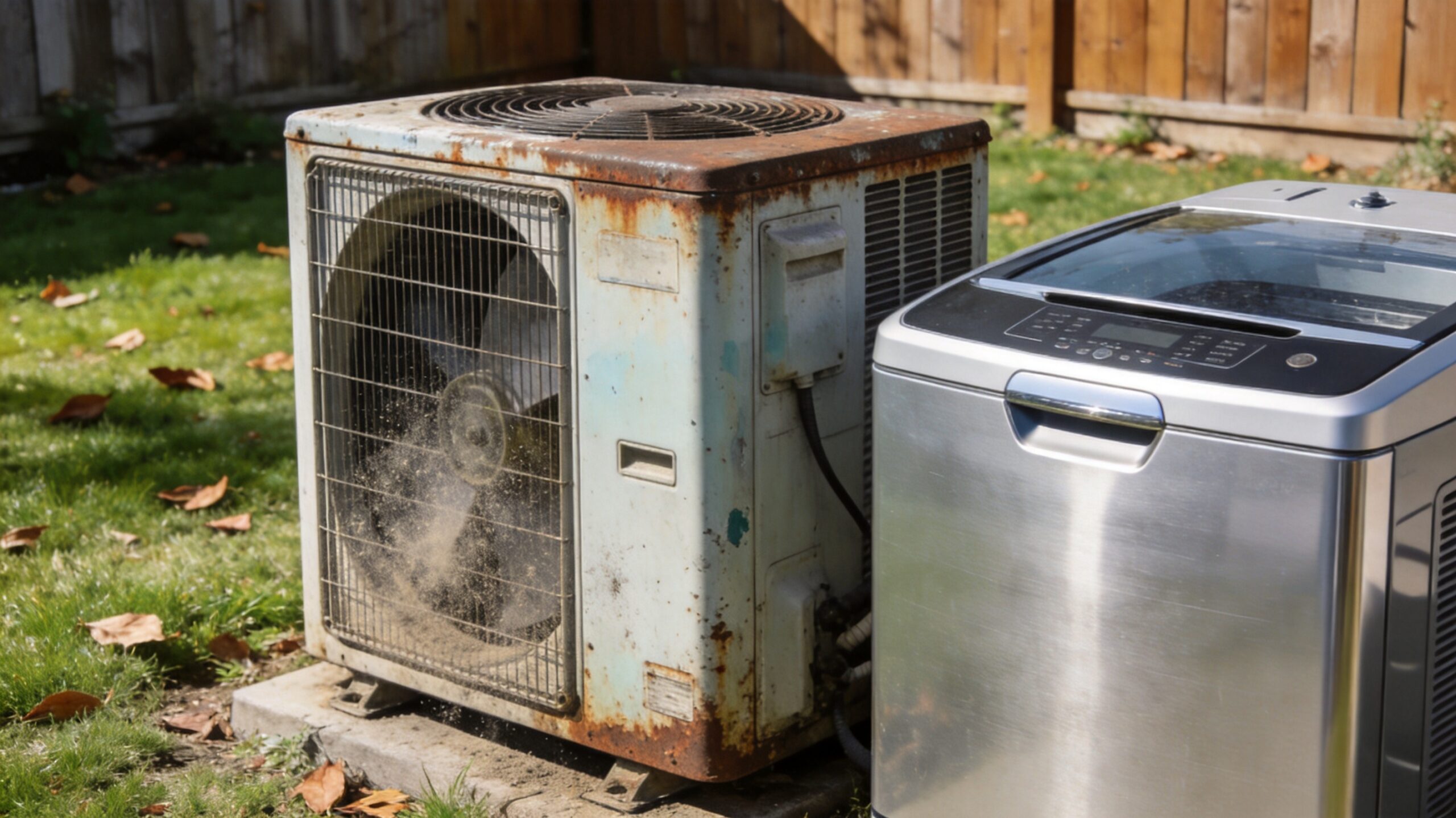
When you call us about a repair-or-replace decision, you get the honest version, not a sales pitch wearing a formula as a costume. We’ll run the rule with you, because it’s a fine starting point, and then we’ll tell you what it’s missing for your specific system: how the rest of it looks, what it’s costing you to run, whether the failures are starting to stack up. A unit that’s been kept on a regular tune-up schedule usually has more life left than the formula suggests.
Sometimes that conversation lands on repair, even when a pushier company would have sold you a system. A twelve-year-old unit with one cheap fix and good bones gets repaired, and we’ll say so. Other times the honest answer really is replacement, and we’ll walk you through why, with the full picture, so it’s your decision and not ours.
Sam built this business over 27 years on being the company that tells South St. Louis County the truth, even when the truth is “this doesn’t need replacing yet.” That’s the difference between a contractor and a salesman, and it’s the one you want making this call with you.
Why St. Louis Homeowners Trust Liberty for an Honest Repair-or-Replace Answer
The reason people trust us with this decision is that we don’t profit from scaring them. A lazy operator uses the $5,000 rule to push the expensive option every time. We use it as the conversation starter it was meant to be, then give you the full context so you can decide with clear eyes. More than once we’ve talked someone out of a replacement they didn’t need, and that’s exactly why they call us back.
Sam has spent 27 years in South St. Louis County earning that trust one straight answer at a time. Liberty is family-owned, licensed, bonded, and insured, and we’d rather keep your old unit alive another few summers if it has the life in it than sell you metal you didn’t need.
We keep it fair, too. Seniors get a 10 percent discount, and everything is quoted upfront before any work starts. When you’re staring at a repair-or-replace decision and want an honest read, our team will give you the real picture.

Facing a Big AC Repair Bill? Here’s How to Get a Straight Answer
Staring at a repair quote and wondering whether you’re throwing good money after bad? Run the rule yourself first, then get a second opinion from someone who’ll tell you the truth instead of defaulting to the sale. The decision is too big to hand to a napkin formula or a stranger with a replacement quote already printed.
For a solid grounding on how central systems work and what affects their lifespan, the U.S. Department of Energy is a straight, ad-free source. And when you want an honest read on whether to repair or replace your own unit, call Liberty Heating Cooling & Plumbing at (314) 600-2202 or book online. Someone’s around all seven days, weekends and holidays too, with same-day service across Oakville and South St. Louis County.
{ “@context”: “https://schema.org”, “@type”: “Article”, “headline”: “What Is the $5,000 Rule for AC, and Does It Apply to Your St. Louis System?”, “author”: {“@type”: “Organization”, “name”: “Liberty Heating Cooling & Plumbing”}, “publisher”: {“@type”: “Organization”, “name”: “Liberty Heating Cooling & Plumbing”}, “datePublished”: “2026-06-01”, “dateModified”: “2026-06-01”, “mainEntityOfPage”: “https://libertyheatingcoolingandplumbing.com/what-is-5000-rule-for-ac-st-louis/” }