Serving St. Louis & Surrounding Areas

Do You Really Need an Annual AC Tune-Up in St. Louis?
Do you really need an AC tune-up in St. Louis every single year, or is that just something HVAC companies say to keep the trucks busy? Fair question, and the honest answer isn’t the self-serving “yes, always” you’d expect from people who sell tune-ups. It depends, mostly on how old your system is.
A brand-new unit in its first couple of years has fresh parts and a full warranty, and it can sometimes stretch the schedule. An aging system is a different animal entirely, where skipping the tune-up is how a small, cheap problem becomes a dead compressor in July. Same question, opposite answers, and the difference is the age of the metal in your backyard.
Sam has spent 27 years in South St. Louis County watching both stories play out, and he’ll tell you straight when a tune-up matters and when it honestly doesn’t. Before you decide to skip one, here’s the real breakdown so you can make the call based on your actual system, not a sales pitch or a skeptic’s blog post.
TLDR
- Whether you need a yearly AC tune-up depends mostly on how old your system is.
- New units under warranty can sometimes stretch the schedule; older units cannot.
- A tune-up’s real value is catching small failures like a drifting capacitor before peak summer.
- Most manufacturer warranties void if you can’t prove annual professional maintenance.
- Get it done in spring, before a St. Louis summer exposes every weak spot at once.
The Honest Answer: It Depends on Your System’s Age
Age is the thing that actually decides this, and once you look at it that way the fog clears. Take a unit that’s only three or four years old. The parts haven’t worn, the seals haven’t dried out, the capacitor hasn’t started to drift. On a young system like that, honestly, a tune-up is more about catching some rare factory defect than stopping a breakdown that isn’t coming yet.
Now picture that same unit at seven or eight years. It’s cycled through a lot of brutal Missouri summers by then, and parts that were fine a few years ago are starting to show it. This is the stretch where the yearly check earns its money, because it catches that wear before the wear catches you. Most homes around here are sitting right in this window.
And the old units, the ones past ten? For those it really isn’t optional anymore. Failures pile up faster, there’s no margin left, and the tune-up is the one thing standing between you and a dead AC in the middle of July. So, do you really need it? Barely, on a new one. Clearly, in the middle. No question at all once it’s old.
What a Tune-Up Actually Prevents (Real Failures, Not Hype)
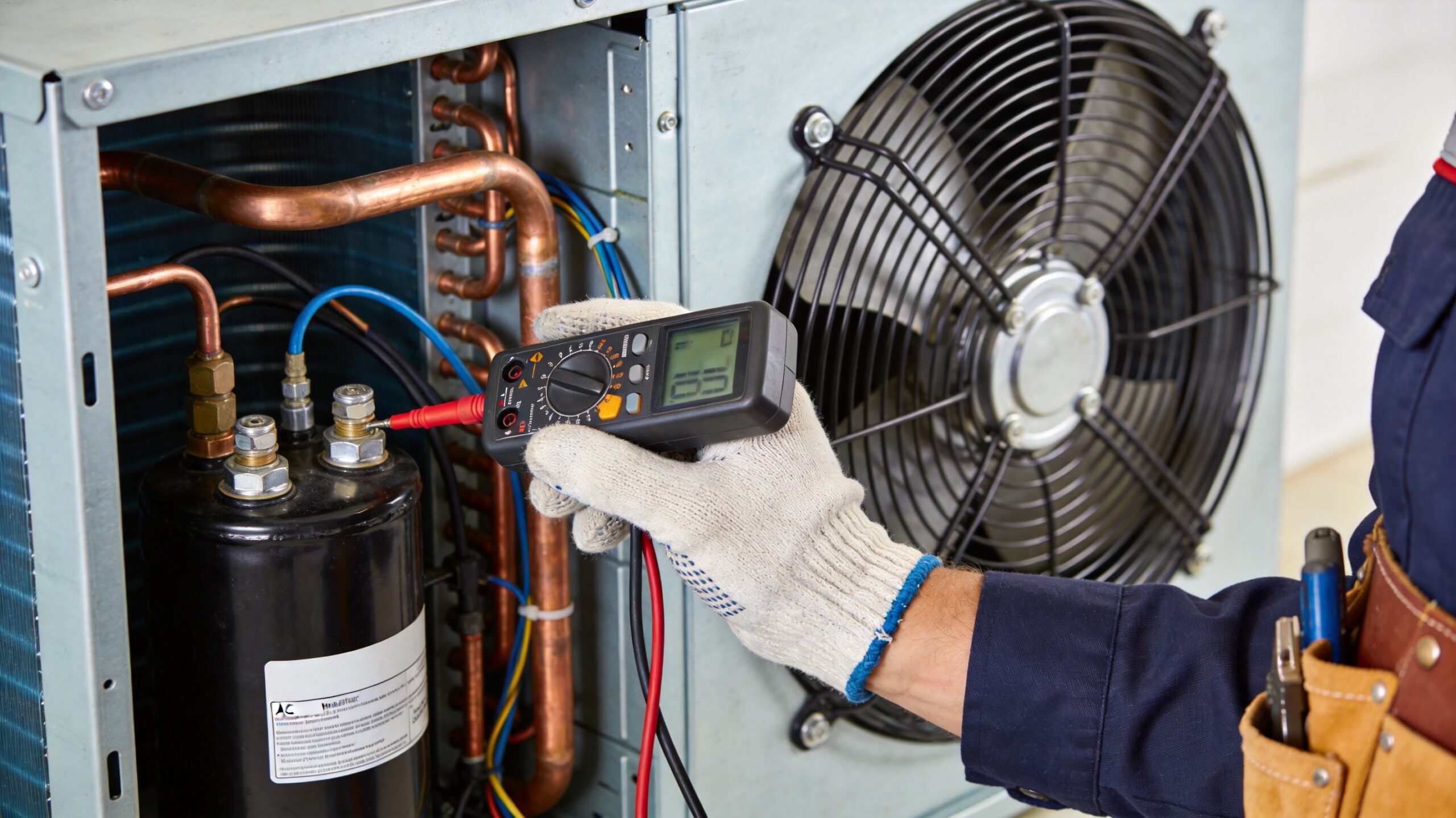
Skip the marketing and look at what a tune-up genuinely heads off, because that’s the only honest way to judge whether it’s worth it. The big one is the capacitor. It’s a small part that weakens a little every hot season, and a tech with a meter can see it drifting toward failure long before it dies. Catching it in spring is a quick swap. Missing it means a no-cool call on the hottest day, when you least want one.
It also catches the slow refrigerant leak, the loose electrical connection that’s a fire risk, and the dirty coil that’s quietly running up your power bill while shortening the compressor’s life. None of these announce themselves. They build up invisibly and then surface all at once, usually at the worst possible time.
That’s the real value, and it’s not hype. A tune-up isn’t magic and it won’t make an old system new. What it does is find the small, cheap problems while they’re still small and cheap, instead of after they’ve cascaded into something that strands you. That’s exactly what a real tune-up covers, point by point.
When You Can Genuinely Skip a Year
Let me give you the honest permission slip, because most HVAC companies won’t. If your system is two or three years old, still under full manufacturer warranty, and you’ve been faithfully changing the filter and rinsing the coil yourself, you can probably stretch to every other year on the professional service without much risk. The parts are fresh and you’ve been handling the basics.
That’s the real exception, and it’s narrow on purpose. The moment any one of those conditions drops away, the skip stops being safe. Warranty expired? Don’t skip. Can’t remember the last filter change? Don’t skip. System older than about five years? Don’t skip. The “every other year” move only works when everything lines up in your favor.
I’m telling you this because a company that only ever says “yes, every year, no exceptions” isn’t being straight with you. There genuinely is a case where skipping is fine. It’s just a lot smaller than people want it to be, and assuming you qualify when you don’t is the costly mistake.
The Warranty Clause That Makes It Non-Optional
Here’s the detail almost nobody mentions, and it changes the whole question. Most manufacturer warranties require proof of annual professional maintenance to stay valid. It’s written right into the fine print. Skip the documented service, and you’ve quietly voided the coverage on the most expensive parts in your system without realizing it.
Think about how that plays out. Your compressor fails at year eight. It’s a part that costs more than most people expect, and you’d assumed the warranty had your back. Then the manufacturer asks for your maintenance records, you don’t have them because nobody serviced it, and the claim gets denied. Now you’re paying full price for a repair you thought was covered.
This is why “do you really need it” has a hidden answer for anyone still under warranty: yes, because skipping doesn’t just risk a breakdown, it can erase the coverage you’re counting on to pay for that breakdown. The annual service is partly an insurance premium, and a documented maintenance visit is what keeps the policy from lapsing.

The St. Louis Summer Test: Why Timing Matters Here
Even when a tune-up is clearly worth doing, when you do it decides how much good it does. Our summers don’t ramp up gently. We go from mild to merciless in a couple of weeks, and an air conditioner that was loafing through May suddenly runs most of the day and half the night. Every weak spot you ignored over winter shows up the moment that heat lands.
That’s why spring is the window. A tune-up in April or early May catches the drifting capacitor and the low refrigerant while there’s still time to fix them in a calm, scheduled visit. The same problems found in mid-July become an emergency call competing with every other overheated house in the county for the same handful of techs.
So the St. Louis test isn’t just whether you need a tune-up, it’s whether you get it done before the heat exposes everything at once. A system serviced in spring walks into summer ready. A system serviced in July, if you can even get on the schedule, is already playing catch-up.
Why St. Louis Homeowners Trust Liberty to Tell Them the Truth
People come back to us because we’ll actually tell them when they can skip, which is not something the average company offers. If your system is young and you’ve kept up the basics, we’ll say so and we won’t push a service you don’t need. That honesty is the whole relationship. A company that finds a reason to sell you something every single visit isn’t a company you can trust with the big calls.
When a tune-up does matter, Sam’s 27 years in South St. Louis County mean it gets done thoroughly, not as a drive-by. Liberty is family-owned, licensed, bonded, and insured, and we treat the annual service as the appointment where we prove we’re worth calling when something actually breaks.
We keep it fair, too. Seniors get a 10 percent discount, and everything is quoted upfront before any work starts. When you want a straight answer about whether your system really needs attention this year, our team will give you the honest one.
Think You’re Due for a Tune-Up? Here’s How to Find Out
Not sure which category your system falls into, or whether this is a year you can safely skip? The simplest move is to let someone who does this for a living take a look and tell you straight. There’s no downside to knowing where your unit actually stands before the heat tests it.
Want the independent take on why upkeep matters? The U.S. Department of Energy lays out how regular maintenance keeps a system efficient and extends its life. And when you want an honest read on your own unit, call Liberty Heating Cooling & Plumbing at (314) 600-2202 or book online. Someone’s around all seven days, weekends and holidays too, with same-day service across Oakville and South St. Louis County.
{ “@context”: “https://schema.org”, “@type”: “Article”, “headline”: “Do You Really Need an Annual AC Tune-Up in St. Louis?”, “author”: {“@type”: “Organization”, “name”: “Liberty Heating Cooling & Plumbing”}, “publisher”: {“@type”: “Organization”, “name”: “Liberty Heating Cooling & Plumbing”}, “datePublished”: “2026-06-01”, “dateModified”: “2026-06-01”, “mainEntityOfPage”: “https://libertyheatingcoolingandplumbing.com/do-you-really-need-ac-tune-up-st-louis/” }