Serving St. Louis & Surrounding Areas

Should You Buy a 6 Year or 12 Year Water Heater? An Oakville, St. Louis Tank Guide
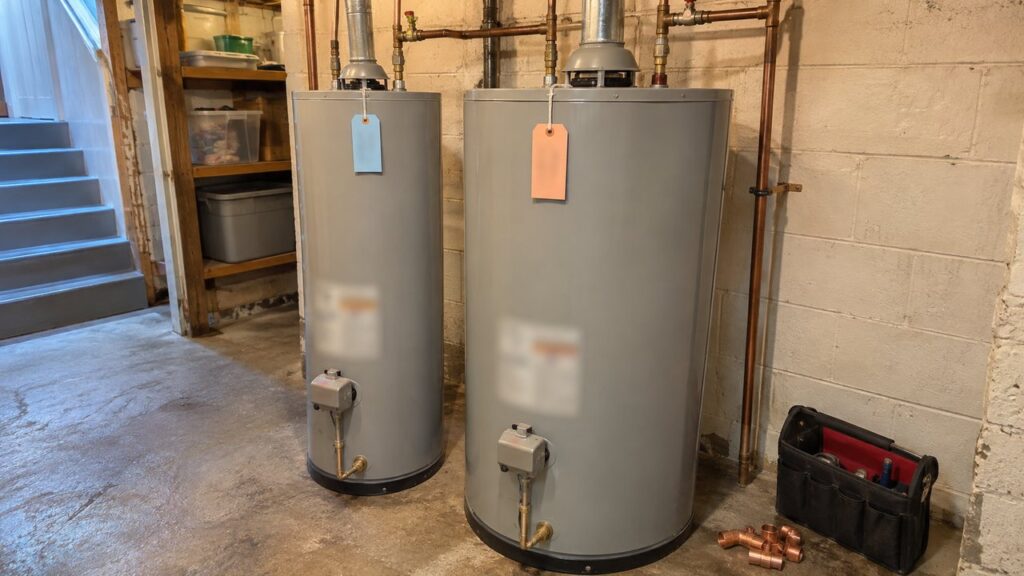
Buy the 12 year water heater if you will still live there after year six, or if a leak would soak a finished room. Buy the 6 year model if you are moving soon, or a leak would only wet an unfinished floor near a drain. The number on the box is how long the maker covers the tank, not how long the tank will last.
Most of the price gap pays for more anode metal inside and more years on paper. What decides whether that paper pays off is the fine print: when the clock starts, what a free replacement is worth, and what you have to hand back. That part is below.
Picking Between the 6 Year and 12 Year Tank
Start with two questions. How long will you own this house? And what is under and around the heater?
- Pick the 12 year when you expect to be there ten more years, when the heater is in a finished basement, a hall closet or an upstairs spot, or when getting a tank in and out of that space is slow work.
- Pick the 6 year when you are listing the house in a few years, or the heater stands in an unfinished utility room where a slow drip runs straight to the drain.
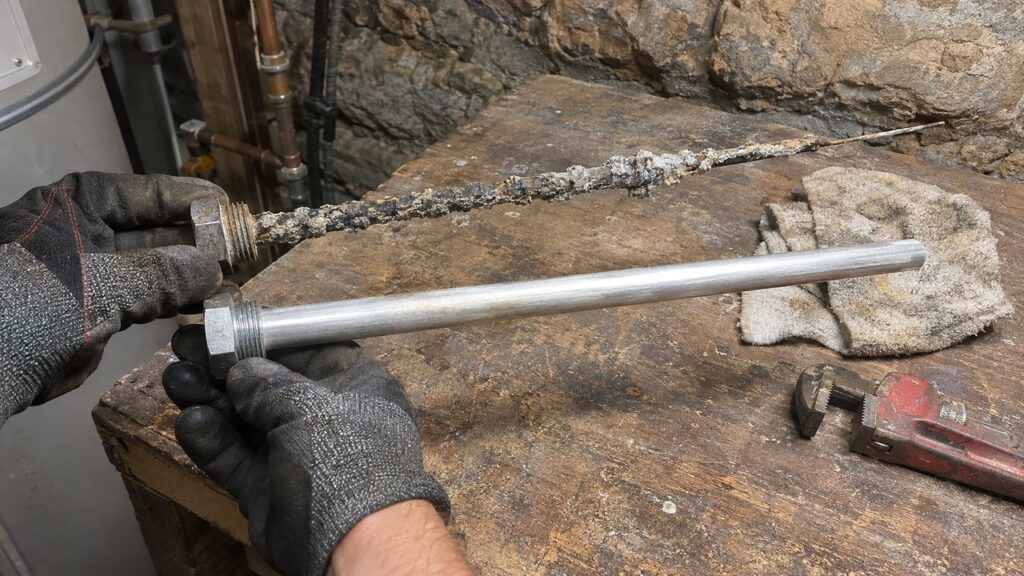
Inside, the two are often close to the same. The longer one usually carries a thicker rod, or a second short one in the hot outlet. That rod is the metal bar that corrodes on purpose so the steel shell does not. More of it means more time before rust reaches the steel.
How Many Years a 6 Year Tank Really Runs
Rheem’s water heater lifespan article puts the normal range for a tank model at 8 to 12 years. A 6 year tank lands anywhere in that range, and the warranty label does not move it much. Two things move it more: how fast the rod gets eaten, and how much sediment piles up on the bottom.
Rheem’s same article suggests a new anode every 3 to 4 years. A 6 year tank whose rod gets swapped on that schedule can easily outlive a 12 year tank whose rod is never looked at.
When the Warranty Clock Really Starts
Most people assume the years begin the day the heater goes in. Rheem’s limited warranty says the start date is the install date only if it is properly documented. Without that proof, the clock starts on the day the tank was built, plus 90 days.
A tank can sit in a warehouse or on a truck for months before it reaches your basement, so that gap can eat part of your coverage. Keep the dated install invoice with the warranty sheet, because without it the clock may have started long before the tank reached your house.
What a Free Replacement Tank Is Covered For
Say a 12 year tank leaks in year 9 and the maker sends a new one. The same Rheem warranty says the new tank is covered only for what was left on the old one. In that example, that is three years, not a fresh twelve.
A free tank only carries the years left on the first one, so plan for it to be your last free one. The warranty also does not pay for the labor to swap it, the permit, or carting the old one off, so ask what that work runs before you pay extra for the longer tank.
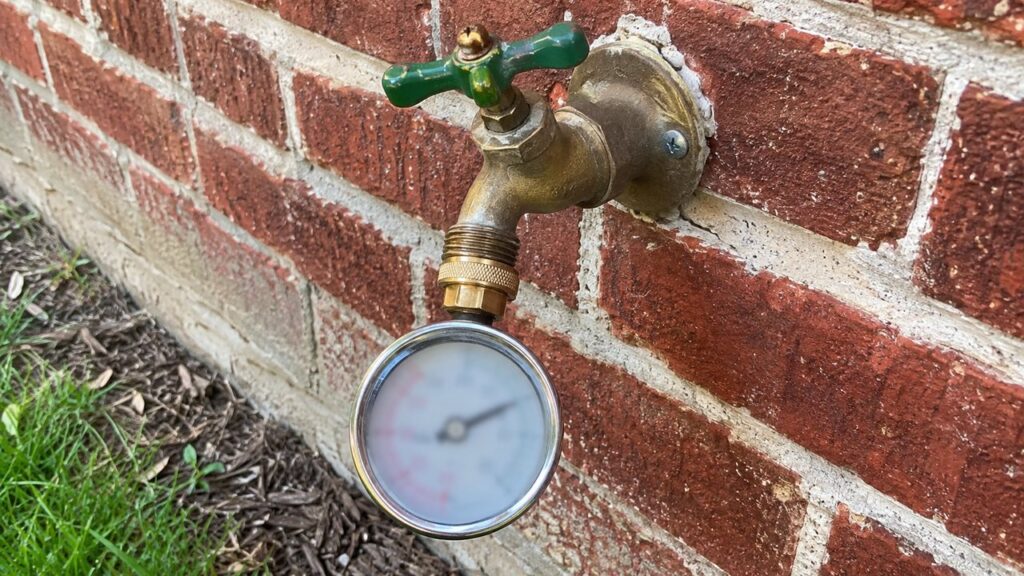
The warranty also leaves out damage from water pressure higher than the rating label allows. A gauge on an outside spigot shows your house pressure in a minute, so ask for that reading when the new tank goes in.
Keep the Old Tank Until the Claim Is Done
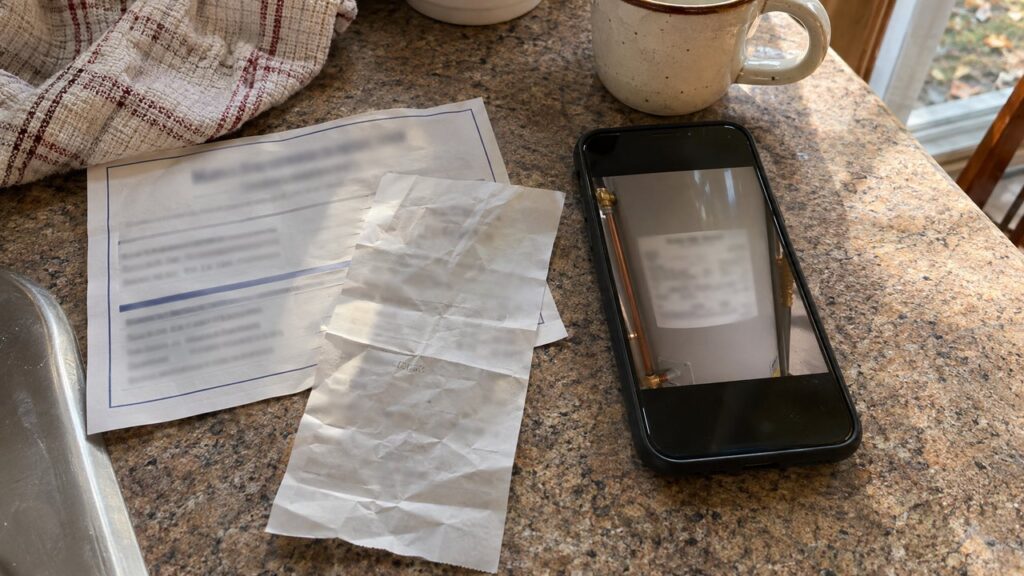
To pay a claim, Rheem can ask for the failed heater itself with its rating label and parts in place, or for the whole original rating label peeled off the tank. Its warranty says photocopies of that label are not accepted.
If the tank leaks while it is still under warranty, keep the old tank or its whole rating label until the claim is done. The rating label is the big sticker on the tank’s side that lists its model and serial. Tell whoever carts it out to set it aside, not toss it in the truck.
Retiring a Tank at 12 Years Old
At 12, a tank sits at the far end of that 8 to 12 year range. Nothing says it must come out the day it turns 12. Weigh three things instead:
- Where it sits. A leak in a finished basement can cost far more than the heater itself.
- Its recent record. Rheem’s article treats a tank past 10 that keeps needing repairs as a strong sign to replace it.
- The rod. If nobody has ever pulled the anode, the steel has likely been on its own for years.
If two of those point the wrong way, plan the swap on your schedule, not the tank’s. Not sure how old yours is? On a lot of Rheem tanks, the build month and year sit in the first four digits of the serial. Pick the day for the water heater installation yourself, before a leak picks it for you. If water is already on the floor, start with what to do when a water heater leaks.
Questions About 6 and 12 Year Tanks
Is a tank still good at 6 years old?
Usually, yes. Most tanks reach 8 to 12, so six years still leaves room. Have someone check the anode and drain some water from the bottom. If the rod is mostly gone, a new one now can add years.
Is it safe to flush a water heater that has gone 6 years without it?
Yes, but go slowly. A drain valve that has not been opened in years can clog with sediment, or drip after you close it. Have a new valve or a cap on hand before you open it.
How much longer should a 6 year old water heater keep going in a St. Louis home?
Most tanks quit somewhere between 8 and 12, so plan on about 2 to 6 more years. Fewer if the anode has never been changed or the bottom is loaded with sediment, more if both have been kept up.
Family Run Since 1998
Sam Marsala has been swapping tanks since 1998, and the business is still in his family’s hands. Seniors get 10% off.
We set tanks in basements across Oakville, Mehlville and Concord, and down in Arnold. If your heater is acting up but not leaking, water heater repair in Oakville may be the better first call.
Ask Before You Pick a Tank
Tell us how old your tank is, where it sits, and how long you plan to stay. We will help you weigh the 6 year against the 12 year for your house.
Call Liberty Heating Cooling & Plumbing at (314) 600-2202 or schedule online.