Serving St. Louis & Surrounding Areas
Boiler Died? Get New Boiler Installation in Oakville
Your boiler stopped working and the house won’t heat up. You’re calling around and most HVAC companies say they don’t really do boilers—they work on furnaces instead. Boiler installation in Oakville takes different skills because boilers heat water instead of blowing hot air. They connect to radiators or baseboards all over your house. Finding someone who actually knows boilers and installs them right means your new system heats properly for the next 20 years instead of causing problems.
Boiler Installation – What Makes It Different
Why Boiler Installation Requires Different Expertise Than Furnaces
Most HVAC techs work on furnaces 95% of the time and see boilers maybe once a month. Furnaces blow hot air through ducts. Boilers heat water that flows through pipes to radiators or baseboard heaters. Completely different systems with different parts, different problems, different installation requirements. Guy who installs furnaces every day doesn’t automatically know boilers just because both heat your house.
Boiler venting works differently than furnace venting. High-efficiency boilers create condensate that needs special PVC venting. Older atmospheric boilers need metal chimney flues sized correctly for the boiler’s BTU output. Wrong vent sizing causes backdrafting where combustion gases spill into your house instead of going outside. This kills people through carbon monoxide poisoning. Furnace guys who don’t regularly work on boilers sometimes get venting wrong because they’re applying furnace logic to boiler systems.
Water pressure, expansion tanks, zone valves, and circulator pumps don’t exist on furnaces. Boilers need all these components sized and installed correctly. Expansion tank too small? Pressure relief valve keeps opening and flooding your basement. Circulator pump undersized? Some rooms never get heat. Zone valves installed backwards? Whole sections of your house stay cold. These aren’t things furnace installation deals with—they’re boiler-specific requirements that need boiler-specific knowledge.
Sizing Your New Boiler Correctly for Your Heating System
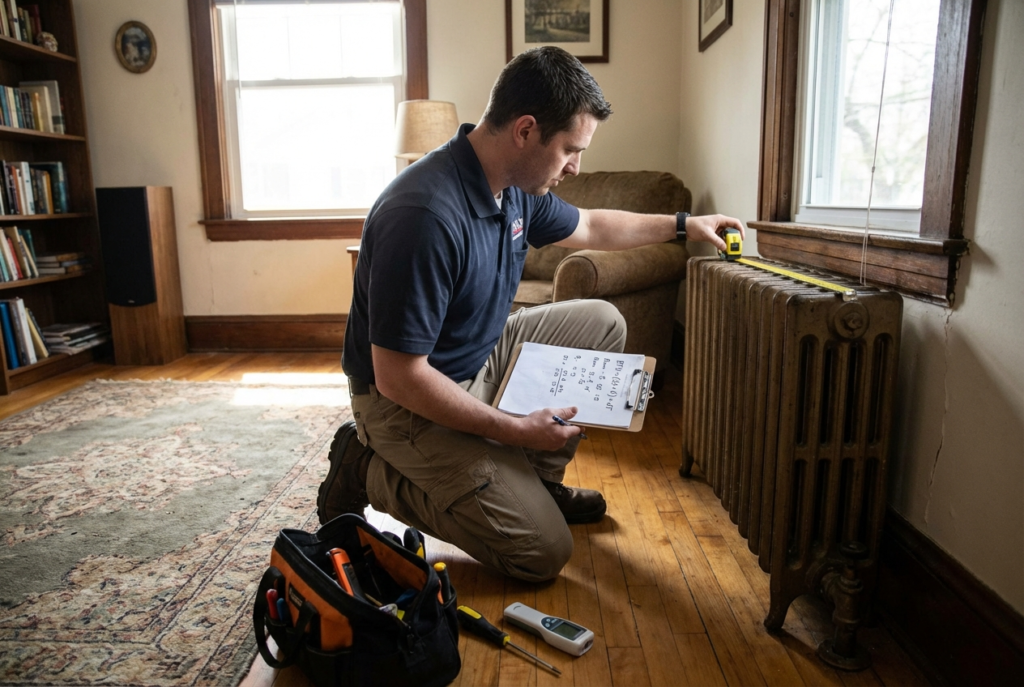
Boiler sizing depends on your existing radiators or baseboard heaters, not just house square footage. Each radiator or baseboard section requires specific BTU output to heat its room. We measure every radiator in your house, calculate total BTU requirement, then add 15-20% capacity for extremely cold days. This takes actual measurement and math—not guessing based on your old boiler’s size or plugging square footage into a calculator.
Your house might have changed since the original boiler installation. Added new radiators when you finished the basement? Removed radiators to make room for cabinets? Upgraded windows that reduced heat loss? All these changes affect what size boiler you actually need now. Installing the same size as your old boiler might oversize or undersize your new system because the house heating requirements changed over 25 years.
Oversized boilers waste money and create comfort problems. Boiler fires up, heats all the water in the system quickly, shuts off before radiators fully warm up. Runs constantly in short bursts instead of longer steady cycles. This is called short-cycling and it wears out components fast while creating uneven heating. Proper sizing means your boiler runs long enough each cycle to heat radiators fully and maintains even temperature throughout your house.
What Boiler Installation Actually Involves
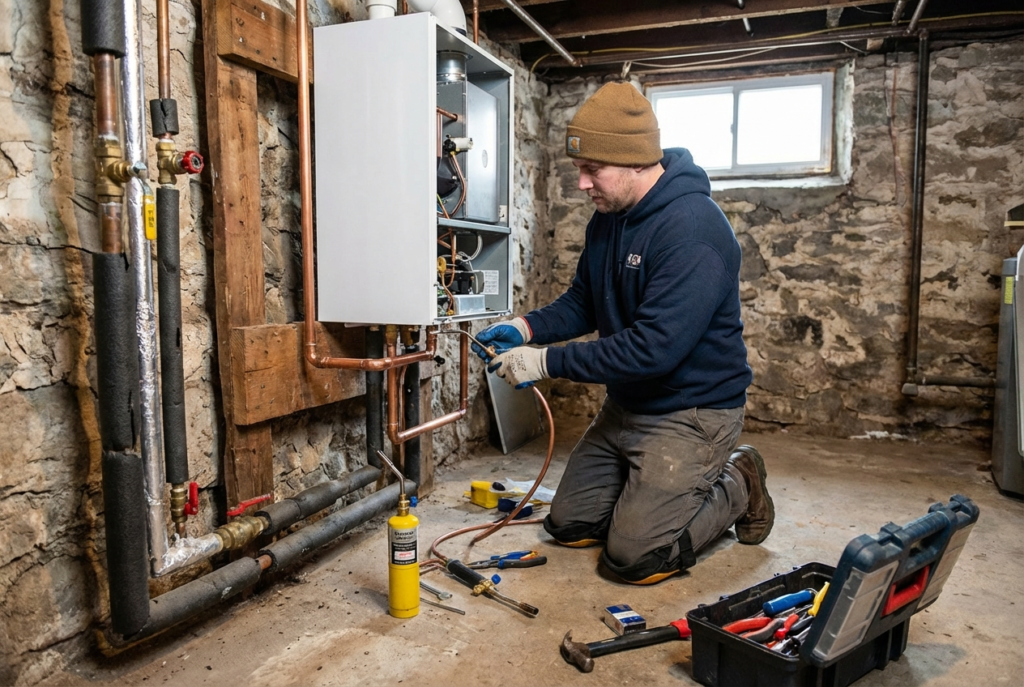
Removing your old boiler is more complicated than removing a furnace. We need to drain all the water from the entire heating system first—sometimes 40-60 gallons depending on how many radiators you have. Disconnect water supply lines, return lines, zone valve wiring, circulator pump, expansion tank, and all the safety controls. Old boilers are heavy—250-400 pounds—and usually sit in basements with narrow doorways or stairs. Removal alone takes 2-3 hours for safe extraction without damaging your house.
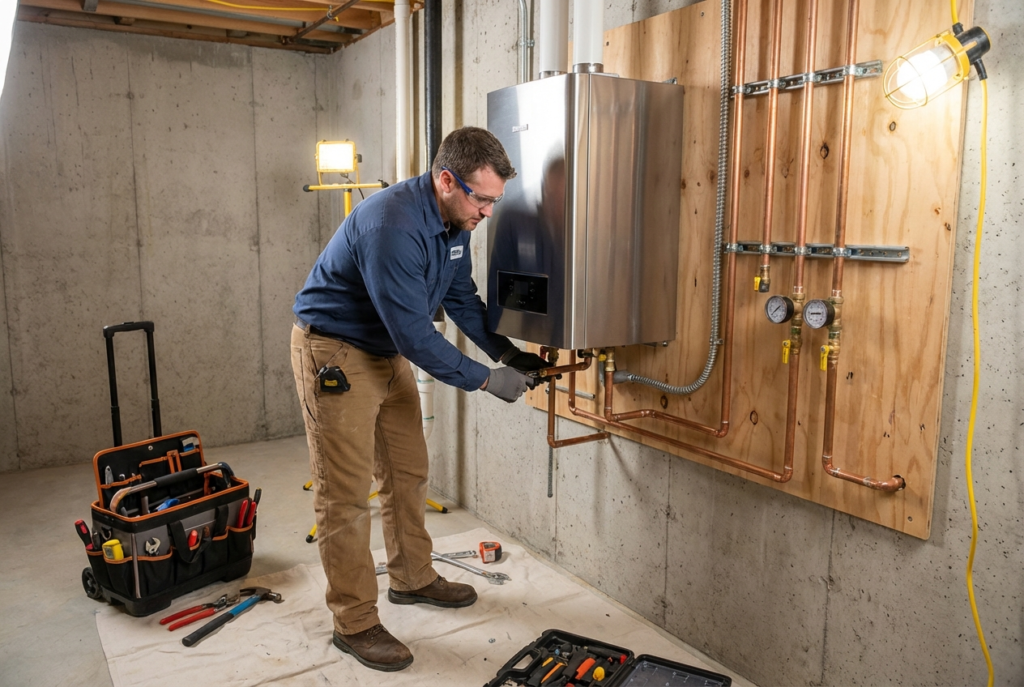
New boiler installation requires connecting to your existing pipe system. Most houses have copper or iron pipes coming from radiators. We connect new boiler to these existing pipes using proper fittings and unions that allow future service access. Set up new circulator pumps sized for your system’s water flow requirements. Install new expansion tank sized for your boiler and total system water volume. Wire zone valves if your system has multiple heating zones for different floors or sections.
Venting and combustion air setup varies based on boiler type. Standard atmospheric boilers need metal chimney vents and draw combustion air from the basement. High-efficiency condensing boilers use PVC intake and exhaust pipes that go through exterior walls. We follow manufacturer specifications exactly because improper venting creates dangerous carbon monoxide situations. Then fill system with water, bleed air from all radiators, pressure test everything, fire up the boiler, and verify even heating throughout your house. Understanding boiler systems and proper installation ensures safe operation and efficient heating.
Choosing Between Standard and High-Efficiency Boilers
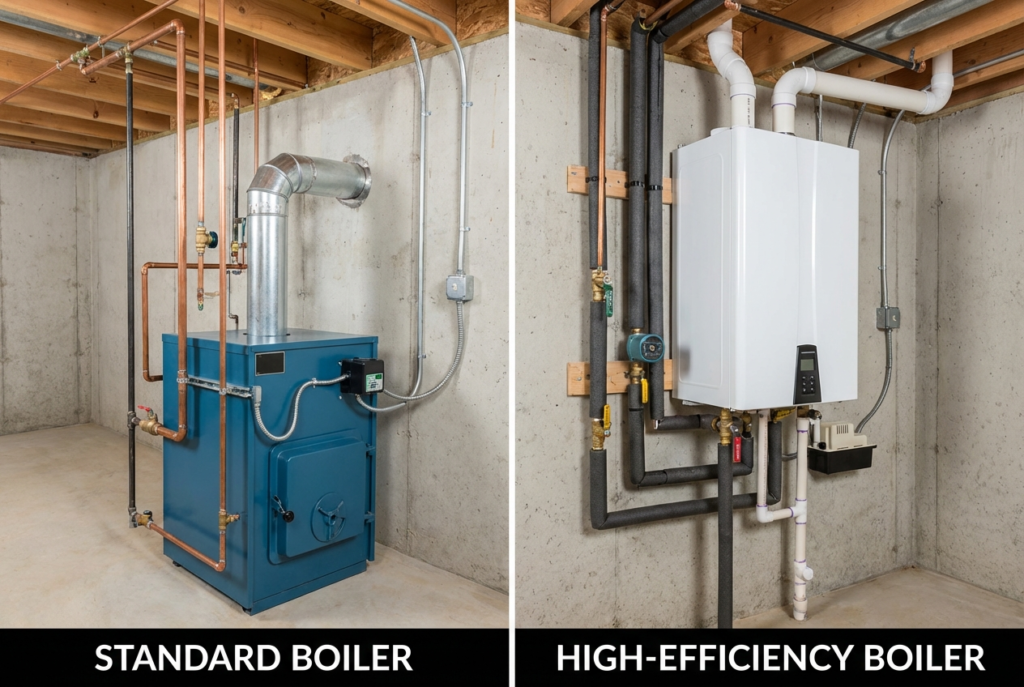
Standard atmospheric boilers cost $4,800-7,200 installed and run 80-85% efficiency. They’re simpler systems with fewer components that can break. Use existing chimney venting so no new holes through your house walls. Work with any type of radiator or baseboard system without modifications. Good reliable heating that’s been proven technology for decades. These make sense if you’re on a budget or have an older house with existing chimney infrastructure.
High-efficiency condensing boilers cost $7,200-10,800 installed but run 90-96% efficiency. Lower monthly gas bills because they extract more heat from combustion gases. Qualify for utility rebates and tax credits that offset higher upfront cost. Create condensate water that needs draining, adding another component that can fail. Require PVC venting through exterior walls since they can’t use regular chimneys. Sometimes need modifications to older radiator systems for proper water temperature control.
Your existing heating system affects which boiler works best. Old cast iron radiators need higher water temperatures that standard boilers provide easily. Modern baseboard or panel radiators work fine with lower temperatures from high-efficiency boilers. Mixing high-efficiency boilers with systems designed for high-temperature water sometimes creates comfort problems unless we add mixing valves or other controls. We evaluate your specific setup before recommending which boiler type actually works for your house.
How Long Boiler Installation Takes and What to Expect
Basic boiler replacement takes one full day for standard installations. Remove old boiler in the morning—2-3 hours. Install new boiler and connect to existing pipes—4-5 hours. Fill system, bleed radiators, test operation, verify heating throughout house—1-2 hours. Most installations finish same day with heat working that evening. Straightforward replacement where new boiler goes in same location as old one without complications.
Complications extend installation timeline significantly. Chimney needs relining for new boiler venting requirements—add 4-6 hours or second day. Converting from old gravity system to modern pumped system—add full day for new piping. Upgrading from single zone to multiple zones with new valves and controls—add 6-8 hours. Old pipes corroded and need replacement during installation—could add days depending on extent of pipe work required. Sometimes these issues show up during removal and turn into emergency boiler situations requiring quick decisions.
Permits and inspections add time to total project. Many cities require permits for boiler replacement because they’re pressure vessels with combustion. Permit approval takes 3-5 business days before we can start work. After installation, inspector needs to verify proper venting and safety controls before signing off. Schedule inspector visit 1-3 days after installation. You can use your boiler while waiting for final inspection—this is just paperwork verification, not a safety hold.
How to Tell If Your Contractor Actually Knows Boilers
Questions That Reveal Real Boiler Experience
Ask how often they actually install boilers versus furnaces. Real answer should be specific—”we do 3-4 boiler installations monthly” or “about 20% of our heating work is boilers.” Vague answers like “oh yeah, we do boilers all the time” from a company that primarily advertises furnace work means you’re their learning experience. Companies that regularly work on boilers talk about specific boiler brands, common boiler problems, and boiler-specific installation challenges without hesitation.
Ask what expansion tank size they recommend for your system before they even see your house. They should say “I need to calculate total system water volume first” or “depends on your boiler size and how many radiators you have.” Guy who immediately throws out a tank size without seeing your system is guessing. Proper expansion tank sizing requires knowing boiler capacity plus total water in all your pipes and radiators. Wrong size creates pressure problems that damage your new boiler.
Ask about circulator pump sizing and how many pumps your system needs. Multiple heating zones need multiple circulators or zone valves with proper controllers. Single-zone systems need one circulator sized for your pipe diameter and total loop length. Contractor who says “we’ll just use a standard circulator” without asking about your heating zones doesn’t understand boiler systems. Pump sizing affects whether all your radiators heat evenly or some rooms stay cold.
Red Flags That You’re Dealing With a Furnace Guy
Company’s trucks and advertising only show furnaces and air conditioners. Their website has detailed furnace information but boilers get one paragraph or aren’t mentioned at all. Their Google reviews talk about furnace and AC work but nobody mentions boiler service. These companies work on furnaces primarily and take boiler jobs when they can’t avoid them. You want companies that advertise boiler expertise specifically, not companies adding boilers as an afterthought.
Contractor quotes your job over the phone without visiting your house. Boiler replacement requires seeing your existing system, measuring radiators, checking pipe sizes, evaluating venting options, and assessing space for new equipment. Phone quotes mean they’re guessing on everything. Real boiler contractors insist on in-person evaluation because too many variables affect final cost and proper equipment selection.
They recommend the same boiler for everyone regardless of heating system differences. Cast iron radiators, baseboard heat, radiant floor heating, and panel radiators all have different temperature requirements. High-efficiency condensing boilers work great for some systems and create problems for others. Contractor who pushes one specific boiler model for every situation doesn’t understand how different heating systems affect boiler selection. If your boiler is having issues but not dead yet, boiler repair might buy you time to find the right contractor instead of rushing into installation with the wrong company.
What Experienced Boiler Contractors Do Differently
They measure your existing radiators and calculate actual BTU requirements instead of matching old boiler size. Might use an infrared thermometer to check radiator surface temperatures. Ask detailed questions about which rooms heat poorly or overheat. Look at your expansion tank and circulator pumps to see if previous installation was done correctly. Real boiler expertise shows in the evaluation process before they ever quote prices.
They discuss your specific heating system and whether modifications improve performance. Might recommend adding zone valves to create separate temperature control for different floors. Suggest outdoor reset controls that adjust water temperature based on outdoor weather. Explain whether your old cast iron radiators benefit from thermostatic radiator valves. These conversations show they understand boiler systems beyond just swapping equipment.
They know local inspectors and permit requirements for boiler work specifically. Some cities have stricter boiler codes than furnace codes because boilers are pressure vessels. Experienced boiler contractors navigate permit process smoothly and know exactly what inspectors check during final inspection. First-time boiler installers often fail inspection for venting or safety control issues that experienced contractors avoid automatically.
Get Professional Boiler Installation in Oakville
Call (314) 600-2202 for boiler installation in Oakville. We work on boilers regularly, not just when we can’t avoid them. Proper sizing, expert installation, and systems that heat your house evenly for the next 20 years.