Serving St. Louis & Surrounding Areas

Old System Failing? Get Commercial HVAC Installation in Oakville
Your office building’s rooftop HVAC unit is 18 years old and failing constantly. Repair bills piling up every month. Employees complaining about inconsistent temperatures. Time to stop fixing and start replacing. Commercial HVAC installation in Oakville handles business building replacements where old equipment costs more to maintain than replace. Rooftop package units serving entire floors. Multi-zone systems cooling different business areas. New commercial installation means reliable heating and cooling for the next 15-20 years without constant repair calls.
Commercial HVAC Installation for Your Business
When to Replace Commercial HVAC Instead of Continuing Repairs
Commercial rooftop units typically last 15-20 years with proper maintenance. Your 18-year-old system breaking down monthly? You’re approaching or past expected lifespan and pouring money into equipment that’s wearing out everywhere at once. Compressor replaced last year, blower motor this spring, now refrigerant leaks—these aren’t isolated problems, they’re signs the whole system is failing. Replacement stops the constant repair cycle and gets you reliable equipment again.
Calculate your annual repair spending versus replacement cost. Spending $3,000-5,000 yearly on repairs for aging commercial equipment? New rooftop unit installation runs $8,000-15,000 depending on size. You’re financing a new system through repair bills without actually getting new equipment. Two years of heavy repairs equals half the cost of replacement, except repairs buy you nothing while installation gets you 15-20 more years of reliable service.
Energy costs from old inefficient equipment add up significantly over time. Commercial HVAC runs 10-12 hours daily during business operations. Old 10 SEER rooftop unit versus new 14-16 SEER equipment means 30-40% lower cooling costs monthly. Office building spending $500 monthly on cooling with old equipment drops to $300-350 with efficient replacement. Energy savings offset installation costs over equipment lifespan while reducing your monthly operating expenses. Planning for commercial HVAC maintenance after installation protects your investment and extends equipment life.
Choosing the Right Commercial Equipment for Your Building
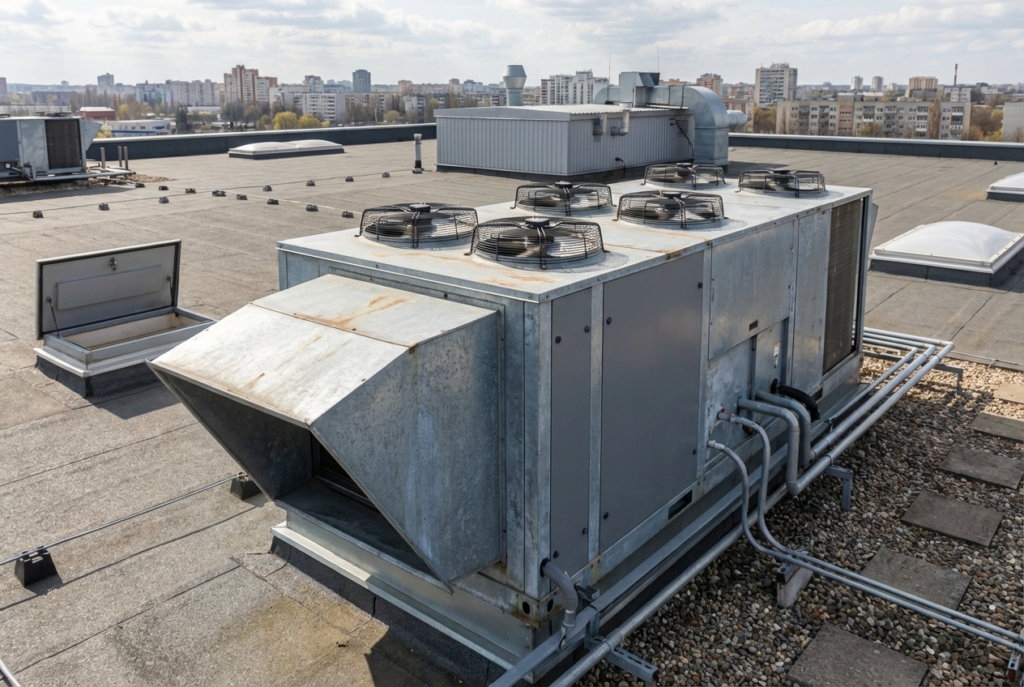
Rooftop package units dominate commercial installations because everything sits in one weatherproof cabinet. Compressor, air handler, evaporator, and condenser all contained in single unit on your roof. No indoor equipment taking up valuable building space. No refrigerant lines running through walls. Easier installation and service access compared to split systems. Most office buildings, retail spaces, and restaurants use rooftop packages because they’re practical for commercial applications.
Size your commercial unit based on building square footage, ceiling height, insulation, window area, and occupancy. Office building with 3,000 square feet might need 5-ton unit. Same square footage retail space with big storefront windows and constant door traffic needs 7.5-ton unit because heat gain is different. We calculate actual cooling load for your specific building rather than guessing based on square footage alone. Undersized equipment runs constantly and never keeps up. Oversized equipment short-cycles and wastes energy.
Multi-zone systems make sense for buildings with different cooling needs in different areas. Law office with reception area, multiple offices, conference room, and storage—each zone needs independent temperature control. Reception stays cooler for customer comfort. Individual offices adjust to employee preferences. Conference room cools down before meetings. Storage area barely needs cooling. Zone dampers and multiple thermostats give you control instead of one temperature for entire building. This costs more upfront but saves energy long-term and keeps everyone comfortable.
What Commercial HVAC Installation Actually Involves
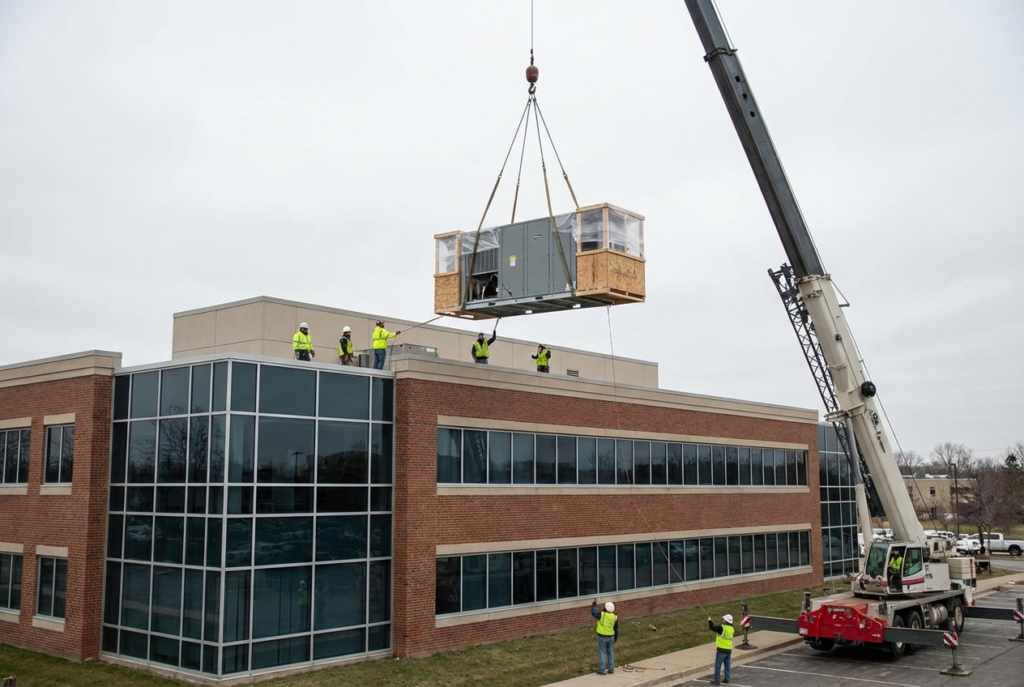
Removing old rooftop equipment requires crane or specialized rigging in most cases. Commercial units weigh 400-800 pounds and sit on roof curbs that can’t support additional weight during removal. We coordinate crane service to lift old unit off roof without damaging building or surrounding property. This adds cost and coordination compared to residential installations but it’s necessary for safe commercial equipment removal. Understanding commercial heating and cooling requirements helps building owners plan installations properly.
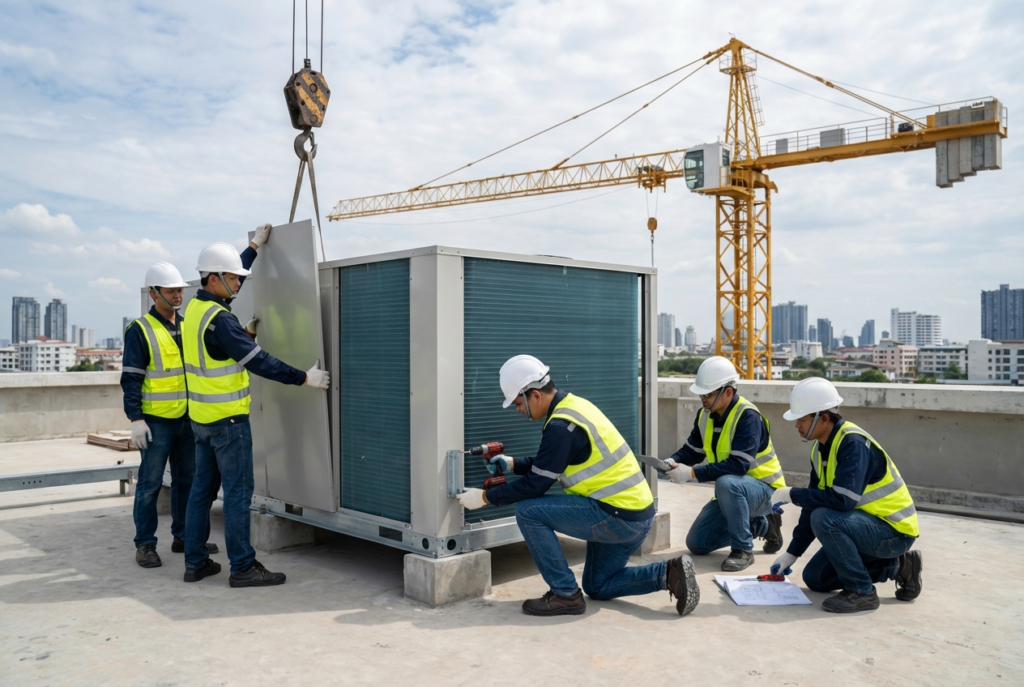
New unit goes onto existing roof curb if curb is still good condition. Curb is the mounting frame that seals between rooftop unit and roof opening. Damaged or rotted curbs need replacement first—adds one day and $800-1,500 to project. We inspect curb condition during estimate so there’s no surprise costs. Connect new unit to existing ductwork inside building using proper connections that seal against weather and prevent leaks. Wire electrical service from building panel to rooftop unit following commercial electrical codes.
Startup and commissioning takes longer for commercial installations than residential. We verify airflow to all zones, check refrigerant charge, test all safety controls, calibrate zone dampers, program thermostats for your business hours, and verify even temperature throughout building. Commercial installations need proper documentation for building permits and inspections. Final inspection verifies everything meets code before we sign off project complete. Your building gets comfortable reliable HVAC that works correctly from day one instead of problems showing up later.
Installation Timeline and Minimizing Business Interruption

Most commercial rooftop replacements take 2-3 days from start to finish. Day one—crane arrives, remove old unit, inspect curb and ductwork, address any issues found. Day two—install new equipment, make all connections, wire electrical. Day three—startup, testing, commissioning, verify operation. Weather delays affect rooftop work more than indoor residential installations. Rain or high winds mean waiting for safe conditions before working on roofs.
We schedule installations around your business operations when possible. Office building that closes weekends? We start Friday afternoon after employees leave, work Saturday, finish Sunday, building has working HVAC Monday morning. Retail store that can’t close during business hours? We work early mornings before opening or evenings after closing for inside work, do rooftop work during low-traffic times. Scheduling flexibility costs more but prevents losing business revenue from closing doors.
Temporary cooling keeps critical areas comfortable during multi-day installations. Portable AC units for your main office area or customer-facing spaces. Not whole-building cooling but enough to maintain essential operations while we complete installation. Restaurant kitchen needs cooling during lunch and dinner service? We coordinate installation around service times and provide temporary solutions so you don’t lose business days. Sometimes installations overlap with commercial HVAC repair timelines when emergency failures force faster replacement decisions.
Commercial HVAC Installation Costs vs. Continued Repair Expenses
Commercial rooftop unit installation runs $8,000-15,000 depending on tonnage and features. Small office 3-ton unit around $8,000-10,000. Larger retail space 7.5-ton unit $12,000-15,000. This includes equipment, crane service, installation labor, electrical work, permits, and startup commissioning. Higher than residential because commercial equipment costs more, installation is more complex, and rooftop work requires additional safety measures and equipment.
Equipment efficiency affects long-term operating costs significantly. Standard 13-14 SEER commercial unit costs less upfront. High-efficiency 15-16 SEER unit adds $1,500-2,500 to installation but reduces monthly energy bills by 25-35%. Office building spending $400 monthly on cooling saves $100-140 monthly with high-efficiency equipment. Energy savings pay back the efficiency premium in 18-24 months, then you’re saving money every month for remaining equipment life.
Compare replacement cost against continuing repairs plus energy waste. Old inefficient unit needing $4,000 yearly repairs plus costing extra $1,200 yearly in wasted energy equals $5,200 annual expense. New installation at $12,000 pays for itself in 2.3 years through eliminated repairs and lower energy costs. After payback period, you’re $5,000+ ahead annually compared to continuing with failing equipment. Replacement is business investment that improves your bottom line, not just expense to avoid.
Selecting the Right Commercial HVAC Installation Contractor
Why Commercial Installation Requires Different Expertise Than Residential
Residential installers work inside homes connecting indoor and outdoor units at ground level. Commercial installers work on rooftops with cranes, heavy equipment, and fall protection requirements. Completely different skill sets and safety protocols. Guy who installs residential split systems every day doesn’t automatically know commercial rooftop installation just because both involve HVAC equipment. Rooftop work requires OSHA training, commercial rigging experience, and understanding of commercial building codes.
Commercial installations need proper project management and business coordination. Residential jobs take one day with minimal planning. Commercial projects span multiple days requiring crane scheduling, permit coordination, parts ordering for commercial-grade equipment, and working around your business operations. Residential installer who shows up when convenient doesn’t understand commercial project management where timeline delays cost you business revenue.
Commercial permits and inspections follow stricter requirements than residential. Rooftop equipment needs structural calculations verifying roof can support new unit weight. Commercial electrical work requires licensed commercial electricians, not residential wiremen. Refrigerant handling for larger commercial systems needs EPA universal certification, not just residential certification. Code requirements are higher for commercial installations because equipment failures affect more people and create bigger liability.
Questions to Ask Before Hiring Commercial Installation Contractor
Ask how many commercial rooftop installations they complete annually. Real commercial contractors should say “15-20 commercial projects yearly” or similar specific number. Vague answers like “we do commercial sometimes” mean you’re their occasional side job. Companies doing commercial installations regularly have established processes, known crane services, commercial parts suppliers, and experience navigating commercial permits.
Ask about their commercial liability insurance limits. Residential contractors carry $500,000-1 million general liability. Commercial contractors need $2-5 million coverage because business property damage claims are larger and business interruption losses are significant. Rooftop installation gone wrong could damage expensive commercial property. Verify their insurance covers commercial rooftop work specifically—some policies exclude rooftop installations or limit coverage.
Ask for commercial references you can actually contact. Real commercial contractors have building owners or property managers who will verify their work. Check those references and ask specific questions—did installation stay on schedule, was business disruption minimized, did final system work correctly, were there hidden costs or surprise charges. References reveal how contractors actually perform versus what they promise during sales pitch.
Red Flags That Signal Wrong Contractor for Commercial Work
Contractor doesn’t mention permits or inspections during initial discussion. Commercial installations always require permits and inspections. Contractor acting like this is optional or something they “handle later” doesn’t understand commercial requirements. We discuss permit timeline upfront because permit approval affects project schedule and you need that information for planning.
They don’t ask detailed questions about your building and business operations. Commercial installation requires knowing roof access, building hours, customer traffic patterns, critical operations that can’t be interrupted, and tenant or employee considerations. Residential mentality treats every job the same. Commercial contractors understand each business has unique requirements affecting installation approach.
No written project timeline or vague schedule commitments. Commercial installations need specific schedules because your business operations depend on working HVAC. “We’ll get it done in a few days” isn’t acceptable when you need to plan employee schedules, customer communications, or temporary cooling arrangements. Professional commercial contractors provide written timelines with specific dates for each phase.
What Professional Commercial Installation Contractors Provide
We coordinate all aspects of commercial installation from permits to final inspection. Structural calculations for roof loading. Permit applications and approval tracking. Crane service scheduling. Parts ordering from commercial suppliers. Electrical coordination with licensed commercial electricians. You get single point of contact managing entire project instead of coordinating multiple contractors yourself.
We provide detailed written proposals with complete scope of work. Not vague estimates that leave room for surprise charges. Our proposals specify equipment model numbers, tonnage, efficiency ratings, warranty terms, all included work, timeline, and total cost. You know exactly what you’re getting and when installation completes. No hidden fees or unexpected additions during project.
We offer extended warranties and maintenance agreements specifically for commercial installations. Standard manufacturer warranties cover equipment defects. Our extended service agreements cover labor, regular maintenance, priority service response, and annual inspections that keep your system running efficiently. Commercial equipment needs professional maintenance to reach full 15-20 year lifespan. We’re committed to supporting your investment long-term, not just collecting installation payment and disappearing. Sometimes planning ahead means considering emergency commercial service coverage as part of your installation package.
Get Professional Commercial HVAC Installation in Oakville
Call (314) 600-2202 for commercial HVAC installation in Oakville. We handle business building rooftop installations regularly—proper equipment sizing, professional installation, minimal business disruption. Get reliable commercial HVAC that works correctly for the next 15-20 years.