Serving St. Louis & Surrounding Areas

Emergency Furnace Installation in Oakville, MO: When It Cannot Wait
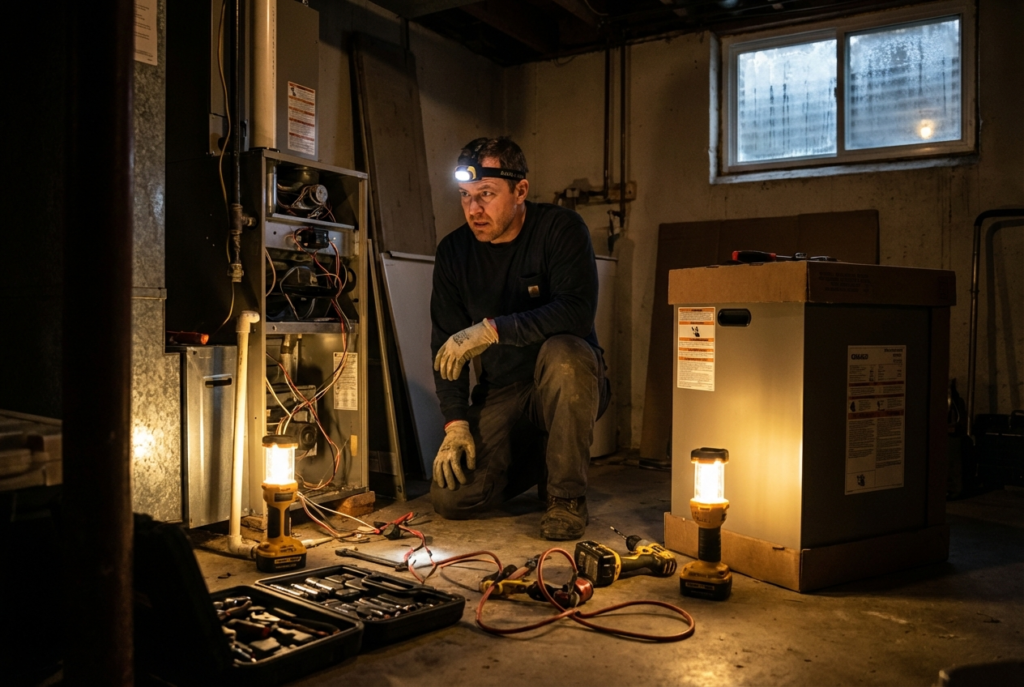
Most furnaces get replaced on a schedule, after a fall inspection turns up something that will not survive another winter. This page is about the other kind, where the furnace is out of the picture today and the decision cannot wait for a quote next Tuesday. Three situations cause almost all of it, and they behave differently from each other.
The Heat Exchanger Has Failed
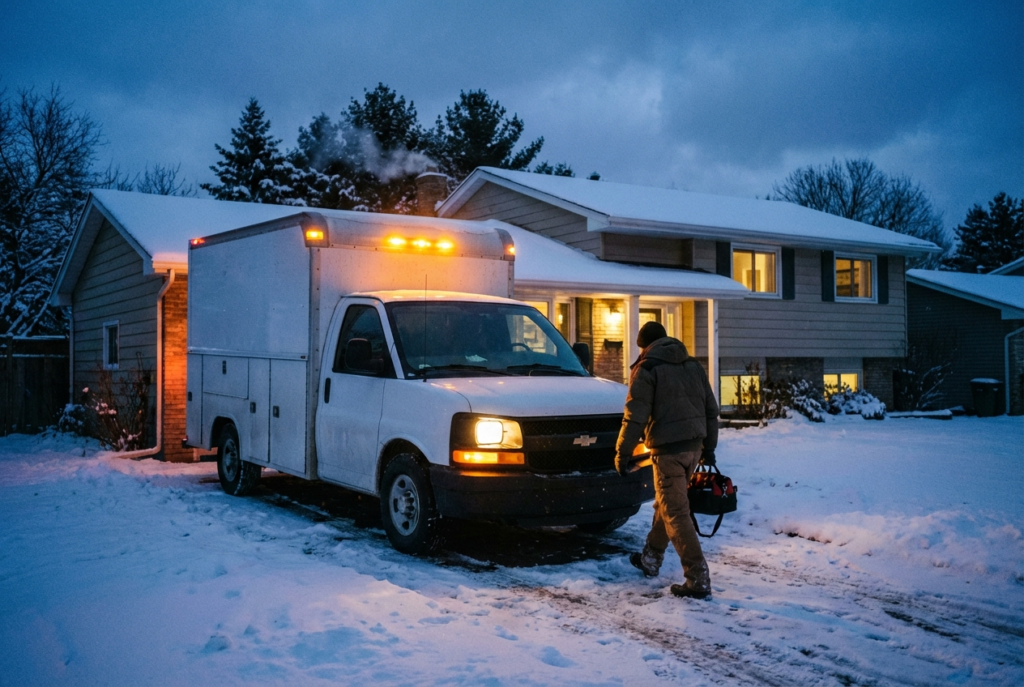
The heat exchanger is the steel wall between the fire and the air in your house. Combustion happens on one side, the blower pushes air across the other, and the two are never supposed to meet. Once that wall is breached, the furnace is not repairable in any practical sense.
People ask why it is not simply replaced, and on paper it sometimes can be. The part is occasionally still under a manufacturer warranty. The labor is not, and the labor is most of it, because reaching the exchanger means pulling the furnace apart down to the cabinet. On a unit past fifteen years you are paying most of the price of a new furnace to put a new component inside an old one whose blower motor, board and valve are all the same age.
The other half of the answer is that we will not relight it while it is in the house. A confirmed breach means the furnace stays off, and that is not a sales position, it is the only defensible thing to do with combustion gases and a blower on the far side of a crack.
The Gas Utility Red Tagged It
A red tag is a physical notice the gas utility attaches to an appliance when they judge it unsafe. The severity varies. Some tags shut the appliance down and leave the gas on for everything else. In the worst cases the meter itself is locked, which takes your water heater and range with it.
This usually arrives one of two ways. Somebody called them about a smell, or they were already on site for a meter change and looked at the furnace while standing there. Either way the finding is theirs, not ours, and it is not negotiable by argument.
What surprises people most is who is allowed to remove the tag. Not you, and not us. The condition gets corrected, and then the utility clears its own tag, and the order of those two events is fixed. Pulling the tag off and firing the appliance is treated as a serious matter, and beyond the legal exposure, a utility inspector wrote that tag for a reason they could see and you cannot.
This is the scenario where replacement genuinely cannot be deferred, because there is no version of the next few days where the old furnace runs again.
The Part Does Not Exist Anymore
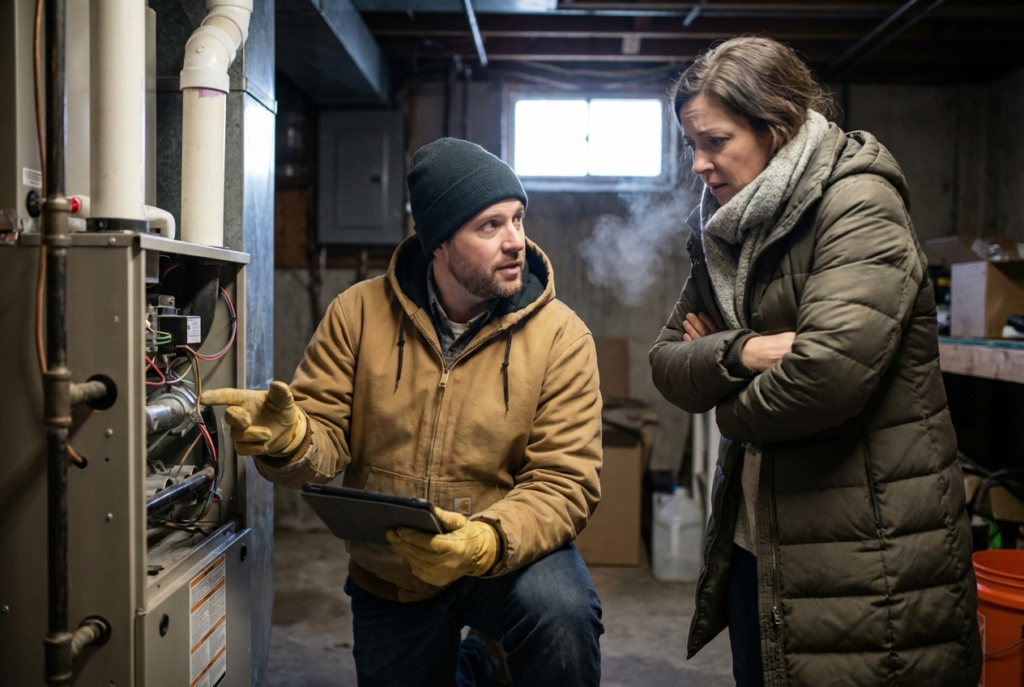
The third situation has nothing to do with safety. The furnace is repairable in principle and the part is simply gone.
- Integrated control boards for discontinued models, which is the most common one by a wide margin
- Inducer assemblies and gas valves for lines a manufacturer has stopped supporting
- Anything on a furnace old enough that the brand no longer exists under that name
- Parts that technically exist but sit with a single supplier at a lead time longer than the cold weather in front of you
A rebuilt board from a salvage source is sometimes findable, and on a furnace with years left in it that can be a reasonable move. On a unit already near the end, it is spending real money to buy a few uncertain weeks. We will tell you which one you are looking at, because from the outside the two situations look identical.
What Gets Compromised When It Happens Today
A forced replacement is a good install done inside a bad schedule. Some things are not negotiable and some genuinely suffer, and you should know which is which before you agree to anything.
What does not move: the furnace still gets sized to the house rather than matched to the label on the old one, the venting still gets verified for the new appliance, the gas and electrical connections still get done properly, and the permit still gets pulled. None of that is where time is saved.
What actually gives is the shopping. On a planned replacement you compare efficiency tiers against your own gas bills, wait for a rebate window, and pick from whatever the distributor can order. On a forced one you choose from what is physically in a warehouse in the region this week. That is a narrower shelf, and it is the single biggest thing you give up.
Duct problems are the other casualty. If the old system was struggling because of undersized returns or leaky trunk lines, the honest fix is duct work alongside the new furnace. On an emergency swap that becomes a second project for spring, and it is worth writing down while somebody is standing in the basement pointing at it, rather than rediscovering it next November.
Heat in the Meantime
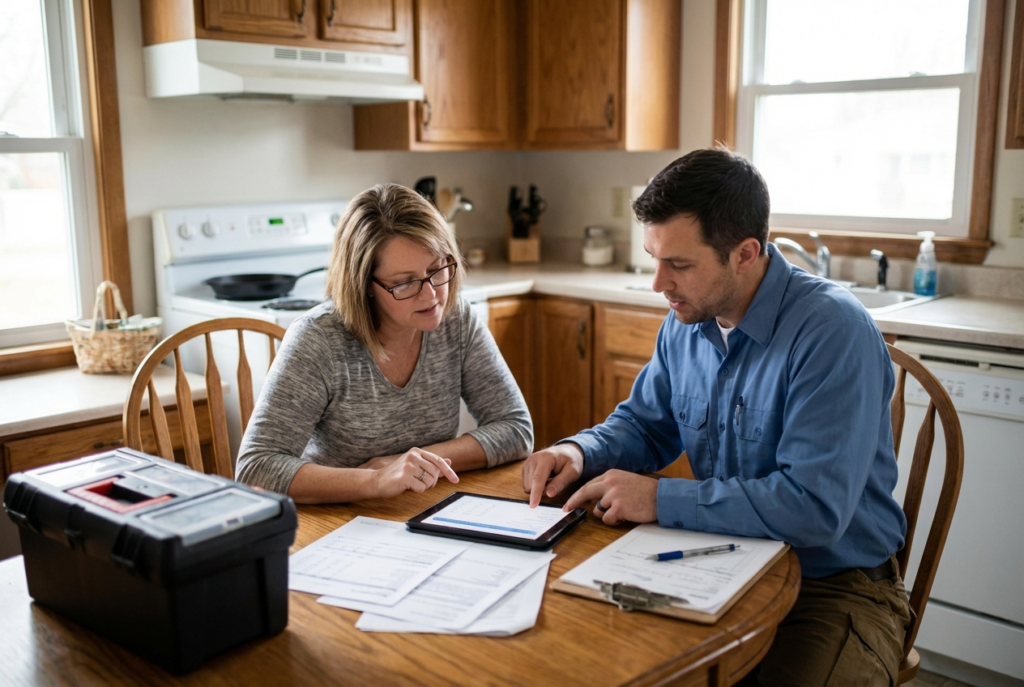
An install is a half-day job and the decision usually happens before the truck with the equipment can get there, so there is often a gap to cover.
If the old furnace is merely dead rather than condemned, sometimes it can be made to limp for a day under supervision. If it is red tagged or the exchanger is breached, it cannot, and anybody offering to nurse it along is doing you no favors.
What we can usually do instead is get temporary electric heat into the rooms that matter and sequence the work so the house is not open to the basement overnight. Ask about this on the first call rather than after, because it changes how the day gets scheduled.
Deciding Well While Under Pressure
Two questions settle most of it, and neither takes long.
First, how old is the rest of the system. A furnace and an air conditioner installed together tend to fail within a few years of each other, and they share the blower and the duct connection. If both are near the end, replacing them together costs meaningfully less than replacing them a year apart, and that is worth knowing today even if the answer is still no.
Second, how long you intend to be in the house. A high efficiency furnace earns its price back through gas bills over years. If the house is going on the market in eighteen months, that math does not close, and a properly sized standard efficiency unit is the better answer rather than the cheaper one.
What should not drive the decision is the temperature in the room while you are deciding. If a proposal only makes sense because you are cold right now, it is not a proposal, it is leverage.
Frequently Asked Questions
Can a cracked heat exchanger be repaired instead of replacing the furnace?
Almost never in a way that makes sense. The part is sometimes still under warranty, but the labor is not, and reaching it means dismantling the furnace to the cabinet. On a unit past about fifteen years you would be paying close to the cost of a new furnace to put one new component inside a system whose other major parts are all the same age.
The gas company put a tag on my furnace. Can you just take it off?
No, and neither can you. The unsafe condition has to be corrected first, and then the utility clears its own tag. That order is fixed. Removing a tag and running the appliance carries real legal exposure on top of the safety problem the inspector actually saw.
How fast can a replacement realistically happen?
Most forced replacements happen within a day or so of the decision, and the install itself runs about half a day. The limit is almost always equipment. Common residential sizes are usually in a regional warehouse, while an unusual size or a specific brand adds time no amount of urgency removes.
Am I going to get a worse installation because it is being done in a hurry?
The install itself does not get shortened. Sizing, venting, gas and electrical connections, permit and final testing all happen the same way they would on a planned job. What you lose is choice of equipment, because you are picking from what is in a warehouse this week rather than from a catalog.
Should I replace the air conditioner at the same time?
Worth asking about if it is the same age, because the two were usually installed together, they share the blower and the duct connection, and doing both at once costs less than doing them a year apart. If your air conditioner is much newer, no.
What will it cost?
It depends on the size the house actually needs, the efficiency you choose, and what the venting and gas connections require, so a number over the phone before anybody has seen the furnace is a guess. You get the price in writing before any equipment comes off the truck.
When the Furnace Is Not Coming Back
Tell us which of the three situations you are in, because they run on different clocks. A red tag is a fixed sequence, a dead board is a sourcing question, and a failed exchanger is a decision about the whole system.
Reach us at (314) 600-2202. If nobody has actually diagnosed it yet and you are working from a symptom, emergency furnace repair covers what to do in the meantime. If your furnace is still running and this is about planning ahead instead, furnace installation walks through the version with time to think.