Serving St. Louis & Surrounding Areas

Furnace Maintenance in Oakville, MO: What a Real Tune-Up Covers
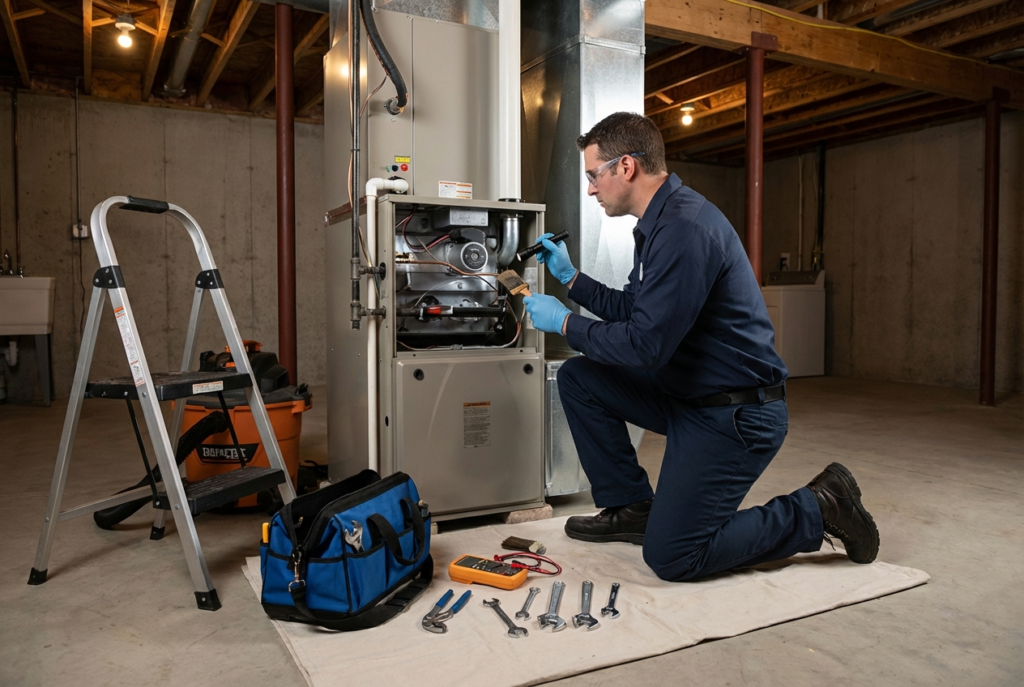
There is a real difference between a furnace tune-up and somebody standing in your basement looking at your furnace for twenty minutes. Both cost you an appointment. Only one of them tells you anything. So here is the actual list of what should happen, what each step is looking for, and which readings belong on the report you get handed at the end. Hold any contractor to it, including us.
The Combustion Side
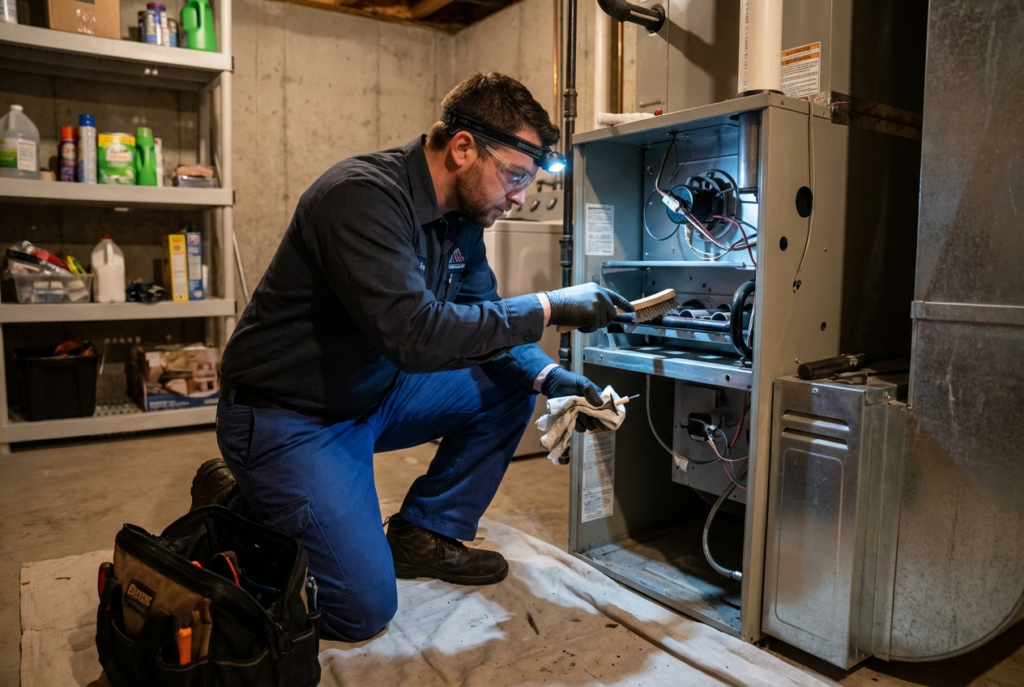
This is the half that makes heat, and the half that can hurt you. It is also the half most commonly skipped, because doing it properly means taking things apart.
- Burners pulled, inspected, and cleaned rather than glanced at through the opening
- Flame pattern watched through a full cycle, including what it does the moment the blower starts
- Manifold gas pressure measured with a manometer and compared to the figure printed on the unit’s data plate
- Flue draft confirmed, and the vent checked for corrosion, sagging, or disconnection
- Carbon monoxide measured in the flue gas, not just in the room
Manifold pressure is the one to ask about by name. A furnace set even slightly rich or lean will still make heat and still feel fine in January, while quietly sooting up the burners or overheating the heat exchanger. It takes a gauge to know, and it takes about three minutes.
The Air Side
Everything past the burners is about moving air, and this is where the easy money hides. A furnace can be in perfect combustion health and still cost you a fortune because it cannot breathe.
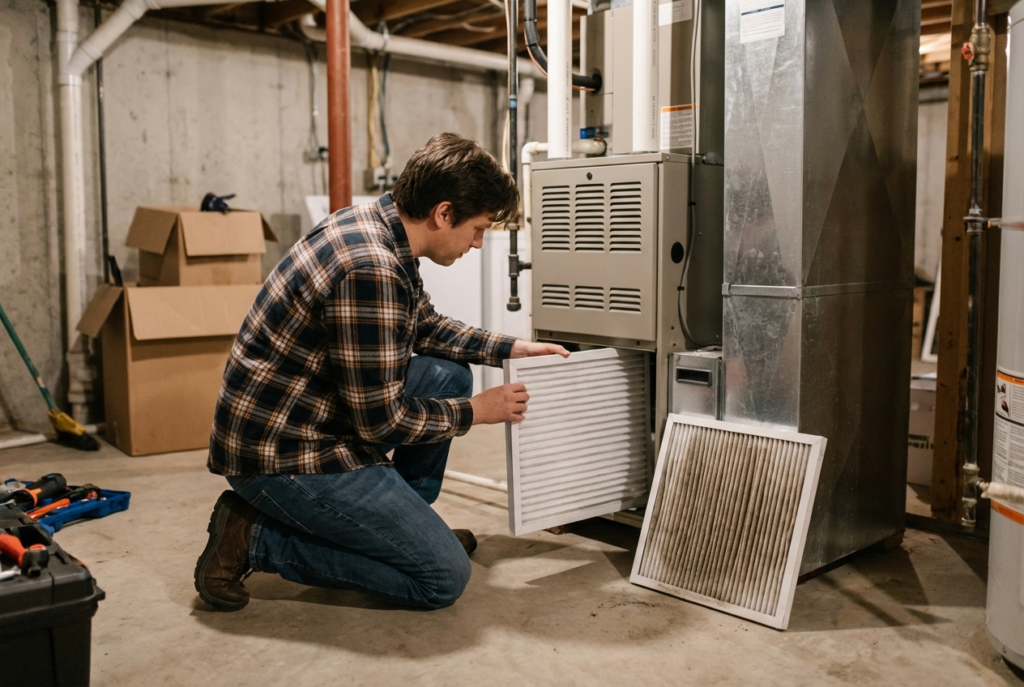
- The filter changed, and sized sensibly for the system rather than the densest one on the shelf
- The blower wheel inspected and cleaned if it is loaded with dust
- The cooling coil sitting above the furnace checked, since it is in the same airstream and a dirty one chokes heating too
- Total external static pressure read across the system
- Return and supply registers checked for anything blocking them
The blower wheel deserves particular attention. It is a drum of small curved blades, and when dust packs into those blades the wheel stops moving anything like the air it was built to move. Nobody sees it, because seeing it means pulling the blower assembly. A dirty wheel is one of the most common reasons a healthy furnace heats a house poorly.
Static pressure is the closest thing there is to blood pressure for a duct system. A high reading means the furnace is straining against the ductwork every minute it runs, which shortens the life of the motor and pushes the unit toward its high limit.
The Safety Devices That Only Matter Once
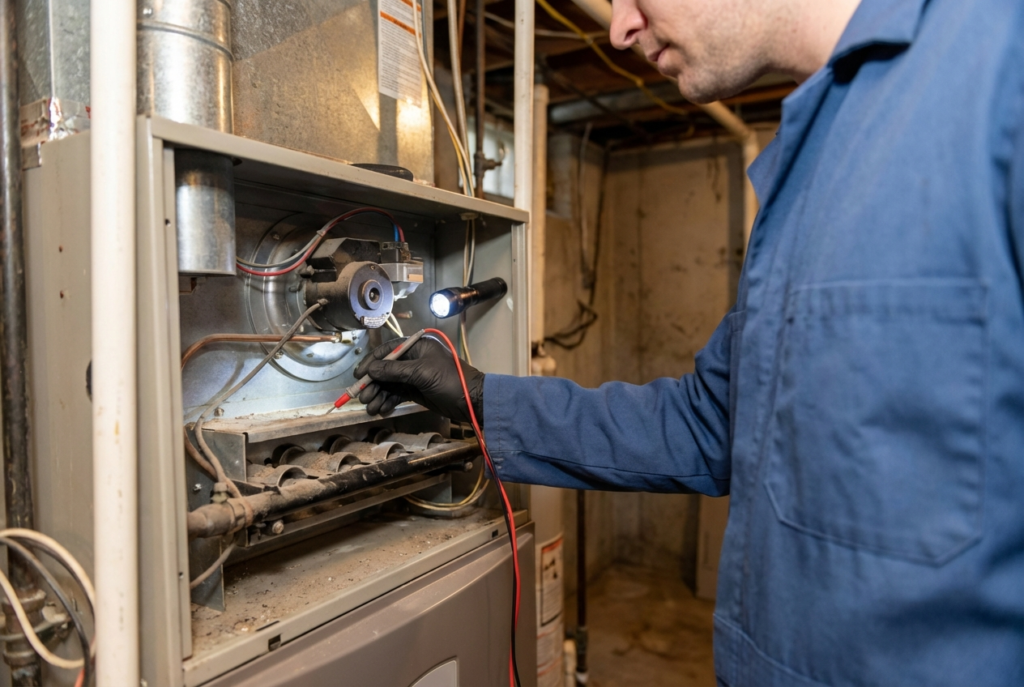
A furnace is full of parts whose entire purpose is to do nothing for years and then work perfectly on a single occasion. Those are exactly the parts that get eyeballed instead of tested.
- The flame rollout switch, which shuts the gas down if flame escapes the burner box
- The high limit, which stops the furnace when it gets too hot to be safe
- The pressure switch, which refuses to let the furnace fire if the flue is blocked
- The blower door switch
- Your carbon monoxide detectors, including the date on them, because they expire
There is a specific thing worth asking about here. A safety switch that keeps tripping is inconvenient, and the shortcut is to bypass it so the furnace stops complaining. That switch tripping was information. If we ever find one jumpered on your system, you are going to hear about it, and it is coming out.
The Readings That Predict a Failure Before It Happens
This is the part that separates maintenance from cleaning. A repair visit diagnoses something that has already broken. Maintenance is supposed to catch the part that is still working and will not be by February. That only happens if somebody writes down numbers.
- Flame signal, in microamps. The flame sensor produces a tiny current. A brand new one reads strong. As residue builds, the number falls. It will still light your furnace at a weak reading, right up until the morning it will not. That number is a countdown, and it is invisible unless somebody measures it.
- Capacitor microfarads. A capacitor drifts below its rating long before it dies outright, and a weak one makes the blower motor work harder every single start.
- Amp draw against nameplate. A motor pulling more current than it should is a motor telling you how it plans to fail.
- Static pressure over time. One reading is a snapshot. The same reading a year later tells you whether your duct system is getting worse.
If your maintenance report is a checklist of ticked boxes with no numbers on it, nobody measured anything. Numbers are the whole point, because numbers can be compared to last year.
What Actually Breaks First When a Furnace Is Never Serviced
Skipped maintenance does not produce random failures. It produces a fairly predictable order, and it usually starts small.
The flame sensor goes first, because residue accumulates on it every season. That is the furnace that lights, runs briefly, and quits. Next is the ignitor, worn out early by all the extra start attempts the dirty flame sensor caused. Then the blower motor, which has spent years dragging air through a clogged filter and a packed wheel while running hotter than it was designed to.
The one at the end of that chain is the heat exchanger. Years of overheating from poor airflow means years of metal expanding and contracting harder than it should. When that finally cracks, the conversation stops being about a repair and becomes a conversation about replacing the furnace, because a cracked exchanger is how combustion gases get into the air in your house.
Every step in that chain traces back to airflow and residue, which are the two things maintenance exists to deal with.
Why Fall Books Solid, and What Waiting Costs You
Furnaces do not fail evenly through the winter. They fail on the first genuinely cold night, because that is the first time all year the system runs hard for hours without stopping. Whatever was marginal in October becomes obvious at once, across the whole county, on the same night.
Which is why the sensible time to have this done is early fall, while the schedule is open and while a part that needs ordering can be ordered without you sitting in a cold house waiting for it. Booking in the middle of the first cold snap means joining a queue behind everyone whose heat is already off, and rightly so, because they come first.
Frequently Asked Questions
How often does a furnace actually need maintenance?
Once a year, before the heating season. Gas furnaces are combustion appliances with safety devices that need verifying annually, and manufacturer warranties generally assume yearly professional service, so skipping it can affect a warranty claim later.
What is the single most useful number on a maintenance report?
Flame signal in microamps. The flame sensor’s output falls gradually as residue builds, so a weak but working reading is advance warning that it will fail this season. It is the clearest example of catching something while it still works.
Can I just change the filter myself and skip the visit?
Changing the filter yourself is genuinely worth doing and we would rather you did it regularly. It does not replace the visit, because the filter is on the air side only. It does nothing about combustion, gas pressure, the flue, or whether your safety switches still function.
What kind of filter should I be using?
The one your system is designed for, which is usually not the densest one available. A very restrictive filter on ductwork that was not built for it raises static pressure and makes the furnace work harder. If somebody has been buying the most expensive filter on the shelf hoping it helps, it may be doing the opposite.
Does maintenance actually prevent breakdowns or is that a sales line?
It prevents a specific and predictable set of them: the ones caused by residue and by restricted airflow, which between them account for most of what we get called out for in January. It cannot prevent a component failing at random, and anybody promising you that is overselling it.
Book a Furnace Tune-Up in Oakville
You get the numbers, not just a tick sheet. If something measures weak but is still working, we tell you that and you decide whether to deal with it now or watch it.
Reach us on (314) 600-2202 and ask for a heating tune-up. Early autumn is the quiet window, and it is the one time of year a part can be ordered without anybody sitting in a cold house waiting for it. If your furnace is already misbehaving, furnace repair walks through what specific symptoms usually mean.