Serving St. Louis & Surrounding Areas
Furnace Repair in Oakville, MO: Find Your Symptom, Start There
It Will Not Turn On At All
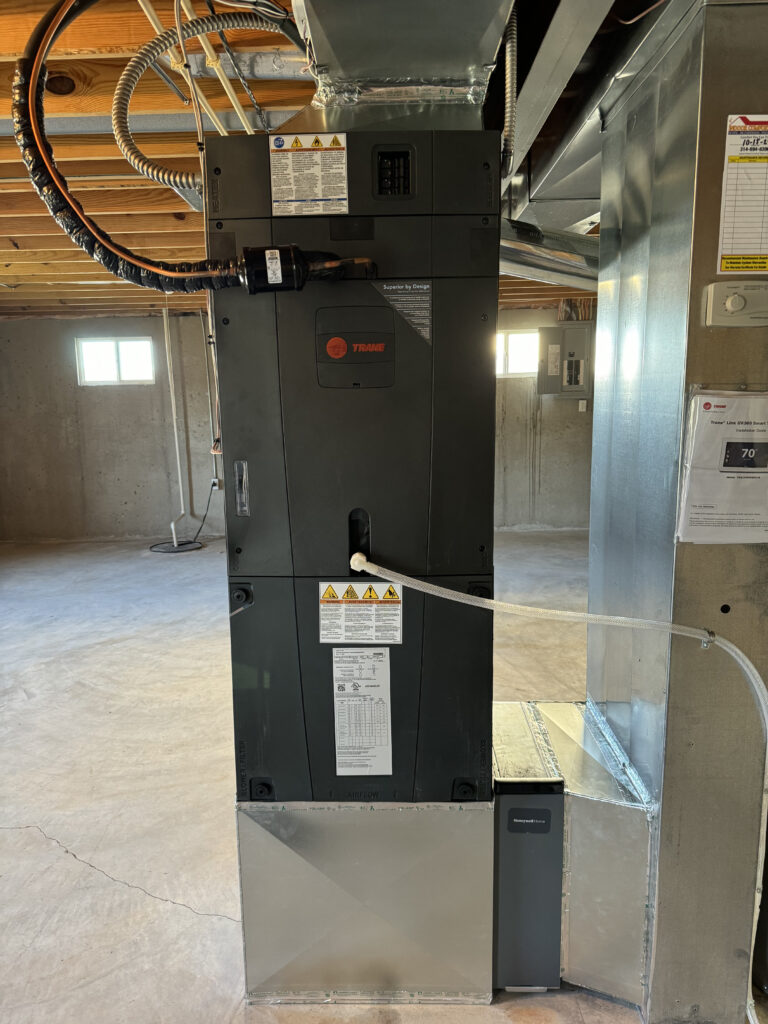
Before anything else, four things account for most no-start calls, and all four are free to check. Your thermostat batteries. The furnace switch, which looks exactly like a light switch on or near the unit and gets flipped off by accident constantly. The breaker. And the door safety switch, a small plunger behind the blower panel that cuts power whenever the panel is not seated properly, which happens after somebody changes a filter in a hurry.
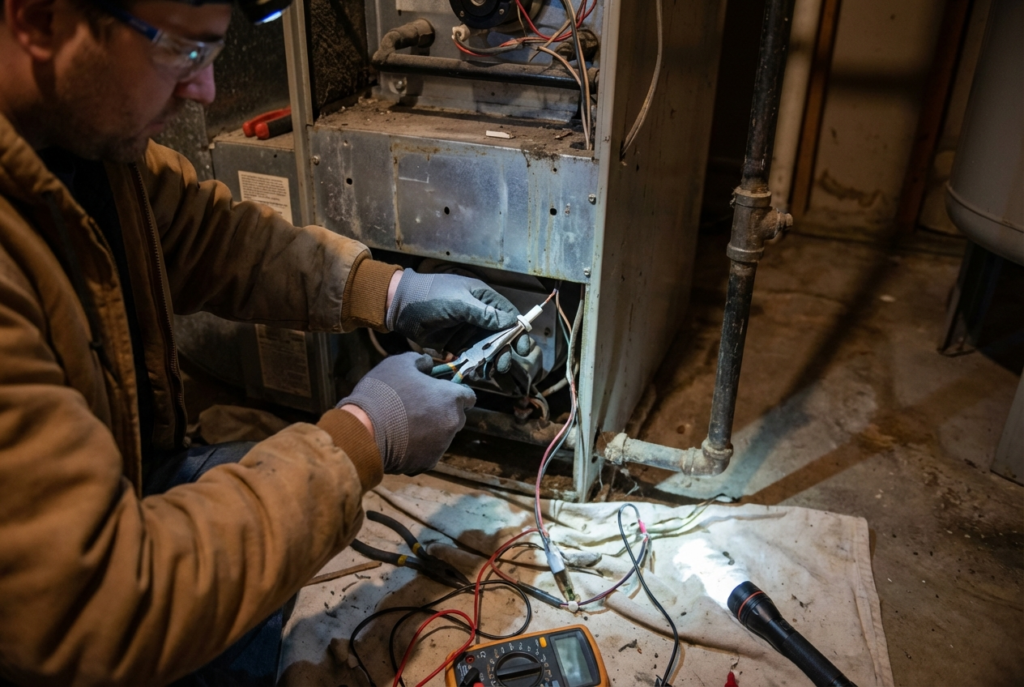
If all four are fine, the usual culprit is the ignitor. Modern furnaces do not have a standing pilot light. They have a hot surface ignitor, a fragile ceramic element that glows orange to light the gas. Ceramic and repeated heating do not get along forever, and they typically give out somewhere around five to seven years. The tell is a furnace that clicks, hums, tries, and never produces a flame.
On an older furnace with an actual standing pilot, the same symptom usually points to the thermocouple instead. That is the safety device that proves the pilot is lit. When it fails, the gas valve refuses to open, which is the system doing exactly what it should.
It Starts, Then Shuts Off a Few Minutes Later
This one has a signature rhythm. The furnace lights, runs somewhere between thirty and ninety seconds, drops out, waits, and tries the whole sequence again. Most of the time that is the flame sensor.
The flame sensor is a thin metal rod that sits directly in the burner flame. Its only job is to confirm a flame is actually present. Over a season or two it builds up a film of residue, stops reading the flame it is sitting in, and the control board shuts the gas down because as far as it knows, gas is flowing with nothing burning it. The system is not broken so much as blinded.
The other common cause is overheating. When airflow is restricted, the furnace cooks itself until the high limit switch cuts it off, then restarts once it cools. A packed filter or a stack of closed vents will do it.
Either way it is worth fixing quickly rather than living with. Every one of those aborted starts is another ignition cycle on the ignitor and another heating and cooling swing on the heat exchanger.
It Runs Nonstop and the House Still Feels Cold
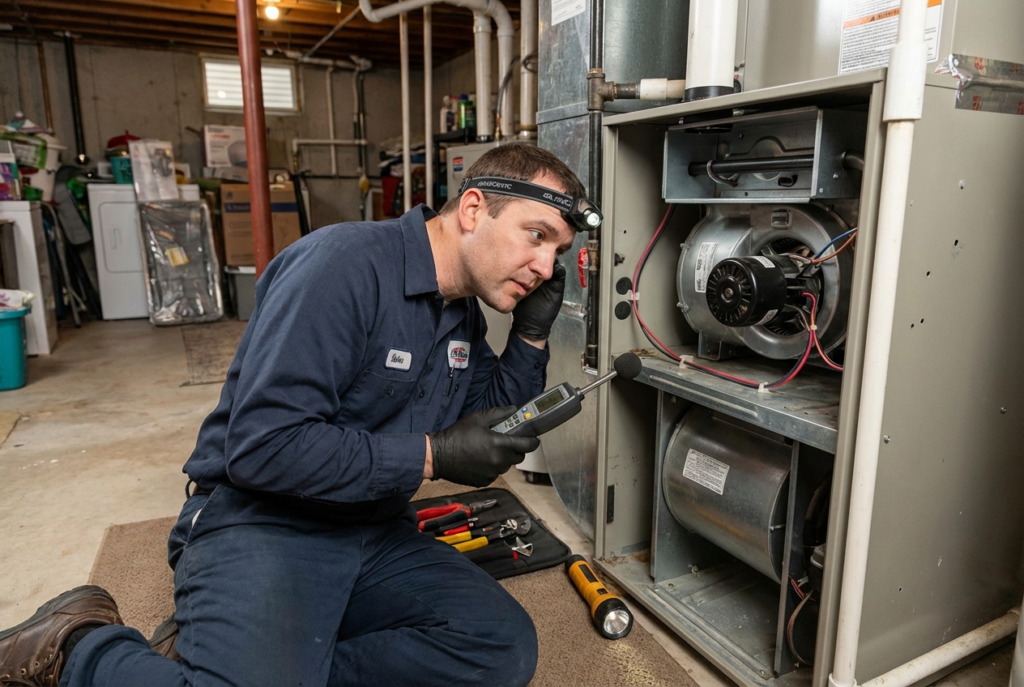
Here the furnace seems fine, which is what makes it maddening. It is producing heat. The heat is not arriving.
Airflow is the first suspect, and it is almost always something ordinary. A filter nobody has changed since spring. Return vents behind a couch. Supply vents closed off in unused rooms, which feels thrifty and actually raises pressure in the duct system and starves the rooms you do use.
- A filter so loaded that the furnace cannot pull air through it
- Return grilles blocked by furniture or rugs
- Supply vents closed in spare rooms
- Duct joints leaking heated air into an attic or crawl space
- A thermostat mounted where it reads the wrong temperature
Leaking ductwork is the quiet one. The furnace heats the air properly and then a share of it escapes through open joints before it ever reaches a register. The furnace never gets the satisfaction of reaching the setpoint, so it simply keeps running.
Then there is combustion itself. A burner flame should be blue and steady. Yellow, lazy, or lifting off the burner means it is not producing the heat it was built to produce, and that is a diagnosis that needs instruments, not a flashlight.
It Is Making a Sound It Did Not Make Before
A furnace has a normal noise floor. Air moving, burners lighting, the blower spinning up. What matters is a sound that is new.
- A bang or boom at startup. This is delayed ignition. Gas is pooling before it lights, then igniting all at once. Stop using the furnace and call. That small explosion is landing on your heat exchanger every cycle.
- Squealing. Blower motor bearings, or a slipping belt on an older unit. It gets worse, never better.
- Grinding. Metal touching metal. Usually the blower wheel making contact with something or bearings that are finished.
- Rattling. Often a loose access panel or a section of duct vibrating. Worth checking, rarely urgent.
- Repeated clicking with no flame. The ignition sequence failing over and over.
Of that list, the bang is the one to act on today. The rest can usually wait for a scheduled visit.
You Smell Something
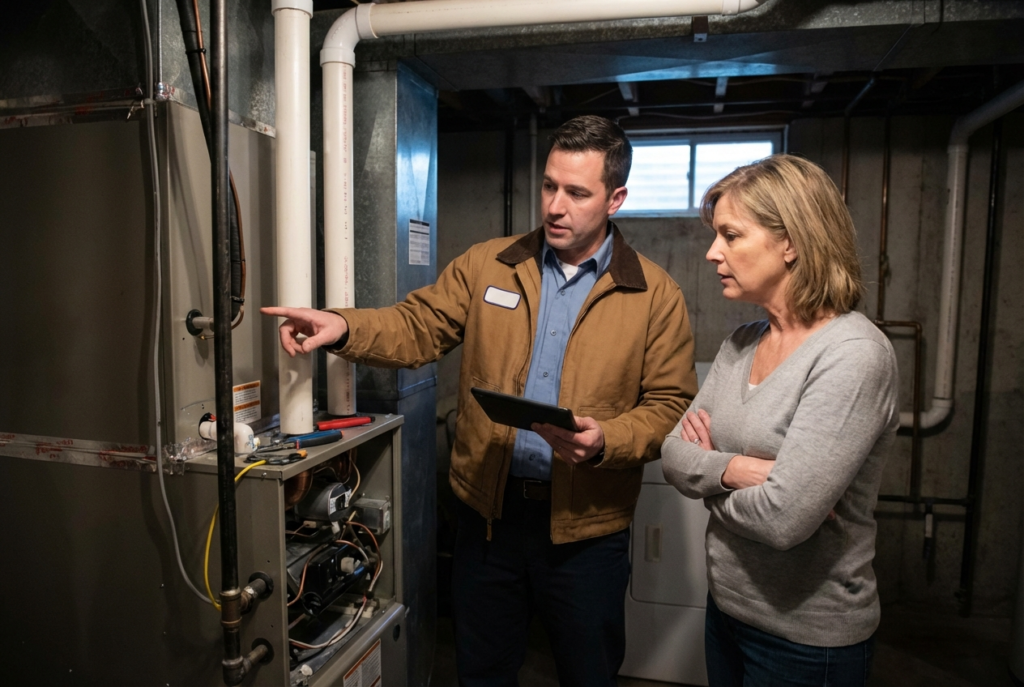
Smells are worth separating out, because one of them is not a repair question at all.
A burning dust smell the first time you run heat in the fall is normal. Dust settled on the heat exchanger all summer and is burning off. It should fade within an hour or so.
A sharp electrical or hot plastic smell is not normal. Shut the system off at the thermostat and the furnace switch, and call.
A rotten egg or sulfur smell means gas. Do not investigate it, do not flip switches. Leave the house, call the gas utility from outside, and call us after they have made the property safe.
The one you cannot smell is carbon monoxide, which is odorless and is exactly why a working CO detector on every level matters more than any single thing on this page. If yours is sounding, treat it as real, get everyone outside, and call from there.
What We Check Before We Leave, Every Time
Swapping the failed part is the easy half. The half that decides whether you see us again in three weeks is verification, and it is the same short list on every furnace we touch.
- A carbon monoxide reading taken at the supply register with the system running
- The heat exchanger inspected for cracking or separation
- The burner flame checked for color, shape, and stability
- Temperature rise across the furnace measured and compared against the range printed on the unit’s own data plate
- Every safety switch confirmed working rather than bypassed
That temperature rise number is the one most people have never heard of and it tells you the most. Every furnace has a range stamped on it. Come in under it or over it and something is wrong with airflow or with fuel, even if the house is currently warm. It is the difference between a furnace that is running and a furnace that is running right.
Frequently Asked Questions
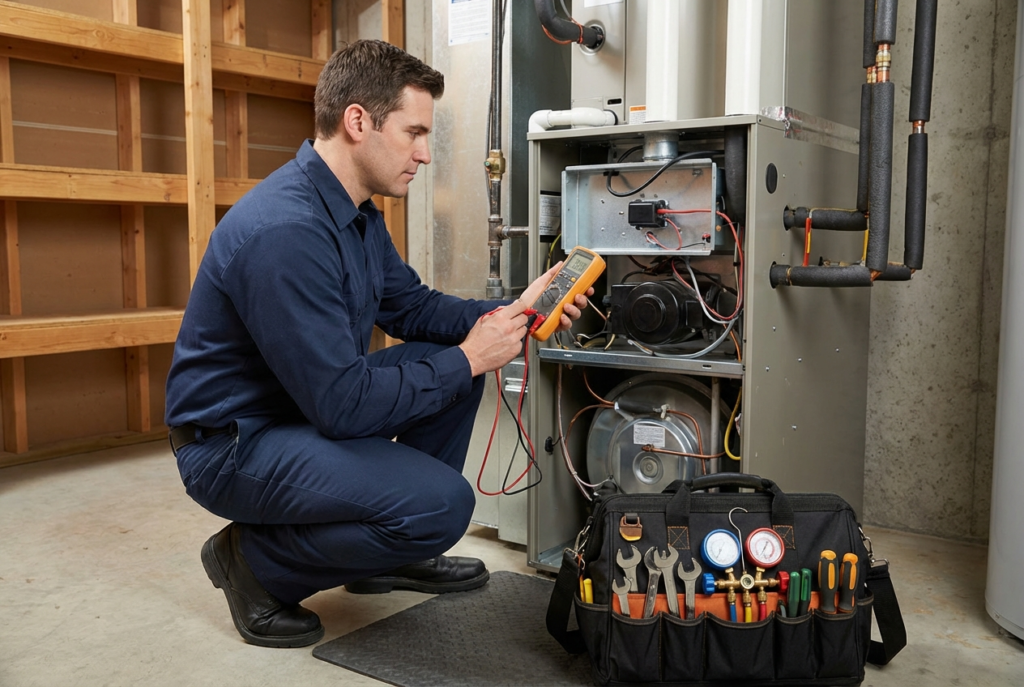
My furnace worked yesterday and will not start today. What should I check first?
Thermostat batteries, the furnace switch on or near the unit, the breaker, and whether the blower access panel is seated all the way. That last one trips a safety plunger and is a common one after a filter change. If all four look right, it is usually the ignitor and it needs a technician.
Why does my furnace start and then shut off after about a minute?
That pattern almost always points to the flame sensor. It is a small rod sitting in the flame that confirms the burner actually lit. When residue builds up on it, the control board cannot confirm a flame and shuts the gas off as a safety measure. Restricted airflow causing the furnace to overheat produces a similar cycle.
Is it safe to keep using a furnace that bangs when it starts?
No. A bang at startup means gas is collecting before it ignites and then lighting all at once. That force lands on the heat exchanger, and a cracked heat exchanger is how combustion gases reach the air you breathe. Shut it off and have it looked at before running it again.
How can I tell if my heat exchanger is cracked?
You mostly cannot tell from the outside, which is the problem. Warning signs include a rumbling that continues after the burners shut off, soot around the burner area, a flame that moves when the blower kicks on, and a CO detector going off. Confirming it takes a visual inspection with a camera and a combustion reading.
Do you carry parts on the truck or will I be waiting on an order?
Ignitors, flame sensors, thermostats, limit and pressure switches, and common blower motors ride on the truck, so most repairs finish in a single visit. Less common parts and anything brand specific may need to be ordered, and we will tell you that while we are standing there rather than after.
What will the repair cost?
It depends entirely on which part failed, and anybody quoting you a number over the phone before seeing the furnace is guessing. We diagnose first, then tell you what the repair costs and what it would cost to replace instead, and you decide with both numbers in front of you.
Get Your Heat Back On in Oakville
Tell us what the furnace is doing and we will tell you what it usually means before we ever get in the truck. If it is something you can sort out in two minutes on your own, we would rather say so.
Our number is (314) 600-2202. Tell whoever picks up what the furnace is doing and roughly when it started, because that alone narrows it down before anyone gets in a truck. If the house is genuinely cold and it cannot wait for morning, emergency furnace repair runs around the clock. And if this furnace is limping through its second rough winter, furnace installation covers what replacing it actually involves.