Serving St. Louis & Surrounding Areas
Furnace Repair Near Oakville Middle School: When the Vents Blow Cold
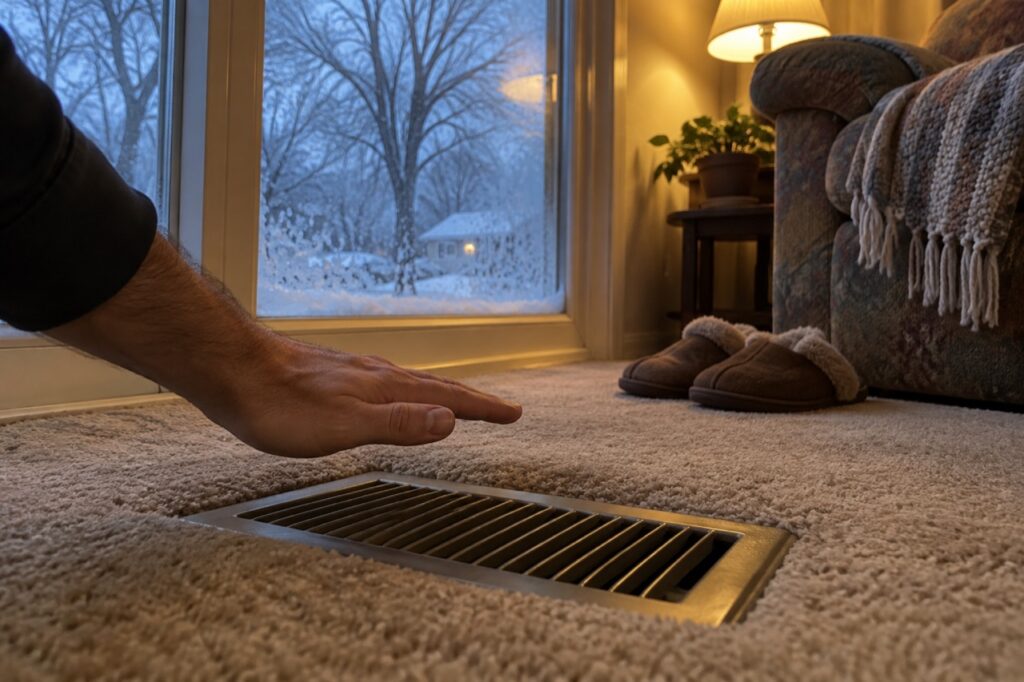
Furnace repair near Oakville Middle School is a lot of one call in particular. “It’s running, I can hear it, but the air coming out is cold.” The furnace sounds fine. The house is freezing. And nobody can figure out which part is the problem.
Liberty Heating Cooling and Plumbing is Sam Marsala’s company. He’s been in the trade since 1998, and he’s chased down a lot of these. Our shop is one straight drive up Telegraph Road, about eight minutes from the school.
Cold Air Is a Clue, Not the Problem
When a furnace blows cold air, it’s telling you the fan is working. The fan is the part that moves air through the ducts. What’s missing is the fire, or the heat isn’t getting to the air.
So the question isn’t “what’s wrong with the fan.” It’s “why isn’t the furnace lighting, or why did it stop.” That’s a short list, and we work down it in order.
Check the Fan Setting First
Before anything else, look at your thermostat. There’s usually a fan setting that says “auto” or “on.”
On “auto,” the fan only runs when the furnace is heating. On “on,” it runs all the time, even between heat cycles. So you’ll feel cool air for a few minutes every time the burners shut off. Plenty of people near the school call us about this, and the fix is one button.
Set it to “auto.” If you still get cold air the whole time the furnace is running, that’s a real problem.
Furnace Repair Near Oakville Middle School Starts With a Meter
Here’s how a lot of furnace repairs go wrong. Somebody guesses, puts in an igniter, and it’s still cold. So they put in a flame sensor. Still cold, and now you’ve paid for two parts and the furnace still doesn’t work.
Sam doesn’t do it that way. Test first. Every start-up goes in the same order, step one, step two, step three, and if one fails the rest never happen. Put a meter on the board and you see which one quit.
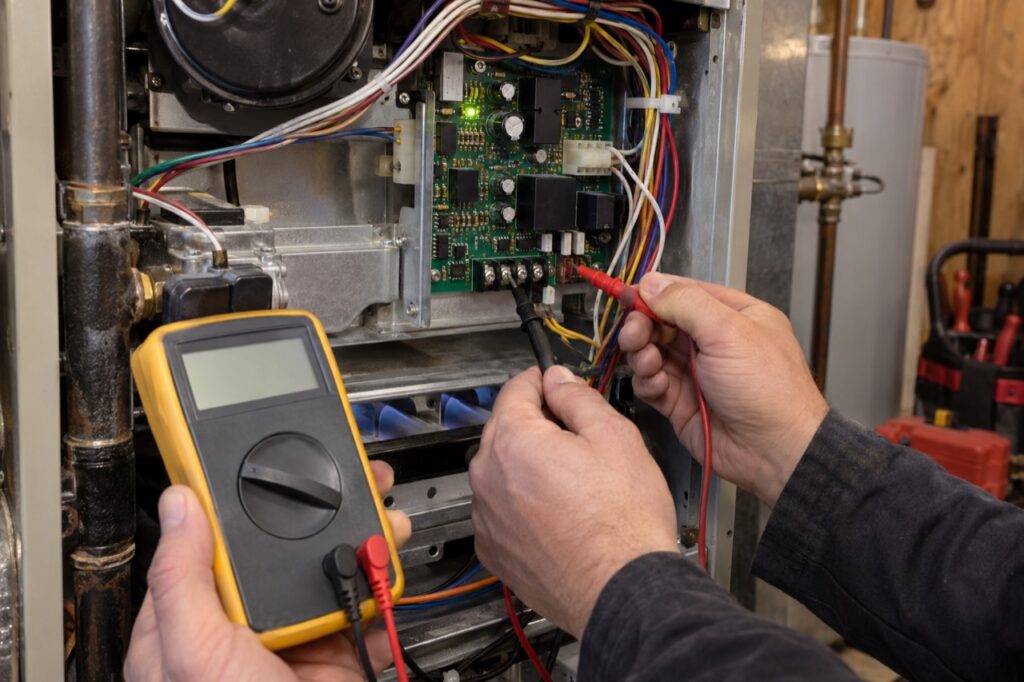
Most boards have a little light on them too. When something’s off, it blinks. There’s a sticker inside the door that says what the blinks mean. Not the whole story, but it’s a start. Count them and tell Sam on the phone.
The Blower Motor and the Dust Nobody Sees
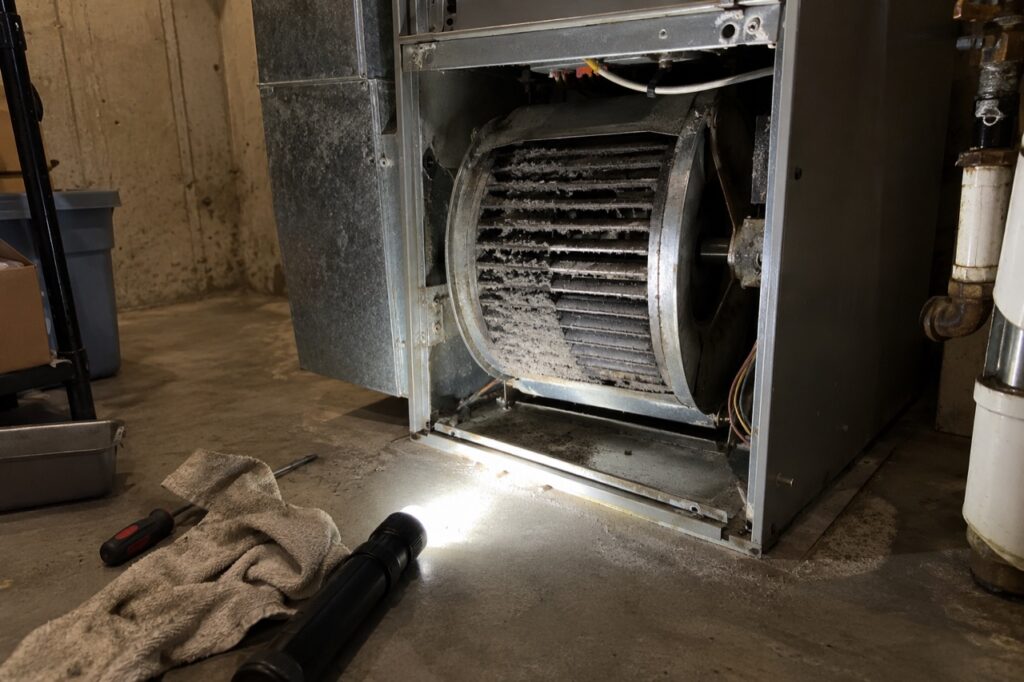
Take the bottom door off the furnace and there’s the blower. Big round wheel, lots of skinny blades. Air comes in the filter, the wheel throws it out into the ducts.
Over the years, dust gets past the filter and cakes onto those blades. A blower wheel full of dust moves a lot less air than a clean one. That can make the furnace run hot and shut itself down.
The motor that turns the wheel can wear out too. Sometimes it’s the motor itself. Sometimes it’s a small part called a capacitor that helps it start. If you hear a hum but the fan never spins, a capacitor is a common reason.
The Fancy Filter That Made It Worse
Here’s one we see after people try to do the right thing. They go to the store and buy the most expensive filter on the shelf. The thick one that says it catches everything. Two weeks later, the furnace starts shutting off.
Those filters do catch more. They also let less air through. On a lot of older furnaces, the blower just isn’t strong enough to pull air through one, so the furnace runs hot and the safety switch trips.
If your trouble started right after a filter change, try a plain one for a few days. If the furnace settles down, that was it. Sam can tell you what your furnace can actually handle.
Basement Furnaces Around Oakville Middle School
Most houses in the neighborhoods around the school have the furnace in the basement. Ducts run across the ceiling and up into each room. That’s a good setup, but it also means you only hear the furnace if you’re down there.
So a lot of furnace problems near the school get found late. The upstairs is chilly, somebody turns the thermostat up, and nobody goes downstairs to notice the furnace isn’t firing at all.
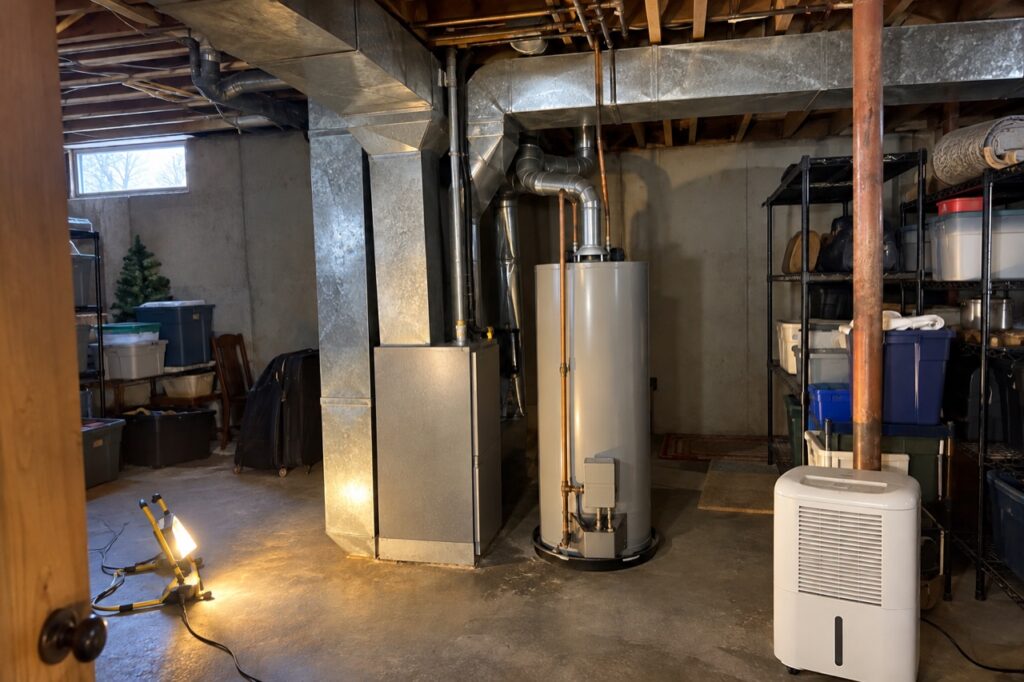
If the house feels cold, go look. Is the furnace running? Can you see a flame through the little window? Is there a blinking light? Those three answers save a lot of time on the phone.
When It’s Running but Not Heating
Other times the burners light fine. House is still cold. Nine times out of ten that’s air, not fire. Filter, closed vents, a blower full of dust, or a duct down in the basement that’s leaking heat into the joists.
We go through the most common causes on our main page for furnace repair in Oakville and St. Louis. Short version? New filter. Open the vents. Still cold, call us.
What Sam Does When He Gets There
Here’s how a no-heat call near the school usually goes:
- You call. Tell Sam what it’s doing, what it sounds like, what it smells like.
- He’ll ask about the fan setting, the filter, any blinking light.
- Once he’s there, he stands at the furnace and watches it try to start.
- He tests the step where it fails, instead of guessing at parts.
- You get the price before any part goes in.
- He runs it through a full cycle, so you know it’s actually heating.
A Duct That Came Apart in the Basement
This one’s sneaky. Furnace runs fine, burners light, one room upstairs gets nothing. Everywhere else is warm.
Go down and follow the duct for that room across the ceiling. A lot of the time you’ll find it. A joint that slid apart. A round pipe that dropped off its strap. Somebody bumped it moving a ladder five years ago and the heat’s been blowing into the joists ever since.
We push it back together, seal it and strap it up. Not a big job. You just have to know to look. And while we’re down there, we’ll check the rest of the runs, because if one came loose, the one next to it usually isn’t far behind.
ENERGY STAR has a short heating and cooling checklist for keeping it going once it’s fixed, too.
Driving Directions From Our Shop to Oakville Middle School
Our shop is at 3236 Ridgetop View Drive in Oakville. Oakville Middle School is about 3.8 miles north, around eight minutes.
- Take Ridgetop View Drive out to Telegraph Road.
- Turn right, heading north on Telegraph Road.
- Stay on Telegraph Road for a little over three miles.
- The school is on the right at 5950 Telegraph Road, next to Wohlwend Elementary.
Around drop-off and pickup, Telegraph Road backs up by the schools, so we plan our arrival around it.
Get directions from our shop to Oakville Middle School on Google Maps
Frequently Asked Questions
Why Is My Furnace Running but Not Heating?
Usually it’s air, a clogged filter, shut vents or a dusty blower wheel, and the furnace gets too hot, kills the burners and just keeps blowing. If the burners never light in the first place, it’s more likely the igniter, the flame sensor or a safety switch, and putting a meter on the board tells you which one it is.
Why Is My Furnace Blowing Cold Air but Not Heating My House?
Look at the thermostat fan first, because if it’s on “on” instead of “auto” the fan runs between heat cycles and you feel room temperature air. If it’s on auto and the air’s cold the whole time, the burners aren’t lighting or they’re quitting early, and somebody needs to test it.
How Do I Reset My Furnace Blower?
Turn off the power at the furnace switch or the breaker, wait about a minute, then turn it back on and set the thermostat fan to “auto.” If the blower hums but won’t spin, or won’t start at all, don’t keep resetting it, because that usually points to a bad motor or capacitor that needs replacing.
What Is the Most Common Problem With Furnaces?
The most common problem is a dirty filter, because it chokes off the air and makes the furnace overheat and shut down. After that, it’s usually a worn igniter or a dirty flame sensor, the small parts that light the burners and prove the flame is there, and both are typically fixed in one visit.
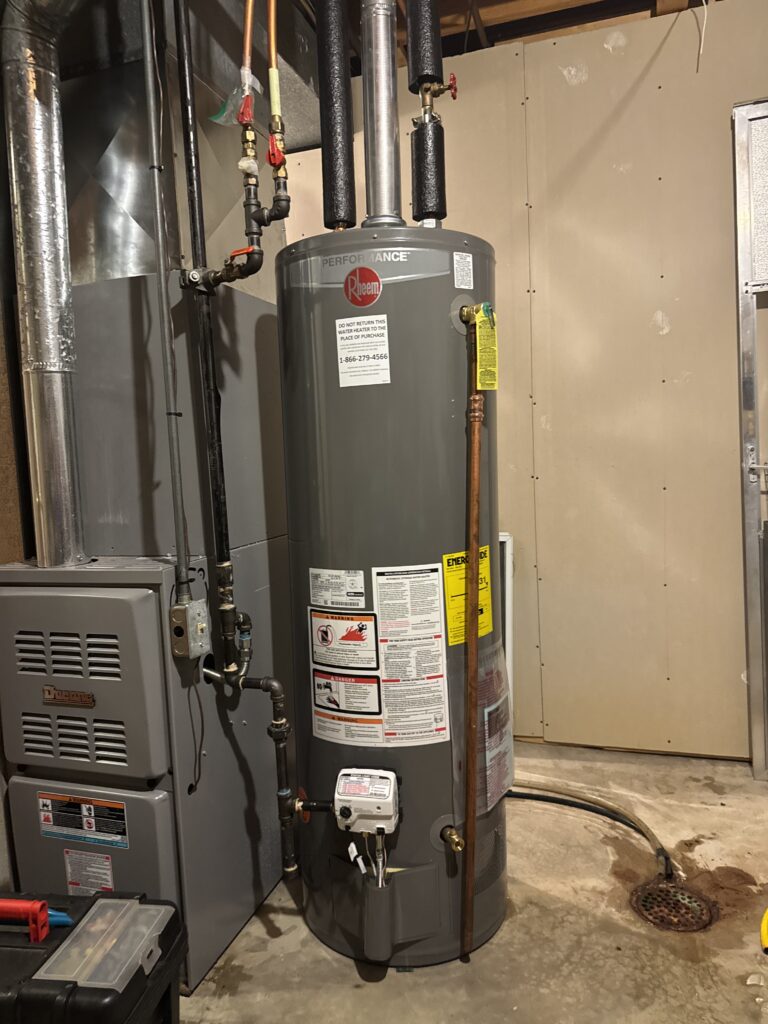
Call Sam for Furnace Repair Near Oakville Middle School
Looking for furnace repair near Oakville Middle School? Call Sam at Liberty Heating Cooling and Plumbing. He’s been fixing furnaces since 1998, our shop is eight minutes down Telegraph Road, and he tests before he puts in a single part. Call us at (314) 600-2202 and get your heat back.