Serving St. Louis & Surrounding Areas

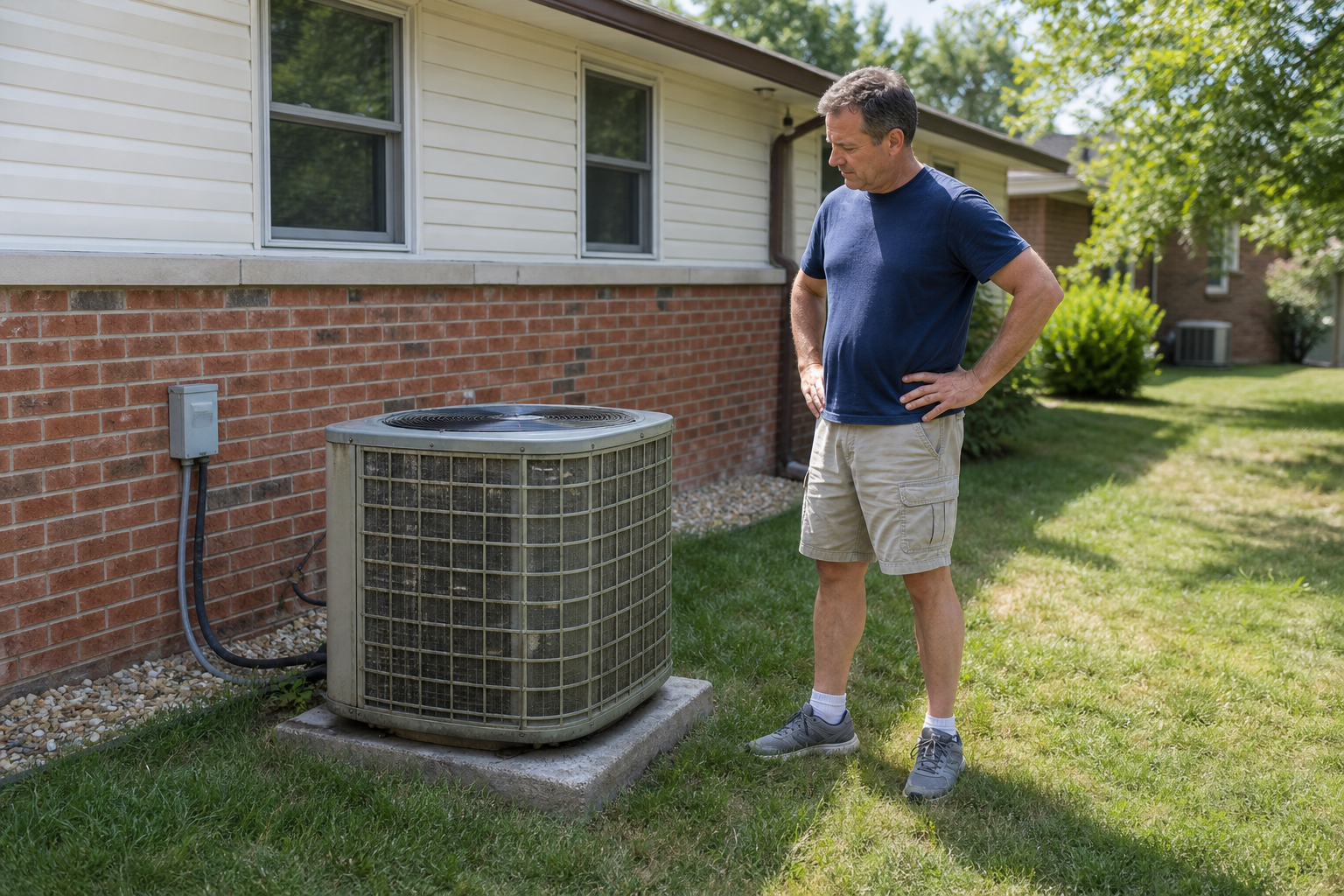
Should You Repair or Replace Your AC Unit in Oakville?
Whether to repair or replace AC in Oakville is a bigger question than a single number on a repair ticket. A quick cost-versus-age formula gives you a gut check, and it is worth running. But it will not tell you what actually broke, whether the rest of the unit is aging with it, or whether a fix will really hold. That fuller picture is what this page is about.
Want the fast math shortcut first? Read our breakdown of the $5,000 rule for AC in St. Louis, then come back here for the rest of the decision the shortcut leaves out.
Sam has been wrenching on cooling systems around South St. Louis County for 27 years through Liberty Heating Cooling & Plumbing. A lot of homes here went up in the seventies and eighties, so aging equipment is what we look at most weeks. When we roll up, you get a real part-level diagnosis and a straight read on whether the unit has life left, not a push toward the bigger ticket. Want that read before you spend a dime? You can book an AC repair visit in Oakville and we will lay it out plainly.
Age Bands and What Tends to Fail at Each One
Most central AC systems are built to run 12 to 17 years on basic maintenance. That is a range, not a finish line. We have pulled units out of South County homes that quit at year 9, and we have serviced units in Affton that crossed year 20 and still cooled fine. Age is not a verdict by itself. What matters is which parts a unit tends to shed as it gets older, because that tells you whether you are fixing a one-off or chasing a system on its way out.
- Under 10 years: Almost always a repair. Failures this early are usually small wear items like capacitors, contactors, or a fan motor, and the unit has plenty of life left.
- 10 to 13 years: Still lean repair if the fix is reasonable. This is where the first bigger part might go, so it is a smart time to start setting money aside for an eventual swap.
- 14 to 17 years: The real decision zone. A small part is still worth fixing, but a compressor or coil failure here means the other major parts are not far behind.
- 18 years and up: Lean replace unless the fix is small and cheap. At this age you are usually one failure away from the next, and refrigerant type often stacks against you too.
Before you assume anything, check the date sticker on the outdoor unit. A lot of these houses have had the AC replaced once or twice, so what looks like a thirty-year-old system might really be a twelve-year-old install. Age changes how you weight everything else here. It does not make the call on its own.
One Big Failure Versus a Pattern of Small Ones
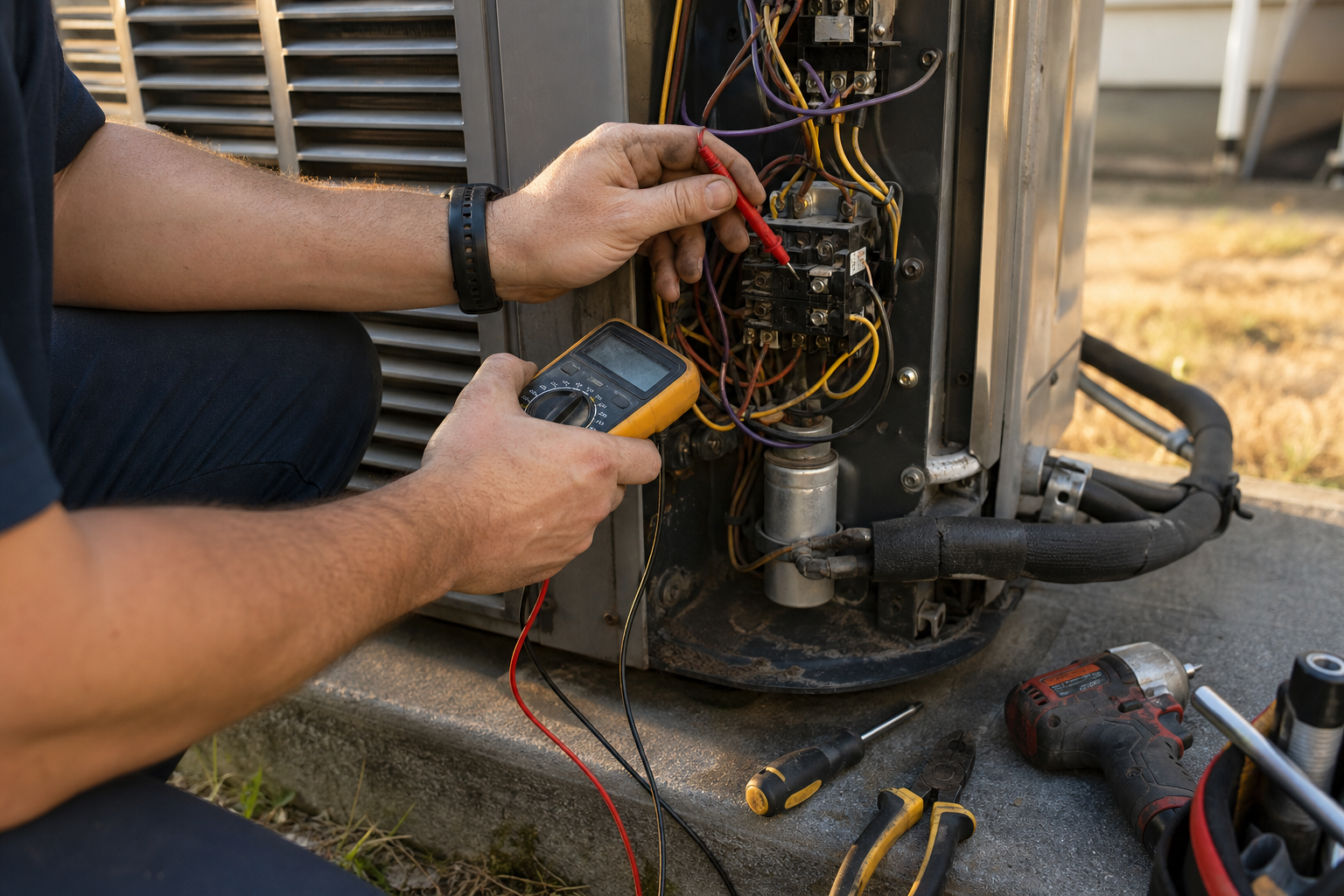
Here is a distinction the quick math never captures. A single failure on an otherwise healthy unit is a repair, plain and simple. A pattern of failures is a different animal. When a unit needs work every few months, the compressor, fan motor, and coil have all aged together, and fixing one part just shifts the strain onto the next weakest one. You are not solving a problem. You are buying time on a system that keeps handing you the bill.
So we read the history as much as the part in front of us. One repair every few years is normal. Three visits in two summers is the unit telling you it is done. These repairs almost always justify themselves, even on an older unit, because they are wear items:
- Capacitor swap
- Contactor replacement
- Fan motor replacement
- Float switch or safety control
- Thermostat replacement
These next ones should give you pause once a unit is past twelve years, because each signals the bigger parts are aging out together:
- Compressor replacement out of warranty
- Evaporator coil replacement
- Condenser coil replacement
- Any refrigerant leak on an R-22 system
A dead capacitor is wear and tear. A failed compressor on a fifteen-year-old unit is the system circling the drain, and the honest recommendation looks different for each. If the compressor is the part in question, our guide to the signs of a bad AC compressor in Oakville shows what that failure looks like. And if you have patched the same unit two or three times lately, get a fresh diagnostic on the system’s underlying health before you fix one more thing.
R-22 Refrigerant: The Phase-Out That Makes Old Units Expensive to Fix
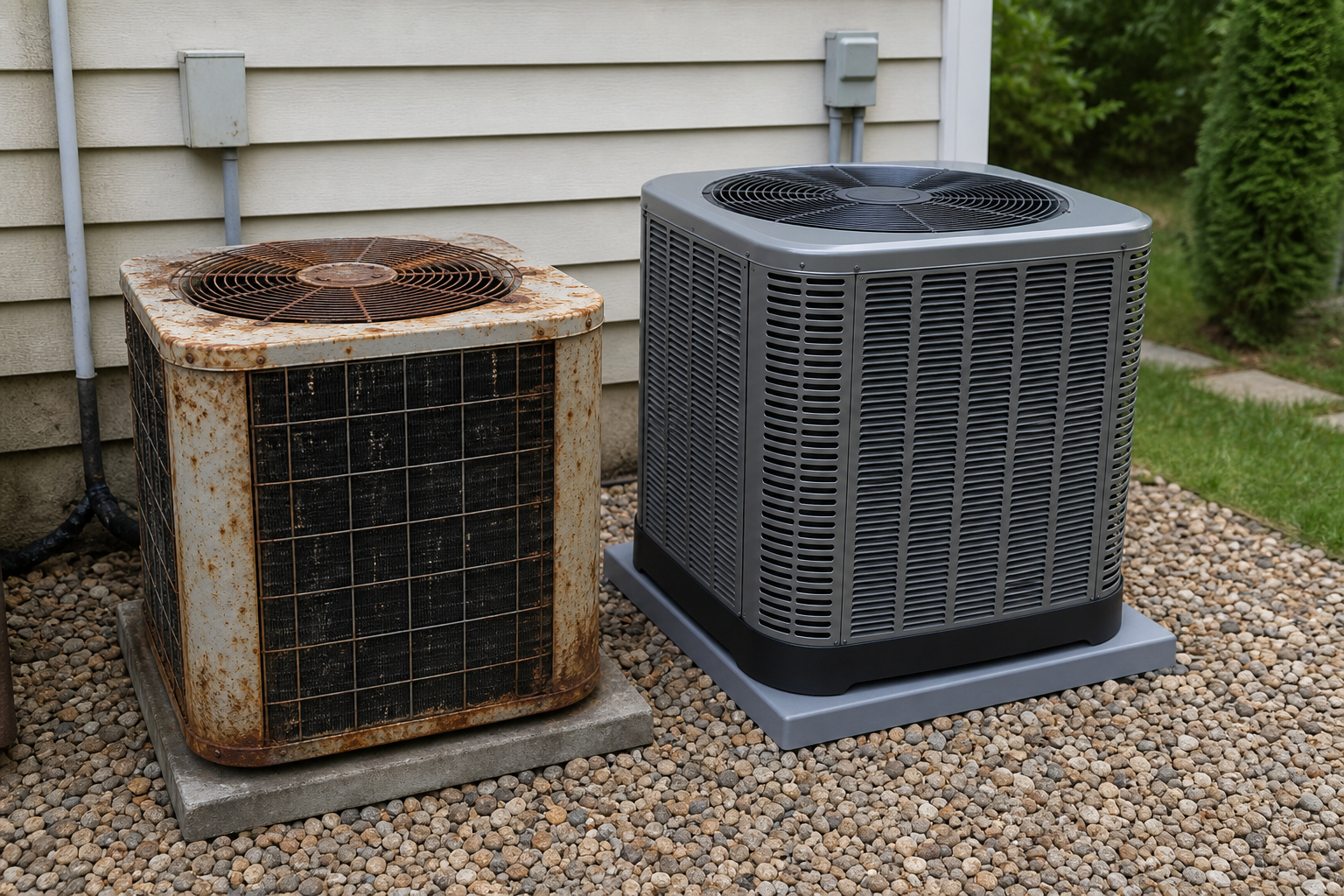
This is the factor that flips more repair-or-replace calls in older South County homes than any other, and no age formula sees it coming. If your AC went in before roughly 2010, there is a good chance it runs on R-22 refrigerant. Production of new R-22 in the United States ended in 2020, and everything built since uses R-410A. The two do not mix, and a system cannot be flipped from one to the other.
Why does that hit your wallet? R-22 still exists, but only the supply stockpiled before the phase-out, so the per-pound cost keeps climbing. A refrigerant leak on an R-22 unit is not just the leak repair. It is the repair plus a refill at today’s inflated price, all poured into a unit that can never run the newer, cheaper refrigerant. For a lot of folks on an R-22 system past fourteen years, that is where a repair stops making sense. Not sure which type you have? The data plate on the outdoor condenser spells it out, or a tech can confirm it in about thirty seconds.
The Comfort Problems a Repair Will Not Fix
Sometimes the unit runs, but the house still is not comfortable. Rooms that never quite cool down. Air that feels damp and sticky with the system running all day. That complaint is easy to miss on a repair ticket, because there is no broken part to point at. An aging or undersized system can keep chugging along and still leave you sweating, and swapping a part will not touch it.
Efficiency lives in the same bucket. Older units from the early 2000s often run at low SEER ratings, while new systems are far more efficient, so an upgrade will trim your summer bill. But the savings show up slowly, so treat any “it pays for itself in three years” pitch with a raised eyebrow. Where humidity, uneven cooling, and a high bill really matter is when they stack on an old, tired unit. Any one alone is not a reason to replace. Three together, on a system already past its prime, usually is.
When a Repair Buys You Two or Three More Seasons
Not every fix on an older unit is throwing good money after bad. The line we watch is simple. If the failed part is small, the rest of the system is sound, and the unit has not been a repeat customer, fixing it is money well spent and can genuinely add two or three more comfortable summers. If the failed part is a major one, the refrigerant is R-22, and the unit is already deep into its age band, that same repair is just a down payment on the next breakdown. Your plans matter too. Listing the house soon? A patch that carries you one more season usually beats a fresh install you will not be around to enjoy. Settling in long-term with a unit that is genuinely done? A new AC installation in St. Louis is where the years of lower bills and steady comfort pay you back.
How Sam Walks You Through the Call
Most homeowners only hit this decision after the AC has already quit mid-summer, the worst possible time to think straight. Here is how we handle it on a visit, so you are not making a rushed call under pressure.
First, a real diagnostic, not a windshield estimate. Somebody opens the unit, checks pressures, tests the electrical side, and gives you a specific part-level diagnosis. If a contractor raps on a thirteen-year-old condenser twice and calls for a whole new system without opening a panel, that is a sales pitch, not a diagnosis. Second, Sam tells you what the failure means given the unit’s age and refrigerant, so you know whether it is a one-off or a pattern. Third, on a close call, he will point out a stopgap fix to keep an old unit limping through the season, so you decide calmly instead of during a heat wave. No quota pushes our techs toward replacement. If a small swap gets you another few years, that is the recommendation, even when a new system would be the bigger ticket for us.

Repair or Replace: Common Questions From Oakville Homeowners
My AC still cools, but the house feels humid and sticky. Will a repair fix that?
Often not. Damp, sticky air with the system running usually points to an aging or undersized unit rather than one broken part, so swapping a component may not touch it. It is worth a diagnostic to see whether the system can be dialed in or whether it is simply past its ability to keep up.
How do I know if my unit uses R-22 refrigerant?
Look at the data plate on the outdoor condenser. It lists R-22 or R-410A in plain print. If it is faded or missing, a tech can confirm it in about thirty seconds. It matters because R-22 is out of production, so a refrigerant repair on that older type runs a lot higher than it used to.
I have repaired the same AC three times in two summers. Is that a red flag?
Yes. A pattern of failures usually means the major parts are aging out together, and fixing one just shifts the load to the next weakest one. That is a different situation than a single wear item, and it is worth a full health check on the system before you approve another repair.
Can a repair really buy me more time, or is that just delaying the inevitable?
It depends on the part and the unit. A small fix on an otherwise sound system can genuinely add two or three good seasons. A major repair on an old R-22 unit that has already broken down before is usually just a down payment on the next failure.
Get a Straight Read on Your AC in Oakville
Whether you should repair or replace AC in Oakville comes down to more than one number. Get a real diagnostic, understand what failed and why, and weigh the unit’s age and refrigerant against how long you plan to stay. Do that and the right answer usually makes itself obvious. Sam and the crew at Liberty do this walkthrough all summer, and we will tell you honestly whether the old unit is worth keeping or whether it is finally time.
When you want that honest read on whether to repair or replace your AC, our crew at Liberty Heating Cooling & Plumbing picks up at (314) 600-2202, and you can book a visit straight from this site. We take calls every day, holidays included, because a dead AC never waits for a weekday. Seniors save 10 percent, and we are family owned, licensed, bonded, and insured.