Serving St. Louis & Surrounding Areas

A New AC in Oakville: The Four Things That Decide Whether It Works

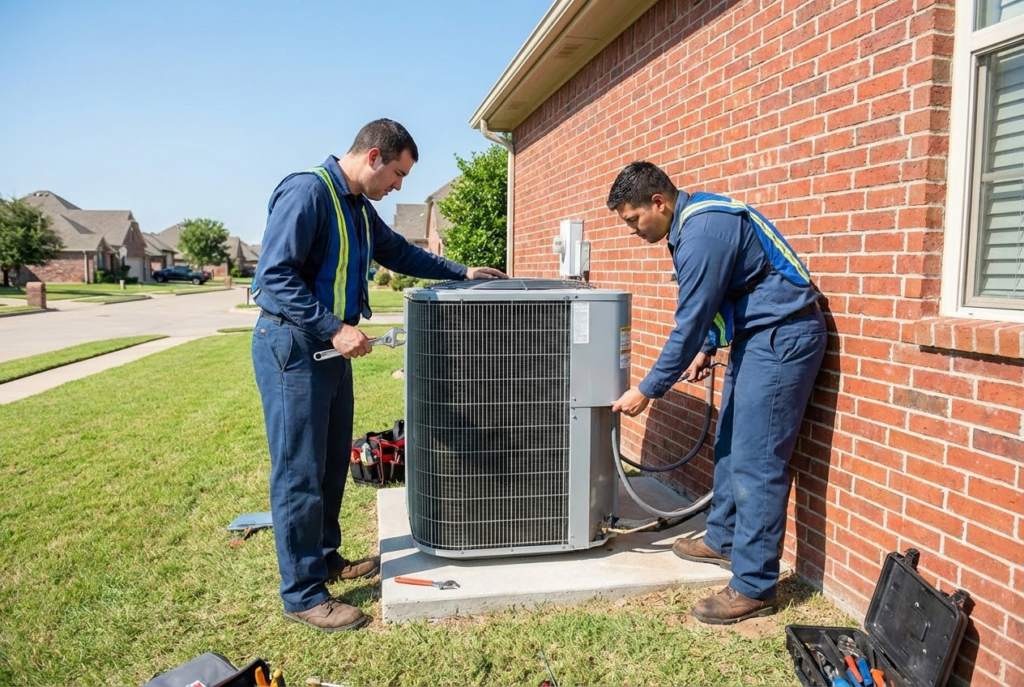
Time to replace that 15-year-old AC that barely keeps up on hot days? Here is the part nobody tells you when they hand you a quote: whether your new system actually works has almost nothing to do with the brand on the box. Four things decide most of it, and every one of them gets settled before anybody bolts anything down. The load calculation. Your ductwork. Whether the indoor coil matches the outdoor unit. And whether the job gets permitted and inspected. Get those four right and a mid-priced system will cool your house beautifully for fifteen years. Get them wrong and the most expensive equipment on the market will disappoint you by the second summer. Free estimates on all new AC installation in Oakville.
One: The Load Calculation That Sets the Size
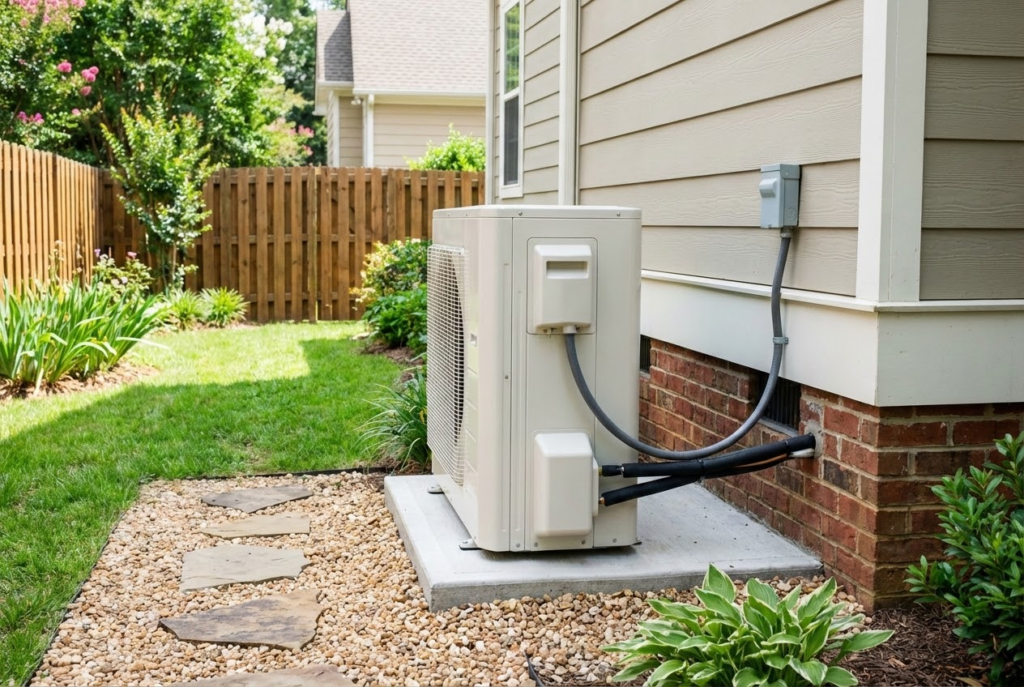
An AC that is too big turns on, cools the house down fast, then shuts off. Sounds good. It is not. It never runs long enough to pull the humidity out of the air, so the house feels clammy even when the thermostat says it hit the number. An AC that is too small runs all day and never quite catches up. Both of those are decided the day somebody picks the size.
Sizing an AC is not a guessing game. There’s an actual industry calculation called Manual J. It accounts for square footage, ceiling height, window count and orientation, insulation in the walls and attic, where the house faces, how shaded the lot is, how many people live in the house. The result is a load number measured in BTUs. That number is what tells us whether you need a 2-ton, a 3-ton, or a 4-ton system.
Most contractors skip Manual J. They walk through the house, eyeball the size, and quote a system based on what’s already there or what fits the budget. Sometimes they get it right by accident. More often the unit is oversized because it’s safer to oversell than undersell from a customer-complaint standpoint. The customer never finds out until year three when the humidity in the house is unbearable and the energy bills are a hundred dollars higher than the neighbor’s.
An Oakville bungalow with original windows and limited attic insulation needs a different system than a 2010-built house with double-pane windows and a sealed attic, even if the square footage is identical. We do the load calc. We tell you what the math says. If it disagrees with what someone else quoted, we walk you through why so you can make the call yourself.
Two: Whether Your Ductwork Can Actually Carry It
Here is the one that gets skipped the most. A new system gets sized for the house, then connected to whatever ductwork happens to be there. If those ducts cannot move the air the new system is rated to move, the system cannot deliver what it was sized for. You paid for three tons and the house receives something less.
The half that almost never gets checked is the return. Supply ducts get attention because they are the ones blowing air at you. Returns are what let the system breathe. A house with one undersized central return will starve a properly sized system, and the symptoms look exactly like a system that is too small: it runs constantly, the far bedrooms stay warm, and the utility bill climbs. Swapping in bigger equipment makes it worse, not better.
This is measurable, and it takes a few minutes. Static pressure across the air handler tells you whether the duct system is choking. We take that reading before quoting a system, because if the number is high, the honest answer is that the duct work has to be part of the job. Telling you that after the equipment is installed is too late.
Then there is the insulation on the duct itself. St. Louis attics push a hundred and fifty degrees in the afternoon. Cold supply air flowing through that attic in uninsulated metal duct picks up heat at every joint. The air arriving at the registers in the rooms is already five to ten degrees warmer than it left the air handler. A system sized perfectly on paper is handing over warm air before it ever reaches you.
Three: Matching the Indoor Coil to the Outdoor Unit
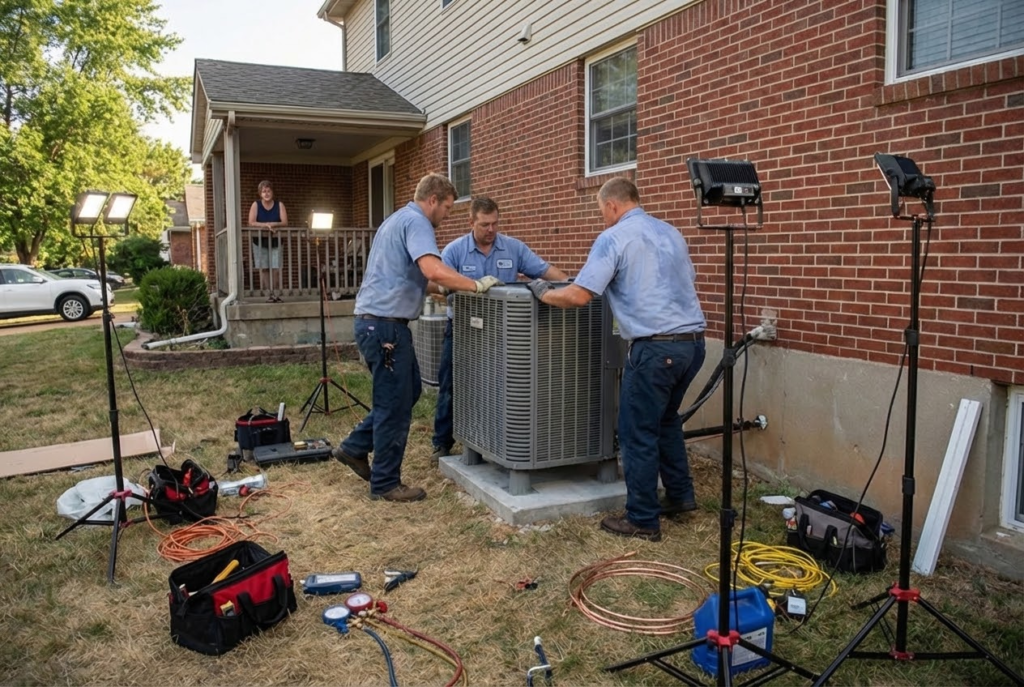
The outdoor condenser and the indoor coil are rated as a pair. The efficiency number on the sticker was measured with those two specific pieces working together. Put a new condenser on an old coil and that rating no longer describes anything you own.
This comes up constantly, because replacing just the outdoor unit is always the cheaper quote. Somebody comes out, the condenser is the part that died, and the quote covers the condenser. It looks like a bargain next to a full system price. Sometimes it genuinely is the right call, when the indoor coil is newer, matched, and in good shape.
Often it is not. The refrigerant has to be the same type the indoor coil was built for, and the pressures and oils are not interchangeable between refrigerant generations. The metering device at the coil has to suit the new condenser. And a mismatched pair will usually cost you the efficiency you paid the premium for, along with part of the manufacturer’s warranty coverage, because most warranties are written around a matched system.
We will tell you which situation you are in before you decide. If your coil is fine and a condenser swap is the right answer, that is what we quote. If it is not, you get the reason, not just a bigger number.
Four: The Permit and the Inspection
Mechanical permits for new AC equipment are required in Oakville and across most of St. Louis County. Plenty of installs happen without one, because pulling a permit means the work gets looked at by somebody who does not work for the contractor.
That inspection is the only outside check on everything above. It is also the thing that keeps your manufacturer warranty intact, since warranty terms generally assume a licensed, permitted installation. And unpermitted mechanical work has a habit of surfacing at the worst possible moment, which is when you sell the house and the buyer’s inspector asks for paperwork nobody has.
We pull the permit, submit the equipment specifications, and meet the inspector. It is part of the job, not a line item you have to ask for.
What It Looks Like in July When These Get Skipped
Most AC failures we get called for in July and August are not equipment failures. They are install failures showing up under load. The unit ran fine in spring when the outside temperature was in the seventies and the indoor target was easy to hit. Then July hits, the outside temperature climbs past ninety-five with eighty percent humidity, the unit has to actually work, and the install shortcuts surface.
The four above are the ones that decide the most. The same corner-cutting shows up in two smaller places, and both of them pick July to announce themselves.
The most common shortcut is undersized refrigerant lines. The line set between the outdoor condenser and the indoor coil has to be the right diameter for the system. Too narrow and the refrigerant cannot move fast enough to pull heat out of the air. The system runs constantly, the compressor works harder than it should, and the equipment ages two years for every one calendar year.
The other one is condensate. The drain line has to slope away from the indoor coil with no sags or kinks. When it does not, water backs up, the safety float trips, the system shuts down on the hottest day of the year. We see two of these calls a week in July. Every one was preventable at install time. We slope drain lines correctly and add a secondary float switch on every install so a clogged line shuts down the system before it floods a basement.
If your system is already down and you cannot wait for a normal appointment, we keep common sizes in stock and run same-day swaps. The timing and after-hours side of that is laid out on our emergency AC installation page. And if you are weighing whether this system is worth one more repair first, the repair or replace breakdown walks through the age bands and the refrigerant question. Replacing both your heating and cooling at once is worth a look at heat pump installation, which does both jobs with one system.
Frequently Asked Questions
How long does AC installation take in Oakville?
A standard residential AC replacement takes one full day, start to finish, when we’re swapping equipment in an existing setup with good ductwork. Add half a day if the line set needs replacement, the electrical needs upgrading, or the original install was unusual.
What size AC system do I need for my Oakville house?
The size depends on Manual J load calc inputs: square footage, insulation, window count, orientation, and shading. As a rough rule, a typical 1,800 square foot Oakville bungalow with average insulation lands at around 3 tons. We run the actual calc on every install so you’re not guessing.
Can I just replace the outdoor unit and keep my existing coil?
Sometimes, and sometimes it costs you more than it saves. It works when the indoor coil is newer, built for the same refrigerant, and matched to the new condenser. It does not work when the refrigerant types differ or the metering device is wrong for the new unit, and a mismatched pair usually gives up the efficiency you paid for plus some warranty coverage. We check the coil before quoting either way.
Do I need a permit for AC installation in Oakville?
Yes. Mechanical permits for new AC equipment are required in Oakville and most of St. Louis County. We pull the permit, submit the equipment specs, and handle the inspection so the work is on the books and the warranty stays valid.
Will a bigger AC cool my house better?
Usually the opposite. An oversized system satisfies the thermostat quickly and shuts off before it has run long enough to pull humidity out of the air, which leaves the house cool and clammy at the same time. It also short cycles, which is hard on the compressor. The right size is the size the load calculation says, not the next one up.
What brand of AC do you install?
We install several major brands and pick the one that fits your house, your usage pattern, and your budget. Brand matters less than installation quality and correct sizing. The same brand installed wrong will fail before a less-known brand installed right.
Get Professional AC Installation in Oakville
Liberty Heating Cooling & Plumbing has been installing AC systems in St. Louis for 27 years. We’ve seen what happens when installations are done wrong. Systems that never cool properly, equipment that breaks down within a few years, homeowners stuck with expensive mistakes. Our techs actually measure your house to size equipment correctly instead of guessing. We install according to manufacturer specs, not shortcuts that save time but cause problems later. Everything gets tested before we leave.
Call (314) 600-2202 for AC installation throughout Oakville and St. Louis. We’re available 24/7 for emergencies and offer free estimates on new systems.