Serving St. Louis & Surrounding Areas

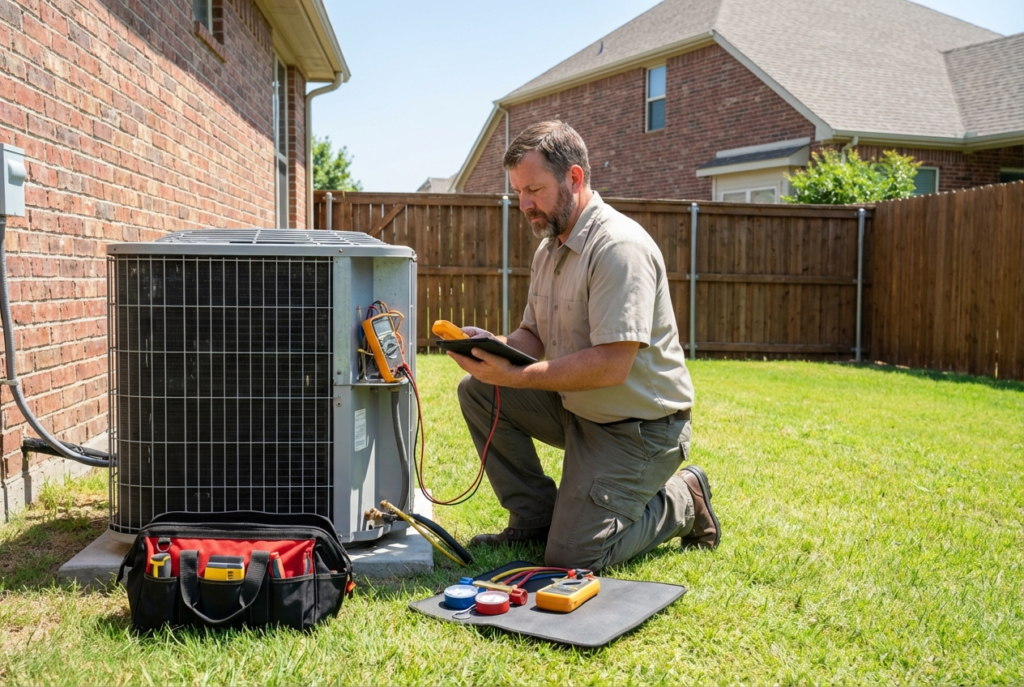
AC Not Cooling? Get Air Conditioning Repair Services in St. Louis Fast
Your AC quit working yesterday and now your house feels like an oven. Thermostat says 85 degrees inside and climbing. Nobody can sleep because bedrooms are sweltering. Kids are cranky, you’re sweating through your shirt, and the dog won’t stop panting. Air conditioning repair services in St. Louis handle systems that break during the worst possible time,middle of summer when you need cold air most. Ignoring weird noises or weak cooling just makes the breakdown worse and more expensive to fix.
What To Expect With Air Conditioning Repair Services in St. Louis
Common AC Problems We Fix Every Summer
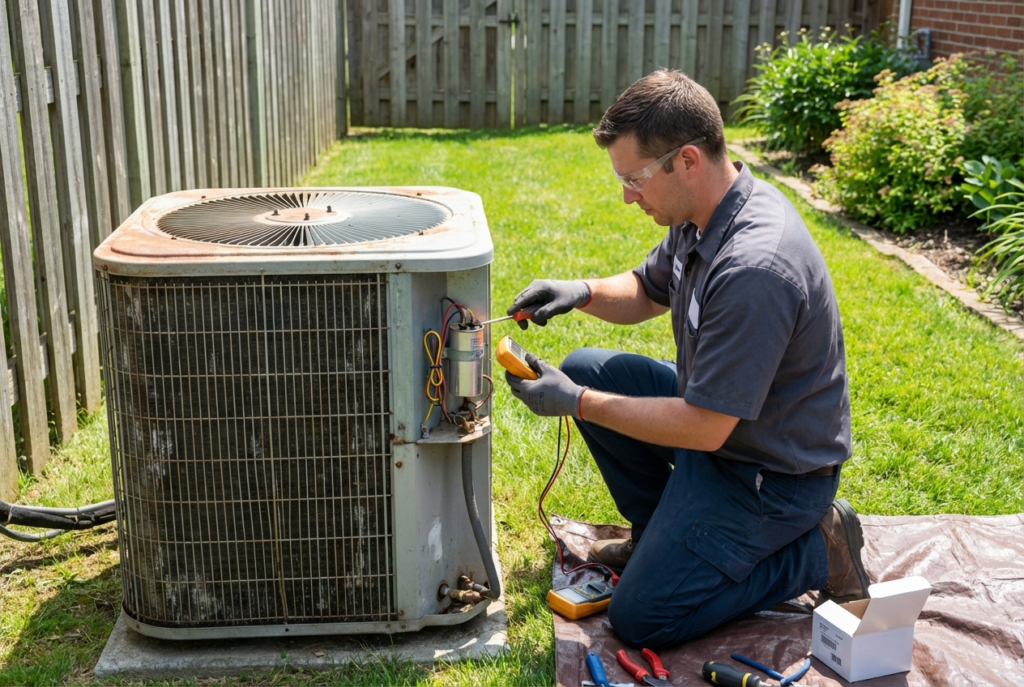
Compressors fail because they’re running constantly in 95-degree heat trying to keep your house cool. The compressor is what actually creates cold air,it pumps refrigerant through the system. When it dies, your AC blows air but it’s just room temperature air moving around. You’ll hear the fan running outside but the compressor won’t kick on. Compressors are expensive to replace but they usually don’t fail without warning. They make grinding noises or struggle to start for weeks before completely dying.
Capacitors burn out from heat and age. The capacitor gives your compressor and fan motors the electrical jolt they need to start. When it fails, your AC won’t turn on at all or the outdoor unit hums but nothing spins. Capacitors are cheap parts,$15-30,but you need a technician to replace them safely because they hold electrical charges that can shock you even when power is off.
Evaporator coils freeze up when airflow gets restricted. Dirty air filter blocks air from flowing over the coil. Coil can’t absorb heat properly so condensation freezes into ice. You’ll see ice forming on the copper lines going to your outdoor unit. AC runs constantly but house never cools down. Turn the system off and let ice melt completely before running it again or you risk damaging the compressor. Understanding how air conditioning systems work helps you recognize when something’s operating wrong.
Why Your AC Runs But Won’t Cool Your House
Low refrigerant means your AC can’t absorb enough heat to cool your house properly. Refrigerant doesn’t get “used up” like gas in a car,if it’s low, you have a leak somewhere. Small leaks take months to cause problems. Big leaks kill your cooling in days. You’ll notice the AC running nonstop but house temperature barely drops. Ice might form on copper lines. Outdoor unit might have oil stains from refrigerant leaking out.
Condenser coils get packed with dirt, grass clippings, cottonwood seeds, and crud from sitting outside all year. These coils need to release heat to the outside air. When they’re clogged, heat can’t escape and your AC works way harder for less cooling. Compressor runs hot trying to force heat through dirty coils. System uses more electricity and cools less. Your outdoor unit should have clean coils with space around it,not buried in weeds or blocked by storage.
Ductwork leaks waste cold air before it reaches your rooms. Your AC produces plenty of cold air but half of it leaks into your attic or crawl space through gaps and holes in ducts. Rooms far from the AC never cool down. Some vents blow strong, others barely push any air. You’re paying to cool spaces nobody lives in while your actual rooms stay hot. Duct sealing fixes this but most people don’t realize it’s the problem. If your AC is running but your house isn’t getting cold, there’s usually one of five things going on , and knowing which one helps you decide what to do next.
AC Making Strange Noises – What They Mean
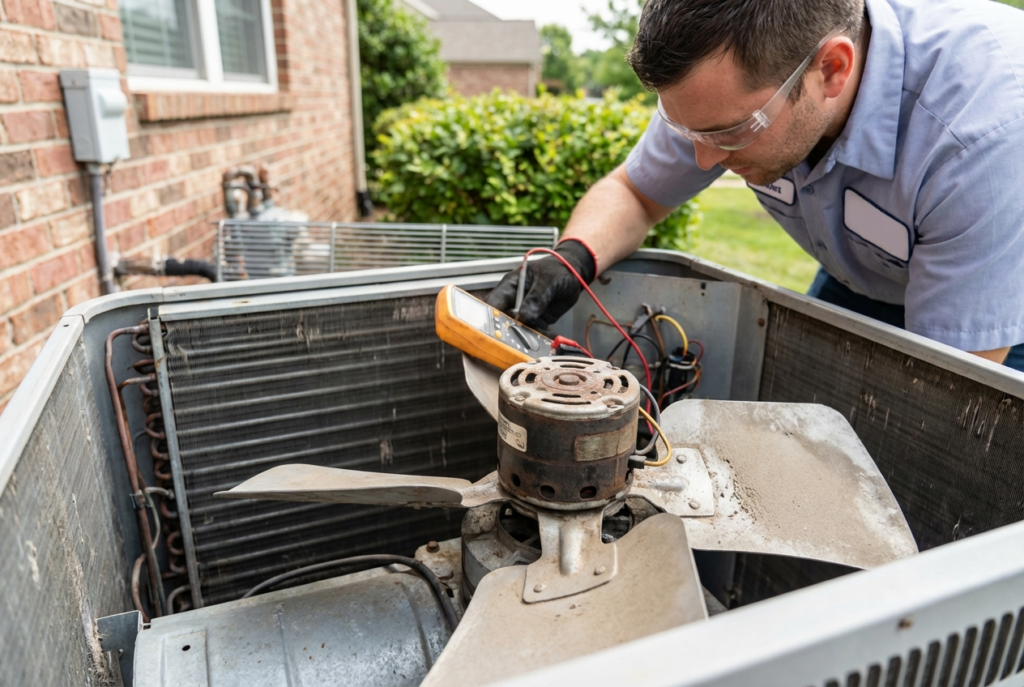
Squealing or screeching from your outdoor unit usually means the fan motor bearings are going bad or the belt is slipping on older units. Sound gets louder over time as parts wear out. Eventually the motor seizes completely and your AC quits. Fan motor replacement costs $300-600 depending on the unit. Catching it early when it’s just making noise is way cheaper than waiting for complete failure in July.
Banging or clanging means something came loose inside the unit and is hitting the fan blades as they spin. Could be a loose panel, debris that fell into the unit, or a mounting bracket that broke. Turn the AC off immediately before the fan blades get damaged. Sometimes it’s as simple as a stick or piece of trash that blew into the unit. Other times it’s internal damage that needs professional repair.
Hissing sounds point to refrigerant leaks. High-pressure refrigerant escaping through a crack or hole makes a hissing noise. Bigger leaks sound like air rushing out. Your AC will gradually cool less and less as refrigerant leaks out. Some leaks are easy to find and fix,visible cracks in copper lines. Others hide inside coils where you can’t see them. We use leak detection tools to find where refrigerant is escaping.
Refrigerant Leaks and Low Refrigerant Issues
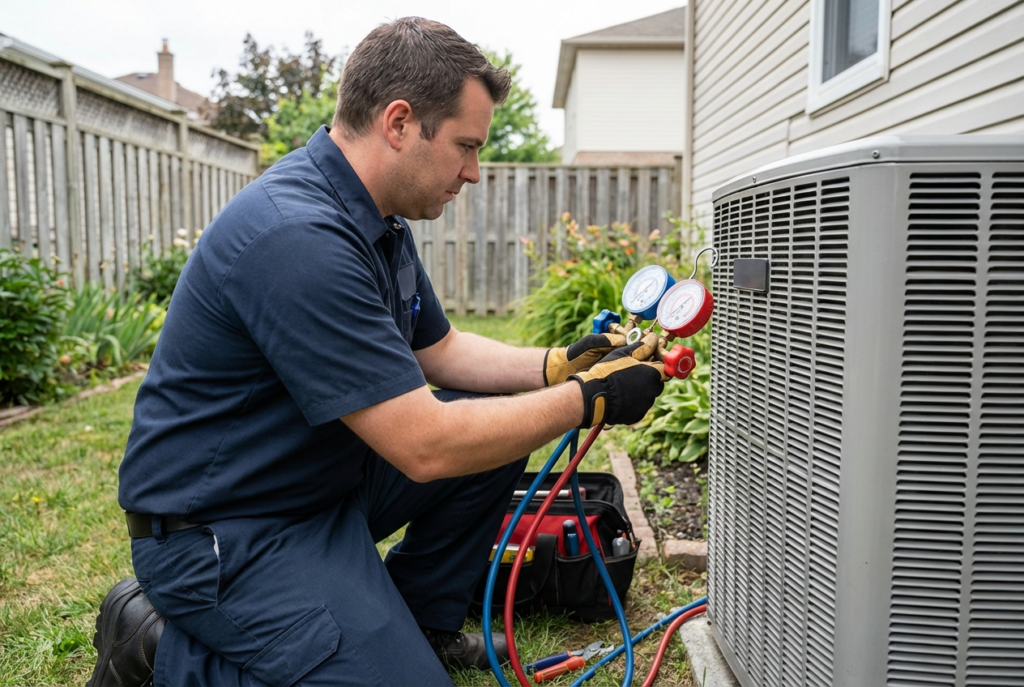
Refrigerant leaks happen from vibration wearing through copper lines, corrosion eating holes in coils, or poor installation that left weak joints. Your AC was charged with refrigerant when it was installed and that refrigerant should last the life of the system if there’s no leak. Needing refrigerant added every year or two means you definitely have a leak that needs fixing,not just topping off.
Some techs will add refrigerant without finding the leak because it’s faster and they get paid either way. This is BS. You pay $400 to recharge your system, refrigerant leaks out again over the next six months, and you’re back to square one. Proper repair means finding the leak, fixing it, then recharging the system. Costs more upfront but actually solves the problem instead of temporarily masking it.
Older AC systems use R-22 refrigerant that’s been phased out and costs $100+ per pound now. If your R-22 system has a big leak, repair might cost $1,500-2,000 just for refrigerant. At that point replacement makes way more sense than throwing money at old equipment using discontinued refrigerant. Newer systems use R-410A refrigerant that’s cheaper and more environmentally friendly.
AC Repair Costs vs Replacement Costs
Basic AC repairs run $200-500 for simple fixes. Capacitor replacement costs $150-250. Contactor replacement runs $200-350. Cleaning coils and checking refrigerant is $200-300. These repairs make sense on AC units under 10 years old that are otherwise working fine. You’re fixing one worn part on a decent system, not throwing money at junk.
Major component failures cost way more. Compressor replacement runs $1,500-2,500 depending on size. Evaporator coil replacement costs $1,000-1,800. Condenser fan motor is $300-600. Control board replacement runs $400-800. On AC units over 15 years old, these big repairs often don’t make financial sense. You’re spending $2,000 on a compressor for a system that’s already ancient and will need more repairs soon.
Age matters more than repair cost. An 8-year-old AC with a $1,200 repair? Fix it and get another 7-10 years out of it. A 20-year-old AC with the same $1,200 repair? You’re probably just delaying replacement by a year or two. Modern AC units are way more efficient too,a new unit might save $40-60 monthly on electric bills compared to keeping an old inefficient system running. When problems turn into genuine cooling emergencies, we respond fast but we’ll be honest about repair versus replacement.
How Long Does AC Repair Actually Take
Quick repairs finish in under an hour. Replacing a capacitor, swapping a contactor, cleaning coils,these are straightforward jobs. We diagnose the problem, swap the bad part, test the system, and leave. Your AC is cooling again before lunch. Refrigerant recharge takes 1-2 hours including leak check and proper evacuation procedures. Shortcuts exist but doing it right takes time.
Bigger repairs take half a day. Compressor replacement is 4-6 hours of work. Evaporator coil replacement takes 3-5 hours. We’re not just swapping a part,we’re evacuating refrigerant, brazing copper lines, pressure testing for leaks, pulling vacuum on the system, recharging refrigerant to exact specifications. Rush this work and you create problems that show up weeks later.
Some repairs need multiple visits. We diagnose your problem, determine you need a specific part for your 12-year-old Trane unit, order it, come back when it arrives to install it. Common parts we stock on trucks. Unusual parts for older units need ordering from suppliers. Most AC repairs finish same-day or next-day. Complex issues requiring special-order parts might take 2-3 days. Our AC maintenance services help prevent breakdowns before they happen.
What AC Companies Don’t Want You to Know
Most “Emergency” AC Repairs Aren’t Actually Emergencies
Your AC quit on Saturday afternoon and it’s 88 degrees in your house. You call around and everyone wants emergency rates,$200+ just to show up. Here’s the reality: unless you have babies, elderly people, or medical conditions that make heat dangerous, this isn’t a life-threatening emergency. It’s hot and uncomfortable, but you can survive the weekend with fans and staying hydrated.
Real AC emergencies are rare. Houses don’t reach dangerous temperatures as fast as people think, especially if you close blinds and create cross-ventilation with fans. Companies push emergency pricing because they make way more money. If you can tough it out until Monday morning, you save $100-150 on the service call alone. We’re available for genuine emergencies where heat is actually dangerous, but we won’t pretend every hot weekend qualifies.
Peak summer means longer wait times no matter who you call. Temperature hits 100 degrees for three days straight and every marginal AC system in St. Louis quits at once. We’re getting 40 calls a day instead of 10. Companies promising instant service are lying,nobody can be at 40 houses simultaneously. We prioritize based on actual danger and handle calls as fast as humanly possible, but sometimes you’re waiting hours during heat waves.
Some AC Problems Can’t Be Fixed Same-Day in Summer
Your compressor died on July 4th weekend. Every supply house is closed until Tuesday. Even if we diagnose your problem immediately, we can’t get parts until suppliers reopen. Your 15-year-old Carrier needs a specific fan motor,not in stock anywhere locally. We order it overnight but you’re still without AC until Wednesday when it arrives and we install it.
This is reality during peak season. Parts for common units usually stock well. Parts for older or unusual systems need ordering. Weekend failures mean waiting for weekday supplier hours. We do everything possible to find workarounds or temporary solutions, but sometimes you’re just waiting for parts while running fans and sleeping in the basement where it’s cooler.
Companies that promise they can fix anything same-day are setting you up for disappointment. We’re honest about what’s realistic. If we need parts, we tell you upfront. If your repair will take three days, we explain why instead of making promises we can’t keep. Better to know the truth and plan accordingly than get jerked around with false timelines.
Get Honest AC Repair in St. Louis
Call (314) 600-2202 for Air conditioning repair services in St. Louis. We diagnose problems accurately and fix them right. Whether it’s refrigerant leaks, compressor failures, or airflow issues, we’ll tell you straight what’s wrong and what it costs.
Frequently Asked Questions
What Causes an Air Conditioner to Run Without Cooling Your Home in St. Louis?
When your AC runs but doesn’t cool, it’s almost always one of five things , a refrigerant leak, a frozen coil, a failing compressor, dirty condenser coils, or a failed capacitor. In every case the fan keeps running, which is why air still blows out of your vents even though it isn’t cold. Here’s a full breakdown of every cause and what to do right now.
How Do You Know Whether to Repair or Replace Your AC?
A good rule of thumb , if your AC is under 10 years old and the repair costs less than half the price of a new system, repair it. If it’s over 15 years old and needs a major component like a compressor, replacement usually makes more financial sense. Age, repair cost, and efficiency all factor in. We’ll walk you through the numbers so you can make the right call.
How Do You Know When Your Air Conditioner Compressor Is Going Bad?
The most common signs are a humming outdoor unit that never fully kicks on, a system that keeps tripping the breaker, and a house that takes longer and longer to cool down. A compressor that’s struggling will usually give you warnings for weeks before it fails completely. Catching it early is the difference between a repair and a full replacement.
How Long Does AC Repair Usually Take?
Simple repairs like a bad capacitor or a clogged drain line take under an hour. Refrigerant recharges take one to two hours done properly. Bigger jobs like compressor replacement take four to six hours. Most repairs finish same day. Parts for older or unusual units sometimes need ordering, which can add a day or two. We’ll always tell you upfront what to expect.
How Can You Tell If Your Air Conditioner Is Leaking Refrigerant?
A refrigerant leak usually shows up gradually. Your home gets harder to cool over a few weeks, your electric bill climbs for no clear reason, and you might notice ice forming on the copper lines near your indoor unit. A hissing sound near the unit is another sign. Low refrigerant doesn’t fix itself , the leak has to be found and repaired.
What Are the Most Common AC Repairs in Oakville?
The five repairs we see most often are failed capacitors, refrigerant leaks, tripped contactors, frozen evaporator coils, and bad fan motors. Capacitors top the list by a wide margin — they’re small, inexpensive parts that wear out fast from heat cycling. Most of these fixes are same-day.
What’s the First Thing to Check When Your AC Stops Working?
Before calling a contractor, run through six homeowner-fixable checks — thermostat settings, air filter, breaker panel, outdoor disconnect, condensate float switch, and a visual on the outdoor unit. A surprising number of AC-broken calls turn out to be one of these.
Is a Broken AC an Emergency in Oakville?
Sometimes yes, sometimes no. Indoor temps climbing past 85 with elderly residents, infants, or anyone with respiratory or cardiovascular conditions = same-day call. Healthy adults in mild weather can usually wait. Some shops bill every call as emergency to charge after-hours rates. We don’t run that game.