Serving St. Louis & Surrounding Areas

Planning a Heat Pump Installation in Oakville, MO
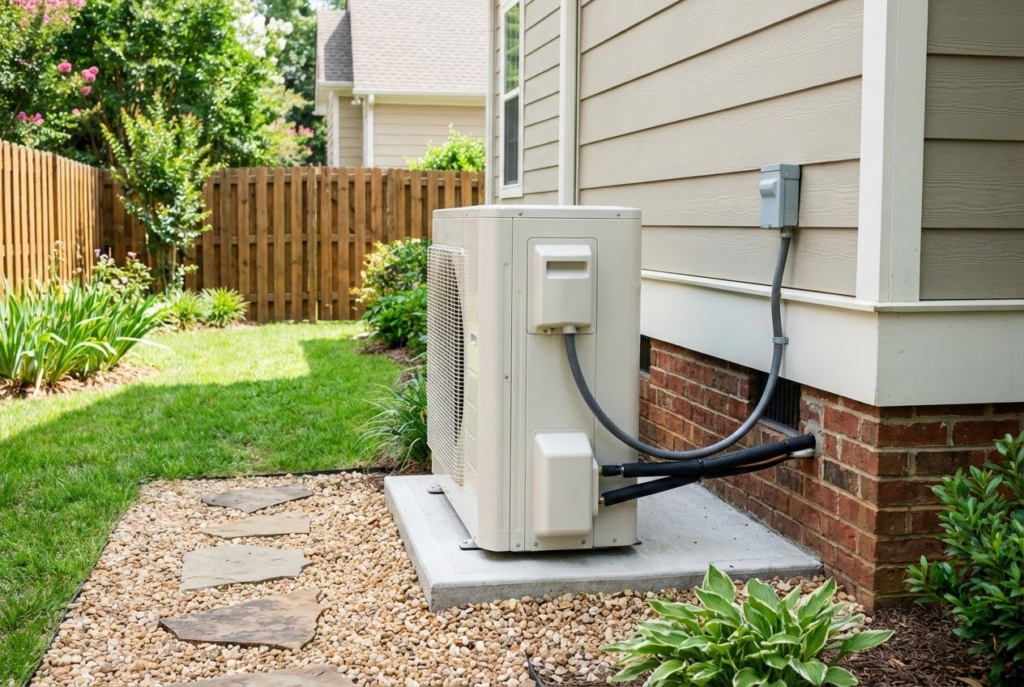
Thinking about a heat pump for your Oakville home? You’re in the right place. This page is for homeowners planning ahead, weighing a switch to a heat pump or replacing an aging furnace and AC with one system. A heat pump does both jobs, heating your house in winter and cooling it in summer from a single outdoor unit, so you look after one system instead of two.
Heat Pump Installation Services
How Heat Pumps Work for Both Heating and Cooling
A heat pump doesn’t burn fuel to make heat. It moves heat that’s already there. In the summer it pulls warmth out of your house and dumps it outside, exactly like a regular air conditioner. In the winter it flips around and pulls warmth out of the outdoor air, even cold air, and carries it inside. There’s real heat in air that feels freezing to you, and the system concentrates it. That’s why one unit covers both seasons.
The part that makes the switch happen is a reversing valve. It changes the direction the refrigerant flows: one way gives you cooling, the other gives you heating. Same coil, same refrigerant, same outdoor unit. That’s why you don’t need a separate furnace in the basement once you go with a heat pump.
When a Heat Pump Makes Sense in the Oakville Climate
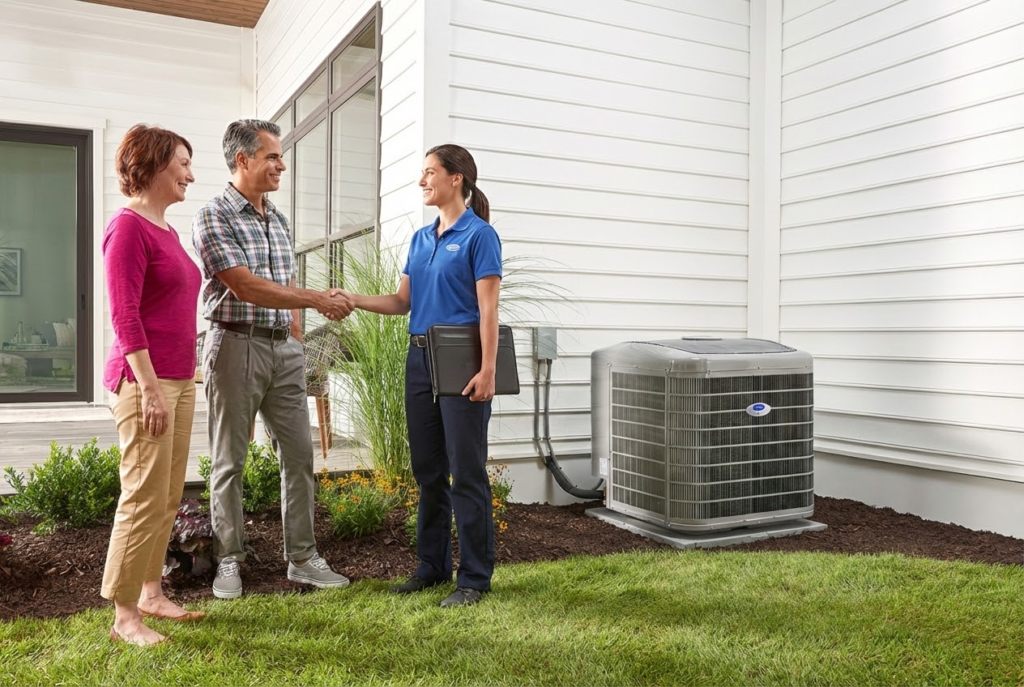
Oakville and the wider St. Louis area are close to ideal for a heat pump. We lean on cooling from late spring into September and heat from November into March, so the two seasons stay pretty balanced. That’s exactly where a heat pump shines, because one system earns its keep all year instead of sitting idle half of it.
Modern units also handle our winters far better than the heat pumps people remember from decades ago. Older models gave up once it dropped below freezing. Today’s systems keep pulling heat efficiently down into the single digits, and we only get a handful of truly bitter nights each year.
For those cold snaps, a lot of Oakville homeowners go with what’s called a dual-fuel setup, which pairs the heat pump with a gas furnace as backup. The heat pump does the everyday heating because it’s efficient, and on the coldest nights the furnace takes over automatically. You get heat pump efficiency through most of the winter and the brute-force warmth of gas when the temperature really drops. If you already own a good gas furnace, keeping it as the backup half of a dual-fuel system is often the smartest way to add a heat pump, and we’ll talk through whether a straight heat pump or dual-fuel fits your house.
Heat Pump vs Keeping Your Furnace and AC
A lot of folks come to us trying to decide between a heat pump or replacing their furnace and AC as two separate machines. There’s no single right answer. It depends on the shape your current equipment is in.
If both your furnace and your AC are getting old at the same time, a heat pump is worth a serious look, because you’re trading two aging systems for one newer, efficient one. If you just put in a furnace a couple years ago and only the AC is failing, it may make more sense to keep that furnace in a dual-fuel setup, or simply replace the air conditioner. If you decide a heat pump isn’t the move, we also handle AC installation and replacement across St. Louis. Every situation is a little different, which is why we walk your house before we quote anything.
On running costs, we’ll be straight with you. A heat pump runs on electricity. If you’re coming off a gas furnace, your winter gas bill shrinks and your electric bill climbs in the cold months, and whether that nets out cheaper depends on what gas and electricity cost that year. We won’t promise your bills get cut in half, because that’s not honest. What we can say is that running one newer efficient system usually beats babysitting two old ones. For real numbers, give us a call and we’ll put together a quote.
Sizing the Right Heat Pump for Your Home

Getting the size right matters more than almost anything else about the install. A heat pump that’s too small runs nonstop and never quite gets the house comfortable. One that’s too big short-cycles, snapping on and off every few minutes, which wears parts out early and does a poor job pulling humidity out of the air, leaving your house feeling clammy even when the thermostat says it’s the right temperature.
The lazy way to size equipment is to look at what you had before and drop in the same thing. If your old system was wrong from day one, now you’ve got the same mistake in shiny new equipment. We do the actual math instead. We measure square footage, check insulation, look at your windows and which way they face, and see what your ductwork can move, then calculate the real heating and cooling load. Two homes the same size can need very different equipment depending on insulation and windows.
Heat pumps add one wrinkle, because they have to be sized for both heating and cooling, and sometimes those two loads aren’t the same. We size for whichever one is bigger so the unit carries both jobs properly, instead of nailing one season and struggling through the other for years.
Efficiency Ratings, Rebates, and Tax Credits
Two numbers tell you how cheap a heat pump is to run. SEER2 is the cooling number, HSPF2 is the heating number. Bigger is better, and you feel it on the utility bill. The catch is that the high-efficiency models cost more up front. Is the jump worth it? Honestly, that depends on how long you’re planning to stay in the house. We lay the options out and you pick.
Rebates and tax credits are a big reason folks are looking at heat pumps right now. A lot of the high-efficiency units qualify for a federal energy-efficiency tax credit, and some utility companies throw in their own rebates too. What you actually get back depends on the equipment and whatever programs are live when you install, so we’re not going to throw a dollar figure at you here. We just steer you toward a system that qualifies and point you at the current offers. The federal side is laid out on the ENERGY STAR tax credit page.
Heat Pump Brands We Install
We install all the major brands: Carrier, Trane, Lennox, Rheem, Goodman, American Standard. Truth is, the brand matters less than most people think. A mid-range unit sized right and installed clean will beat a top-of-the-line one that got rushed. The install is where the comfort comes from, not the badge on the box. The brands do vary on efficiency tiers and price, though, so once we know your budget and your house, we’ll point you at a couple of models that fit and walk you through the trade-offs.
What the Installation Looks Like
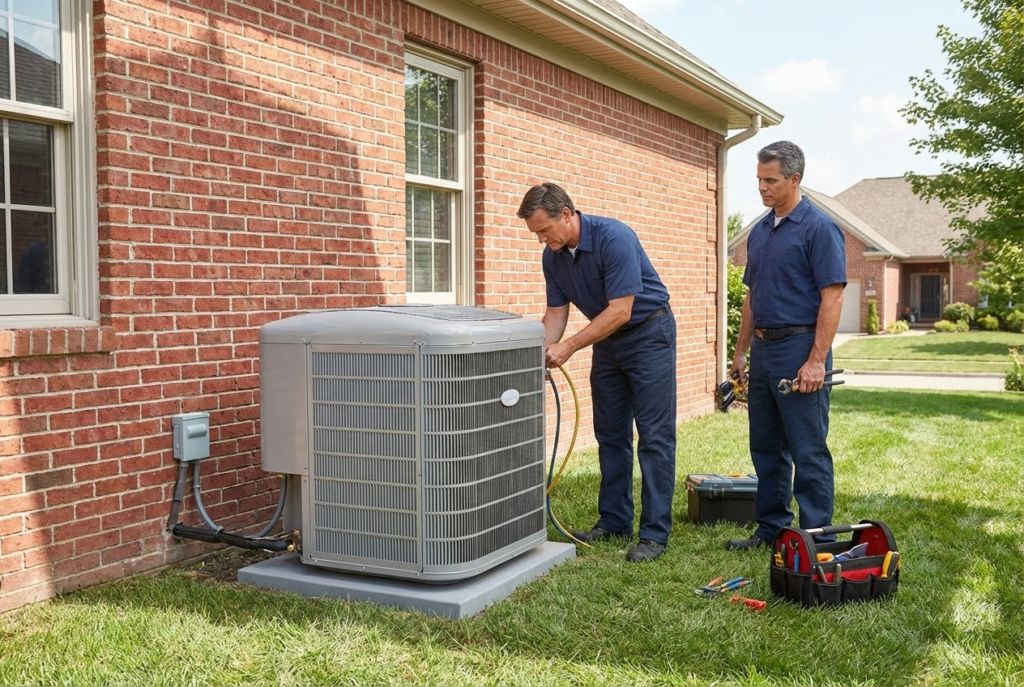
Most heat pump installs take one to two days. If you already have a heat pump and we’re just upgrading it, that’s usually a one-day job. We disconnect the old unit, set the new one, run the refrigerant lines and electrical, tie into your ductwork, charge the system, and test it.
Going from a separate furnace and AC over to a heat pump takes longer. We may need to modify ductwork, run new lines, and sometimes upgrade the electrical if the panel can’t carry the load, which is typically a two-day job. Houses with tricky ductwork or hard-to-reach crawl spaces can run longer, and we tell you that up front.
Before we pack up, we test everything: heating mode, cooling mode, the defrost cycle, and the backup heat if your system has it. We program the thermostat, show you how to run it, and tell you when to change the filters, so you’re not left figuring out your own system after we leave.
Why Choose Liberty for Heat Pump Installation in Oakville
We’ll Tell You When a Heat Pump Isn’t the Right Call
Some companies push heat pumps on every customer because the sale is good for them. We don’t work that way. A heat pump isn’t right for every house. If your gas is cheap and your furnace is nearly new, keeping it makes sense. If your ductwork is undersized and needs replacing, the project gets a lot bigger. We tell you honestly when a heat pump pencils out and when you’re better off with something else. We’re a family-owned shop with 27 years in the trade, and we’d rather earn a repeat customer than force a system that doesn’t fit.
Already Have a Heat Pump?
This page is about planning a new heat pump install. If you already have one and it’s acting up, that’s a different job. For a unit that still runs but isn’t heating or cooling right, making odd noises, or icing over, our team handles heat pump repair and troubleshooting in St. Louis. If your old unit has quit for good and you need it swapped fast, we also do same-day heat pump replacement. And if you’ve got no heat or no cooling right this minute, our 24/7 emergency heat pump repair crew can get to you quickly.
Get a Heat Pump Installation Quote
Ready to talk heat pump installation in Oakville? Call Liberty at (314) 600-2202. We’ll look at your house, figure out whether a heat pump is the right fit, size it correctly, and install it clean if it makes sense for you.
Heat Pump Installation FAQs
How do I know if a heat pump is the right choice for my Oakville home?
It usually comes down to timing. If your furnace and AC are both wearing out around the same stretch, a heat pump lets you swap two systems for one. Our climate helps too, since we use heat and cooling about equally. We’ll walk your house, look at the ductwork and electrical, and give you a straight answer on whether a heat pump fits or whether you’re better off another way.
What is a dual-fuel heat pump, and do I need one in the St. Louis area?
It’s a heat pump paired with a gas furnace for backup. The heat pump carries the everyday heating because it’s cheaper to run, and when it gets brutally cold the furnace takes over on its own. Plenty of Oakville homes go this route. You get heat pump efficiency most of the winter and real gas heat for the cold snaps. Already have a decent furnace? Keeping it as the backup is usually the smart move.
Are there rebates or tax credits for installing a heat pump?
Often, yes. A lot of the high-efficiency heat pumps qualify for a federal energy-efficiency tax credit, and some utilities kick in their own rebates. What you get back depends on the equipment and the programs running when you install, so we help you pick a system that qualifies and point you at the current offers instead of quoting a number here.
What size heat pump does my house need?
We figure that out with a load calculation, not a gut guess. We look at square footage, insulation, windows, and your ductwork, work out the real heating and cooling load, then size to whichever one is bigger so the unit covers both seasons. Two houses the same size can land on totally different equipment depending on how they were built.
How long does a heat pump installation take?
Swapping an old heat pump for a new one is usually a one-day job. Going from a separate furnace and AC over to a heat pump runs closer to two days, since it can mean ductwork changes and sometimes an electrical upgrade. Tricky ductwork or panel work can stretch it a little, and we’ll give you the timeline before we start.