Serving St. Louis & Surrounding Areas

Emergency Commercial HVAC in Oakville, MO: Who Gets Seen First
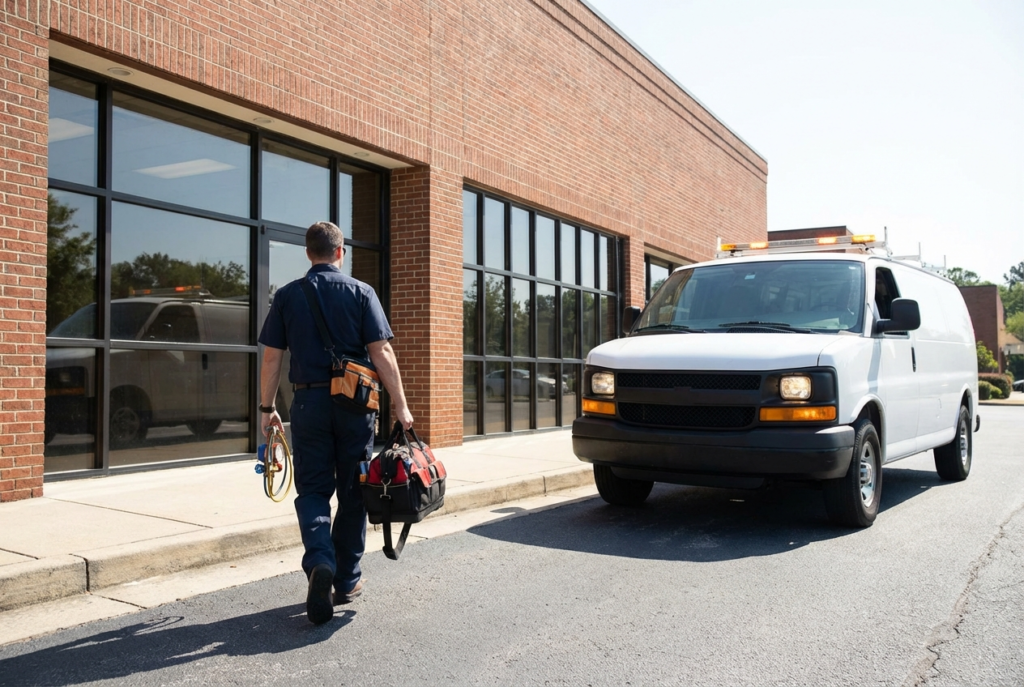
During a hard freeze or a long stretch of heat, more commercial buildings go down in a single day than any contractor in the county can physically reach. That is the actual situation behind every emergency number, and pretending otherwise helps nobody. So it is worth knowing how those calls get ordered, where your building sits in that order, and which of the things that move you up the list you can arrange before you ever need to.
How the Order Gets Decided
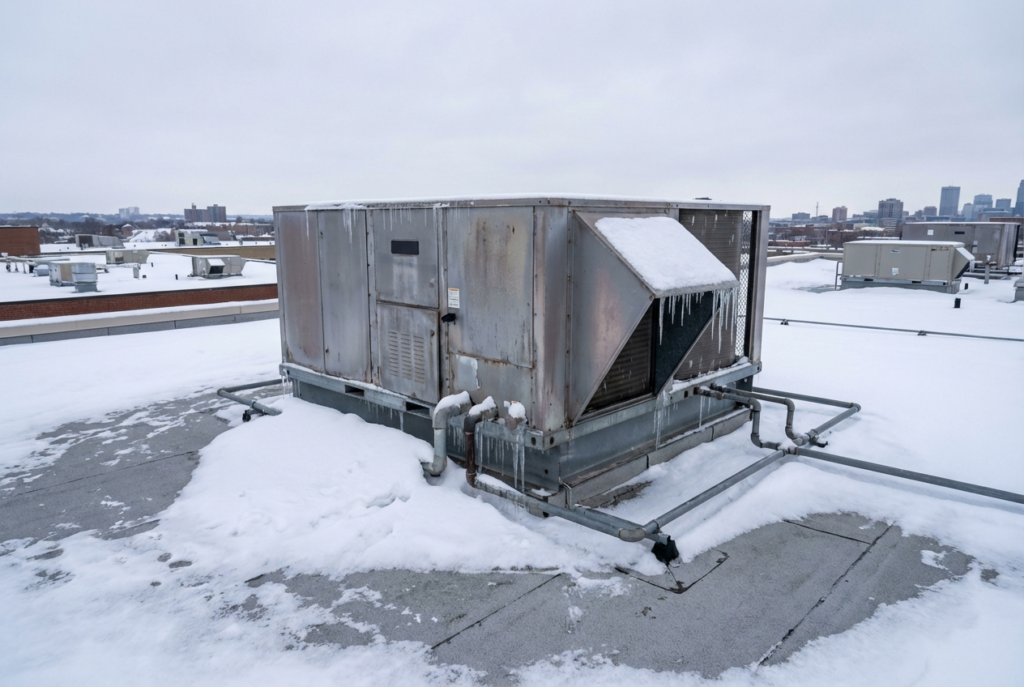
Emergency calls are not worked in the sequence they arrive. They are worked by what is lost while waiting, and the governing question is whether the loss is recoverable.
A building that is uncomfortable at nine tonight is equally fixable at seven tomorrow morning, and nothing is destroyed in between. A cooler full of product that crosses its temperature threshold at midnight is not recoverable at any hour, because the loss has already happened. Everything else sorts between those two.
That principle is worth understanding before you call, because it tells you which facts about your situation actually matter. Describing how unpleasant the building is moves nothing. Describing what is going to be ruined, and when, is the information that decides the order.
First: Anything Where Product Is Being Lost
Refrigeration and temperature sensitive inventory go to the front, and it is not close.
The reasoning is the clock rather than the value. A restaurant’s walk in cooler rising through its safe range is running a food safety timer that cannot be reset by fixing the equipment afterward. Product held under a temperature requirement behaves the same way. Once the threshold is crossed the inventory is gone whether the compressor is repaired at two in the morning or at ten.
If this is your situation, lead with it on the call. Say what is stored, what temperature it has to hold, what it reads now, and how fast it is climbing. Those four facts will move you up the list ahead of a building full of people, and they should.
It is also worth knowing that commercial refrigeration and comfort cooling are related but separate systems. If your cooler is failing while the dining room is fine, that is useful diagnostic information rather than a coincidence.
Second: Process Loads and Protecting the Building
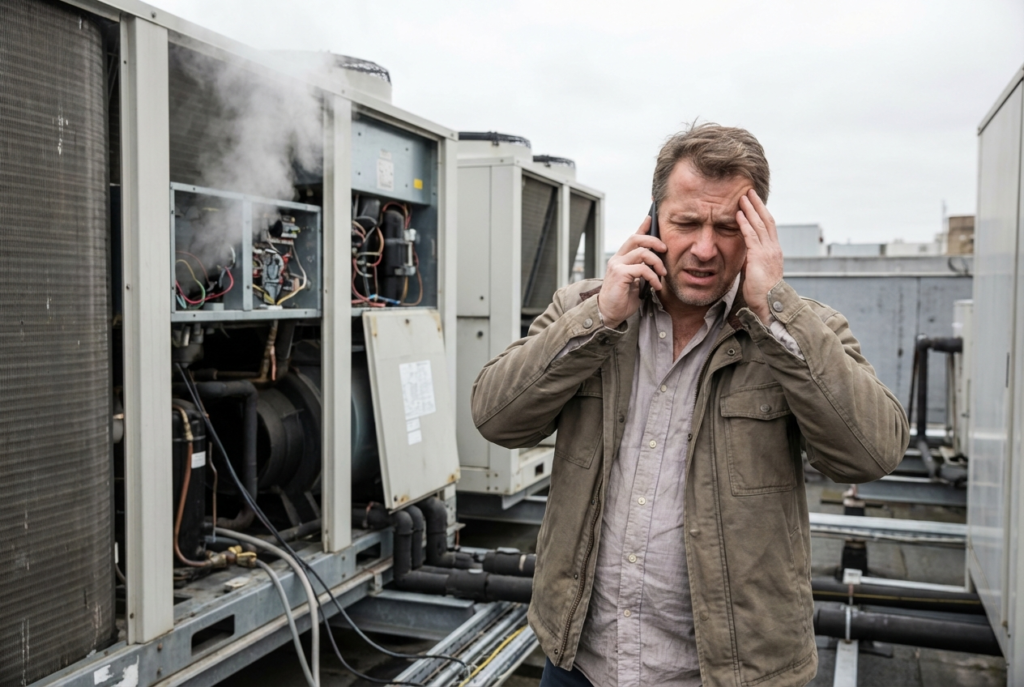
The middle tier is everything where cooling or heating serves the function of the building rather than the comfort of the people in it.
Server and equipment rooms are the common one. These spaces generate heat continuously and have no tolerance for an outage measured in hours, and unlike an office they do not get more bearable overnight when the sun goes down. Any process equipment with a thermal limit sits in the same tier.
In winter this tier also covers protecting the building itself. A commercial building losing heat has plumbing in it, and sprinkler systems in unheated or poorly heated spaces are a genuine freeze risk that turns a heating failure into a water event. If your building has wet sprinkler lines in an area that depends on the failed equipment, that raises your priority considerably and it is worth saying so explicitly.
Third: Occupied Comfort
Most emergency calls live here, and this tier is real even though it sits below the other two.
A workplace that cannot be occupied costs a day of payroll, a retail floor that empties costs a day of sales, and neither is trivial. What separates this tier is that fixing it tomorrow restores the situation completely. Nothing is destroyed in the interval.
Within this tier the ordering still moves for genuine vulnerability. A building where people cannot safely be present, rather than merely uncomfortable, is treated differently, and so is a business that physically cannot open in the morning without the system running.
What we try to do here is be straight on the phone. If the honest answer is first thing tomorrow, hearing that at eight in the evening lets you decide about tomorrow rather than waiting up for a truck.
Access Is the Delay Nobody Plans For
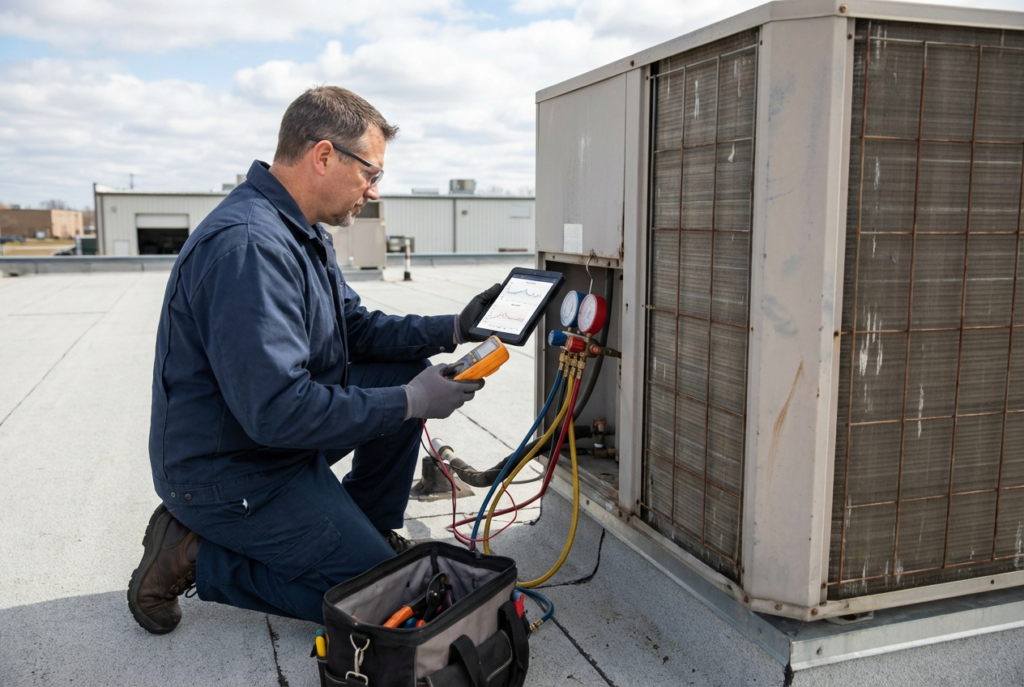
The most common avoidable hour lost on a commercial emergency has nothing to do with parts or with driving. It is standing outside a building nobody can open.
- Who holds keys after hours, and whether that person answers their phone at night. In multi tenant buildings this is often a property manager rather than you.
- The alarm code, and the alarm company. Somebody arriving at a mechanical room at midnight trips a system, and if the monitoring company has no record of authorized after hours access, everything stops.
- Roof hatch or ladder access, which is frequently locked separately from the building and held by somebody else entirely.
- Escort requirements, where a tenant or landlord policy says no contractor is on site unaccompanied.
- Where the equipment actually is. On a building with several rooftop units, knowing which one serves the affected area saves real time in the dark.
All of this is solvable in ten minutes on a Tuesday afternoon and nearly unsolvable at two in the morning. If you do one thing after reading this page, put that information somewhere your contractor already has it.
What an Agreement Changes in Practice
Agreement customers go ahead of non agreement calls, which is the part everybody knows. The practical advantages matter at least as much and get discussed less.
Your equipment is already on file, meaning models, serial numbers, tonnage, refrigerant type and what was replaced when. Somebody taking your call at eleven at night can see all of it, which frequently determines whether the right part is on the truck when it arrives rather than after a second trip.
Your access details are on file too, along with your after hours contacts, which removes the delay described above.
And a building that has been serviced twice a year has a history. A technician who noticed a component reading weak in the autumn has already told you about it, which is why buildings on a regular schedule turn up in the emergency queue less often than buildings that are not.
Holding the Line While a Part Ships
Some emergency calls end with a repair and some end with a plan, because the part does not exist within driving distance that night.
When that happens, the objective is not to make the building comfortable. It is to protect whichever tier above actually applies to you. That is a much smaller and more achievable target.
For refrigeration, that can mean relocating product into working coolers, bringing in refrigerated storage, or in some cases packing with ice while a compressor is sourced. For a server room, spot cooling aimed at the actual heat load rather than the room. For a building at freeze risk, temporary heat placed to protect the vulnerable piping rather than the occupied space.
Rented equipment is a real cost and it is worth putting against what it protects. Covering a sales floor for a day is a judgement call. Covering a walk in full of inventory usually is not.
Who Can Authorize the Spend at Two in the Morning
This is the commercial complication that has no residential equivalent, and it stalls more overnight calls than any technical problem does.
Work stops until somebody with authority approves it, and at night that person is often unreachable. Knowing in advance who can approve an emergency repair, what figure they can approve without escalating, and whether a landlord or a tenant owns the equipment in question is worth settling while nothing is broken.
The repair or replace question arrives the same way, compressed. One factor is genuinely commercial and worth knowing before the night it matters. Equipment old enough to run on R-22 is affected by that refrigerant’s phaseout, since it is no longer produced and supply now comes from reclaimed stock, which makes a large recharge on an old unit an increasingly poor investment. If your rooftop units are of that generation, the calculation has already shifted toward replacement and it is better to know that in advance than to work it out at midnight.
Liberty has been handling commercial heating and cooling in Oakville for twenty seven years, and the buildings that come through these nights best are almost always the ones that settled the boring questions early. Who has keys, who approves, and what is on the roof.
Frequently Asked Questions
We called first. Why is another building getting seen before ours?
Because emergency calls are ordered by what is being lost rather than by who dialed first. A cooler full of product crossing its temperature threshold is a loss nobody can recover by arriving later, while an uncomfortable building is equally fixable in the morning. If something in your building is being destroyed while you wait, say that explicitly, because it changes your position.
What should I say on the phone to get the fastest response?
Facts about consequences rather than about temperature. What is stored and what it has to hold, whether a server or process load is affected, whether sprinkler or plumbing lines are at freeze risk, and whether the building can open in the morning. Then how somebody gets in after hours.
Our walk in cooler is failing but the air conditioning is fine. Same call?
Yes, call it in, and lead with the cooler. Commercial refrigeration and comfort cooling are related but separate systems, so one failing while the other works is diagnostic rather than strange. Refrigeration goes to the front of the queue because the product clock cannot be rewound.
Does a maintenance agreement really get us there faster?
It moves you ahead of non agreement calls, and the practical side helps as much. Your equipment list, refrigerant types and service history are already on file, which often decides whether the right part is on the truck the first time, and your access and after hours contacts are recorded so nobody is standing outside a locked building.
What if the part cannot be found overnight?
Then the job shifts to protecting whatever is actually at risk rather than making the building comfortable. That might mean moving product into working refrigeration, spot cooling aimed at a server load, or temporary heat placed to protect vulnerable piping. It is a smaller target and a far more achievable one.
Our units are old. Should we be repairing them at all?
Age alone does not settle it, but refrigerant does. Equipment running on R-22 is affected by that refrigerant’s phaseout, so it is no longer produced and supply comes from reclaimed stock, which makes a large recharge on an old unit a poor investment. If your rooftop units are that generation, work out your replacement plan before the night you need to decide in a hurry.
Building Down Right Now
Lead with what is at stake and how somebody gets in. Product and its temperature, process loads, freeze risk, and who holds keys and the alarm code after hours. That is what sets your place in the order and what gets a truck to the right door.
The number is (314) 600-2202. If the building is uncomfortable but nothing is at risk and this can wait for the working day, commercial HVAC repair sorts it by building type. If you would rather not be making this call again, commercial HVAC maintenance is where the access details and the equipment history get recorded in the first place.