Serving St. Louis & Surrounding Areas

Prevent Breakdowns with Furnace Maintenance in Oakville
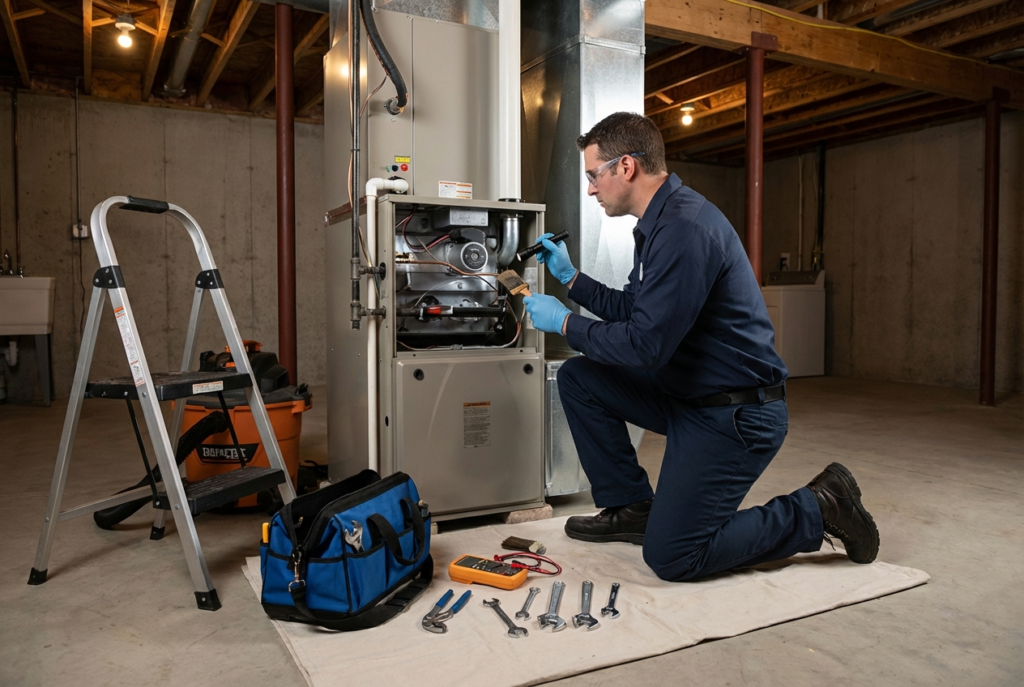
Annual furnace maintenance in Oakville stops expensive problems before they start. You spend $175 on a tune-up in October or you spend $800 on an emergency repair in January when your furnace quits at midnight. Maintenance finds the ignitor that’s about to crack, the blower motor bearing that’s starting to fail, the heat exchanger showing early wear. Catching these problems during a scheduled visit beats dealing with them when it’s 20 degrees outside and your house is freezing.
Furnace Maintenance Services
What Actually Happens During a Furnace Tune-Up
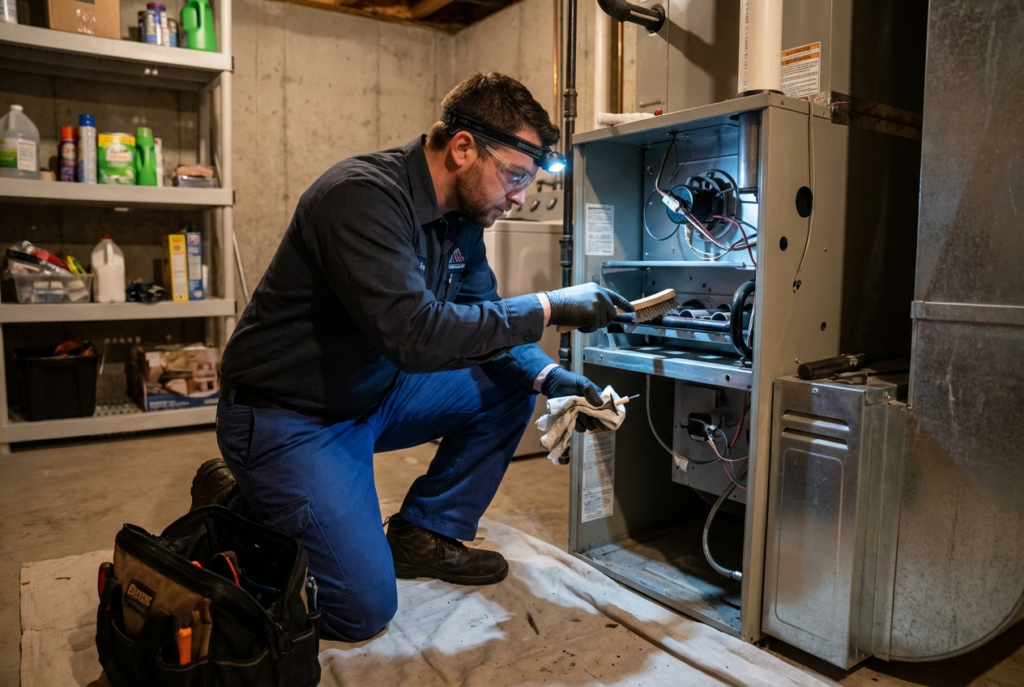
A real furnace tune-up takes about an hour and covers everything that could cause problems during winter. We clean the burners and flame sensor—these get coated with soot and combustion residue that makes your furnace work harder and less efficiently. Dirty burners mean incomplete combustion, which wastes gas and can produce carbon monoxide. Flame sensors covered in buildup shut your furnace down thinking there’s no flame when the burners are actually lit.
We check and tighten all electrical connections because loose wires cause intermittent failures. Test the ignitor to see if it’s cracking—ignitors don’t usually fail without warning, they show signs of wear first. Inspect the heat exchanger for cracks or rust that could leak exhaust fumes into your house. Measure airflow and check your blower motor—bearings start making noise before they seize completely. Clean or replace your air filter if it’s clogged.
Test your thermostat to make sure it’s communicating correctly with the furnace. Check gas pressure to ensure burners are getting proper fuel supply. Inspect the flue pipe and venting system for blockages or damage. Lubricate moving parts that need it. Test all safety switches—limit switches, pressure switches, rollout switches—these shut your furnace down if something goes wrong, and they need to work correctly. Understanding proper furnace maintenance procedures helps you know what to expect during a professional tune-up.
Best Time to Schedule Annual Furnace Maintenance
Schedule furnace maintenance in September or October before heating season starts. You want problems found and fixed before you actually need heat, not discovered when your furnace fails on the coldest night of the year. Early fall means we’re not slammed with emergency calls yet, so scheduling is flexible and we’re not rushing through appointments.
Waiting until November or December means competing with everyone else who put off maintenance until they turned their heat on and realized something was wrong. Parts availability becomes an issue when half of Oakville needs the same ignitor or blower motor at once. You might find a problem during your December tune-up but wait two weeks for parts while using emergency heat or space heaters.
Some people schedule maintenance in spring after heating season ends. This works if you’re disciplined about getting repairs done over summer before you need heat again. The problem is people find issues in April, plan to fix them in June, forget about it until October, and suddenly it’s emergency repair season. Fall maintenance means any problems get fixed immediately while you remember and before winter arrives.
How Maintenance Prevents Winter Breakdowns
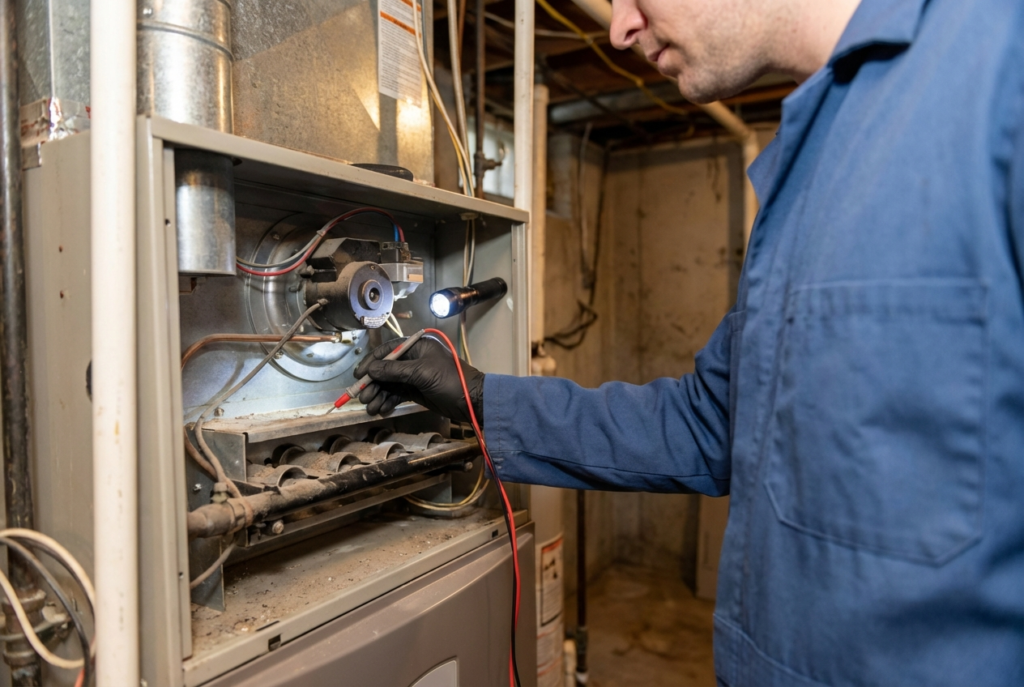
Maintenance catches small problems before they become big failures. Your ignitor has hairline cracks starting to form—during a tune-up we see this and replace it for $250. Without maintenance, that ignitor fails in January during a cold snap and now you’re paying $400 for emergency service plus parts. Your blower motor bearings are making slight grinding noises—we catch it during maintenance, replace the motor on your schedule for $600. Without maintenance, the motor seizes in December and you’re without heat until we can fit you in for emergency service.
Heat exchangers don’t crack overnight. They develop small stress fractures that grow over time. Annual inspections catch these before they become dangerous carbon monoxide leaks. Flame sensors don’t just stop working—they gradually get dirtier until they start shutting your furnace down randomly. Cleaning them during maintenance prevents those 2 AM furnace failures.
Maintenance also improves efficiency. Dirty burners waste 10-15% more gas because combustion isn’t complete. Clogged filters make your blower work harder, using more electricity and wearing parts faster. A furnace running efficiently costs less to operate and puts less strain on components, which means fewer breakdowns. Our heating repair services handle problems when they occur, but maintenance helps you avoid those calls in the first place.
Furnace Maintenance Costs vs Emergency Repair Costs
Annual furnace maintenance runs $150-200 depending on what’s included. One tune-up per year. Compare that to emergency furnace repairs that start at $300 for simple fixes and go up to $3,500 for major failures. Most furnace breakdowns cost $500-1,500 to fix—ignitors, flame sensors, blower motors, control boards. One prevented emergency repair pays for 3-7 years of maintenance.
Here’s the real math: furnace maintenance costs you $175 per year. Over 15 years that’s $2,625 total. A furnace that never gets maintenance will have 3-5 major failures over those same 15 years, costing $1,500-2,500 each time. You’re looking at $4,500-12,500 in repair costs versus $2,625 in maintenance costs. Plus maintained furnaces last 18-20 years while neglected furnaces die after 12-15 years.
Maintenance also catches problems while they’re cheap to fix instead of expensive. A $30 air filter change during maintenance versus $800 to replace a heat exchanger that cracked from restricted airflow. A $200 flame sensor cleaning versus $600 to replace a control board that failed from constant false shutdowns. Prevention is legitimately cheaper than repair, not just something HVAC companies say to sell maintenance plans.
What You Can Do Yourself vs What Needs a Professional
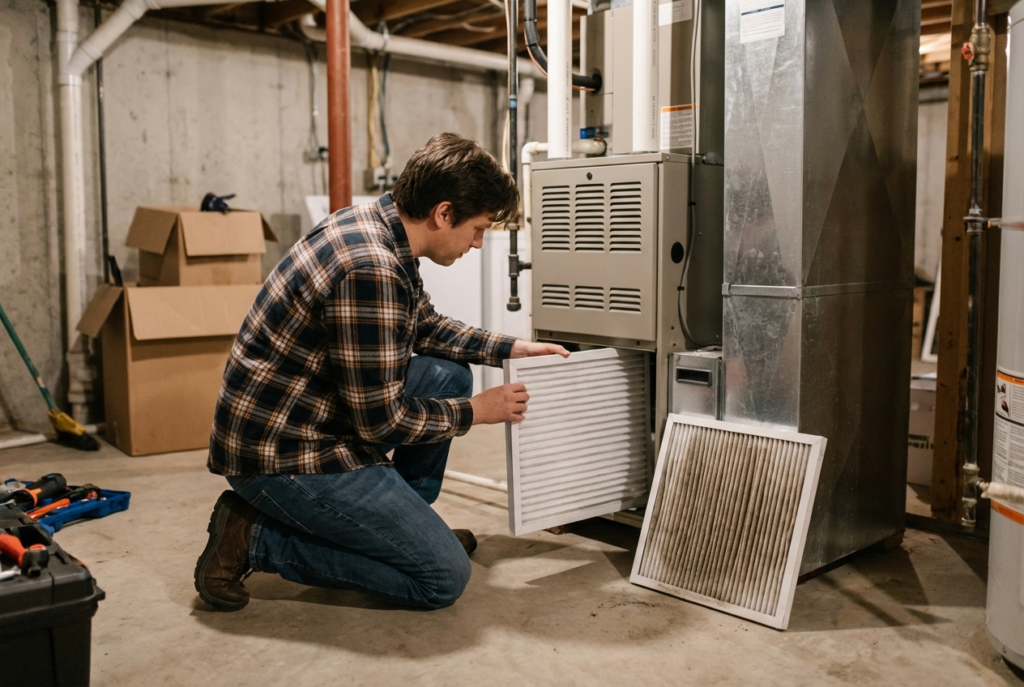
Change your air filter every 1-3 months depending on how dirty it gets. This is the single most important DIY maintenance you can do. Clogged filters cause probably 30% of furnace problems we see. Keep the area around your furnace clear—don’t stack boxes against it or block airflow. Make sure all your vents are open and not blocked by furniture or rugs. Keep your thermostat away from heat sources like lamps or sunny windows.
Test your carbon monoxide detector batteries and replace the detector every 5-7 years. Listen for weird noises from your furnace—grinding, banging, squealing all mean something needs attention. Check that your furnace is actually heating when the thermostat calls for it. Watch for signs of short cycling—furnace turning on and off every few minutes instead of running for 10-15 minute cycles.
Everything else needs a professional. Don’t mess with gas lines, electrical connections, or anything inside your furnace cabinet. Checking refrigerant levels, testing heat exchangers for cracks, measuring combustion efficiency, calibrating gas pressure—these require tools and knowledge you don’t have. DIY furnace repair usually creates more problems than it solves. People try to clean flame sensors and break the ceramic insulators. They adjust gas valves and create carbon monoxide hazards. Stick to filters and call us for everything else.
Annual Maintenance Plans and Service Agreements
Maintenance plans cost $200-300 per year and include annual tune-ups plus perks like priority scheduling and repair discounts. Basic plans cover one inspection per year. Premium plans include two visits—one before heating season and one before cooling season if you have central air. Some plans include filter changes, others give you 10-15% off repairs.
Priority scheduling means when your furnace dies in January, you don’t wait three days for an opening. You get moved to the front of the schedule because you’re a plan member. During cold snaps when everyone’s calling, this actually matters. Repair discounts save money if you need work done—10% off a $1,200 blower motor replacement is $120 saved right there.
Plans make sense if you actually use them. Paying $250 per year but skipping your tune-up means you wasted money. Plans don’t make sense if you’re handy enough to change your own filters and your furnace is only 3-4 years old with nothing likely to break. But for furnaces over 10 years old, or for people who forget about maintenance until their heat stops working, plans force you to keep up with it and save money when repairs inevitably happen.
What Maintenance Companies Don’t Tell You
Most “$79 Tune-Ups” Are Just Sales Pitches
Those $79 furnace tune-up specials you see advertised? They’re designed to get technicians in your house to sell you replacements. The “tune-up” is rushed—maybe they check your filter, turn the furnace on, and spend the rest of the visit inspecting your heat exchanger with a camera looking for any tiny imperfection they can call a “crack.” Then comes the hard sell. Your furnace is dangerous, needs replacing immediately, here’s financing for $9,000.
Real tune-ups take an hour or more. Testing amp draw on your blower motor takes 15 minutes by itself—longer on two-stage systems where you need to test both stages. Cleaning the blower wheel properly takes time. Checking that everything’s running in spec isn’t a 20-minute job. Companies charging $79 aren’t making money on maintenance—they’re making it on selling you a new furnace you probably don’t need yet.
Replacement jobs are way more profitable than fixing your flame sensor or cleaning your burners. A $300 repair doesn’t pay the bills. An $8,000 installation does. So techs are trained to find reasons your furnace needs replacing rather than maintaining what you have. We charge realistic prices for actual maintenance because we’re not using your tune-up as a sales opportunity.
Skipping Maintenance Voids Some Warranties
Manufacturer warranties on new furnaces often require annual professional maintenance. Skip maintenance for two years and your heat exchanger cracks? Warranty claim denied because you didn’t maintain the system per manufacturer requirements. This is buried in the warranty paperwork nobody reads, but it’s there and manufacturers use it to deny claims.
Keep receipts from your maintenance visits. If you ever need warranty service, you’ll need proof you maintained the furnace according to the schedule. Some manufacturers want maintenance done by licensed professionals, others accept DIY maintenance if you document everything. Read your specific warranty to know what’s required.
Extended warranties sold by HVAC companies almost always require annual maintenance through that same company. This locks you into their service at whatever price they decide to charge. Miss one year or use a different company? Warranty void. These extended warranties often aren’t worth the restrictions they impose.
Get Honest Furnace Maintenance in Oakville
Call (314) 600-2202 to schedule furnace maintenance in St. Louis. We do thorough tune-ups that actually prevent problems—testing amp draw, cleaning blower wheels, making sure everything’s in spec. Not 20-minute inspections designed to sell you a new furnace.