Serving St. Louis & Surrounding Areas

Heat Pump Acting Up? Planned Heat Pump Repair in Oakville, MO
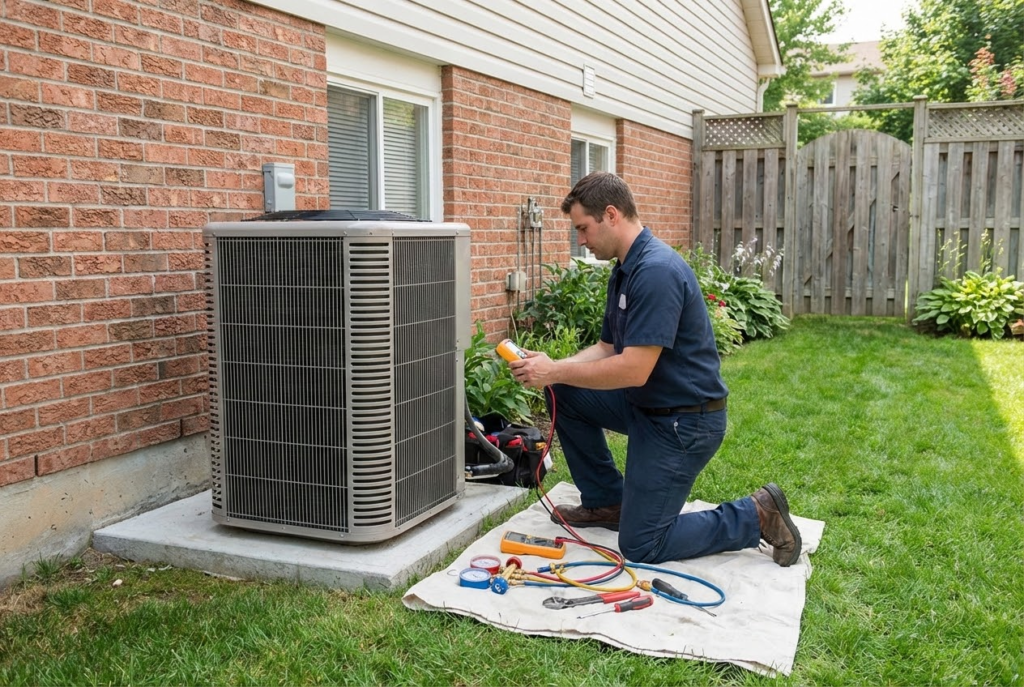
Heat pump repair is what you’re after when the unit still runs but you can tell something’s off. Maybe it started making a noise last week it never used to make. Maybe there’s ice packed on the outdoor unit, or the backup heat won’t shut off, or it runs all day and the house still feels a couple degrees short. It’s not dead. It’s just not right. That’s the kind of call we take at Liberty. We come out, actually diagnose it, tell you what’s going on, and fix it. We’re not the shop that swaps a part and hopes.
TLDR
- This page is for a heat pump that still runs but has a problem: weird noises, ice that won’t clear, backup heat stuck on, or a house that never gets comfortable. We come out on a scheduled visit, find the cause, and fix it.
- Heat pumps run all year, both directions, so the reversing valve and defrost parts take more of a beating than a system that sits idle half the year. Trouble usually shows up as a symptom before the unit quits.
- Backup heat that runs all the time is your heat pump waving a flag. It’s straight electric resistance heat, so it burns electricity and your bill climbs while you barely notice.
- We track down what caused the failure before we replace anything, so the same part doesn’t cook itself again next season and cost you twice.
- No heat or cooling at all, right now? That’s an emergency, not a planned repair. Just call and we’ll get moving.
When Your Heat Pump Runs But Something Is Off
Most of our repair calls aren’t dead units. They’re heat pumps that still turn on and blow air, just not the way they should. Honestly, that’s the easier kind of call. With a system that’s running we can watch it flip modes, read the pressures, and see what the defrost board is up to. Dead units hide their secrets. Running ones tell on themselves. Here’s what we see most, and what it usually points to.
Strange Noises and What They Mean
A soft whoosh when the system swaps between heating and cooling? Normal. That’s just the reversing valve doing its thing. The sounds worth worrying about are the new ones. Grinding usually means a motor bearing is on its way out, either the outdoor fan or the indoor blower, and metal’s rubbing where it shouldn’t be. Squealing is often a tired motor, or a worn belt on the older units. A hard bang when it kicks on says something came loose inside. And a steady click, click, click while the unit never actually starts? That’s electrical parts trying to fire and coming up short.
Here’s the thing about all of them: they don’t heal. They get louder, and they get pricier. A grinding bearing today is a seized motor next month. A loose part can chew up the parts around it before it finally lets go. So if your heat pump has started talking to you, get somebody out before the cheap fix turns into a big one.
Ice or Frost on the Unit: Normal Defrost vs a Real Problem
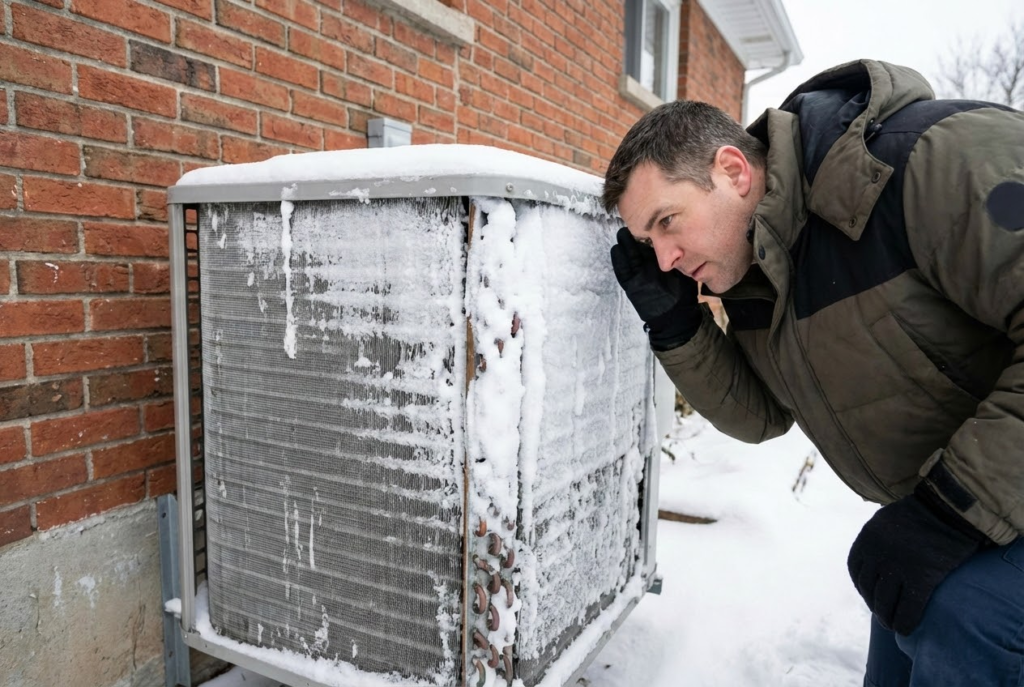
Frost on the outdoor unit in the winter throws a lot of people, but a little of it is completely normal. Your heat pump pulls warmth out of cold outside air, and that leaves moisture behind that freezes onto the coil. So the system runs a defrost cycle. Every so often it flips to cooling for a few minutes to warm that coil up and shed the frost. You’ll usually see what looks like steam rolling off the unit while it does it. That’s not smoke, and nothing’s wrong.
What worries us is ice. Thick, solid ice that wraps the whole unit and just sits there for hours, or days. That means the defrost cycle has stopped, and nine times out of ten it’s the sensor that triggers defrost or the board that runs it. Once defrost quits, ice keeps stacking up until the heat pump can barely grab any heat at all, and your backup strip heat ends up carrying the whole house. Ice in the summer is a different animal, and it points at airflow, usually a filthy filter or a plugged coil starving the system.
Backup or Auxiliary Heat Running Constantly

Your thermostat probably has a little light marked AUX, or maybe EM HEAT. That’s your backup, and it’s only meant to jump in on the bitter-cold days or during a defrost. Worth knowing: backup heat is plain electric resistance heat, the same idea as a space heater, so it costs a good bit more to run than the heat pump itself. A few minutes here and there, no big deal. Running around the clock? Now you’ve got a problem, and the heat pump has quietly stopped doing the heavy lifting.
When backup heat won’t quit, it’s almost always covering for something else. A refrigerant leak saps the heat pump’s heating power, so the backup fills the gap. A dead defrost cycle can trick the system into thinking it’s always too cold to run the heat pump. Even a thermostat set up wrong can force it on for no reason. Bottom line, if that AUX light never goes dark, don’t wait for the electric bill to tell you. It’s one of the most common things we chase down, and it usually traces back to one small part.
Running Nonstop But the House Won’t Warm Up or Cool Down
This one drives people nuts, because the system sounds like it’s trying its heart out. Runs and runs. Thermostat reads 72, the room feels like 68, and it never closes the gap. A few things do this. Low refrigerant from a slow leak is the usual culprit, since a heat pump needs the right charge to move heat either direction. Dirty coils are another. An outdoor coil clogged with dirt and cottonwood can’t grab heat from the air, and a caked-up indoor coil chokes the airflow. And an old compressor that’s lost a step just can’t push like it used to.
Then again, sometimes nothing’s broken. The unit’s just too small for the house, so it runs flat out and still comes up short. That’s a sizing thing, not a repair, and if that’s what we find, we’ll say so instead of selling you parts you don’t need. The only honest way to tell these apart is to put gauges on it and measure. That’s what the diagnostic is for.
Refrigerant Leaks in Heat Pumps vs Regular ACs
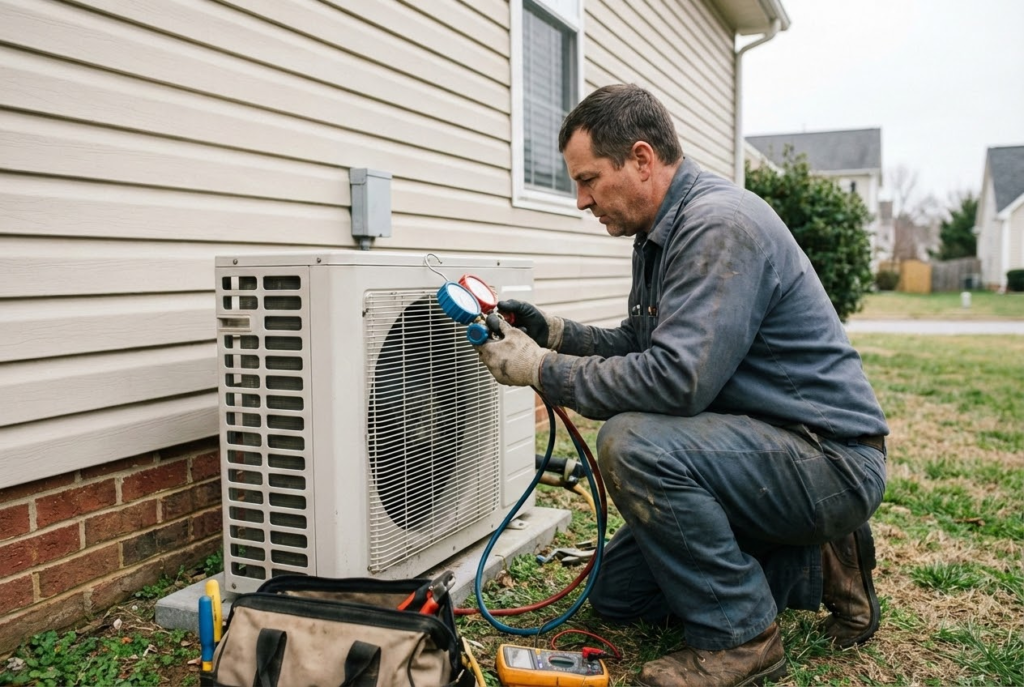
Heat pumps spring refrigerant leaks a little differently than a plain air conditioner does. They carry extra hardware a standard AC never has, like a reversing valve and a few more line connections, and every one of those joints is another spot a leak can start. Add in the fact that they run year round under pressures that keep swinging, and those connections just get worked harder.
The sneaky part is that the same leak looks like two different problems depending on the season. In summer it reads like a normal AC issue: weak cooling, ice creeping onto the coil, the unit never shutting off. Come winter, that same leak shows up as lousy heating and, surprise, backup heat running all the time. You’d never catch that winter clue on a regular AC, because a regular AC doesn’t heat. When we find a leak, we fix it at the source, pull the system into a vacuum, and weigh the charge back in to the maker’s spec. No topping it off from a can and calling it good.
Repair or Replace? How We Help You Decide
Sooner or later every heat pump owner asks it: is this thing worth fixing, or am I throwing good money after bad? We’ll walk you through it straight, not nudge you toward whatever answer lines our pockets. It comes down to two numbers: how old the system is, and how much this repair costs next to a new one. A younger unit with a small fix is a no-brainer. An older one facing a big repair is where replacing it starts to pencil out.
We watch for a pattern, too. A unit that’s needed the same fix a couple times, or one leaking refrigerant in more than one place, is trying to tell you something. We lay both options out with real numbers and let you make the call. If replacing wins, we handle that end too, whether it’s a planned heat pump installation you line up ahead of time or a fast emergency swap for a unit that’s already dead. On the repair side, cost depends on the part and the problem, so we hand you a firm quote before we touch a thing. Give us a call and we’ll price it out.
How a Heat Pump Diagnostic Visit Works
Since your unit still runs, a planned repair kicks off with a real diagnostic, not a rushed guess in the driveway. We run it through its modes, check the refrigerant charge, pull the codes off the defrost board, check the electrical side for weak capacitors or burnt contacts, and look at the coils and airflow. What we’re hunting is the cause, not just the part that gave out. A capacitor that blew because something else overloaded it will blow again if we ignore the why. That’s how folks end up paying twice for the same repair, and dodging that is the whole point.
When we know what’s wrong, we tell you in plain English, give you the price up front, and get after it. Most planned repairs wrap up in one visit. We’re a family shop out of Oakville, and we cover south St. Louis County and the towns around it. And if it turns out your trouble isn’t the heat pump after all, we also do AC repair and furnace repair in the same area. One more thing: if the system’s already quit and you’ve got no heat or cooling right this minute, that’s an emergency heat pump repair. Call us and we’ll get out there quick.
Frequently Asked Questions
What does a grinding or squealing heat pump usually mean?
Grinding is usually a motor bearing on its way out, either the outdoor fan or the indoor blower. Squealing tends to be a tired motor or a worn belt on older units. Neither one heals on its own, so it’s worth having looked at before the whole motor seizes and a cheap fix turns into a big one.
There is ice on my outdoor unit in winter. Is something wrong?
A little frost that comes and goes is normal. The defrost cycle melts it off every so often, and you might see steam roll off the unit while it runs. Thick ice that wraps the whole unit and never clears is the warning sign, and it’s usually a bad defrost sensor or control board that needs fixing.
Why does my heat pump run nonstop but the house never gets comfortable?
Usually it’s low refrigerant from a slow leak, dirty coils that can’t move heat, or an old compressor that has lost its punch. Now and then the unit is just too small for the house. We put gauges on it and measure before we replace anything, so you’re not paying for a part that wasn’t the problem.
Can you fix a heat pump that is low on refrigerant?
Yes. We find the leak, fix it at the source, pull the system into a vacuum, and weigh the charge back in to the maker’s spec. Just topping it off without finding the leak only buys you a few months before it’s low again, so we go after the cause instead of the symptom.
Should I repair my heat pump or replace it?
It mostly comes down to the age of the system and how the repair compares to the cost of a new one. A younger unit with a modest fix is worth repairing. An older one staring down a major repair often makes replacement the smarter play. We give you both numbers straight and let you decide.
How long does a typical heat pump repair take?
Most planned repairs are done in a single visit once we’ve pinned down the real cause. Simple electrical fixes go fast. Jobs with refrigerant work or a reversing valve take longer because of the extra steps. Either way, we give you a time estimate along with the price before we start.
Schedule a Heat Pump Diagnostic
If your heat pump is running but clearly acting up, don’t wait for it to die on the coldest or hottest day of the year. Call (314) 600-2202 and set up a heat pump repair with Liberty. We’ll find the real problem, hand you a firm quote before any work, and fix it right so you’re not paying for it twice.