Serving St. Louis & Surrounding Areas

HVAC Near Jefferson Barracks: Post-War South County Specialists
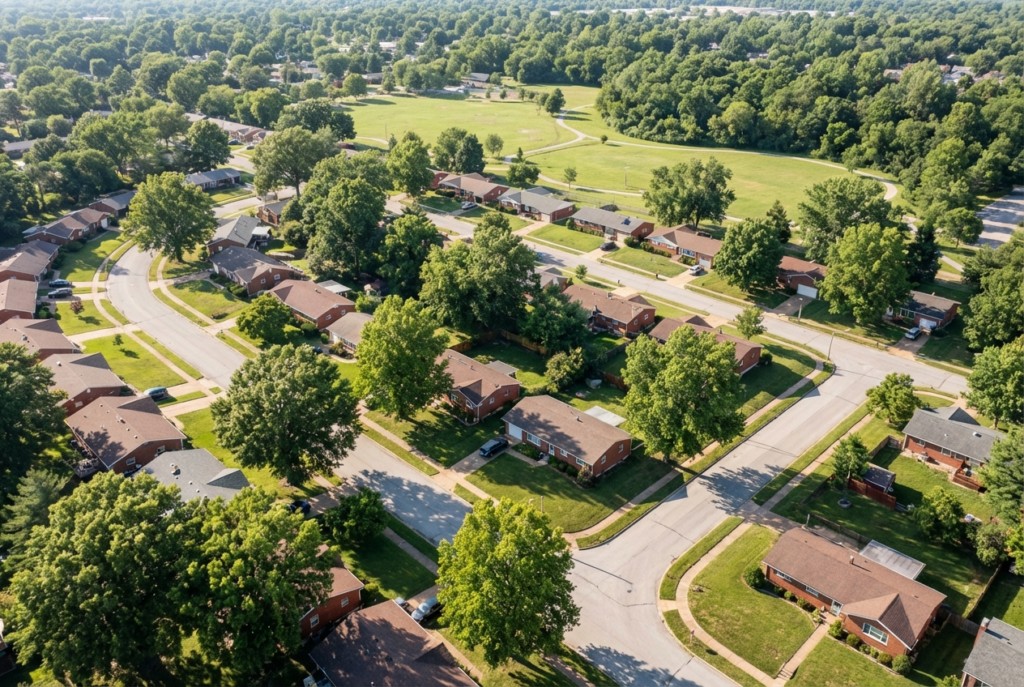
Looking for an HVAC Contractor near Jefferson Barracks in St. Louis, MO? Look no further! Jefferson Barracks has been standing since 1826. The homes surrounding it aren’t quite that old, but some of them feel like it when their HVAC systems give out. The Lemay corridor is packed with mid-century construction. Solid bones, good neighborhoods, but heating and cooling equipment that was installed decades ago and has been limping along ever since. Add in the Mississippi River humidity in summer and the cold wind that cuts through this part of South St. Louis County in winter, and you’ve got conditions that push older systems to their limit faster than most homeowners expect.
TLDR
- Liberty Heating, Cooling and Plumbing handles HVAC and plumbing for the post-war neighborhoods around Jefferson Barracks, available seven days a week including emergencies.
- Most of the housing here went up between 1945 and 1960 to absorb returning servicemen from the base, which means small footprint frame houses, undersized original ducts, and electrical panels that have not been touched since the Eisenhower administration.
- Frequent calls in this part of south St. Louis County: original gravity furnaces that need full replacement, mid-century single-stage AC swaps, undersized supply trunks that starve back rooms, panel upgrades to handle modern compressor loads.
- Call (314) 600-2202 for same-day work in the streets along Sherman Road, Telegraph, and the streets backing onto the Jefferson Barracks Park boundary.
We service the neighborhoods around Jefferson Barracks seven days a week. Lemay, Bella Villa, and the surrounding streets are a regular part of our route. If something breaks down, whether it’s the middle of a July heat wave or a January cold snap, we’re close and we’re available.
For service-specific detail, our AC repair, furnace repair, and heat pump repair pages cover what each call looks like and what it costs.
What Homeowners Near Jefferson Barracks Should Know About Their HVAC Systems
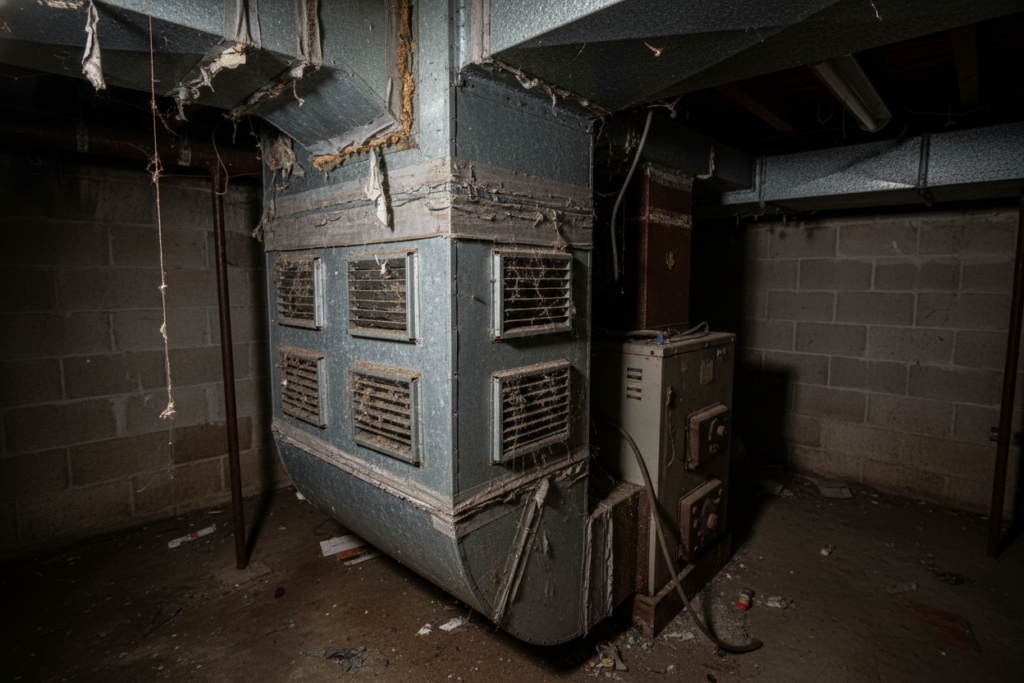
Most people don’t think about their ductwork until something goes wrong. But in the neighborhoods around Jefferson Barracks, the ductwork itself is often the problem, and it has been for decades. Homes built in the 1950s and 60s were designed around coal and early forced air systems. When those got upgraded over the years, the old ducts stayed. Too small, poorly sealed, and moving air through a house they were never designed to cool properly. The system runs longer. Bills go up. And eventually something gives out.
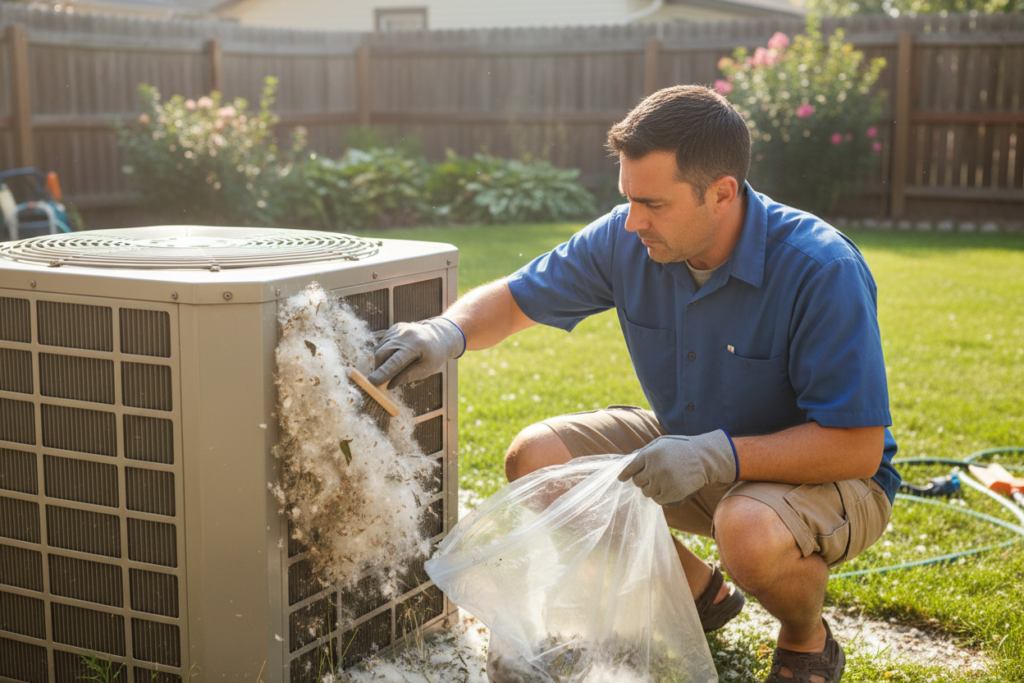
The river doesn’t help. Lemay sits close enough to the Mississippi that humidity levels here are consistently higher than most of St. Louis County. That extra moisture speeds up coil buildup, fills drain pans faster, and sends cottonwood straight into outdoor condenser units every spring. We’ve pulled debris out of units near Jefferson Barracks that the homeowner had no idea was there, and in every case the system was working twice as hard as it needed to.
If your home was built before 1980 and your system has never had a real inspection, that’s not a small thing. It’s worth knowing what you’re working with before it becomes an emergency.
Common Heating and Cooling Problems in the Lemay Area
Some HVAC problems show up everywhere. Others are more common in specific areas, and Lemay has its own patterns. After years of service calls in this part of South St. Louis County, we see the same issues come up again and again.
Frozen coils are one of the most common summer calls near Jefferson Barracks. The combination of older duct systems that restrict airflow and high river humidity creates the perfect conditions for a coil to ice over. The AC keeps running, the house stops cooling, and most homeowners assume the system just needs refrigerant. Usually it doesn’t, it needs airflow fixed first.
Furnace igniter failures show up every winter on the older systems common to this neighborhood. Igniters on systems that have been running for 15 or 20 years don’t owe you anything. They go out fast and without warning, usually on the coldest night of the year.
Condenser units clogged with cottonwood are a spring problem unique to this corridor. The trees along the river drop cottonwood every year and it goes straight into outdoor units. A unit running through a clogged coil is working harder than it should, and in a South St. Louis County summer, that extra strain adds up fast.
Why Older Homes Near Jefferson Barracks Need Specialized HVAC Attention
A newer home in West County and a 1960s ranch in Lemay are two completely different jobs. The equipment might be the same brand. The refrigerant might be the same type. But everything about how that system fits into the house is different.
The U.S. Department of Energy recommends that older homes have their duct systems inspected before any equipment upgrades, here’s why proper heating system maintenance matters.
Older homes near Jefferson Barracks often have undersized returns that choke airflow before it even reaches the equipment. Some have duct runs that were modified over the years, a wall moved here, a room added there, and nobody updated the ductwork to match. The result is a system that’s been fighting the house for decades and showing the wear from it.
Some homes in this corridor still have cast iron radiator systems or early forced air installs that most technicians don’t see often. That’s not something you want a technician guessing their way through. We’ve worked on enough of these homes in the Lemay and Bella Villa area to know what to look for and what to leave alone.
An older home doesn’t automatically mean an expensive fix. But it does mean the diagnosis has to be right the first time.
How St. Louis Summers and Winters Hit This Part of South County Hard
South St. Louis County doesn’t get a break between seasons. Summer arrives fast and stays humid. Winter comes in cold and stays longer than people expect. For homeowners near Jefferson Barracks, that means your HVAC system is working at full capacity for a good portion of the year with very little downtime in between.
The humidity pocket that sits over this part of the county in summer is real. Homes near the Mississippi River corridor run their AC harder and longer than homes just a few miles west. That sustained runtime is what separates systems that last from systems that don’t. A unit that’s slightly low on refrigerant or running with dirty coils in a drier climate might limp along for another season. In Lemay, it usually doesn’t make it through July.
Winter brings its own version of the same problem. Cold air off the river pushes heating loads higher on homes near Jefferson Barracks Park. Furnaces that cycle normally in milder parts of South County run almost continuously here on the coldest nights. Heat exchangers crack. Igniters burn out. Pressure switches fail. These aren’t random, they’re the predictable result of a system running at its limit through a St. Louis winter.
Getting HVAC Service to Your Home Near Jefferson Barracks
Scheduling service in the Lemay area is straightforward. Lemay Ferry Road and Telegraph Road are the two main routes we use to reach homes in this corridor. We know the neighborhood, the side streets off South Broadway, the subdivisions tucked behind Jefferson Barracks Park, and the older blocks closer to the river where addresses can get confusing.
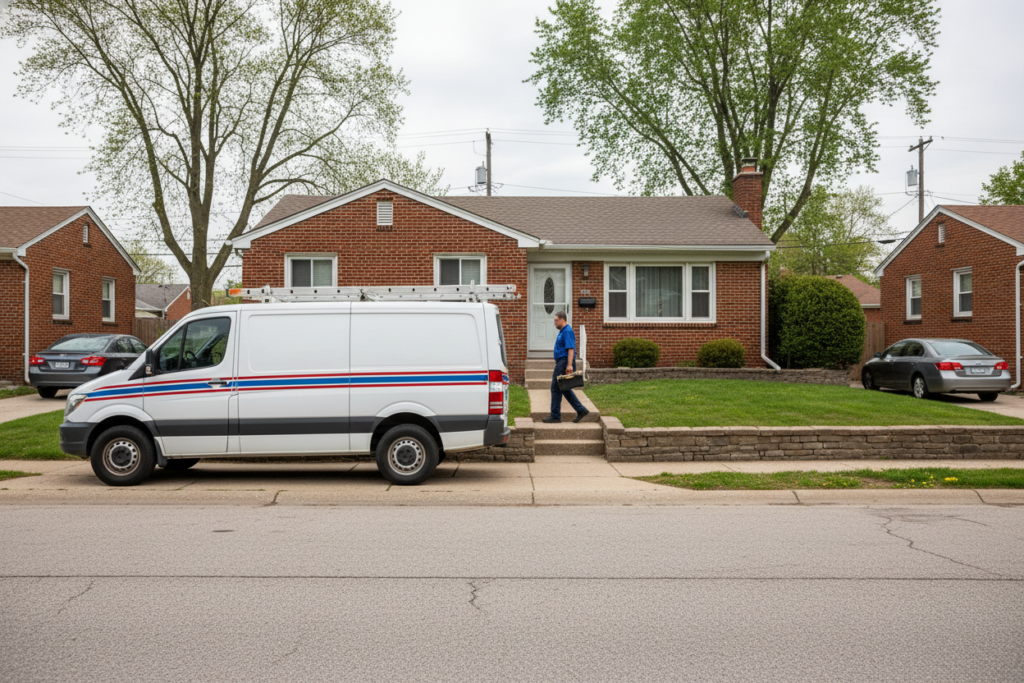
Same-day service is available most days in this part of South St. Louis County. Emergency calls in the Lemay and Bella Villa area get the same priority as calls closer to our shop in Oakville. If your system goes down on a weekend or a holiday, that doesn’t change the response time.
We’re a family-owned company with 27 years of experience serving South St. Louis County. We work with your budget and offer a 10% discount for senior citizens. We pride ourself in providing professional service without the “dealer” pricing. We’ll never upsell you on equipment you don’t need. Licensed, bonded, and insured. See all the areas we serve.
How to Reach Us from Jefferson Barracks
Jefferson Barracks and our shop in Oakville are closer than most people realize, same stretch of South St. Louis County, just a short drive apart. From the park entrance on South Broadway, head north and turn left on Lemay Ferry Road. Follow it west to Telegraph Road and turn right. Hop on I-255 West toward Oakville and take the Baumgartner Road exit. Turn right on Ridgetop View Drive and we’re at 3236 Ridgetop View Dr, St. Louis, MO 63129. Door to door it’s about 15 minutes, which is also roughly how fast we can get a technician heading your direction on an emergency call. If you’re looking for an HVAC Contractor near Jefferson Barracks in St. Louis, MO, contact us today!
What 20 Years of Jefferson Barracks Calls Taught Us
Twenty years of running calls through the post-war streets around Jefferson Barracks gives you a different list than working any other corridor in south county.
Pattern one is the original gravity furnace. Plenty of these mid-century homes still have the octopus-style gravity unit in the basement that came with the house in 1948. Those systems work, but they have no blower, no thermostat zoning, and the heat distribution depends on the ducts that fan out from the unit. By year seventy the cast iron heat exchanger is cracking and carbon monoxide becomes a real risk.
Pattern two is the trunk-line bottleneck. Returns and supplies in these houses were sized for furnaces with a fraction of the airflow modern HVAC delivers. Drop a high-efficiency furnace into the existing duct trunk and the back bedrooms still won’t get warm because the trunk can’t move enough CFM. We see this misdiagnosed as a furnace problem at least once a month.
Behind every Jefferson Barracks call where someone wants a new heat pump is usually a panel that cannot carry it. The original 60-amp service was specced for an old gravity furnace and a refrigerator. By the time we walk through, that same panel is running clothes dryer, dishwasher, microwave, leftover window AC, and an EV charger. There is zero room left for a compressor inrush.
We don’t bid on a system without walking the whole picture: panel, ducts, original equipment, the renovation history. Half the time the right answer in these houses isn’t a bigger system, it’s fixing what the previous installer skipped.
Frequently Asked Questions
Do You Service Mid-Century Homes Near Jefferson Barracks?
Yes, post-war 1945-1960 housing is most of what we work on around the Jefferson Barracks corridor. We know the original gravity furnaces, the trunk-line layouts, and the 60-amp service panels that come with these houses.
Can You Replace an Original Gravity Furnace Safely?
Yes, gravity furnace replacements are a regular part of our work in this part of south county. We size the new unit to the existing duct trunk where possible, and we tell you up front when the trunk also needs work to handle a modern furnace properly.
Will My Old Service Panel Handle a New Heat Pump?
Often not without an upgrade. A 60-amp or 100-amp service panel from the 1950s usually can't carry a modern heat pump compressor on top of existing loads, so we check the panel rating before quoting any electric-heavy install.
Do You Service Homes on Sherman Road and Telegraph?
Yes, both are in our daily route through south county. Most of the streets around the Jefferson Barracks Park boundary fall inside our same-day emergency response window.
Can You Add Central AC to a 1950s Home Near Jefferson Barracks?
Often yes, but the answer depends on the existing duct trunk capacity and whether your panel can carry the compressor load. We walk the home, measure the trunk, and tell you whether central AC or a ductless mini-split is the better fit before quoting.
What's the Most Common Repair Call You Get From This Area?
Cracked heat exchangers on the original gravity furnaces and back bedrooms that won't heat because of undersized trunk lines. Both are common in mid-century homes here, and both need real diagnostic time before throwing parts at the system.