Serving St. Louis & Surrounding Areas

How Often Should AC Be Serviced in St. Louis? Set the Schedule by What You Own
How often should AC be serviced in St. Louis? For a regular central air conditioner, once a year, in spring, before the first hot week. Pretty much everybody agrees on that part. Here’s what gets skipped, though: tons of houses around here don’t fit the regular schedule. Got a heat pump? That’s two visits. Thick filter or thin one? Totally different clocks. A unit parked under a cottonwood clogs up way quicker than one out in the open, and if you just moved in, odds are you have no clue when anybody last opened it up.
So think of this page as a schedule. Find the setup that sounds like your place and you’ll know how often yours needs a visit. If what you actually want to know is whether you can get away with skipping a year, our page on whether you really need a yearly AC tune-up takes that one head on.
The Usual St. Louis House: Two Systems, Two Visits a Year
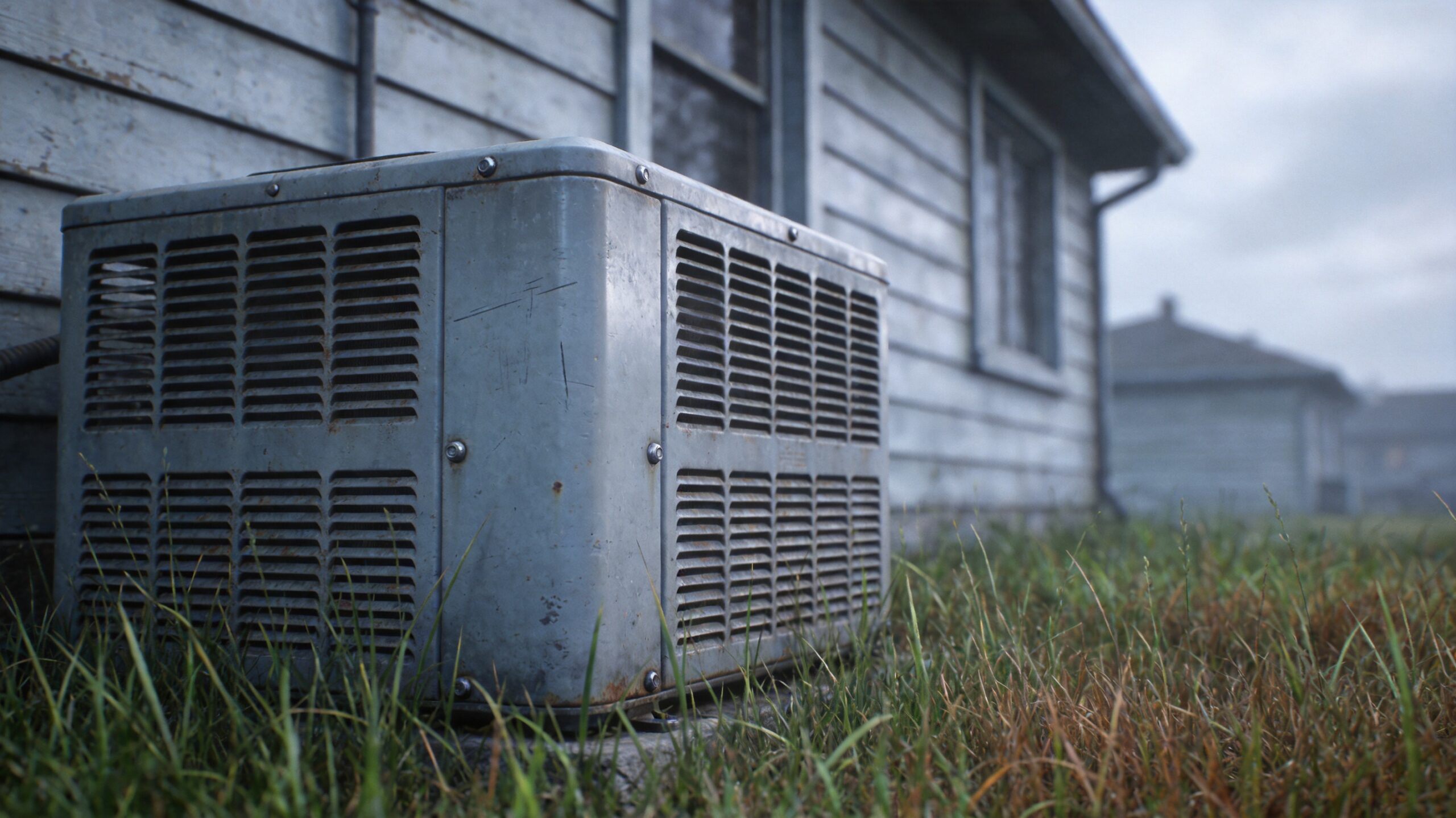
Most homes in Oakville and South St. Louis County have a central air conditioner outside and a gas furnace in the basement. Same blower, same ducts, but they wear out in opposite seasons. The schedule that works:
- AC visit in spring, somewhere from March to early May, before the first 85-degree week.
- Furnace visit in fall, September or October, before the first cold night.
- Filter checked every month and changed when it’s dirty (more on that below).
Why not do both at once? You can, and plenty of people book one visit for the whole system. The catch is testing. In April a tech can fire the furnace for a few minutes, but the house isn’t calling for heat, so a weak part has nowhere to show itself. In October it’s the same story with the AC. Each side is easiest to read in the season it’s about to work. The furnace side has its own checklist, and our furnace maintenance page walks through it.
Heat Pumps Get Two Visits, Because They Never Get a Season Off
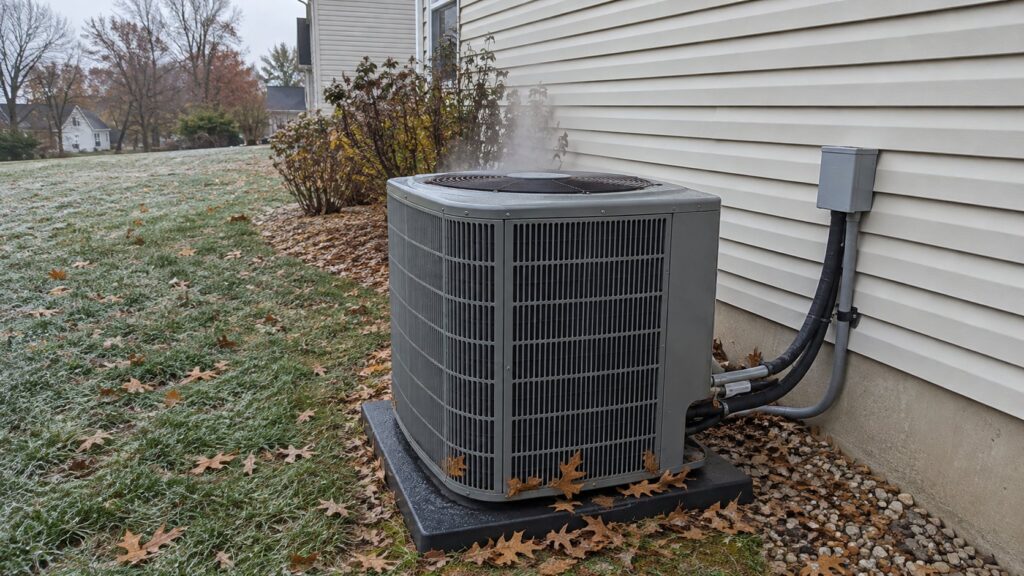
A heat pump looks like an air conditioner sitting in the yard, but it’s doing both jobs. It cools all summer, then runs in reverse all winter, pulling heat in from the outside air. Compare that to an AC that just sits there from October to May. Way more hours.
That’s why a heat pump gets a visit before each season instead of just one. The spring visit is the cooling check. The fall visit looks at parts a plain AC doesn’t even have: the valve that flips it from cooling to heating, the defrost control that melts ice off the outdoor coil on cold mornings, and the backup electric heat that kicks on when it’s too cold out for the heat pump to keep up alone. (Steam coming off the unit on a frosty morning is usually that defrost doing its job, by the way, not a problem.)
Got a heat pump with a gas furnace as the backup? The fall visit covers both. Already seeing something off, like ice that won’t clear or a unit that never stops? Our page on heat pump repair goes through the usual suspects.
Your Filter Runs on Its Own Clock
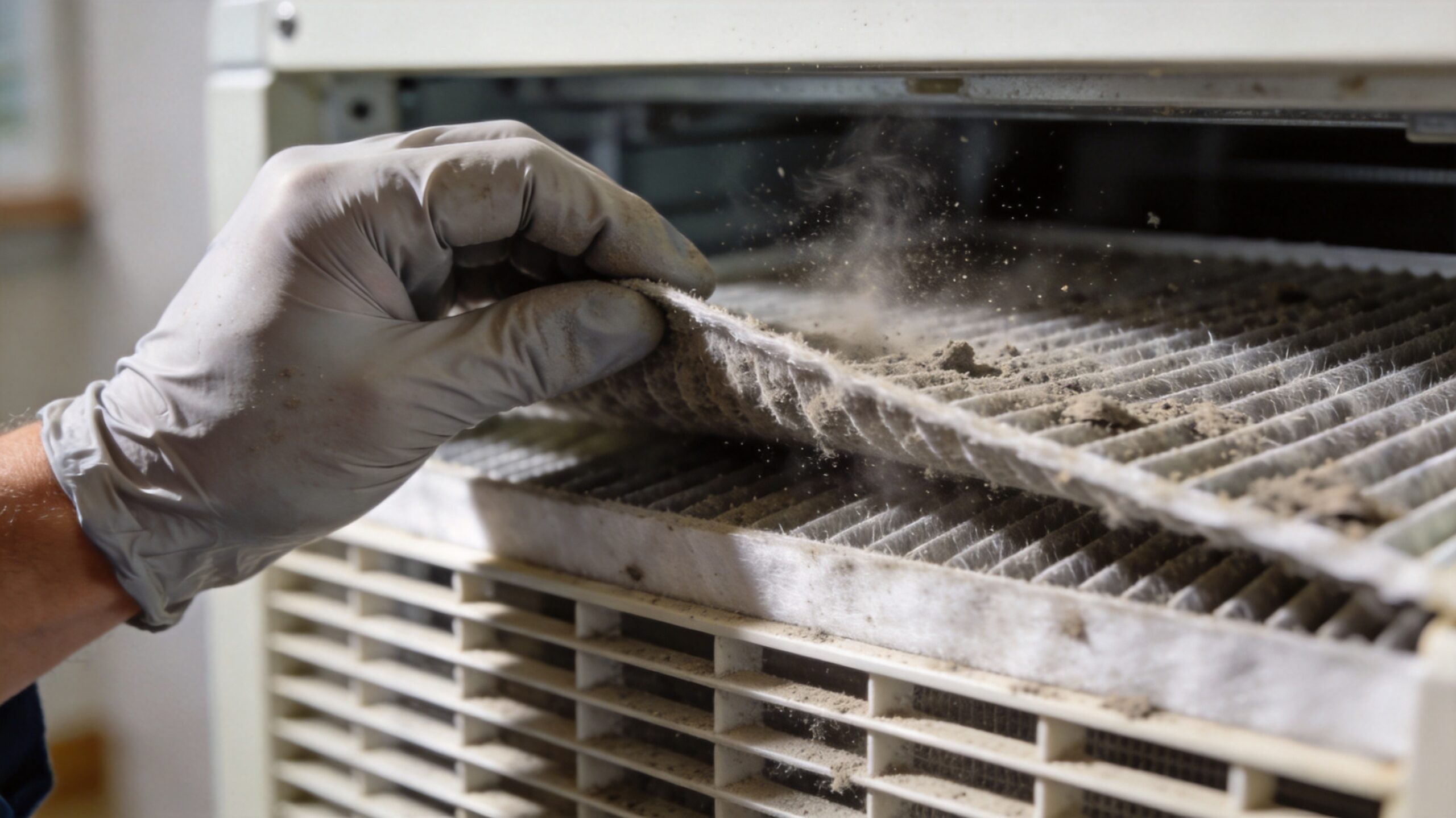
The filter is the one part of the schedule that’s on you, and how often depends on how thick it is. Pull it out and look at the edge:
- 1-inch filter (the thin kind that slides into a slot by the furnace or sits behind a wall grille): look at it every month, and plan on a new one every 1 to 3 months.
- 4- or 5-inch filter (a thick one in its own cabinet right next to the furnace): usually every 6 to 12 months.
- Either kind: sooner if you have pets, smokers, allergies, or work going on in the house.
Thick ones last longer only because there’s more filter to fill up. Either way, hold it up to a light. Can’t see through it? Toss it. Clogged filters are a big reason indoor coils freeze up in July, and a new filter is about the cheapest fix on this page.
Houses That Need a Closer Schedule
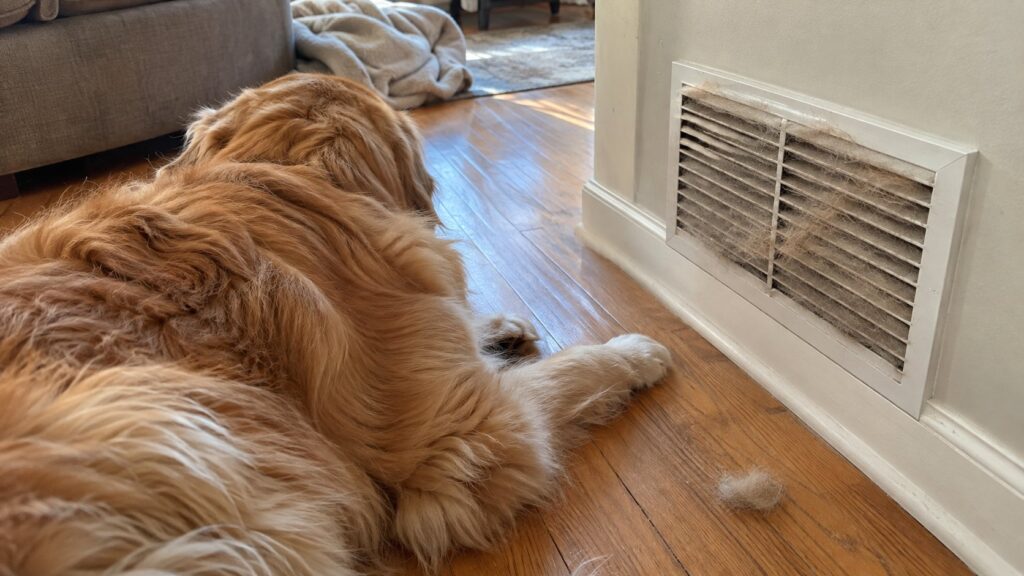
Once a year works fine for a unit out in the open and a quiet house. Lots of homes aren’t like that. Here’s when we’d tighten it up:
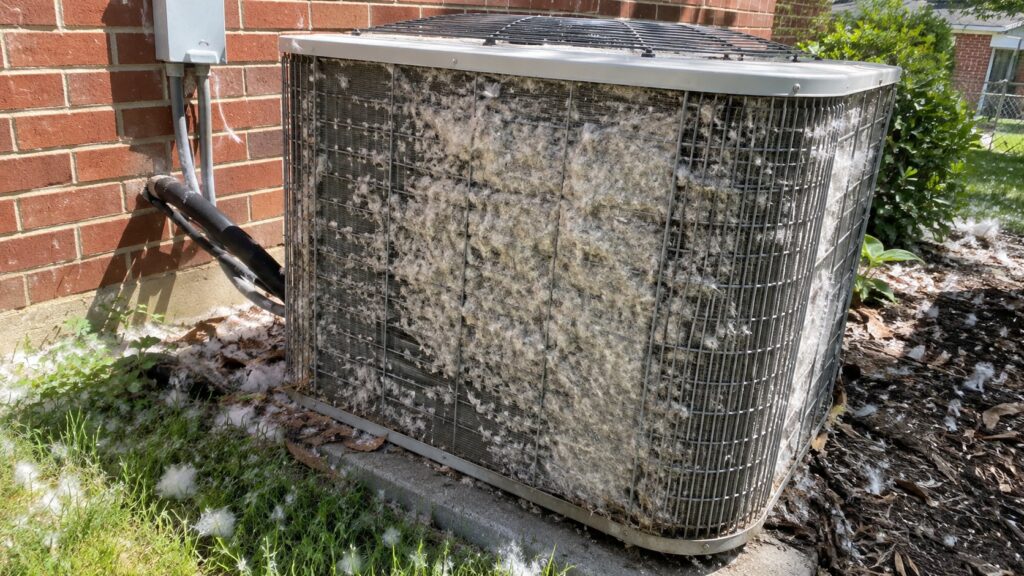
- A cottonwood, maple, or oak hanging over the outdoor unit. Late May and June can mat the coil with fluff in a couple of weeks. Once the fluff is done falling, cut the power at the box by the unit and rinse the coil gently with a hose, even if the spring visit already happened.
- Dogs or cats that shed. Hair loads up the filter and the return grilles fast. Check the filter every two to three weeks during shedding season.
- A remodel, new floors, or drywall work. Drywall dust can plug a filter in a few days. Swap it when the work is done, then again a week later.
- A unit that works hard. Full afternoon sun, an upstairs that never quite cools down, or a house kept at 68 all summer. More hours means more wear, so the spring visit isn’t the one to let slide.
- A system that just had a refrigerant leak fixed. Have the charge checked again at the next spring visit, so a second small leak gets caught early.
- A rental. Tenants almost never change filters. If you own the place, put the filter changes on your own calendar.
No, none of this means a visit every month. It just means the little stuff between visits counts more, and you really shouldn’t push the yearly one back. For the full list of what you can safely handle yourself, see what maintenance an AC unit actually needs.
Just Bought the House? Find Out When It Was Last Serviced
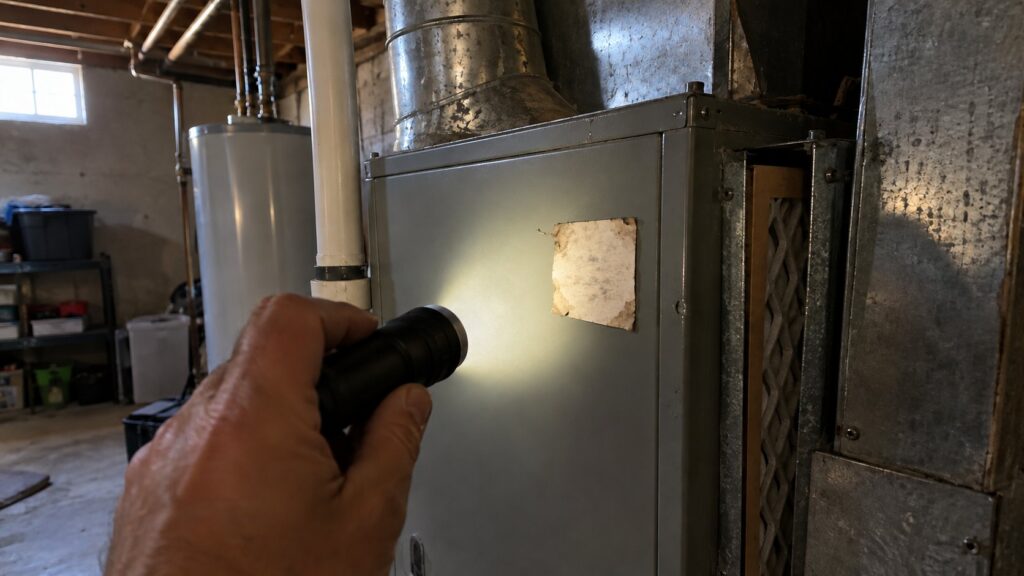
New house, no service records? Really common. Before you guess, check these:
- Look for a tag or sticker on the furnace cabinet, the box above it, or the side of the outdoor unit. A lot of companies leave one with the date written on it.
- Check the papers from the sale. The seller’s disclosure or the home inspection report sometimes notes how old the system is and when it was last looked at.
- Find the metal plate on the side of the outdoor unit. The serial number on it usually holds the year it was built. Every brand writes that code differently, so a tech can read it for you if it isn’t obvious.
- Ask a neighbor. In a lot of South County subdivisions the houses on one street went up the same year, often with the same equipment.
Still nothing? Treat it as overdue and book a visit before the first hot week. That first visit gives you a starting point: how old the system is, what the readings look like, and what shape it’s in. Every visit after that has something to compare against. If you want to know what a full visit should cover, here’s what a real AC tune-up includes.
Keep the Schedule Without Thinking About It
A schedule’s no good if you forget it. Little things that help:
- Set two phone reminders: early March for the AC, early September for the furnace.
- Write the date on the edge of the filter with a marker when you put it in. Next month you’ll know exactly how long it’s been.
- Keep one folder for every service receipt, so you always know what was done, what was found, and when.
- Book early. Spring calendars fill up fast once the first heat wave hits, and fall goes the same way after the first cold snap.
If you want something to stick on the fridge, Energy Star’s seasonal maintenance checklist is a good one.
Questions About How Often AC Should Be Serviced
How often should you have air conditioning serviced?
Once a year for a regular central air conditioner, best in spring before the heat shows up. A heat pump needs two visits a year, spring and fall, because it heats and cools. The filter runs on its own clock: every 1 to 3 months for a thin 1-inch filter, and every 6 to 12 months for a thick 4- or 5-inch one.
Are heat pumps supposed to run all the time?
They run a lot longer than most people expect, especially on cold days, because a heat pump puts out steady, gentle heat instead of short hot blasts. Long run times in January are normal. Running nonstop while the house keeps getting colder is not, and that one is worth a call.
Is a 7 year old AC unit old?
No, a 7 year old air conditioner is about middle-aged. Most central systems around St. Louis last somewhere around 12 to 15 years with regular care. Seven is right about when the yearly spring visit starts catching worn parts, like a weak capacitor, before they quit on a hot afternoon.
What is the average lifespan of an AC unit?
Most central air conditioners last about 12 to 15 years, and heat pumps tend to run a little shorter because they work all year. A clean outdoor coil, a fresh filter, and a yearly check are what push a system toward the long end of that range.
Not sure which schedule fits your house? Call Liberty Heating Cooling & Plumbing at (314) 600-2202, or book an AC maintenance visit online. Tell us what you’ve got, AC or heat pump, roughly how old, and when anyone last looked at it. Sam has been working on systems around Oakville and South St. Louis County since 1998, and he’ll tell you straight how often yours needs to be seen.